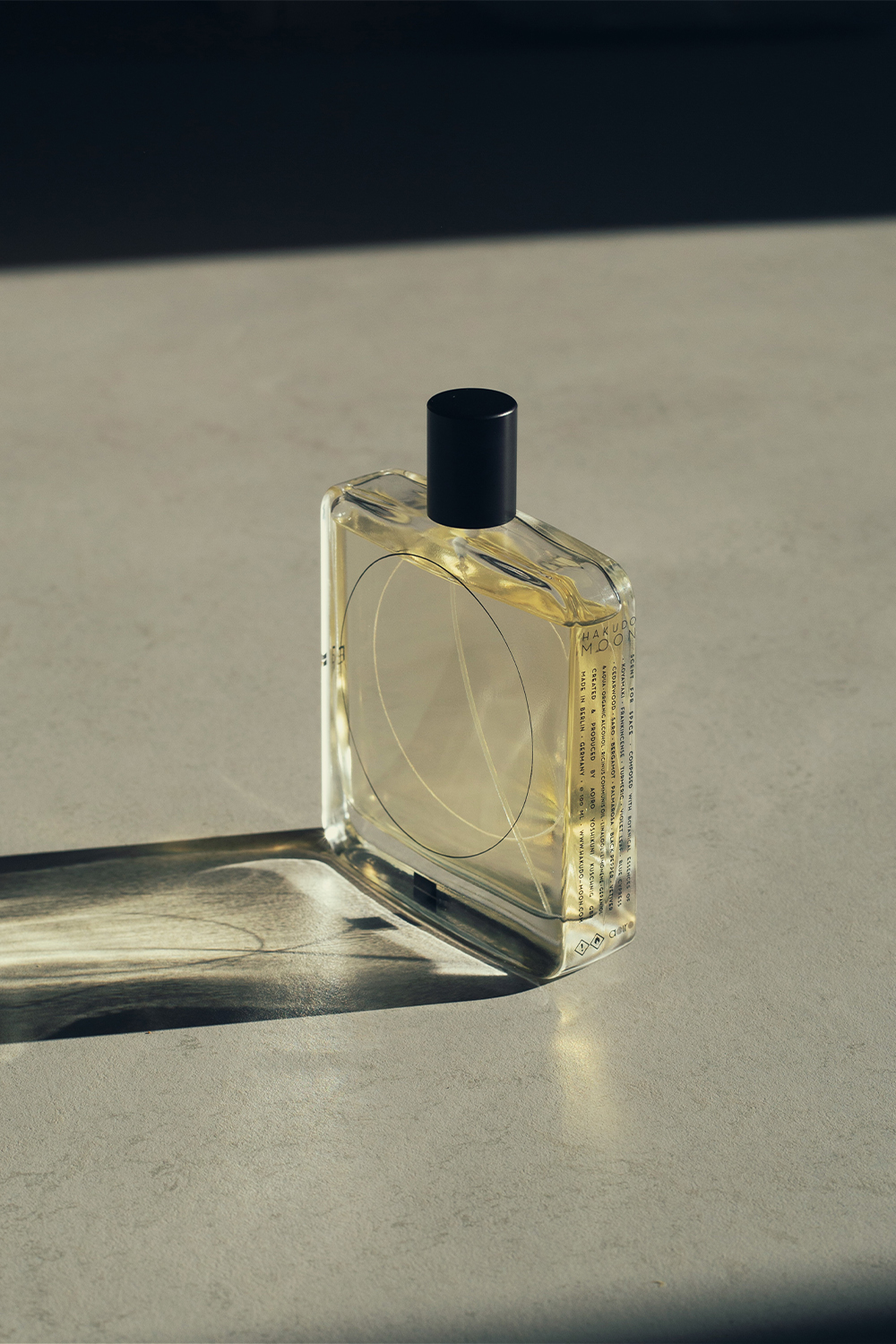
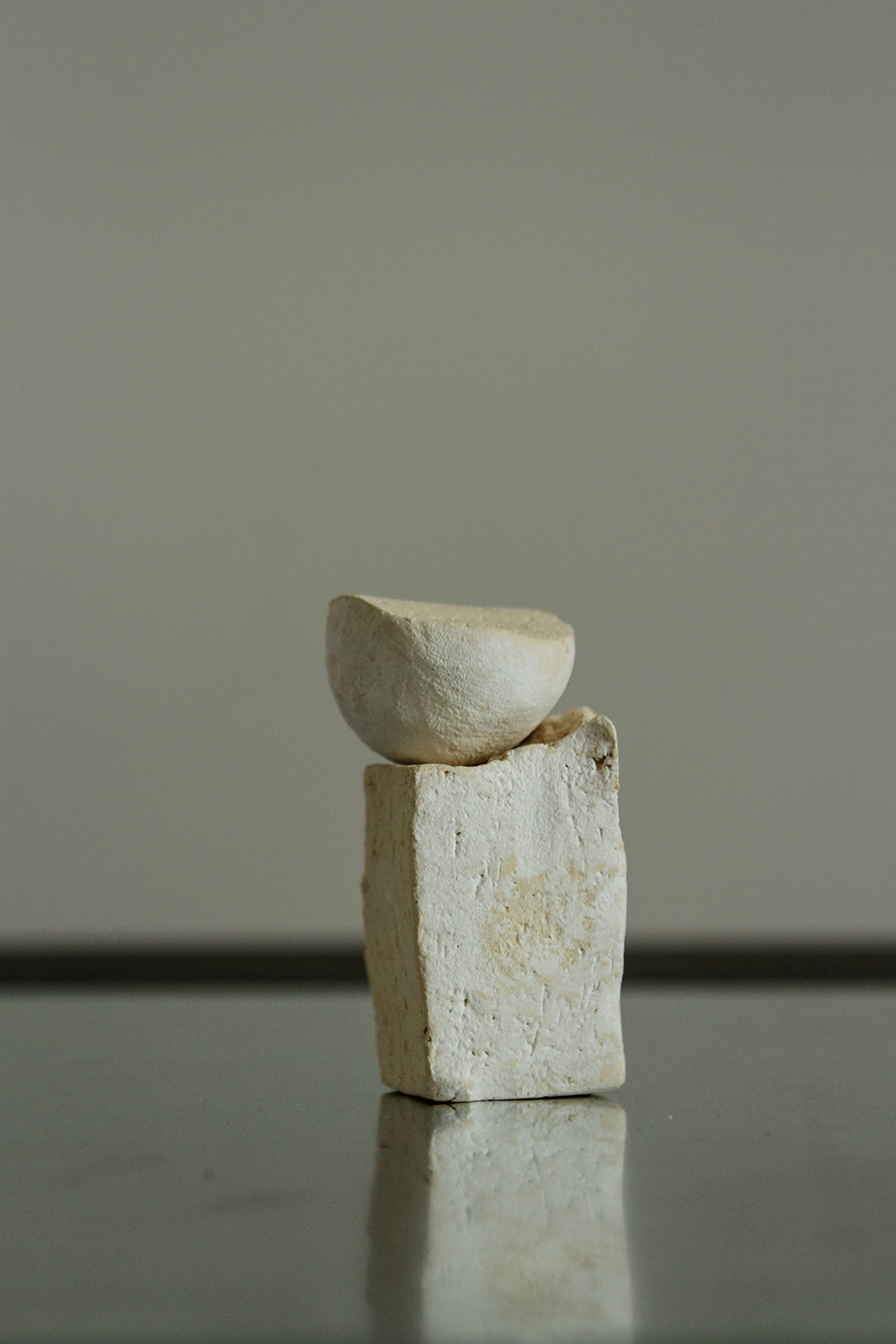
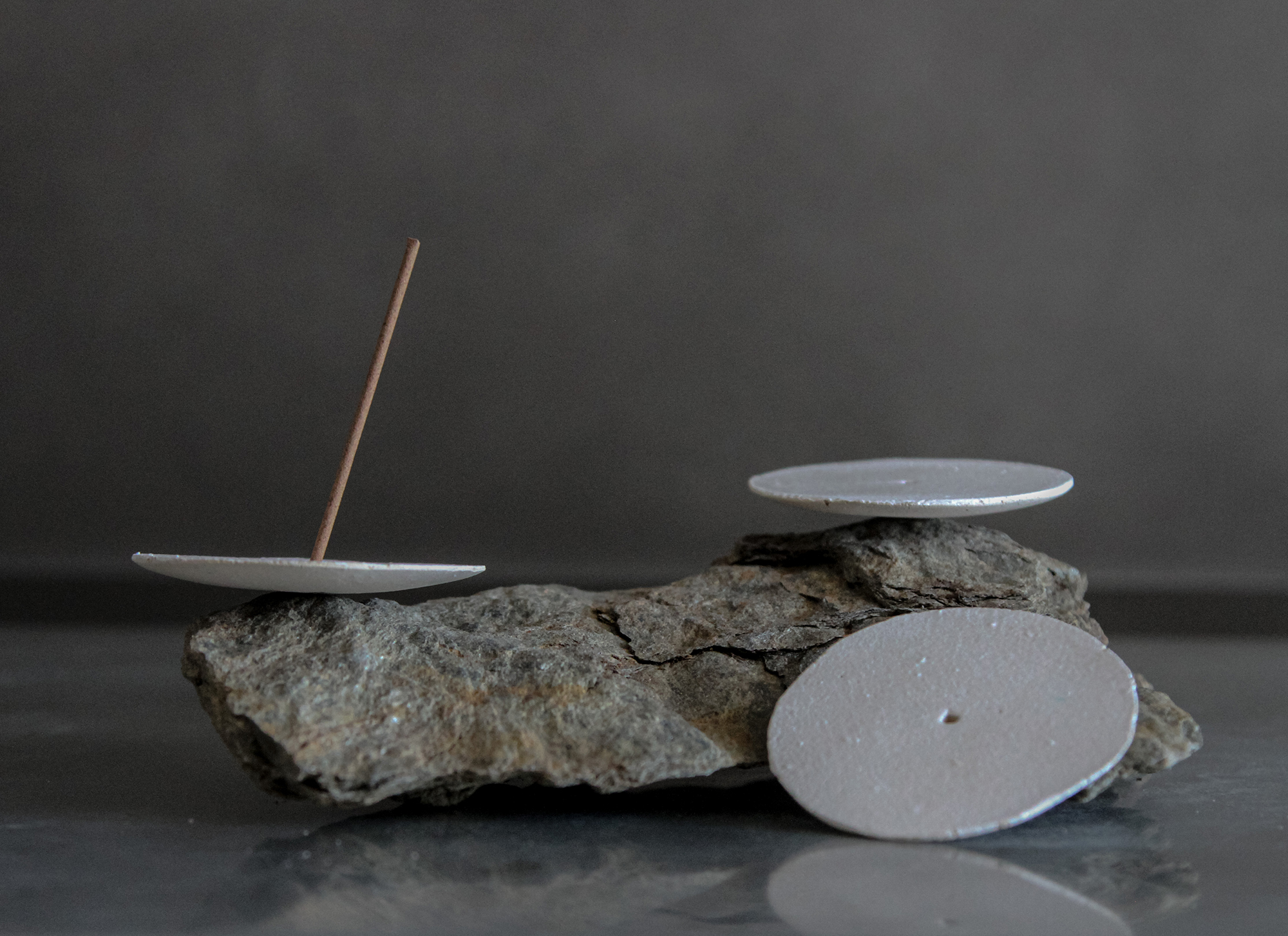
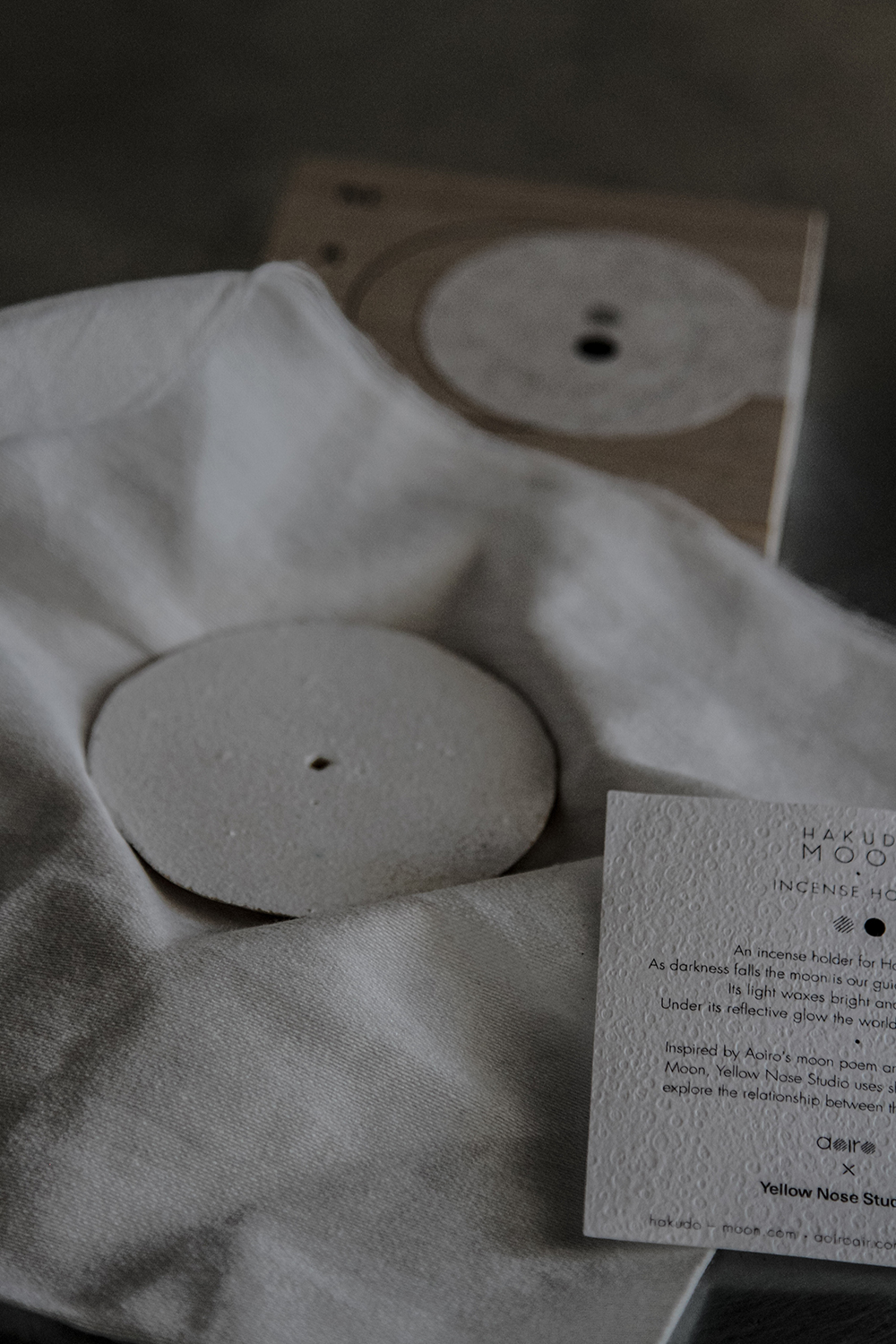
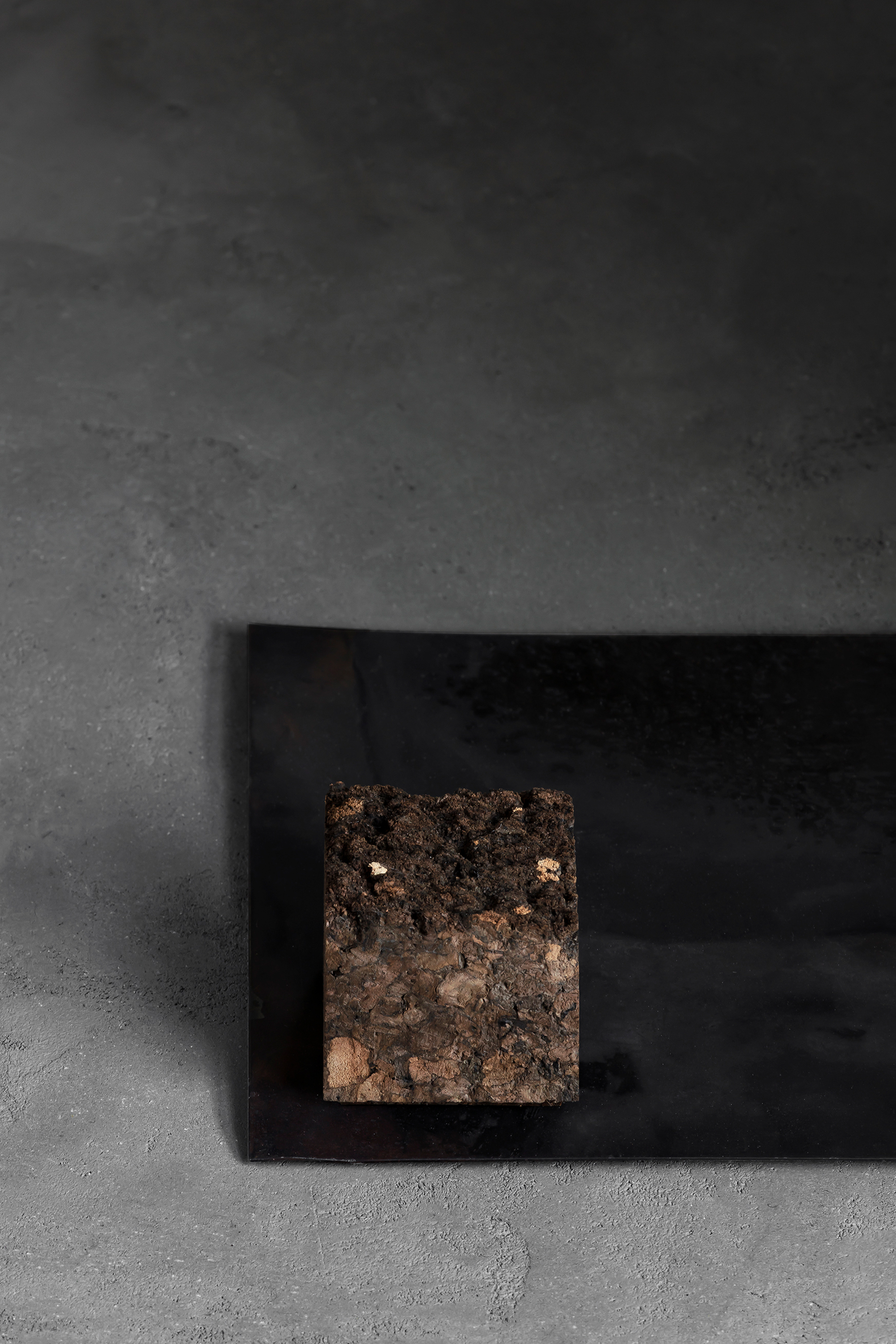
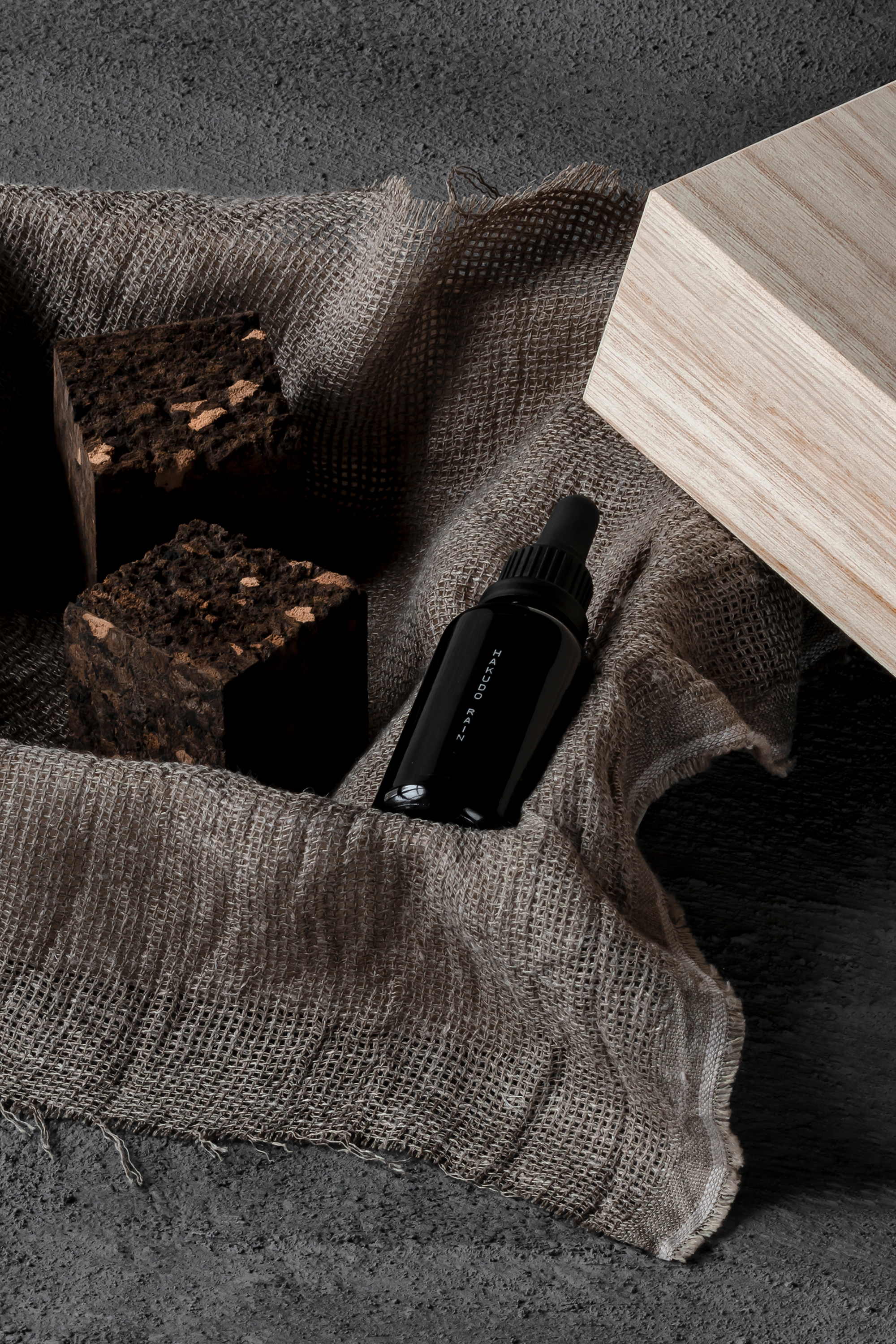
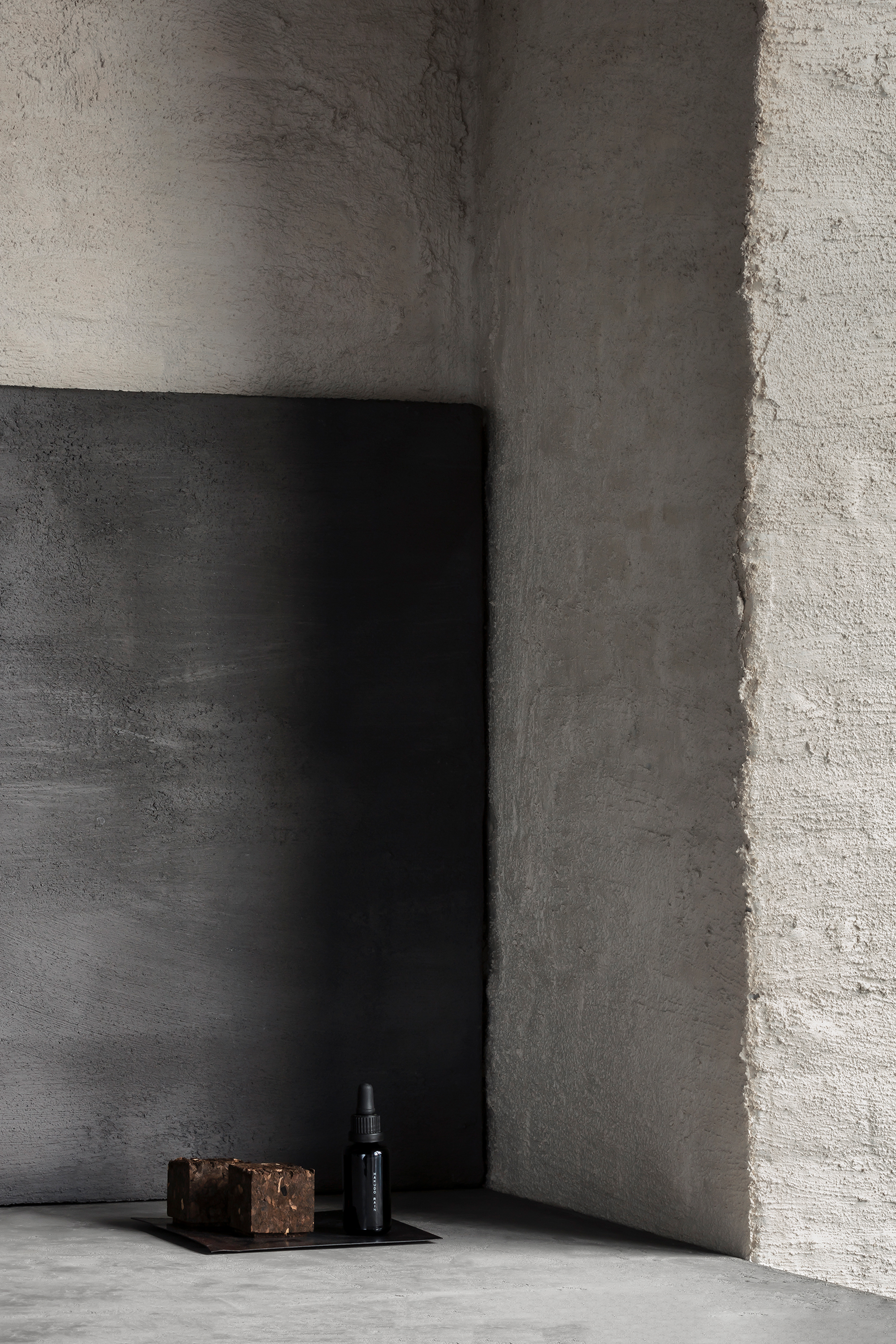
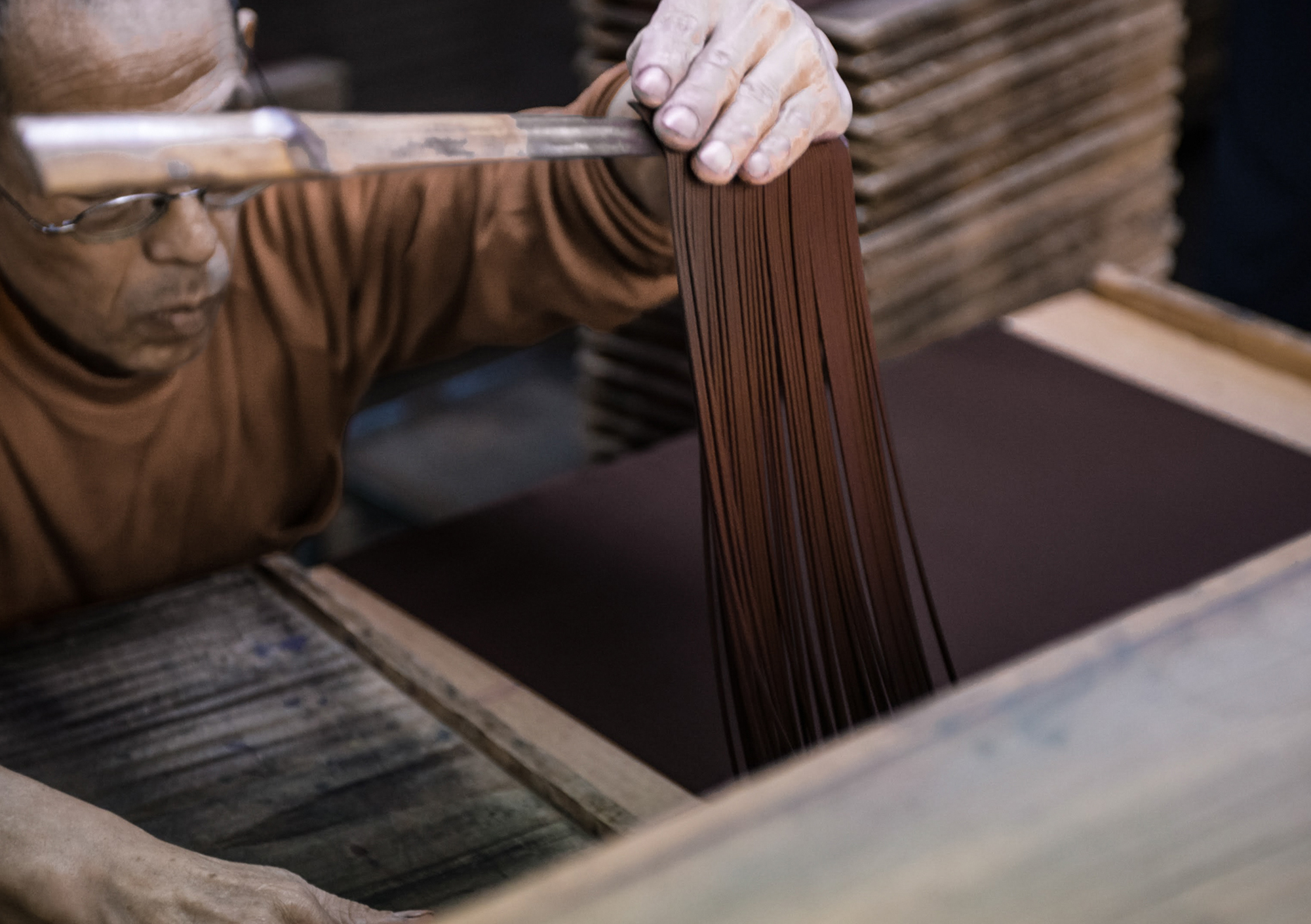
AOIRO takes its name from “a shade of blue” — a gradation that exists within the air. As described by the founders of AOIRO, “the air surrounding a space is our canvas.” Air is never empty; it carries light, sound, material presence, and the emotional shifts perceived by those who inhabit a space. What AOIRO focuses on are these continuously emerging and transforming layers of atmosphere, seeking to translate them through scent into something perceptible. Rather than defining scent, AOIRO aims to connect with those intangible elements that resist clear definition.
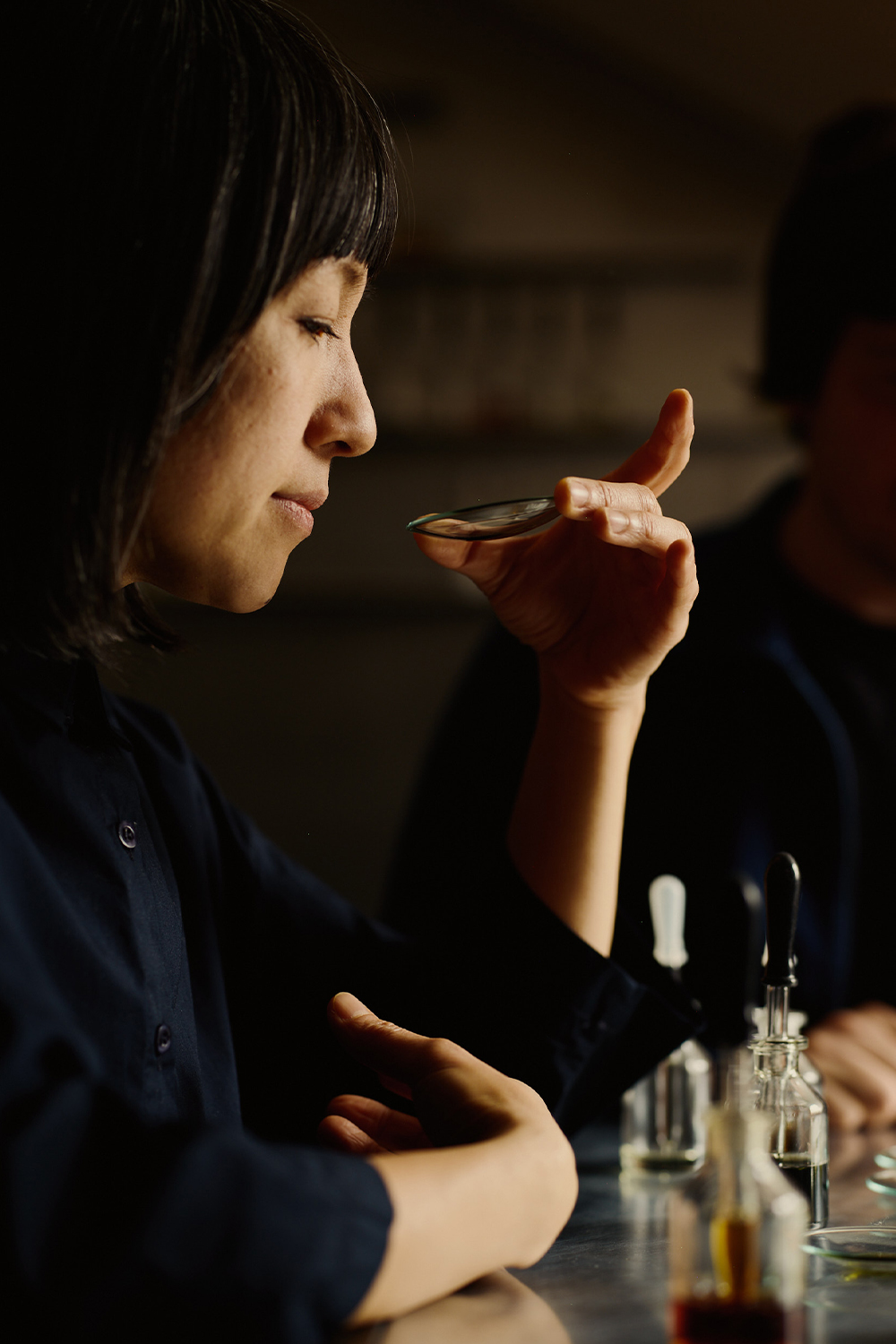
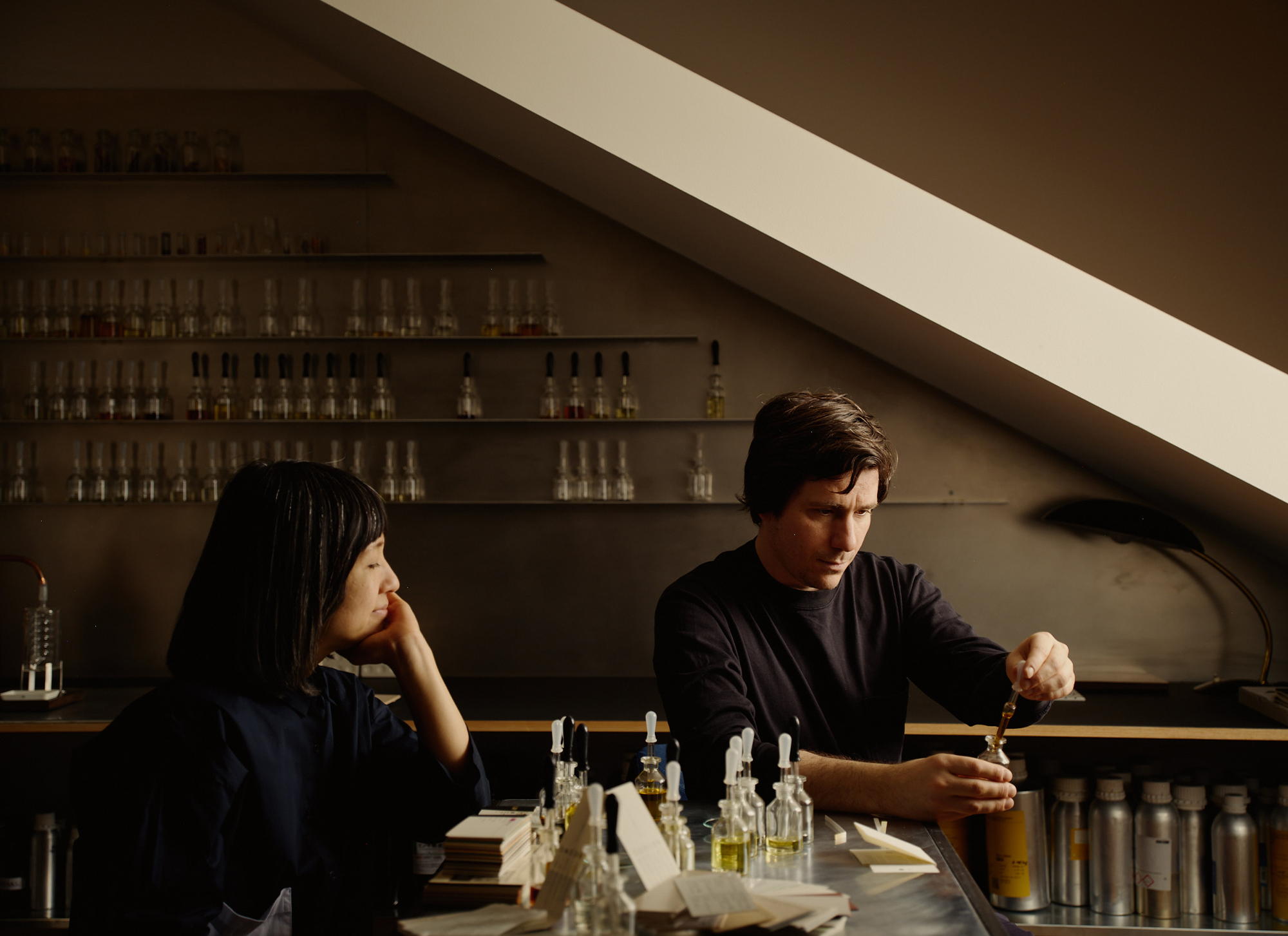
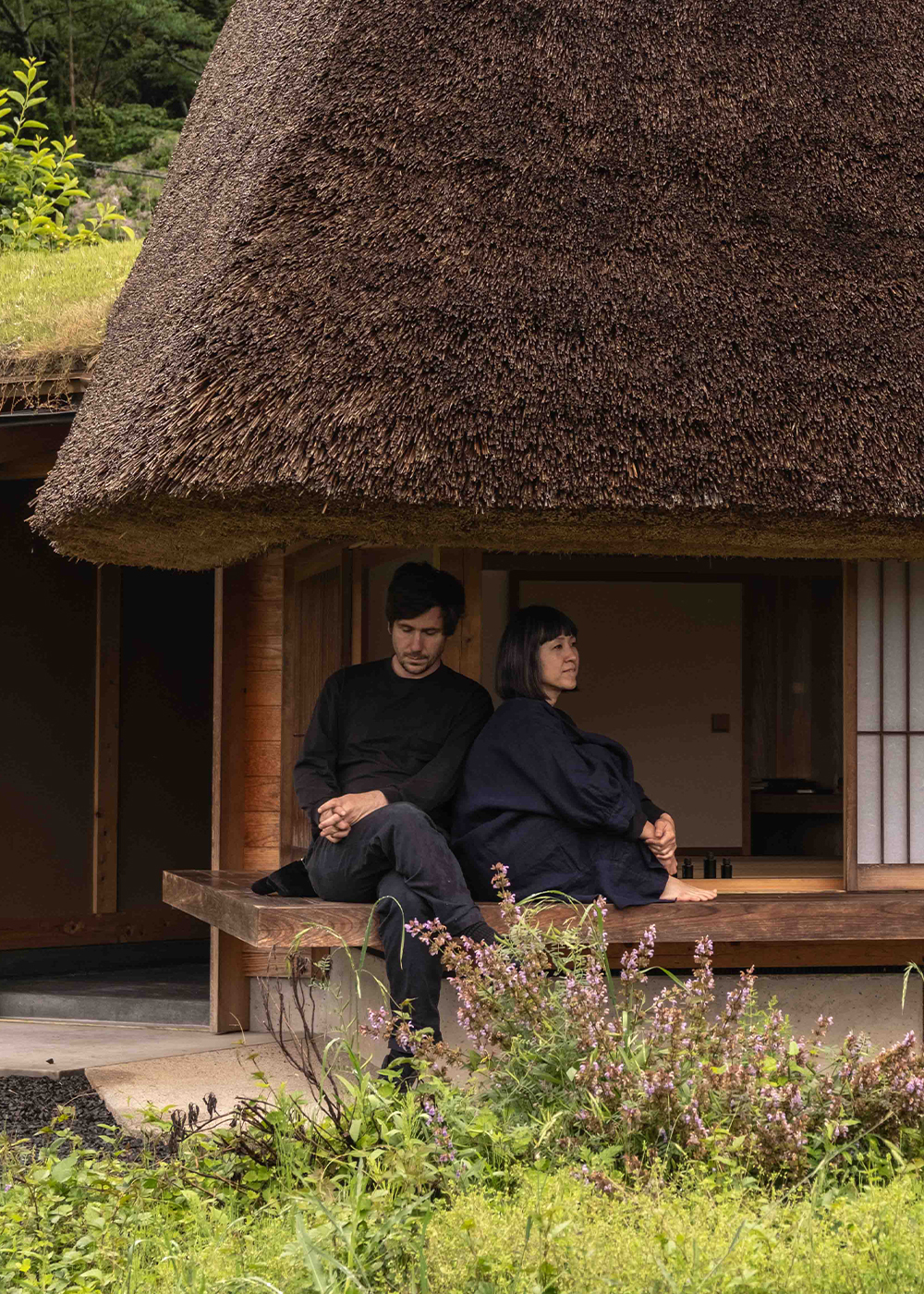
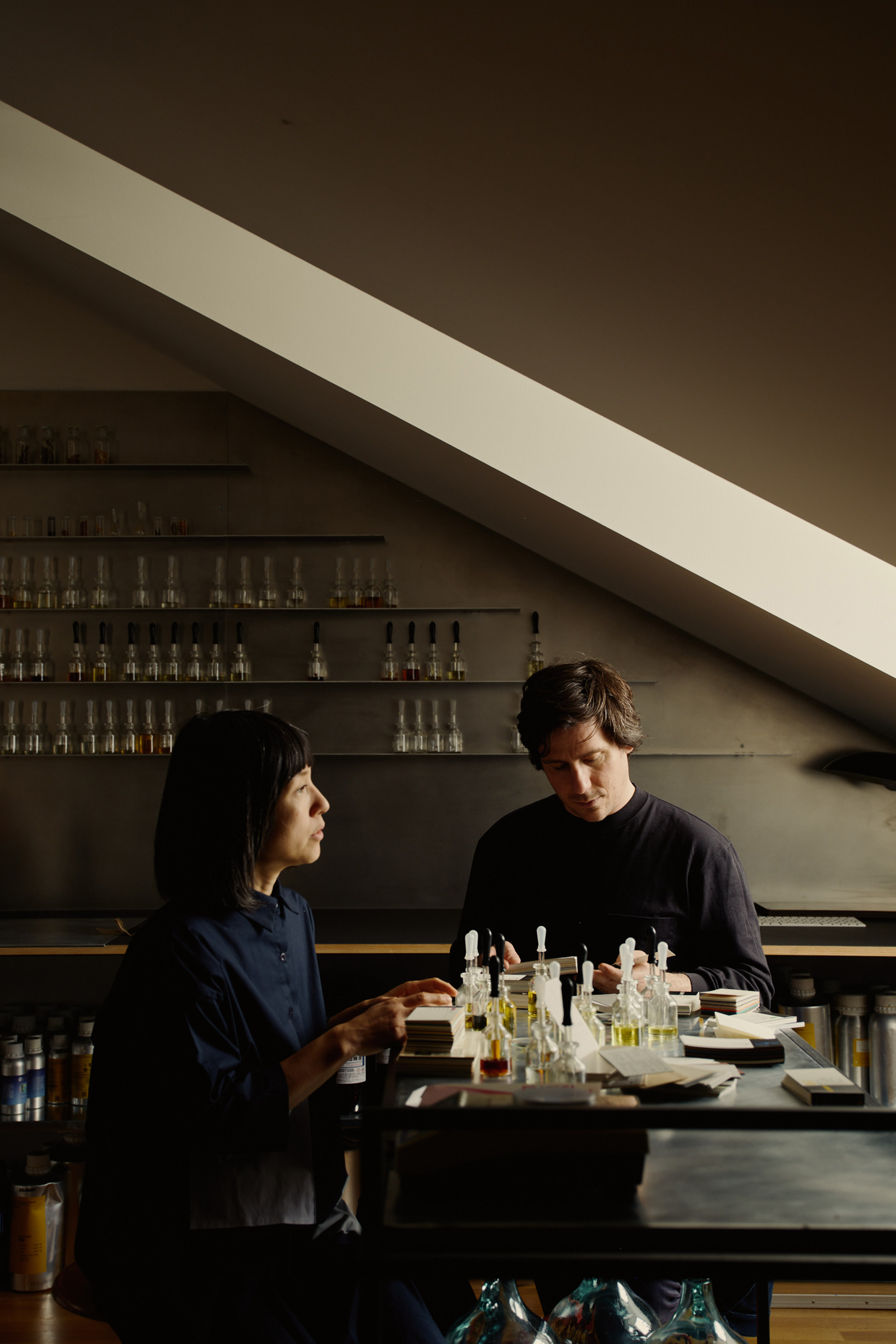
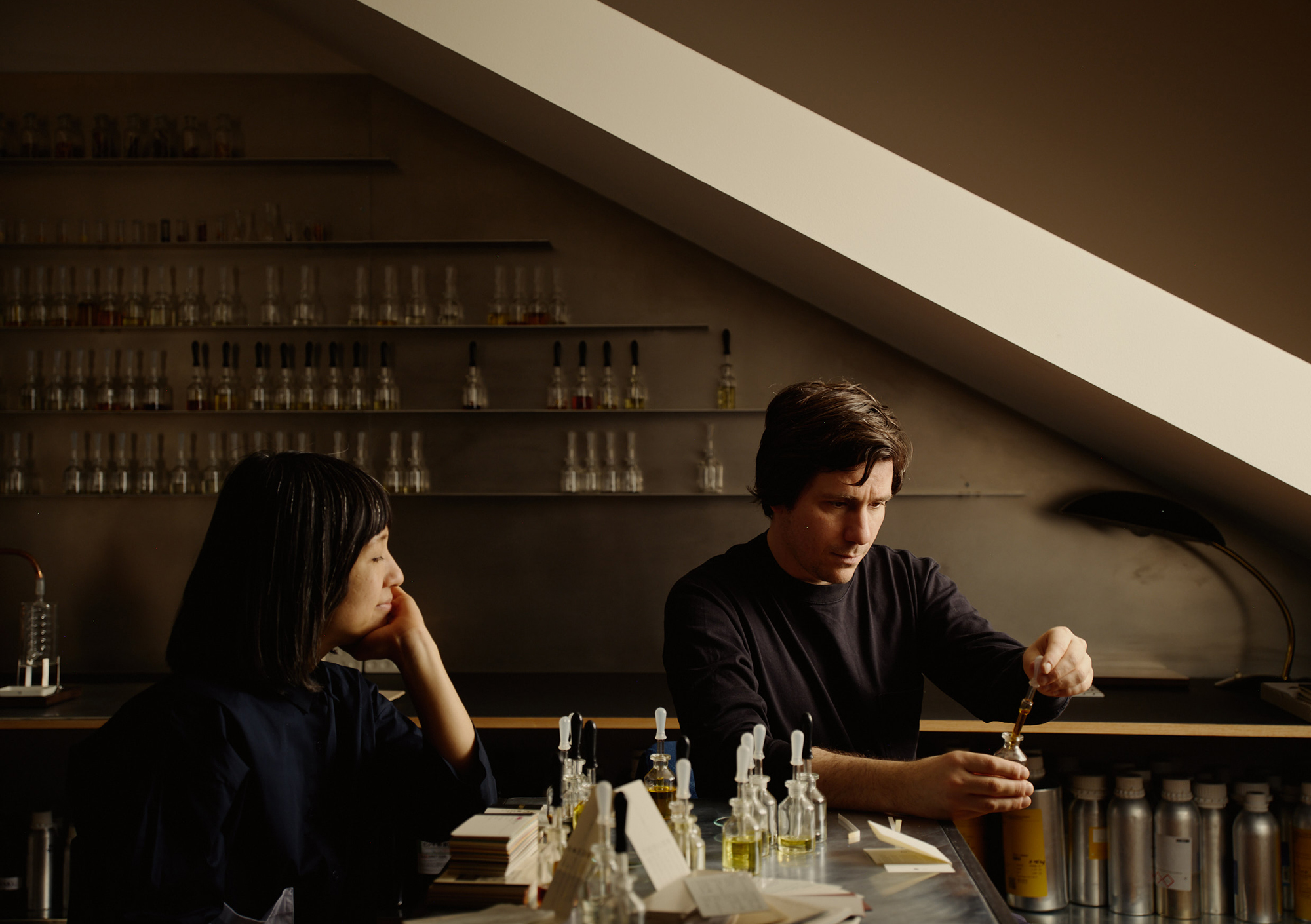
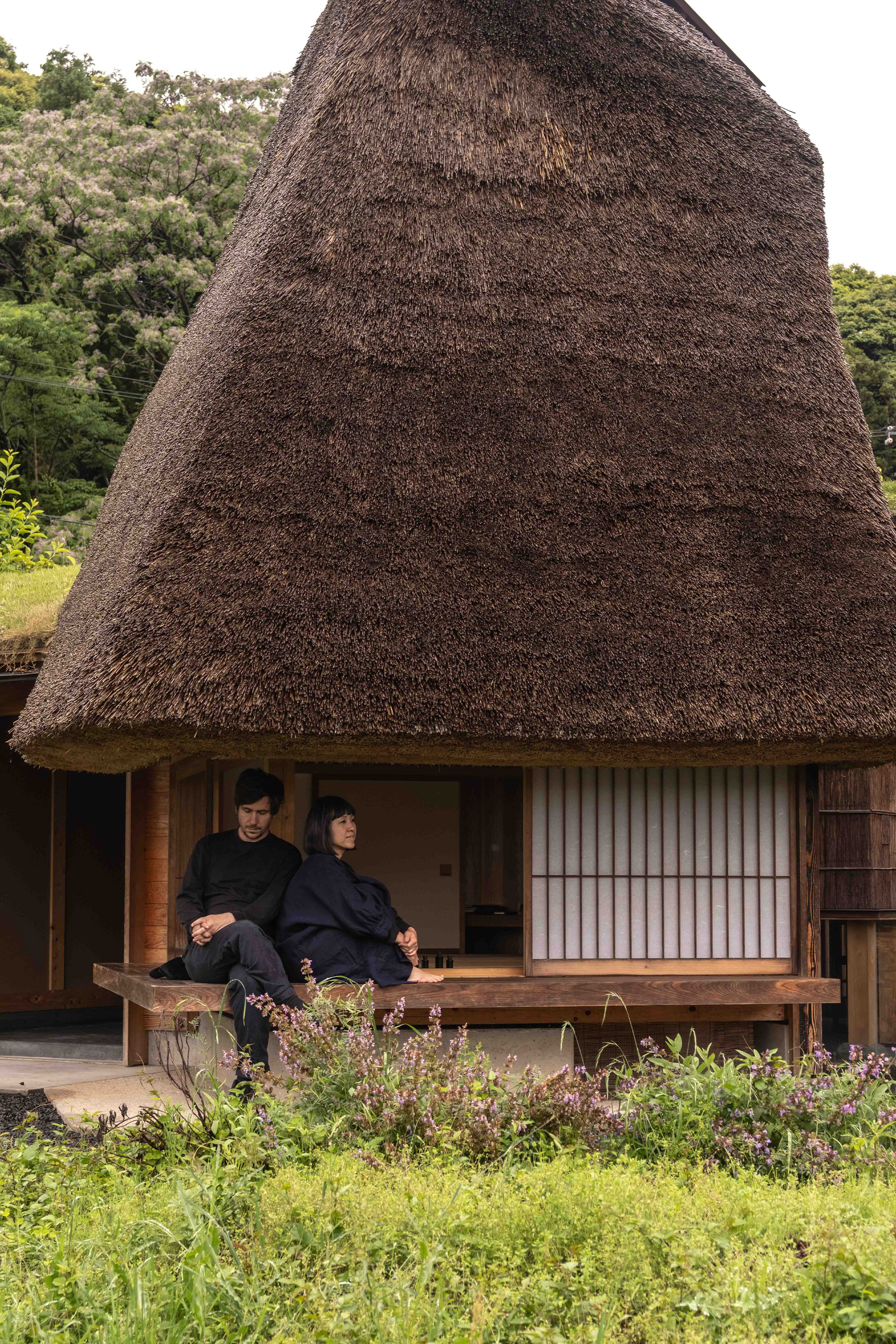
AOIRO was founded by Shizuko Yoshikuni and Manuel Kuschnig. Coming from different backgrounds, the two gradually developed a shared language through practice. Shizuko’s work is rooted in aromatherapy, where scent is closely tied to bodily perception, breath, and inner states; Manuel, with a background in philosophy and design theory, is concerned with the relationships between perception, concepts, and design language. “For us, scent connects all the other senses.” Within their framework, scent becomes a language of its own — one that helps articulate emotions and sensations, and offers another way of relating to the external world.
Their collaboration began with a project in Tokyo in 2009. At the time, Shizuko developed an olfactive identity for the client, while Manuel created the corresponding visual system. What started as a single project soon evolved into an ongoing partnership. “We realized that, as a duo, we could develop olfactive design in a more layered and nuanced way, and approach scent from perspectives different from those we had known before.” It was through this process that AOIRO gradually took shape.
Based in Berlin, AOIRO works internationally across diverse contexts. Their projects range from architectural spaces such as VitraHaus by Herzog & de Meuron and Hotel Son de Mar in Corsica, to collaborations with automotive brands including Land Rover and Defender, as well as the Berlin-based holistic fitness space Hagius. They have also translated IGNANT’s worldview into a sensory experience. Across these varied contexts, AOIRO maintains a clear and consistent approach while allowing each project to unfold within its own specific conditions.

AOIRO’s work does not begin with scent, but with those atmospheres within a space that have yet to be clearly named. They define their practice as olfactive design—a process of translating emotional atmospheres into olfactory expression.
Each project begins with an in-depth personal dialogue. Without predefined assumptions, Yoshikuni and Kuschnig take time to fully immerse themselves in the world of a project. “We usually start by engaging with the space itself, or—if it has not yet been built—with its concept, in order to understand its interior philosophy, design language, brand expression, and material qualities.” These non-olfactory cues form the foundation of their understanding. At this stage, scent remains undefined; it is merely a direction, a possibility.
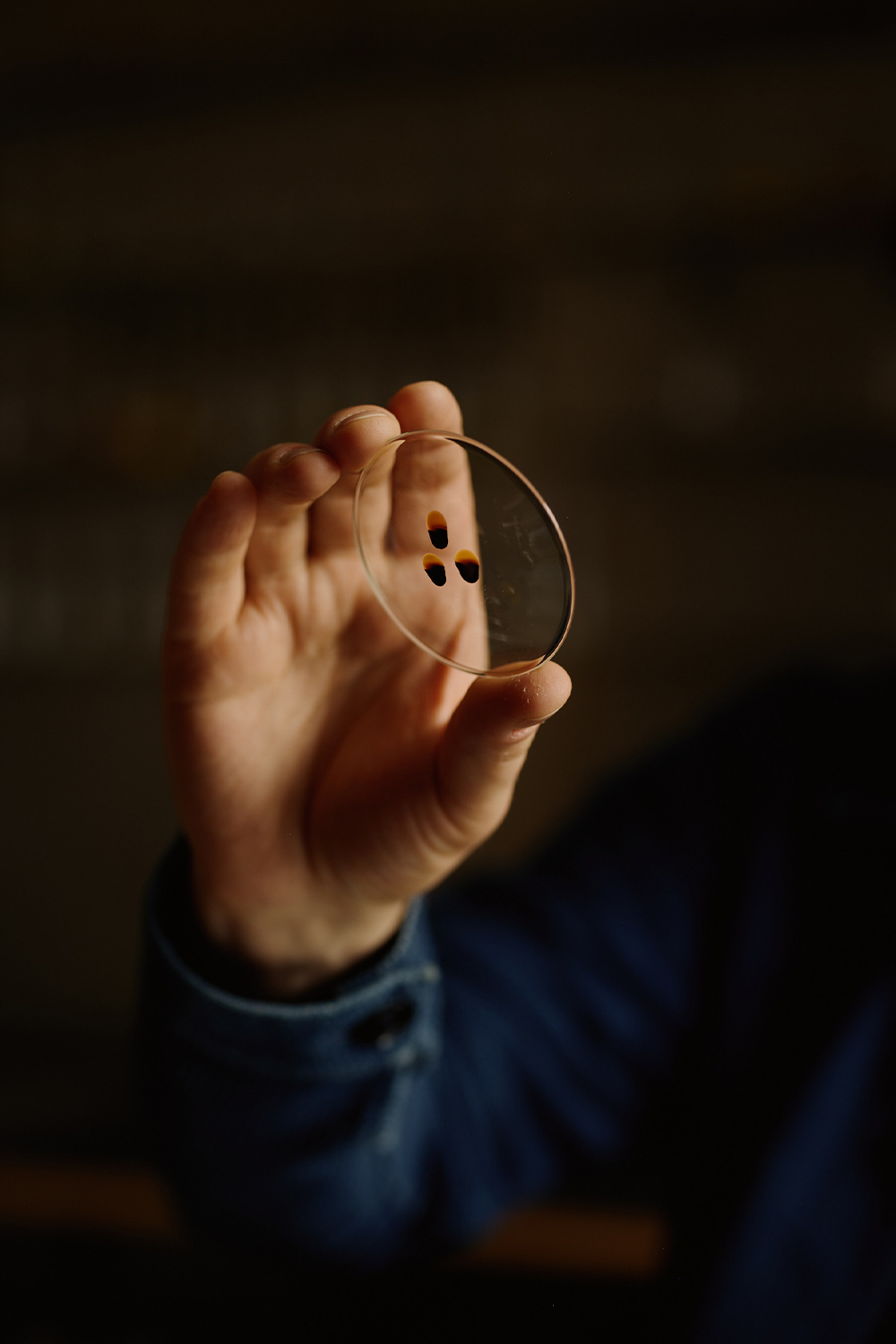
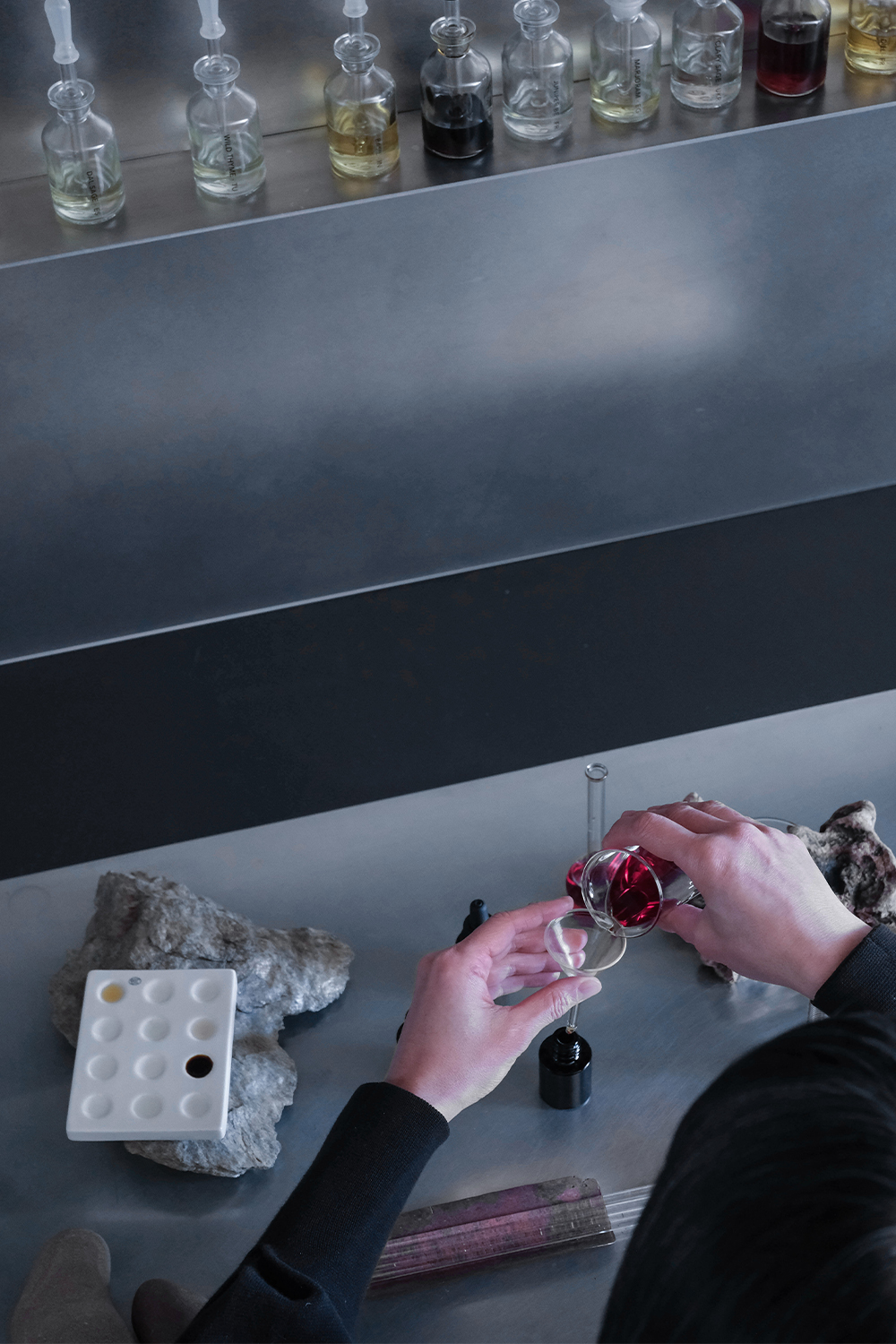
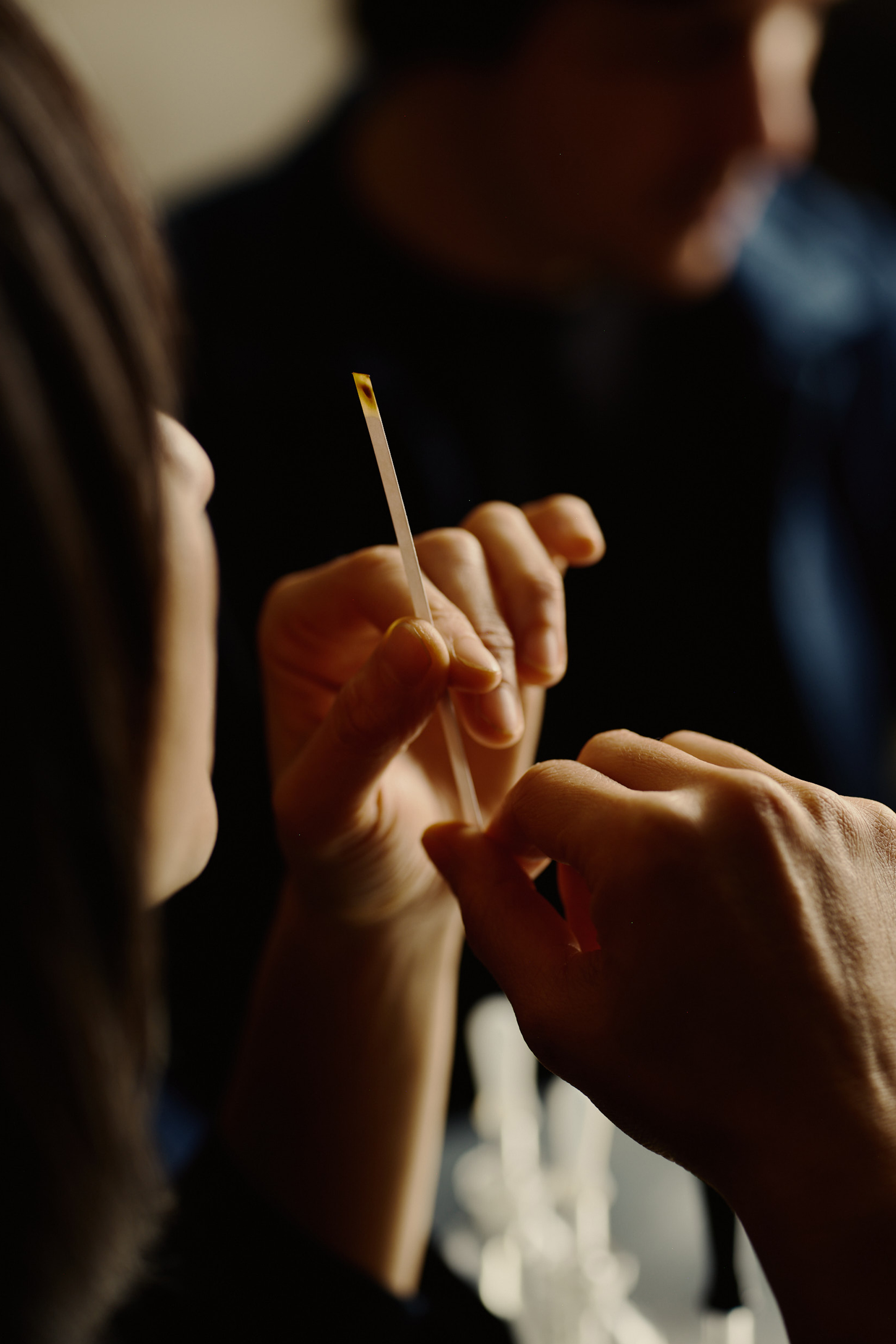
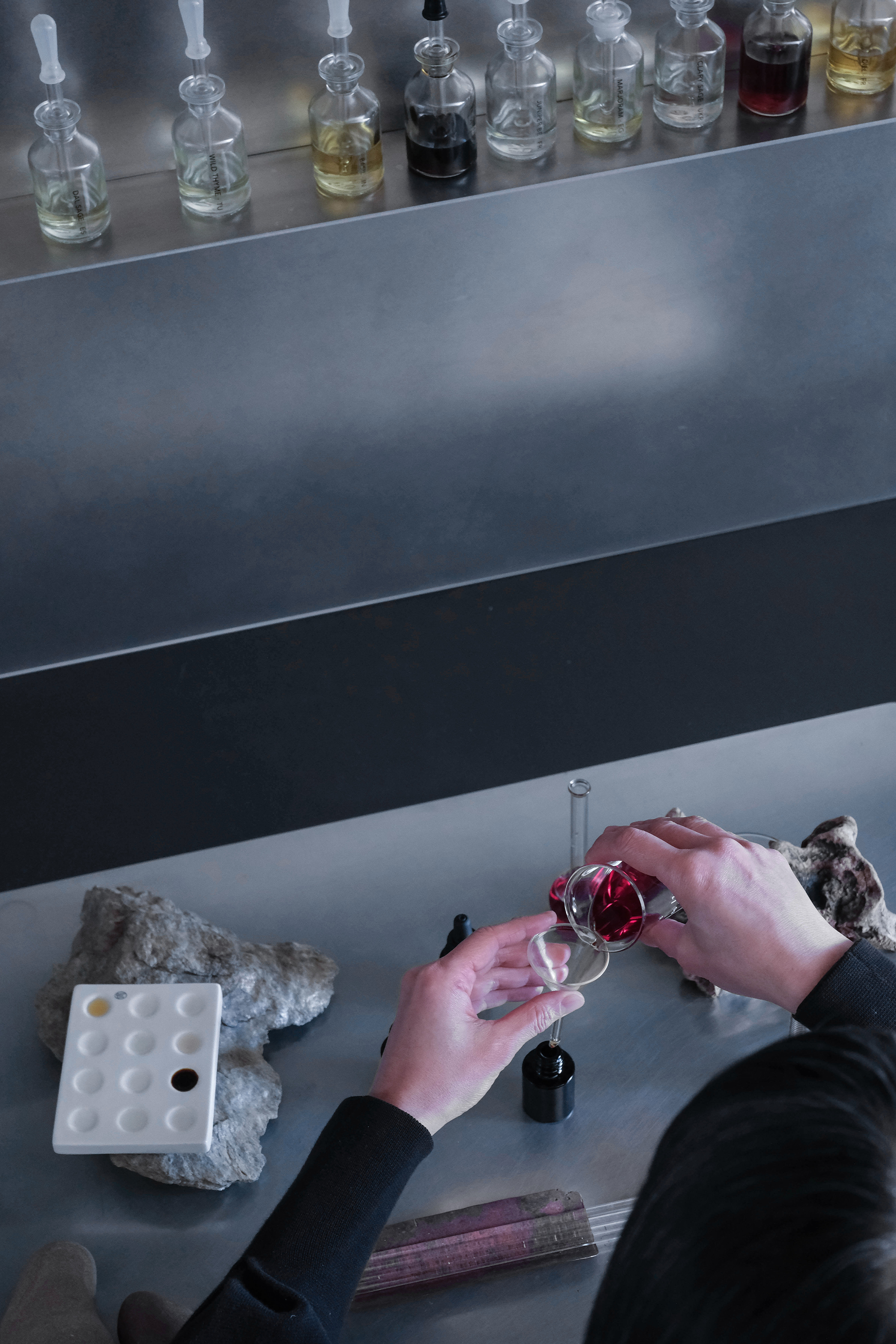
Over years of practice, AOIRO has gradually developed methods they refer to as “olfactory interviews” and “scent profiles.” These approaches allow them to communicate desired olfactory directions through other sensory impressions. Their focus remains on creating a holistic experience, ensuring that scent is closely connected to and in dialogue with the other sensory elements already present within a space. Through visual narratives, atmospheric qualities of light, sound elements, or the tactile impressions of materials, they capture the emotional character of a space or brand. As these cues become clearer, scent begins to take form—developed through the continuous exploration of different layers and olfactory structures, resulting in expressions that are both distinctive and unexpectedly nuanced.
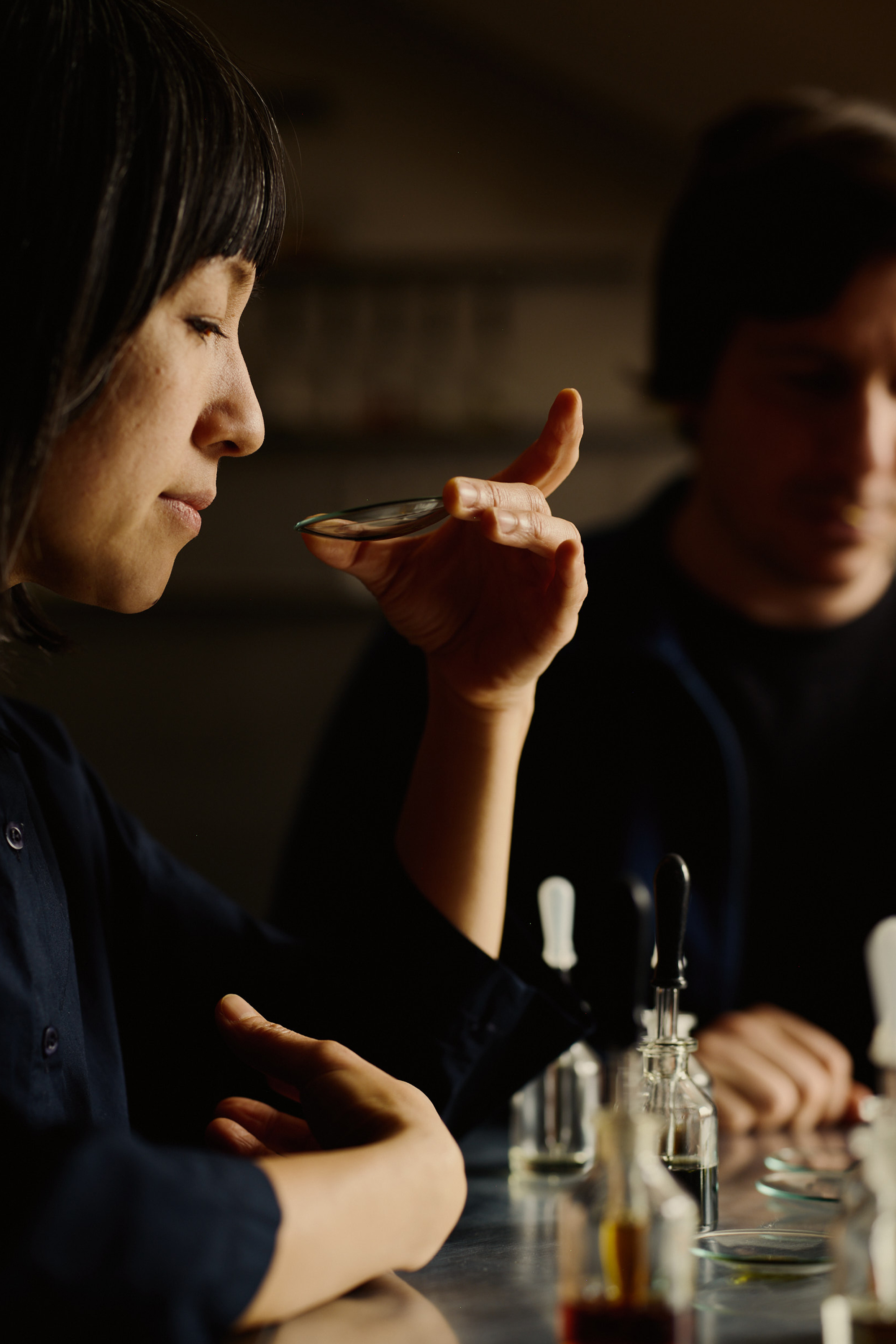
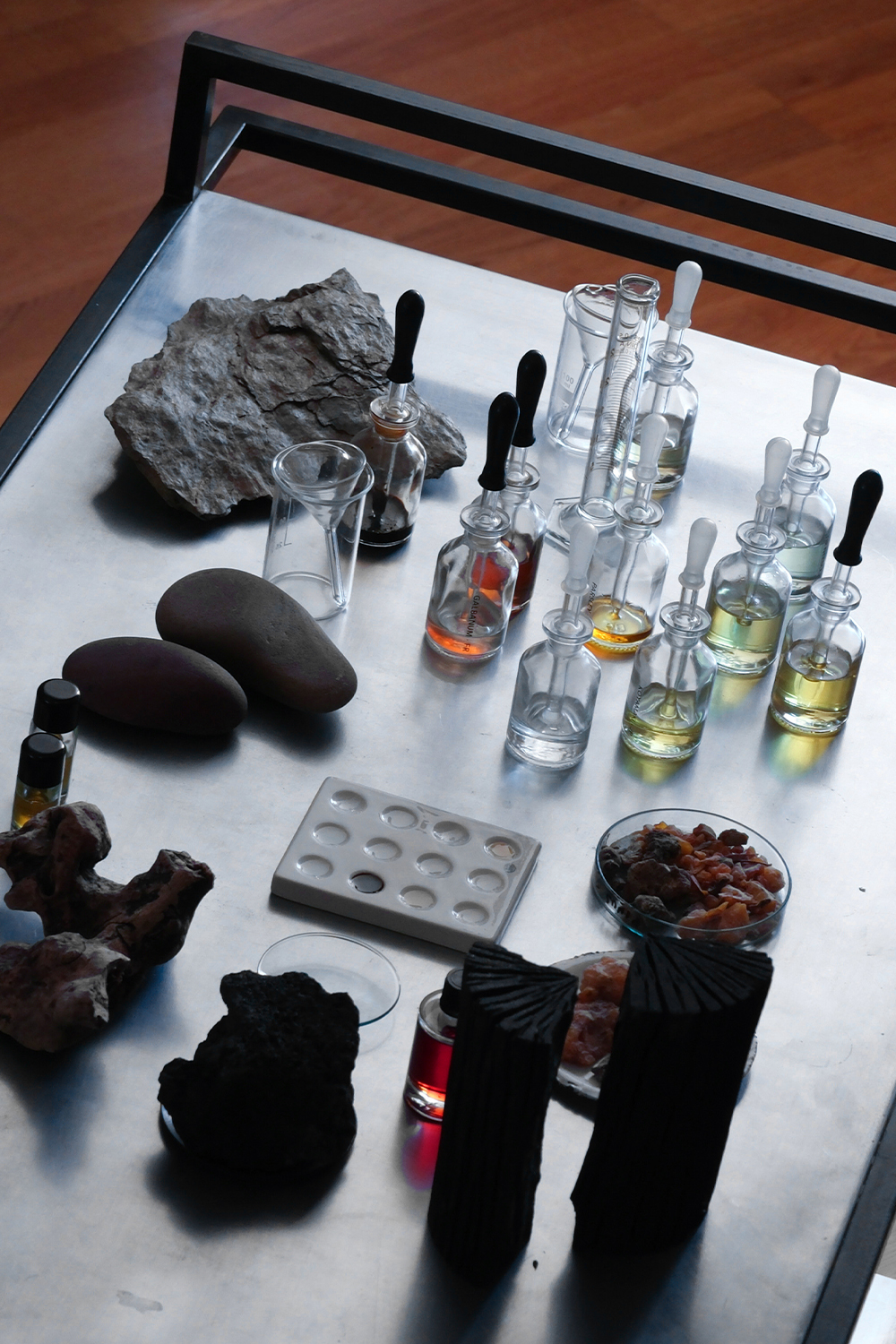
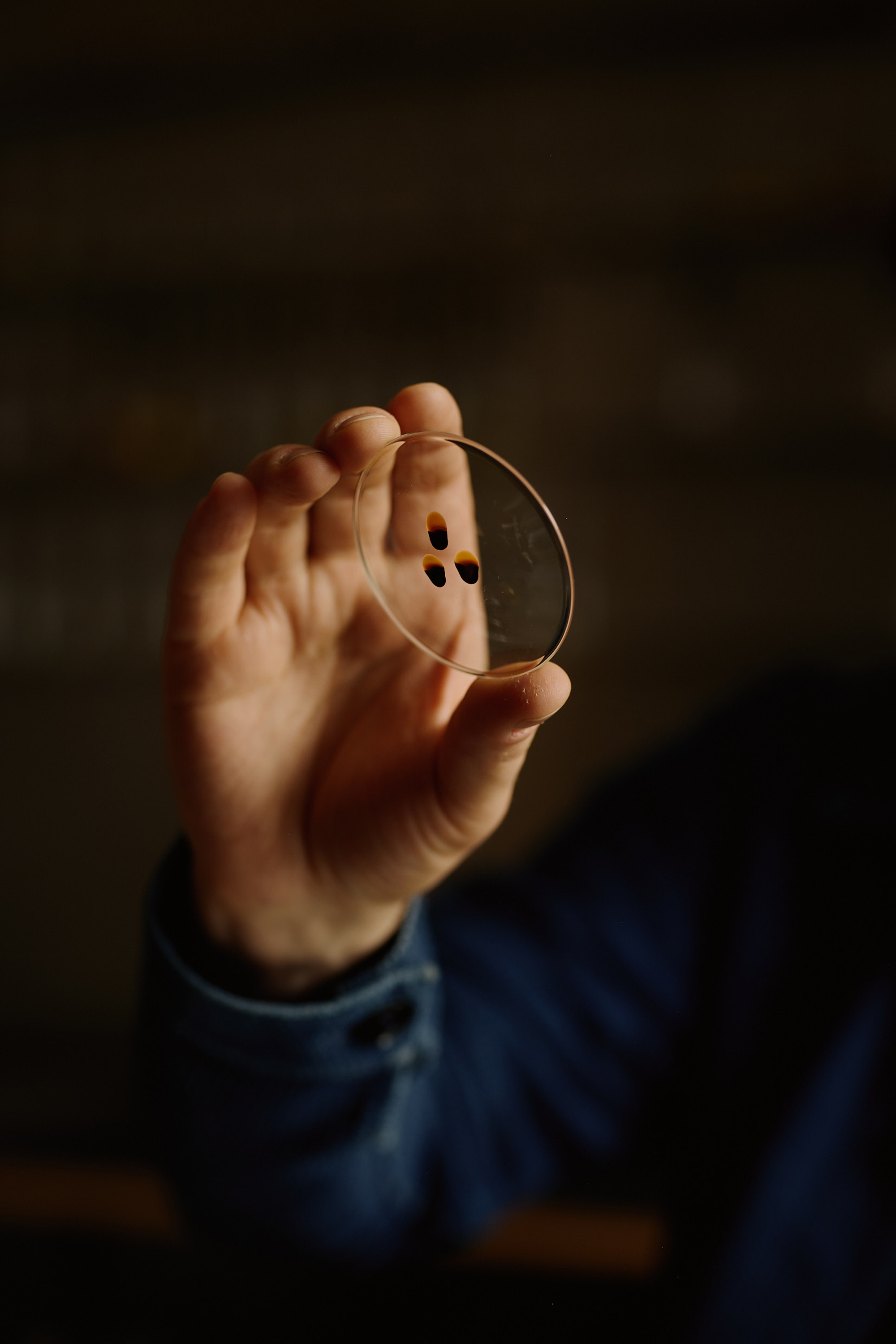
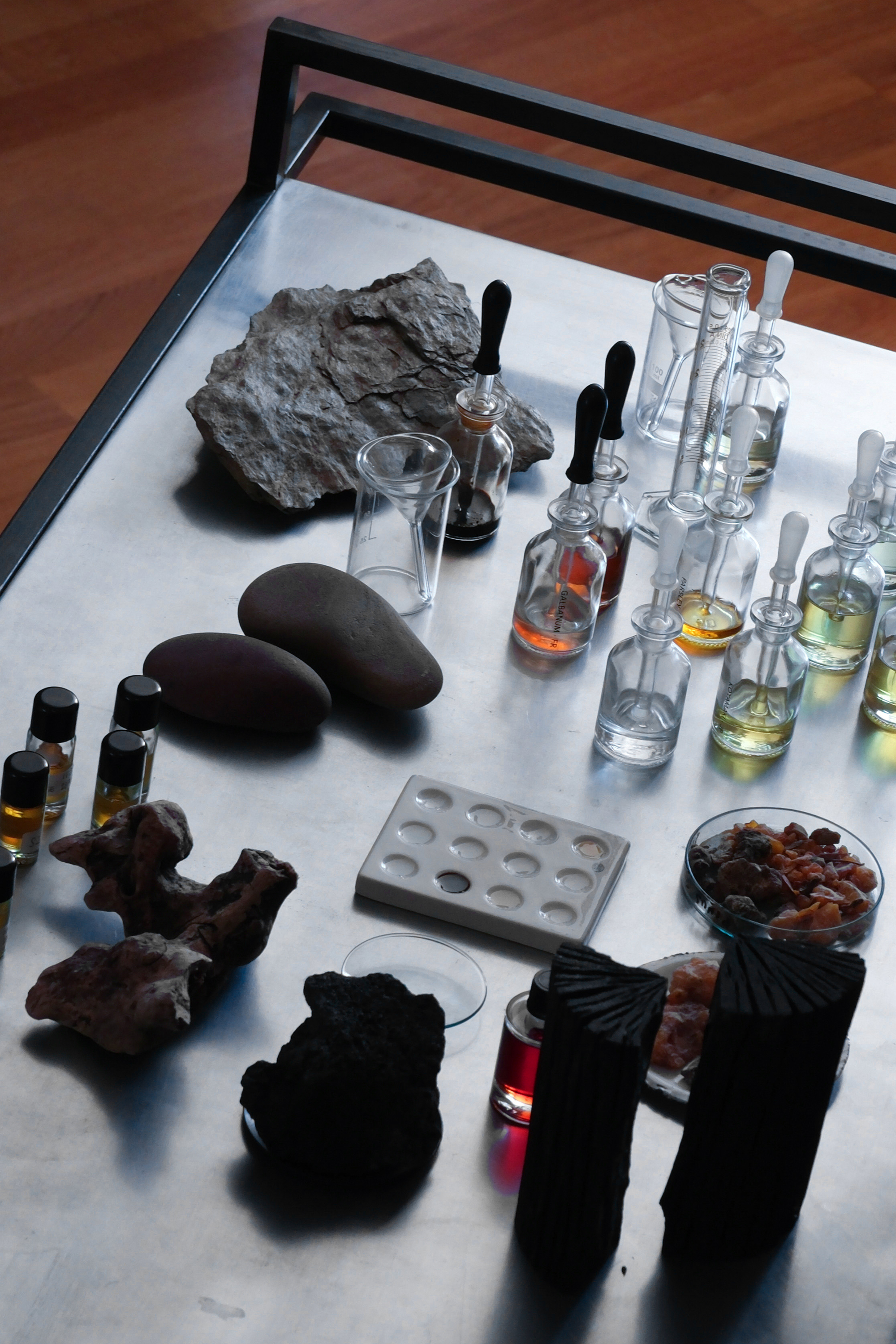
In terms of material selection, AOIRO works exclusively with botanical essences. These materials are sourced from small-scale growers and distillers around the world, with relationships built through ongoing visits during their travels. “When you encounter truly high-quality natural essences, they are no longer just a ‘scent,’ but a complete form of energy—originating from the life of the plant, and from something greater beyond it. When an essence carries such beautiful and complex layers, it immediately creates a sense of nourishment.” It is this experience that has led AOIRO to consistently choose botanical essences as their creative medium.
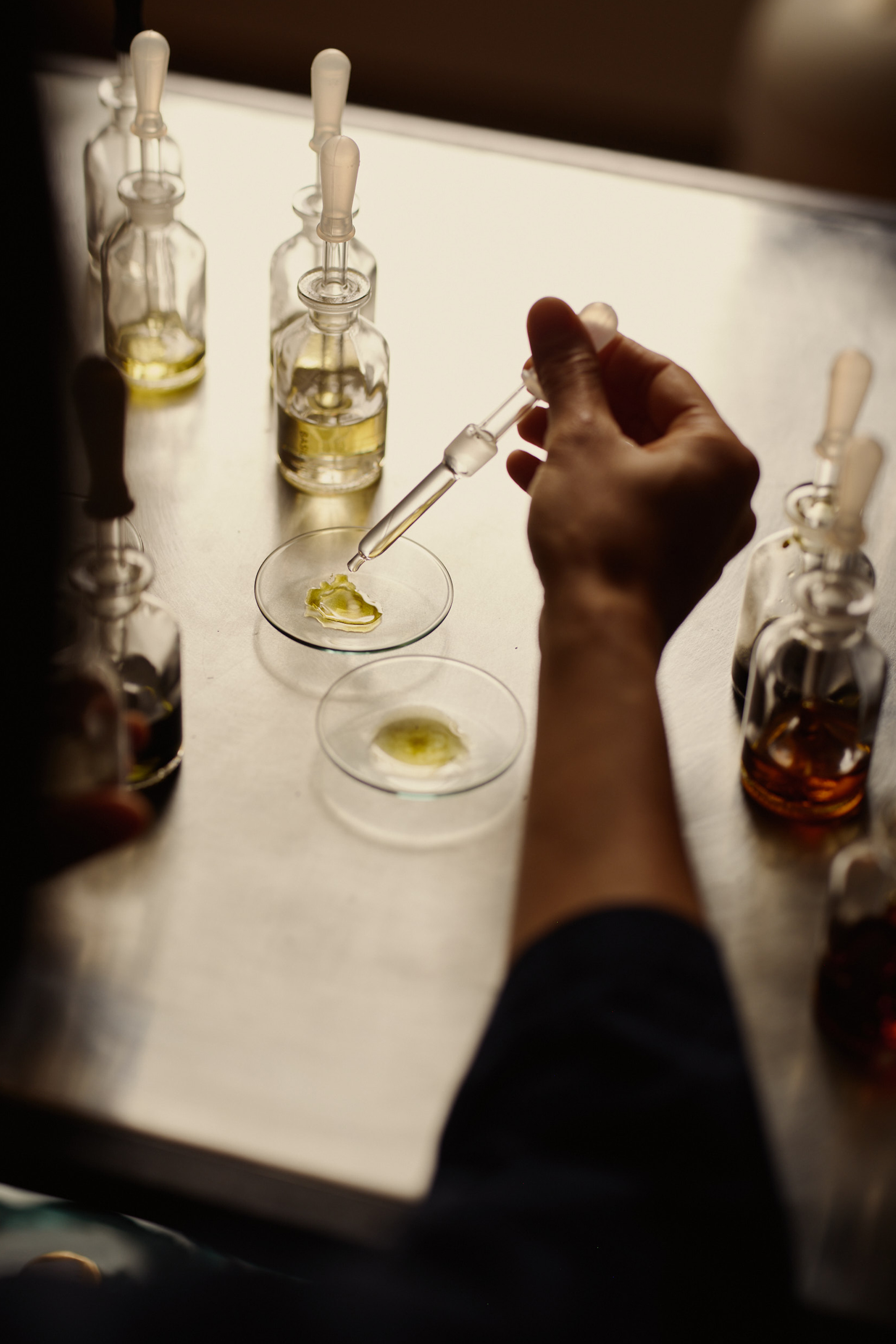

Precisely because everything in nature is transient and constantly in flux, they seek to bring this attitude into their creative process. Through walking and observing, they notice sensations they may not have previously been aware of, collecting and archiving these fragments over time. Eventually, at a certain moment, these elements are recomposed into a unified and coherent concept. Even when creating a scent, they prefer its presence to remain restrained and understated—something that can be rediscovered again and again.
In their design process, AOIRO deliberately avoids the conventional fragrance structure of top, middle, and base notes. Instead, they hope scent can be experienced as a “momentary whole,” allowing olfactory perception to move beyond individual ingredients and connect with a broader sensory impression. They are more interested in imagining how scent moves through a space, and what kinds of feelings are evoked when people encounter it. Scent does not need to be understood all at once; it can unfold gradually through repeated experience.
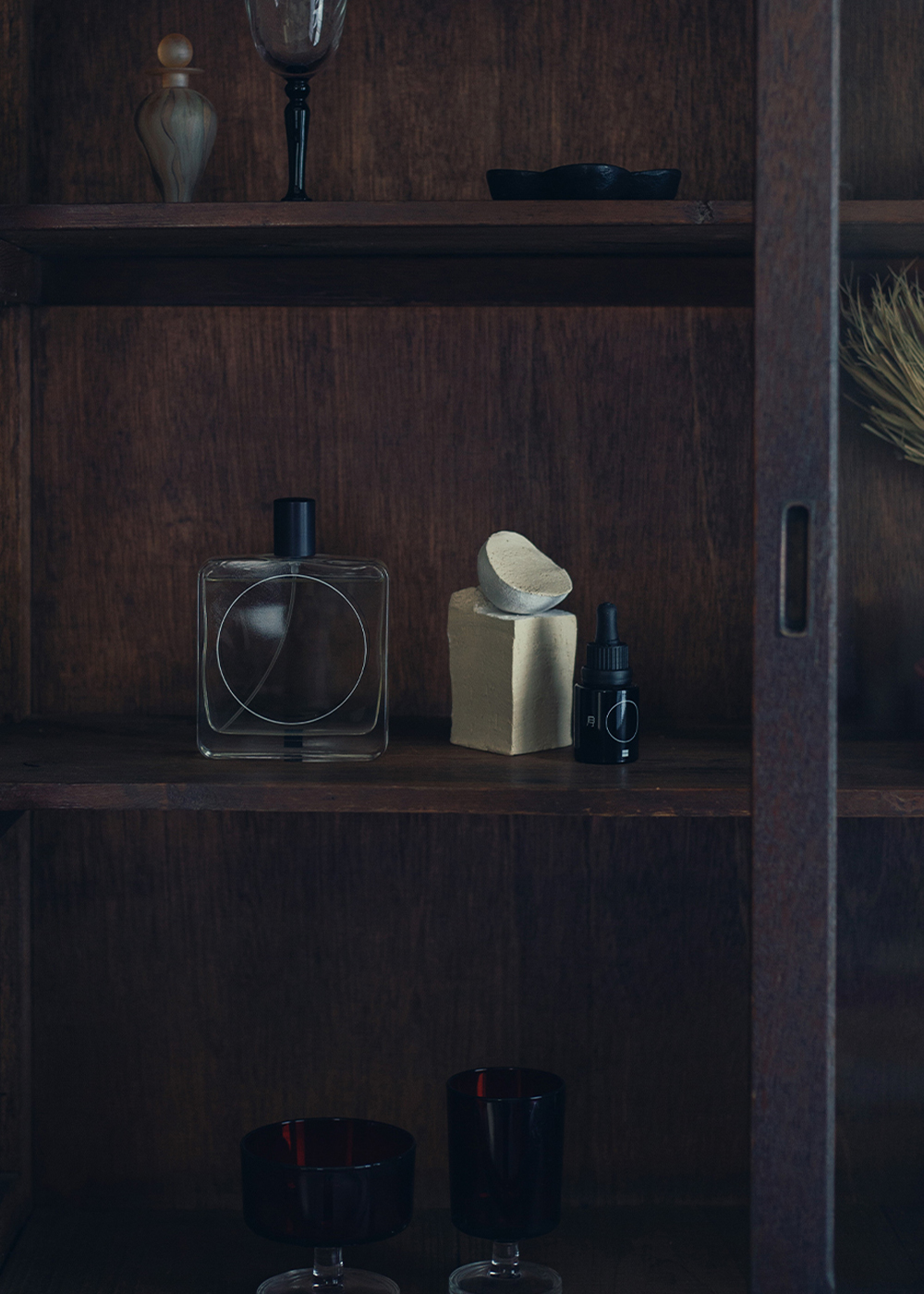
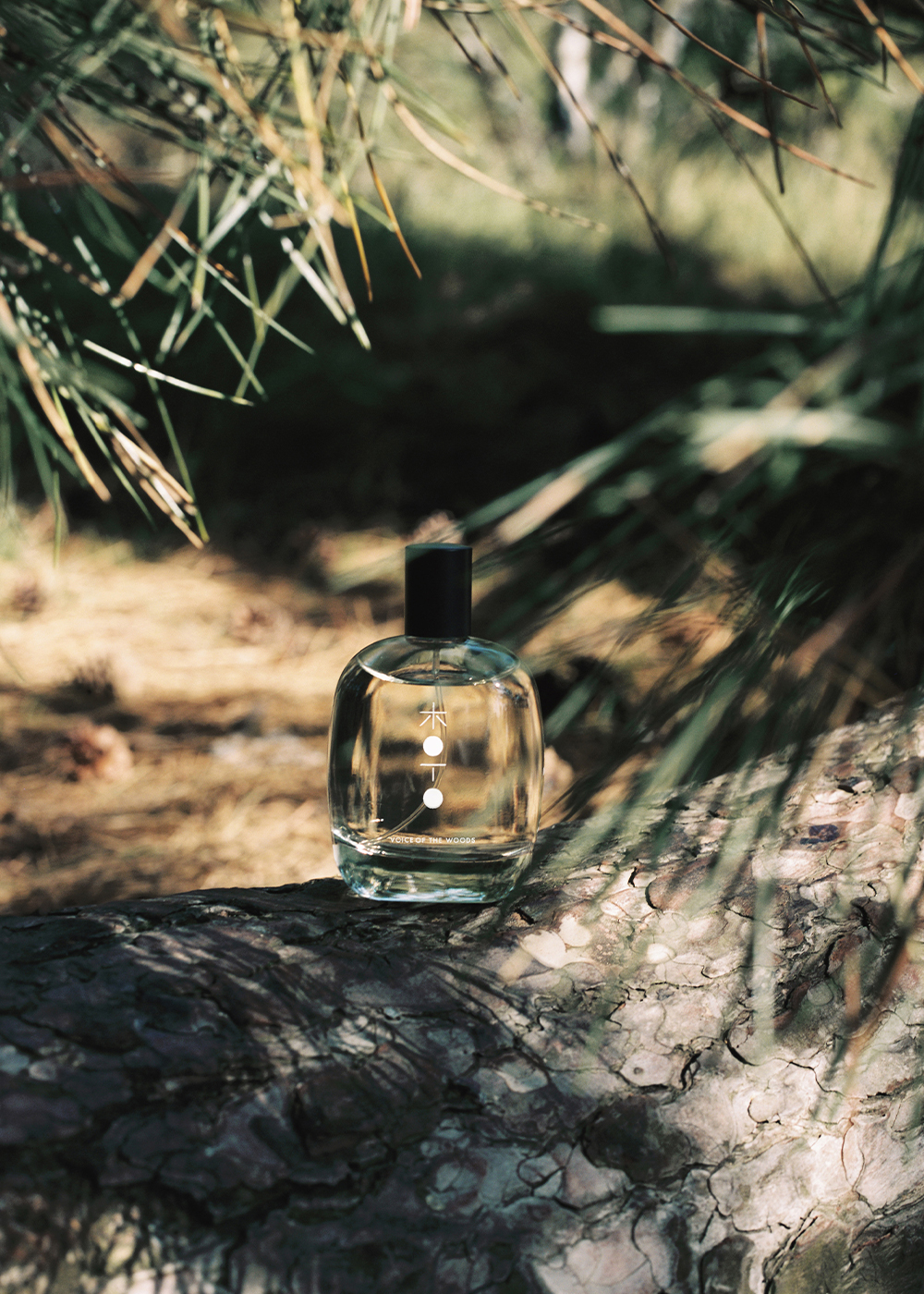
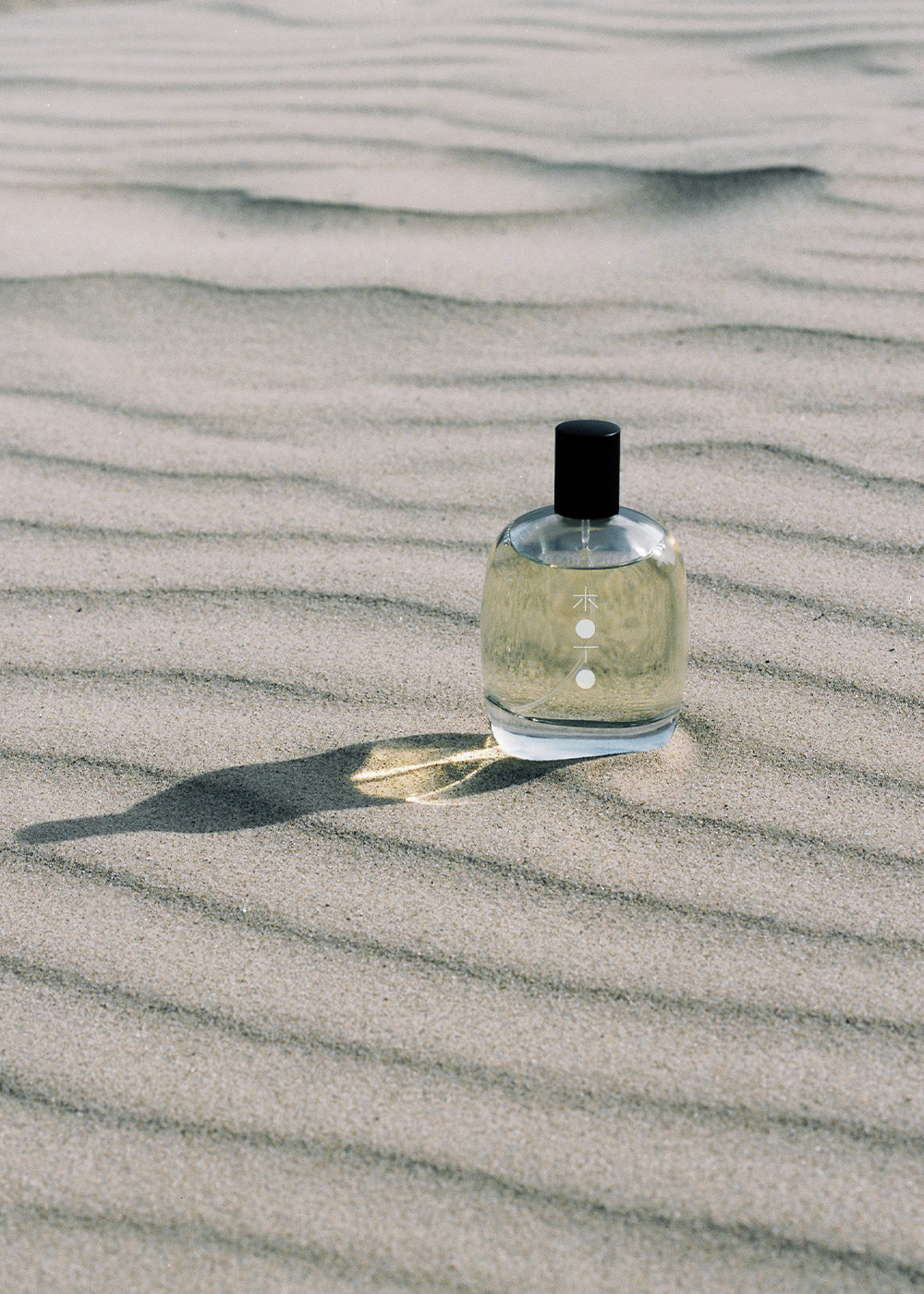
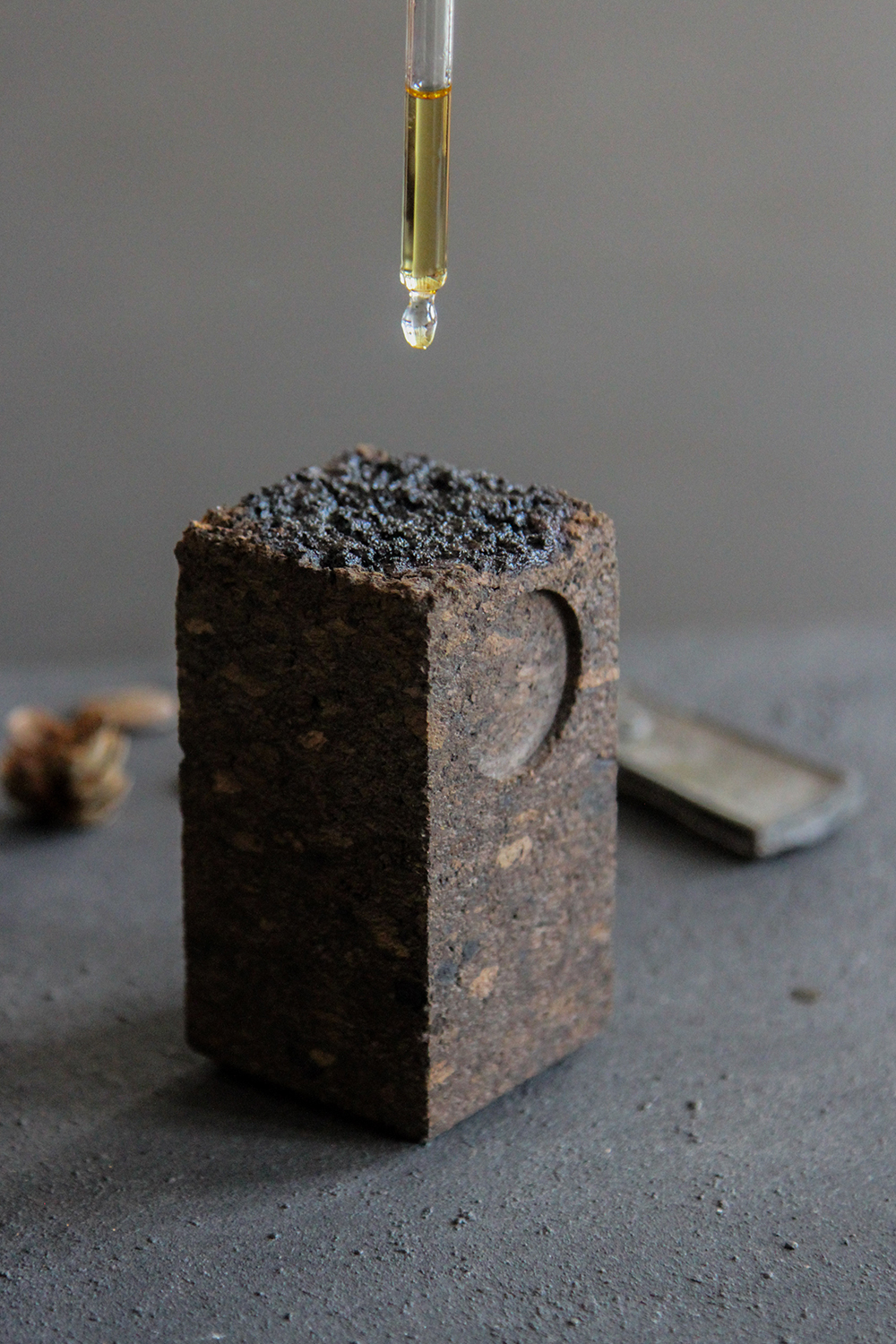
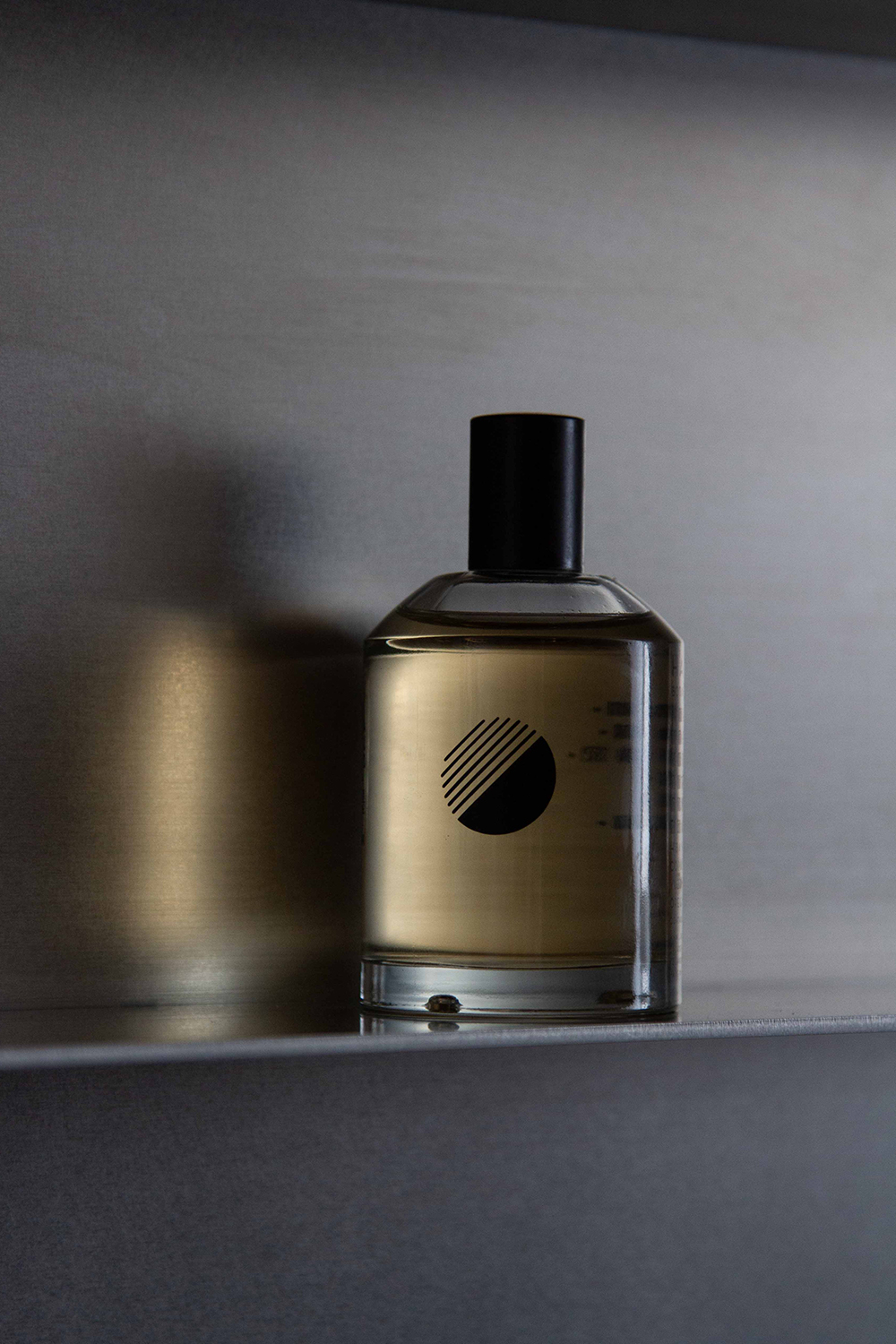
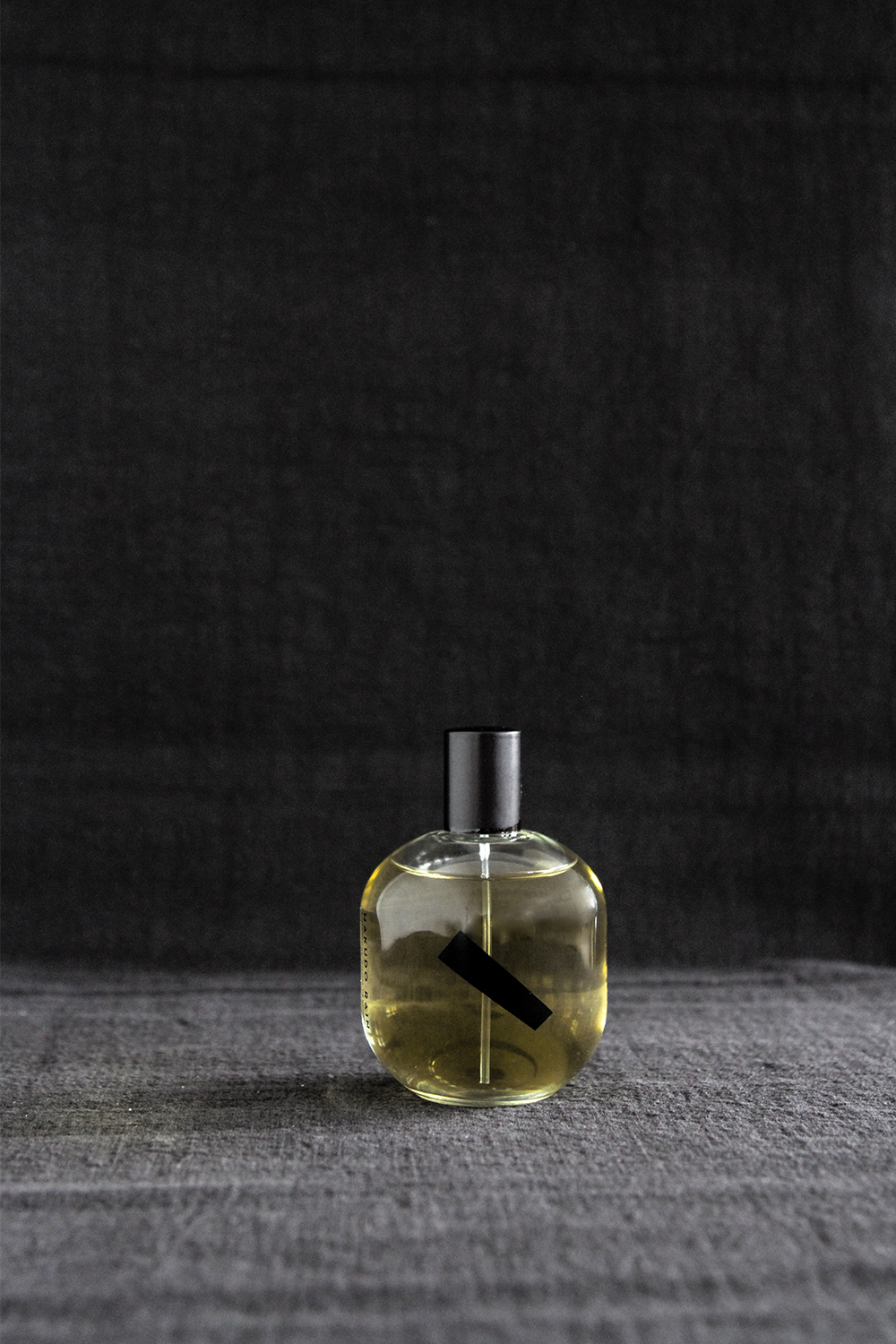
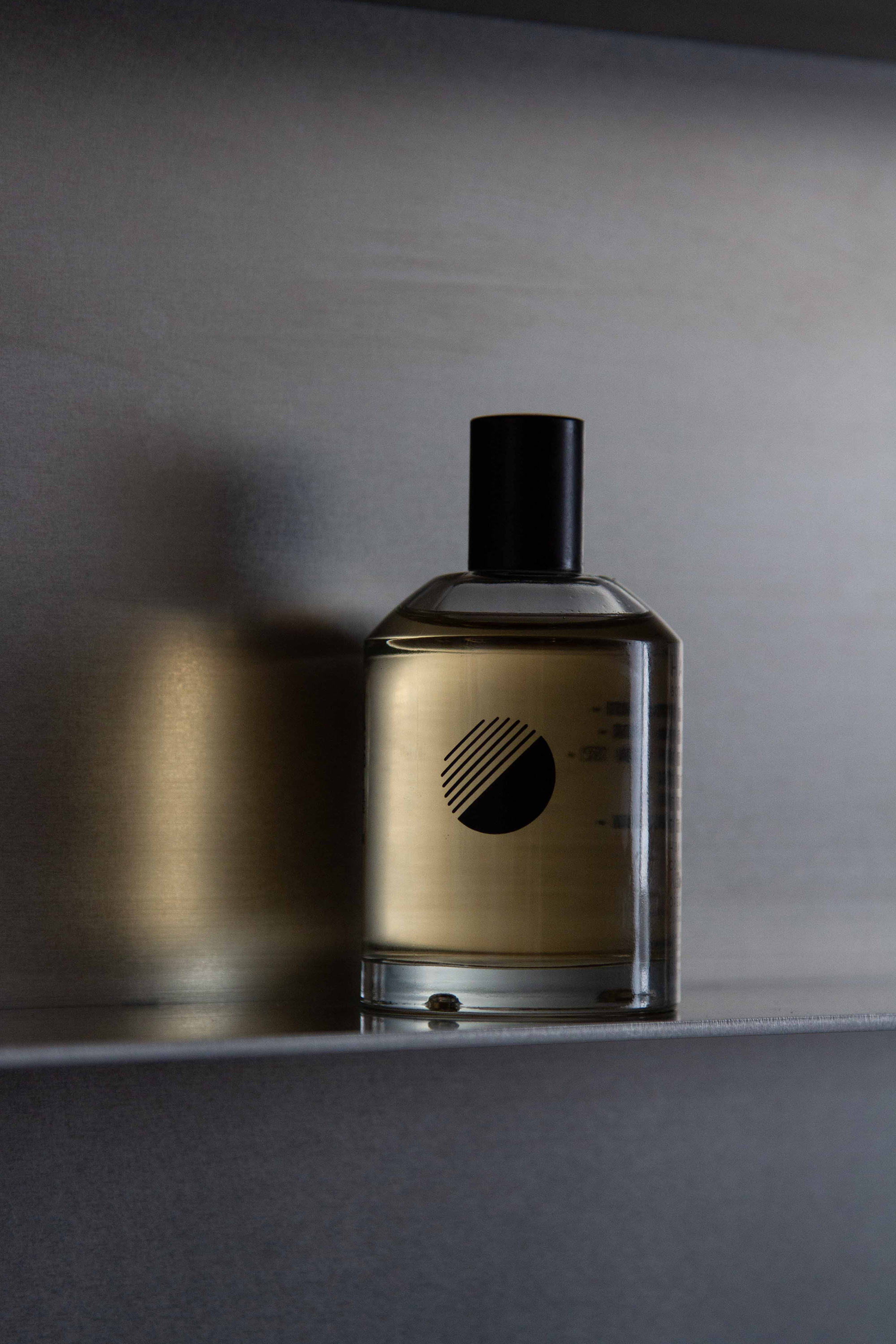
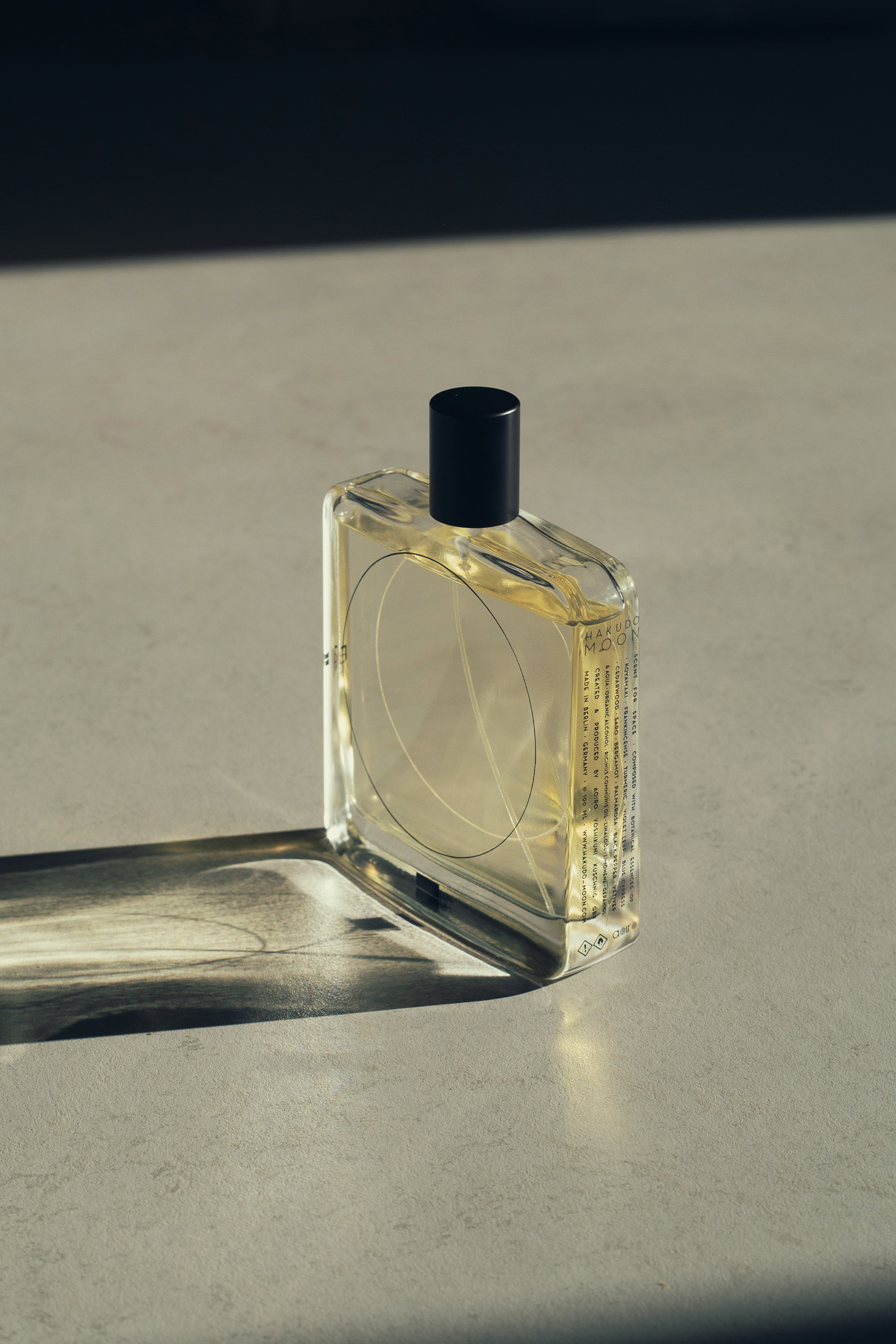
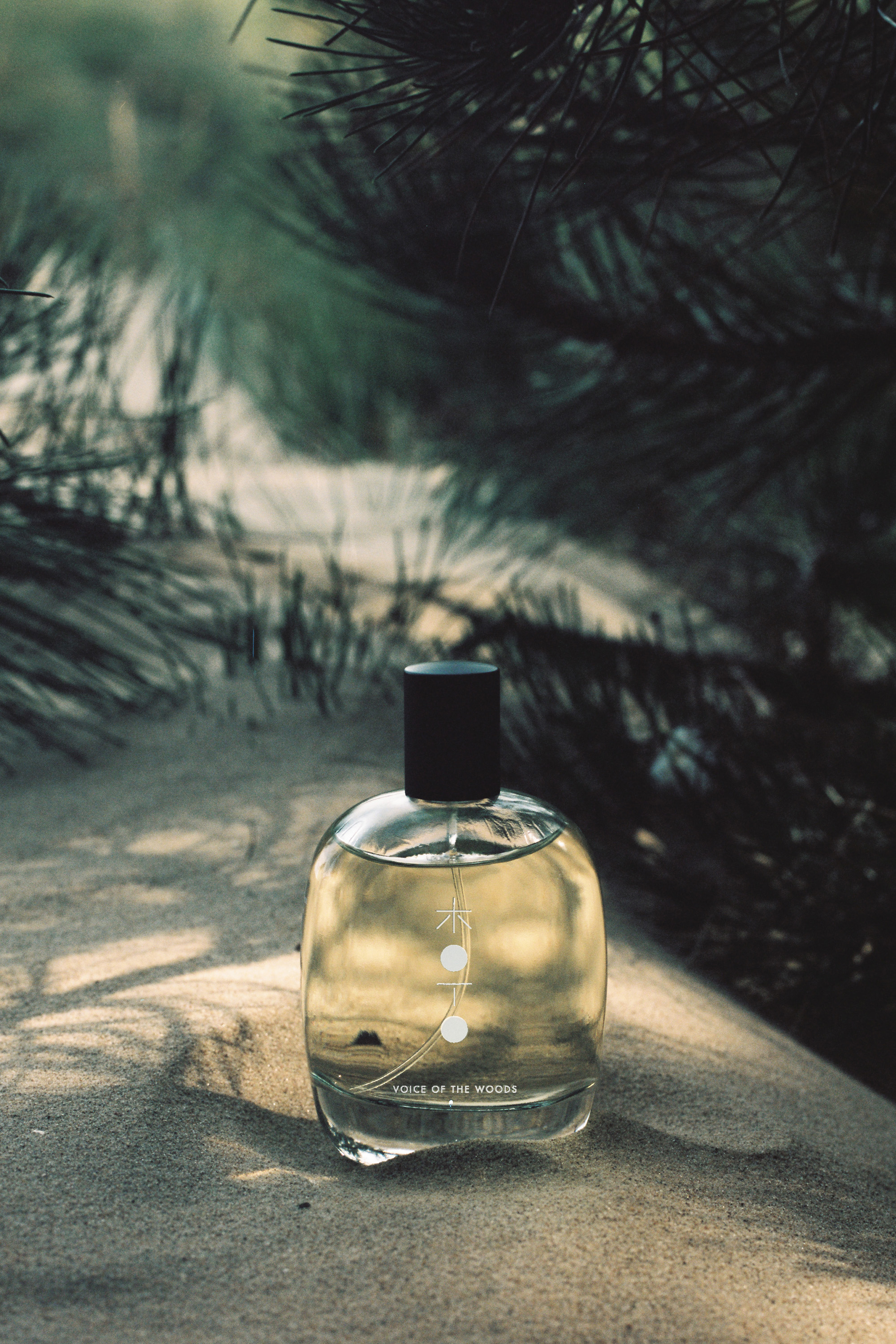
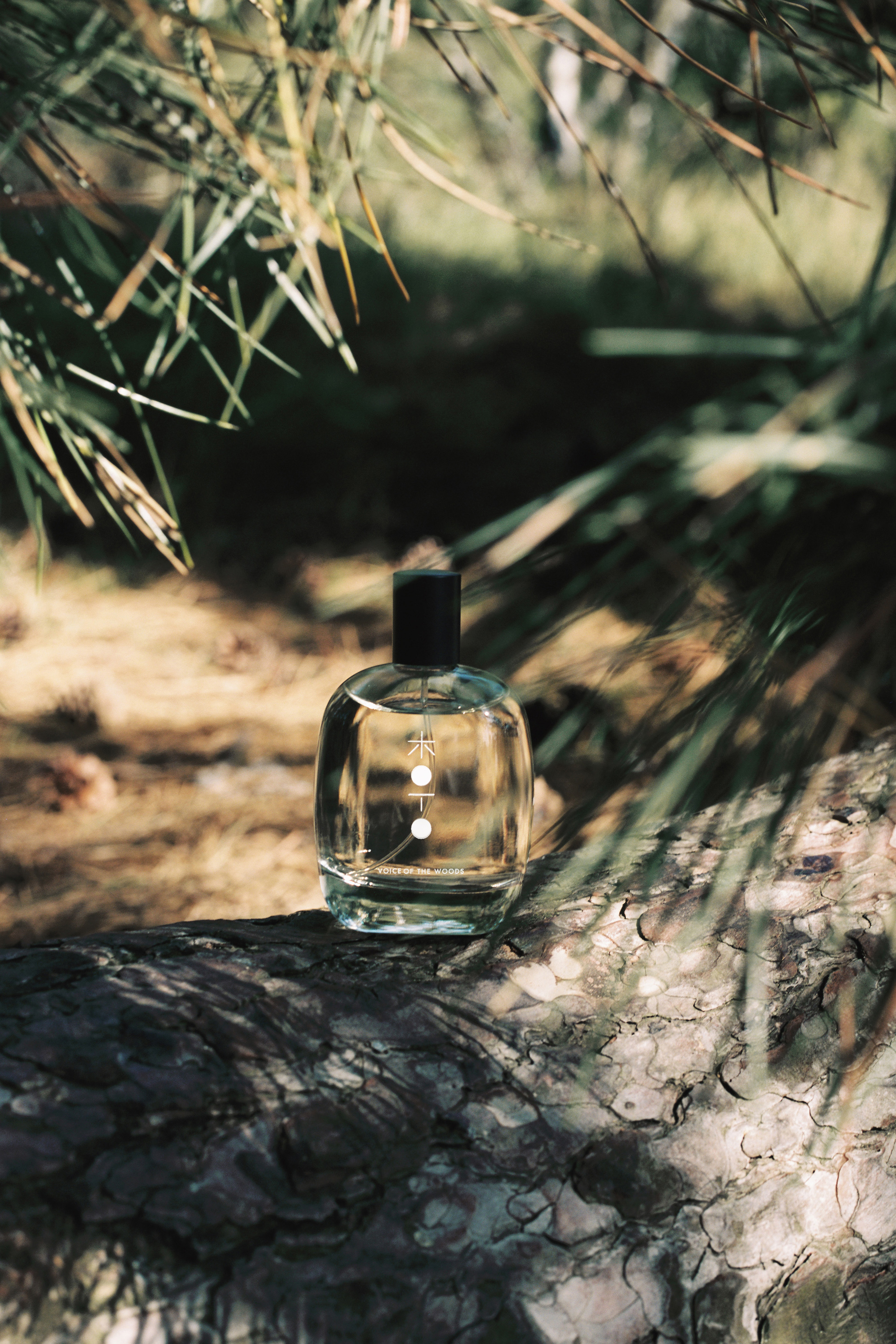
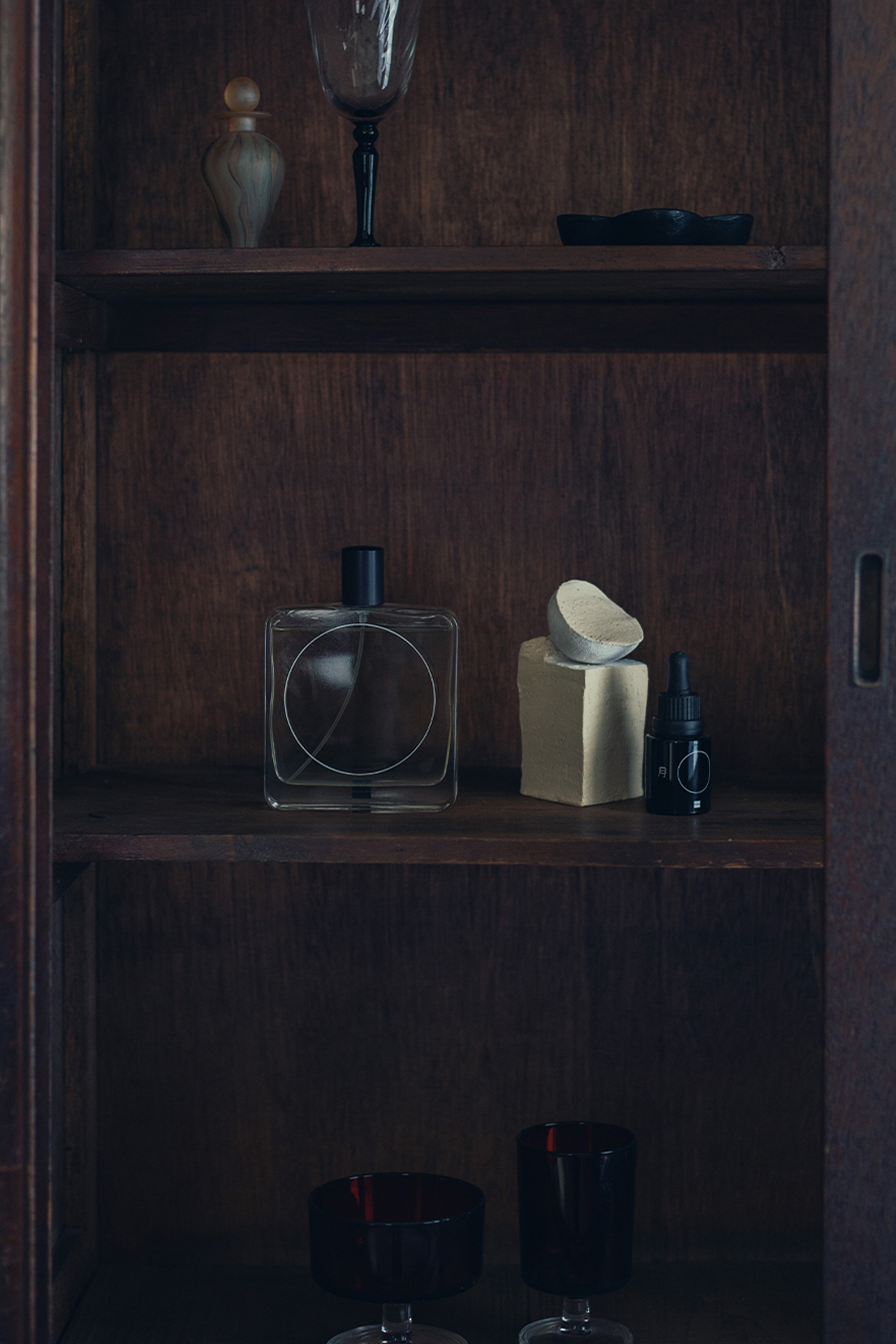
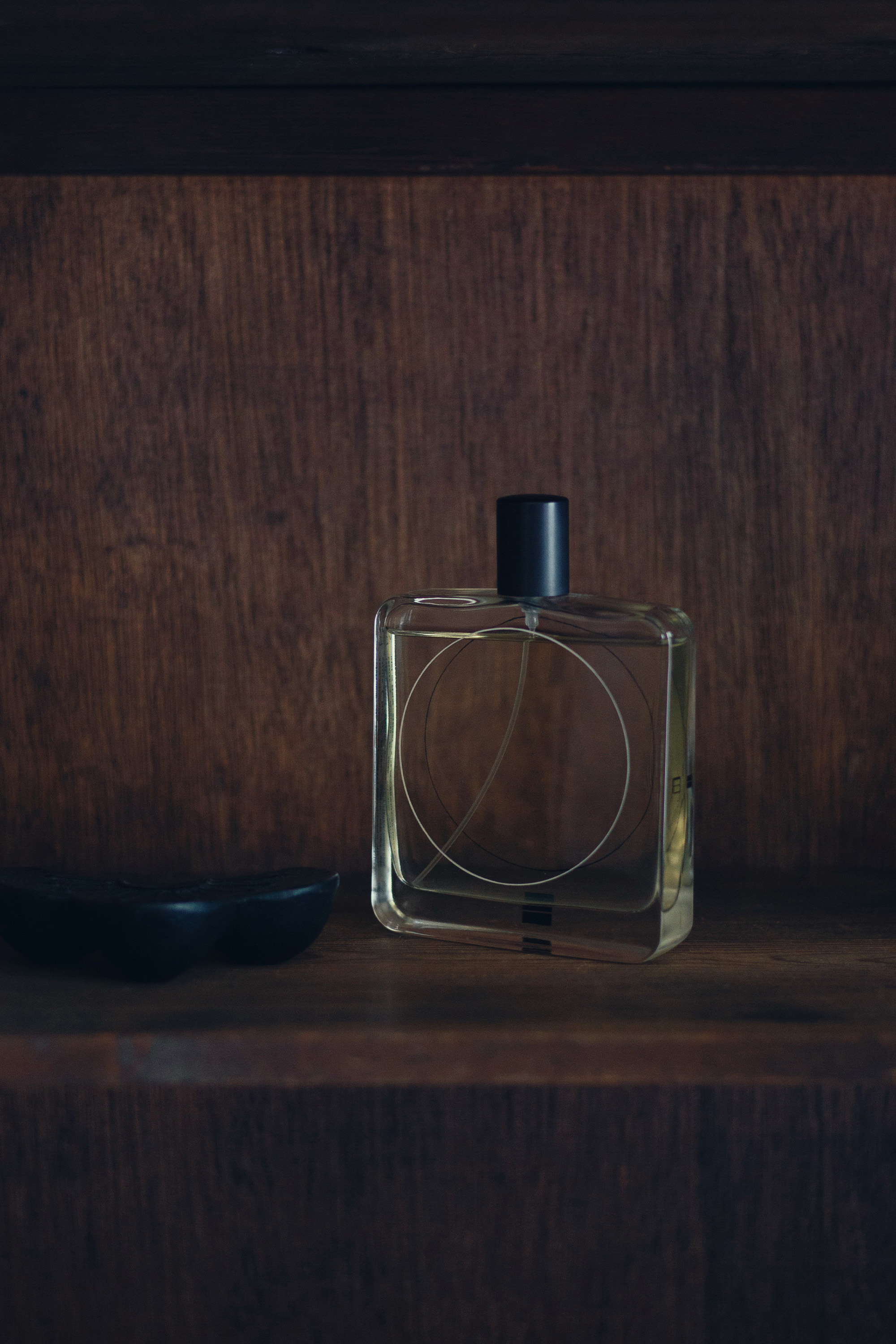
This understanding of materials and olfactory states naturally extends into their collaborative work. In collaboration with House of Grey, AOIRO co-developed KOTO—a botanical scent mist that uses air as its medium. Rather than being viewed as a product, KOTO can be understood as an olfactory state placed within everyday life: one that purifies the air while helping the body return to a sense of stability and balance. Composed of ancient woody notes and botanical essences, its presence is subtle and restrained, accompanying the rhythms of daily life as it is gradually perceived. It does not seek to create a fixed olfactory memory, but allows scent to occur naturally within a space—like air itself.
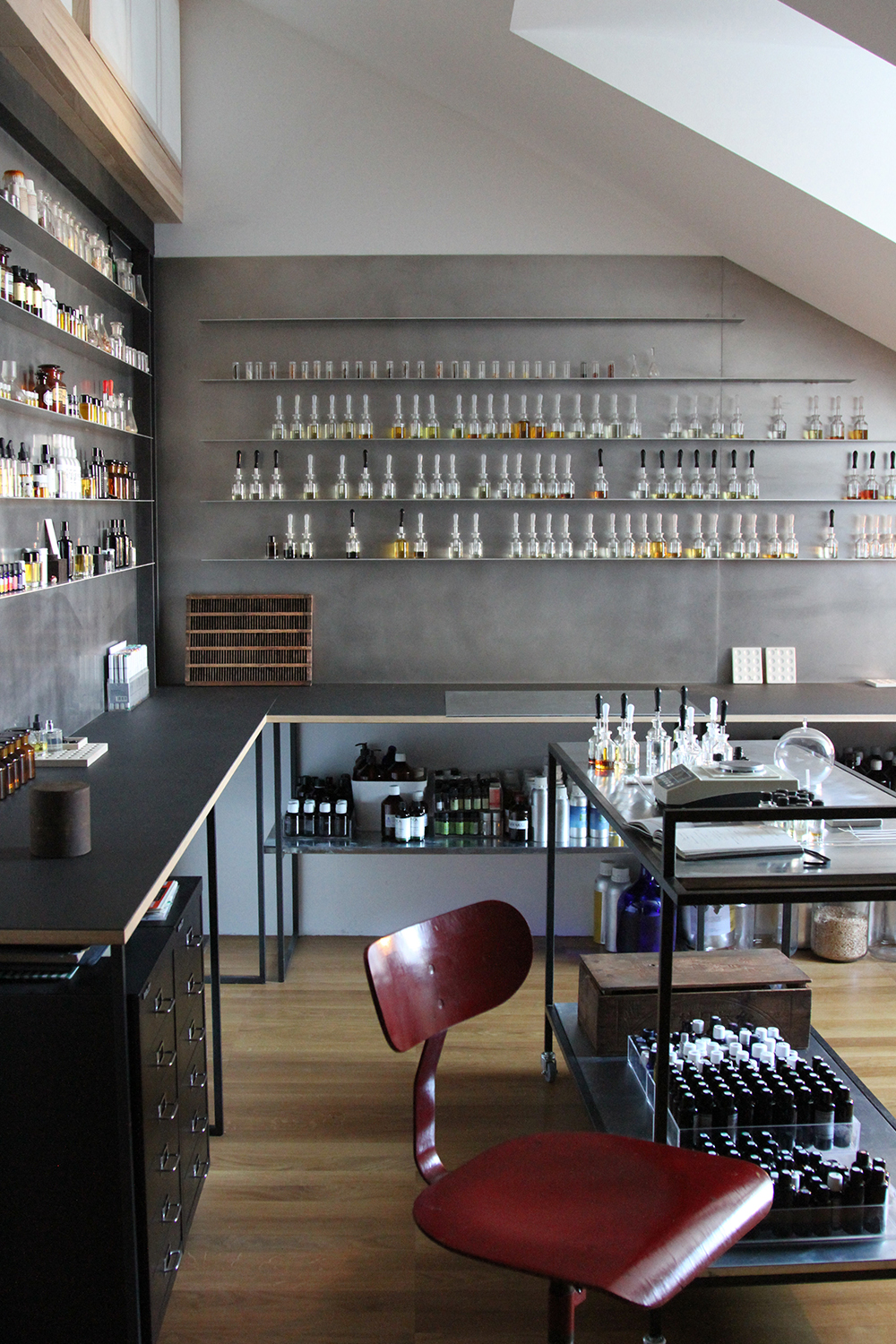
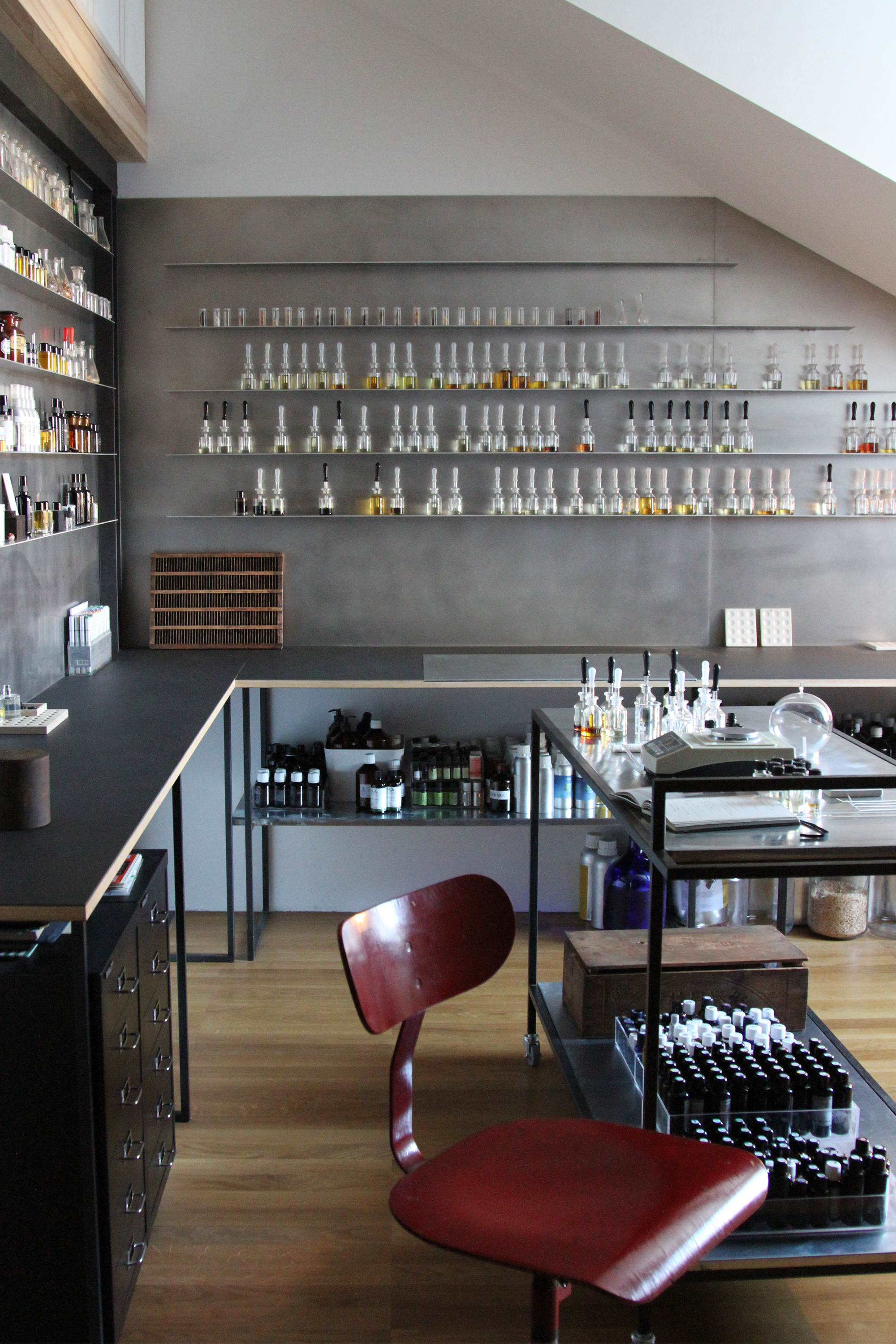
AOIRO’s space in Berlin is more than a place of work; it is an integral part of their olfactive design methodology. The space is clearly articulated into two distinct states: one dedicated to creation, experimentation, and formula development, characterized by a restrained and neutral atmosphere that allows attention to remain focused on the careful adjustment and calibration of scent.
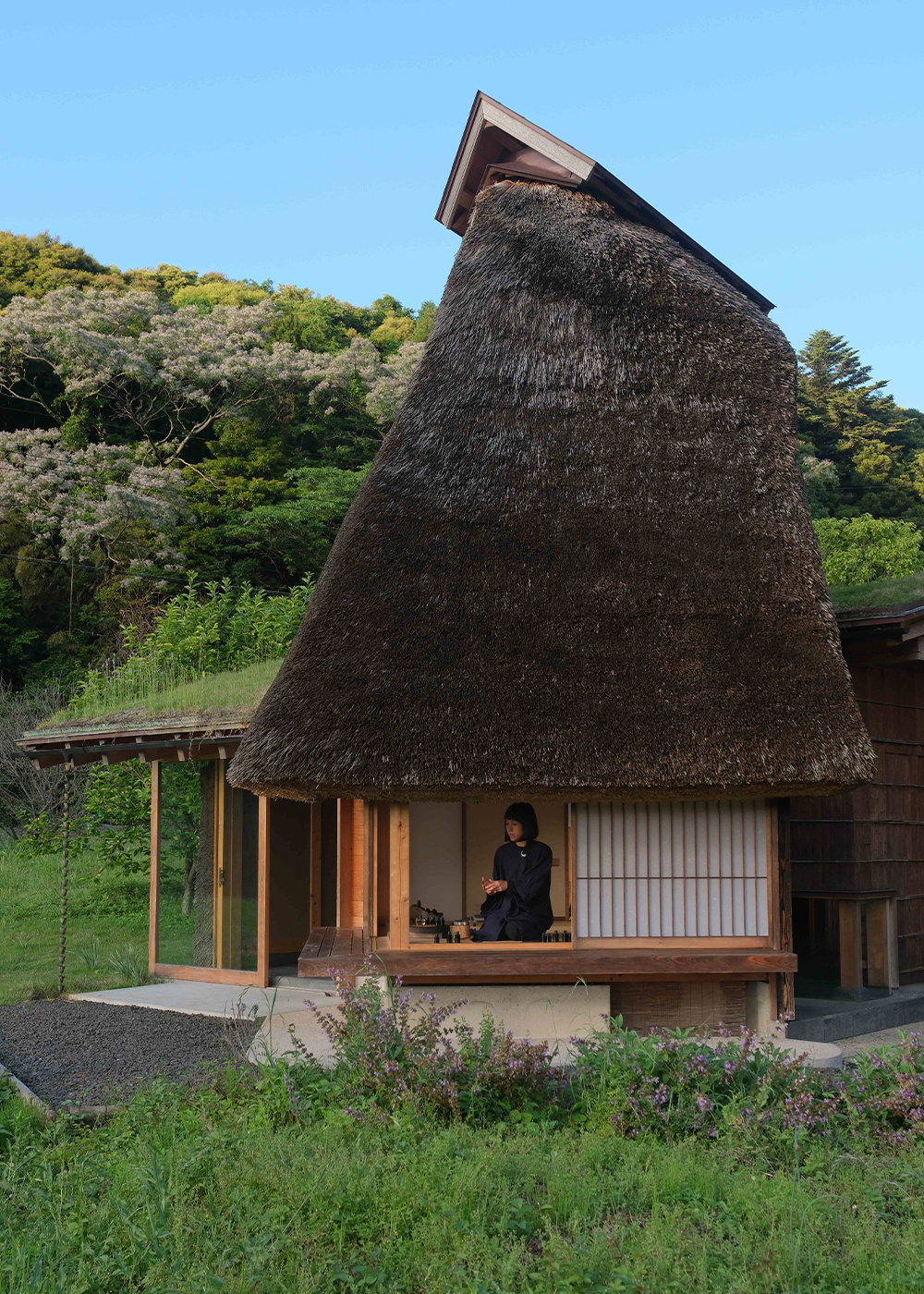
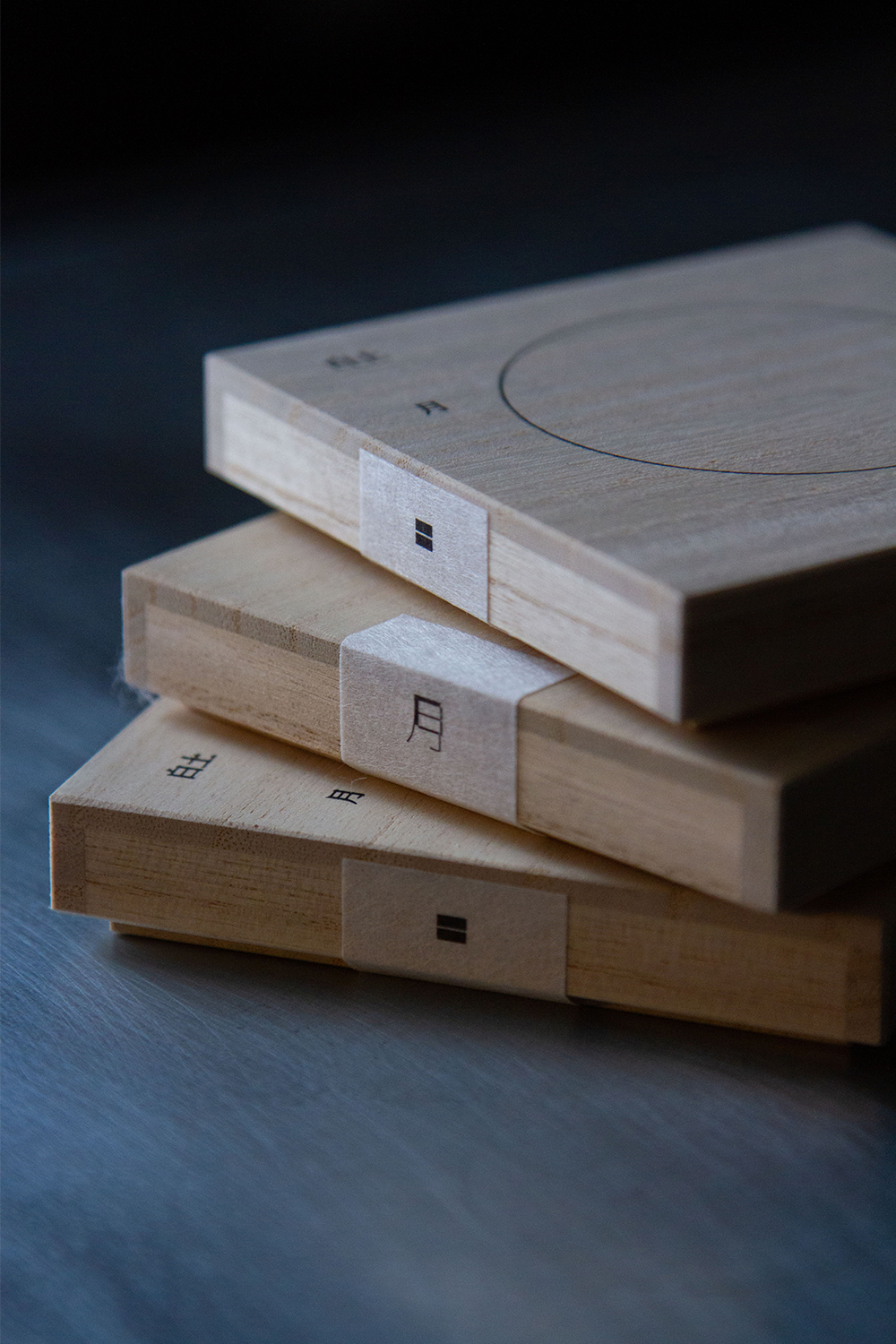
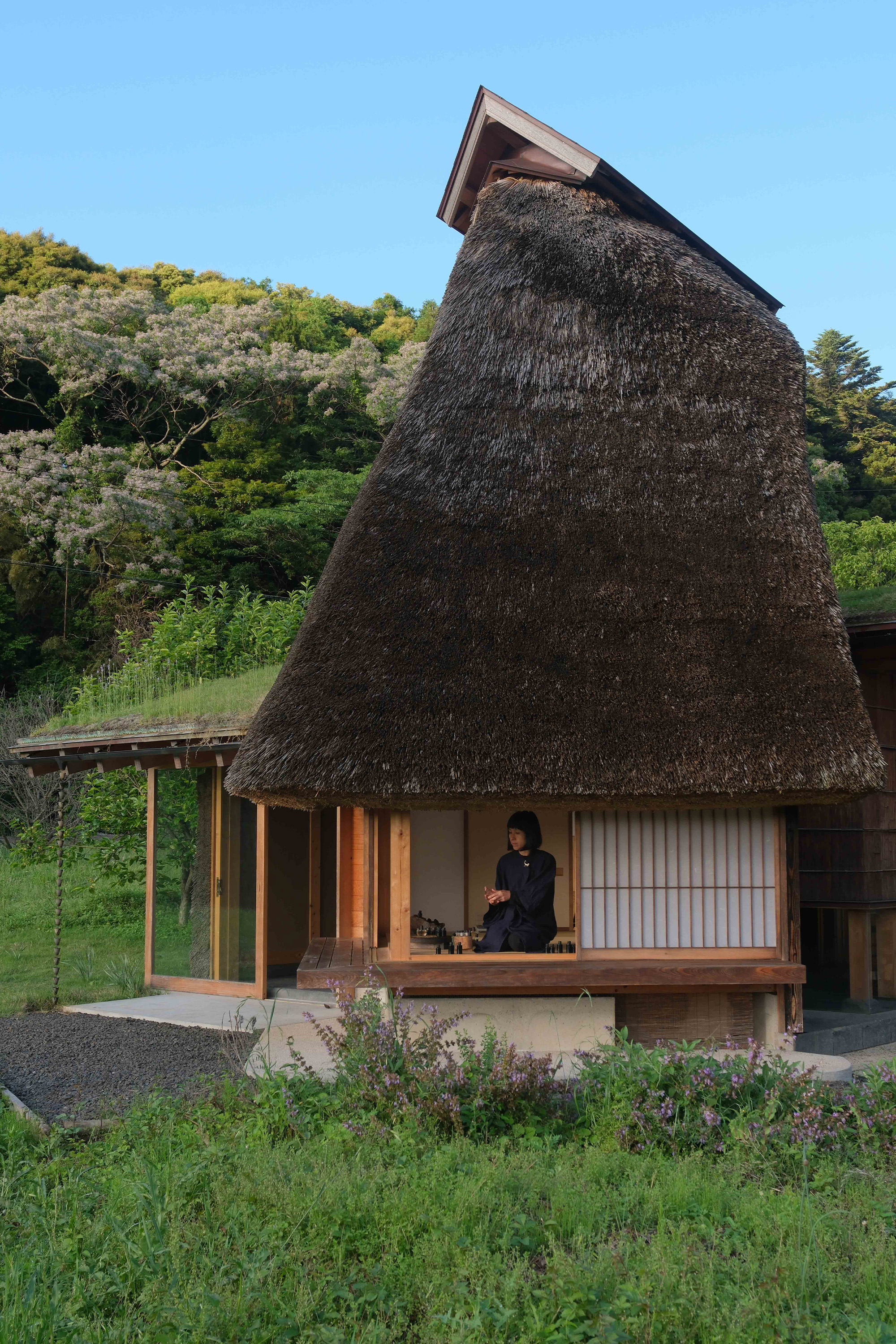
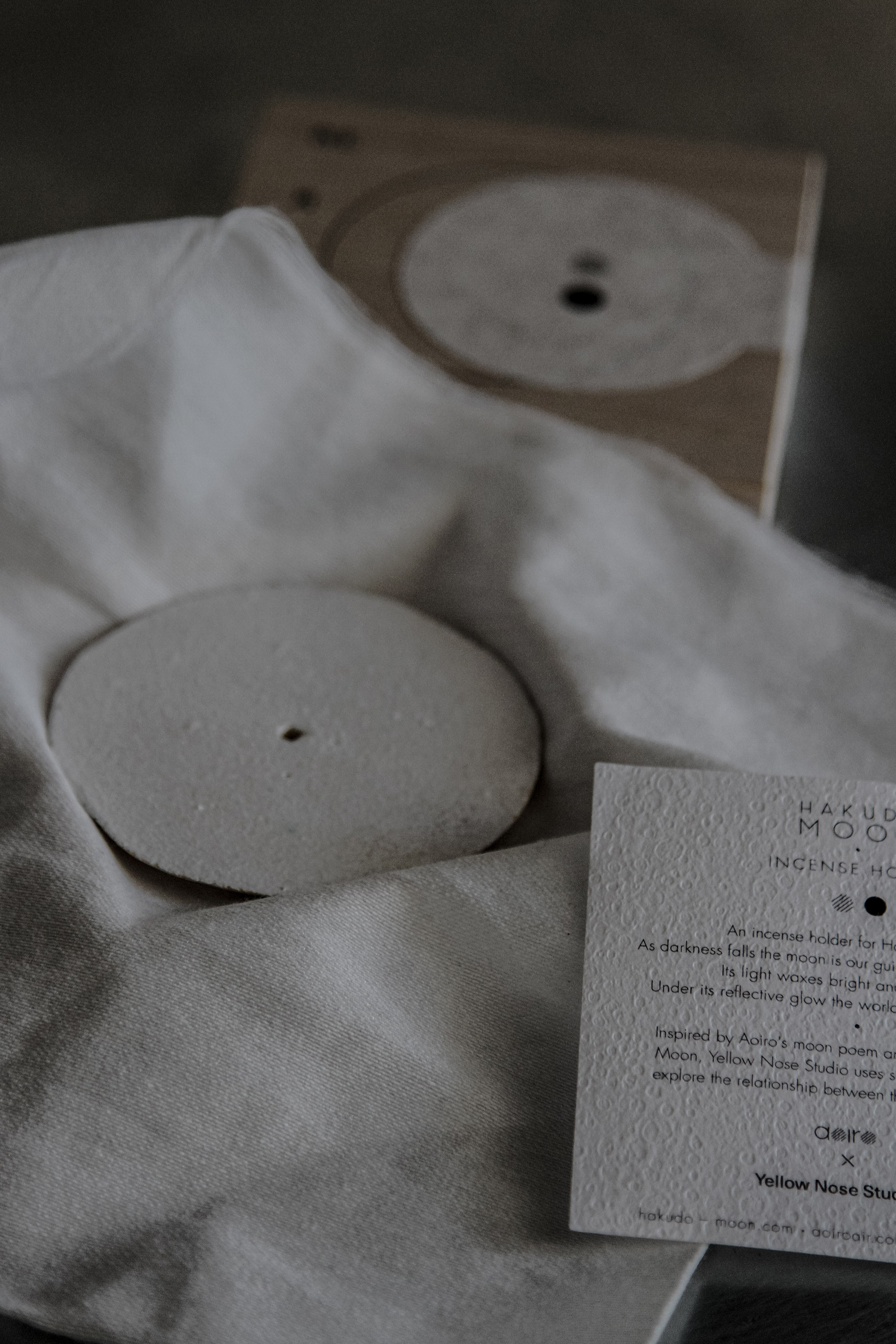
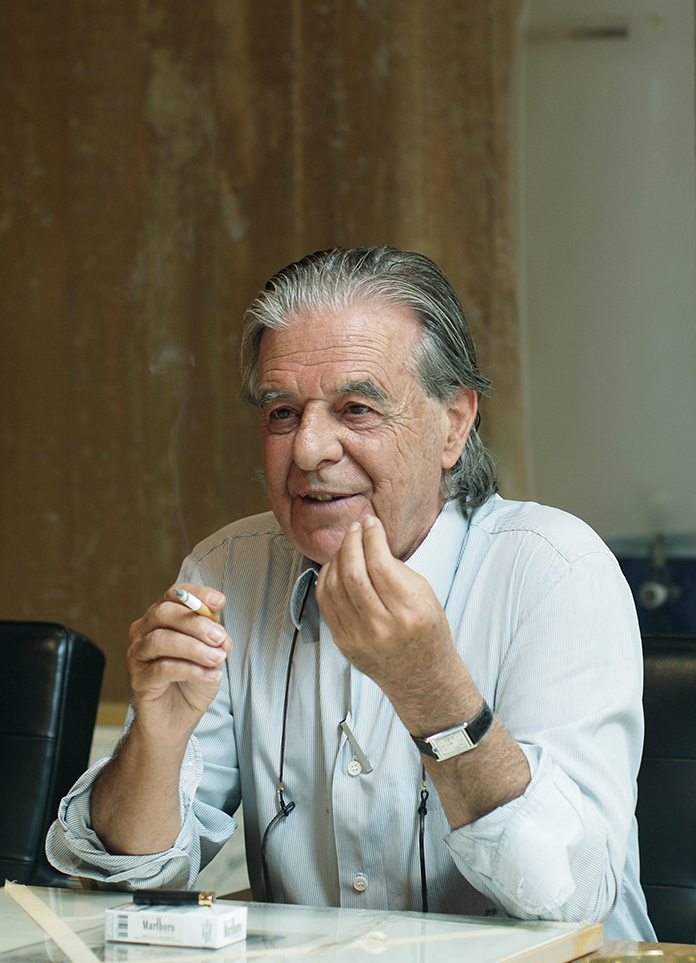
The other is a space devoted to olfactory experience, known as the Moon Room. Designed in collaboration with Swiss architect Peter Märkli, the Moon Room draws on references from traditional Japanese architecture in both typology and materiality. As sliding doors slowly open, the body and gaze enter a quieter rhythm. Rather than seeking theatrical effect, the space relies on the control of scale, material, and light to gently slow perception.
AOIRO values those unexpected facets that resist immediate clarity, as they often hold the greatest appeal. Rather than expressions that are simplified into something direct and explicit, they are drawn to experiences that require time to be understood and gradually revealed. Here, scent does not rush to appear. The space itself has already laid the groundwork for sensory experience.
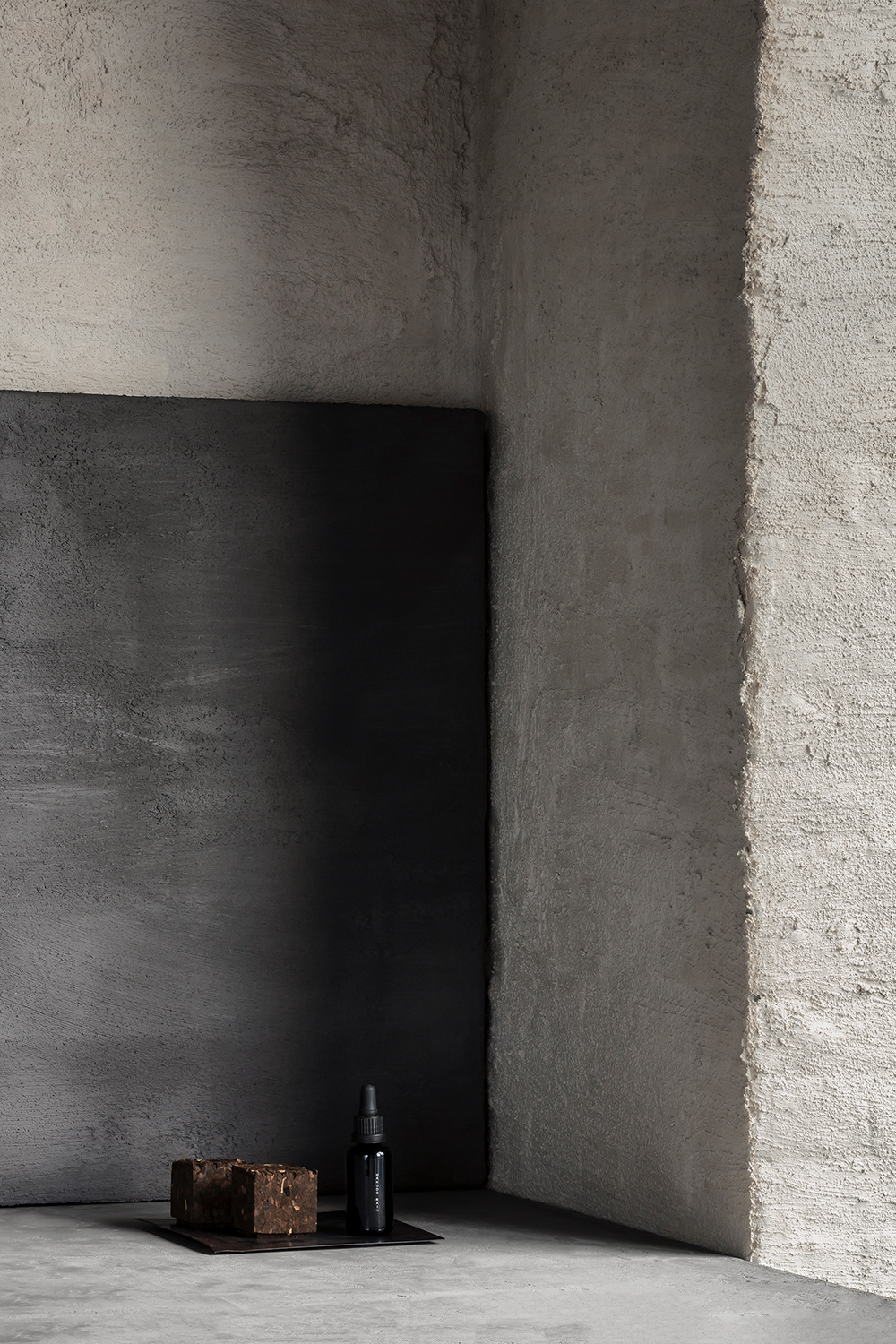
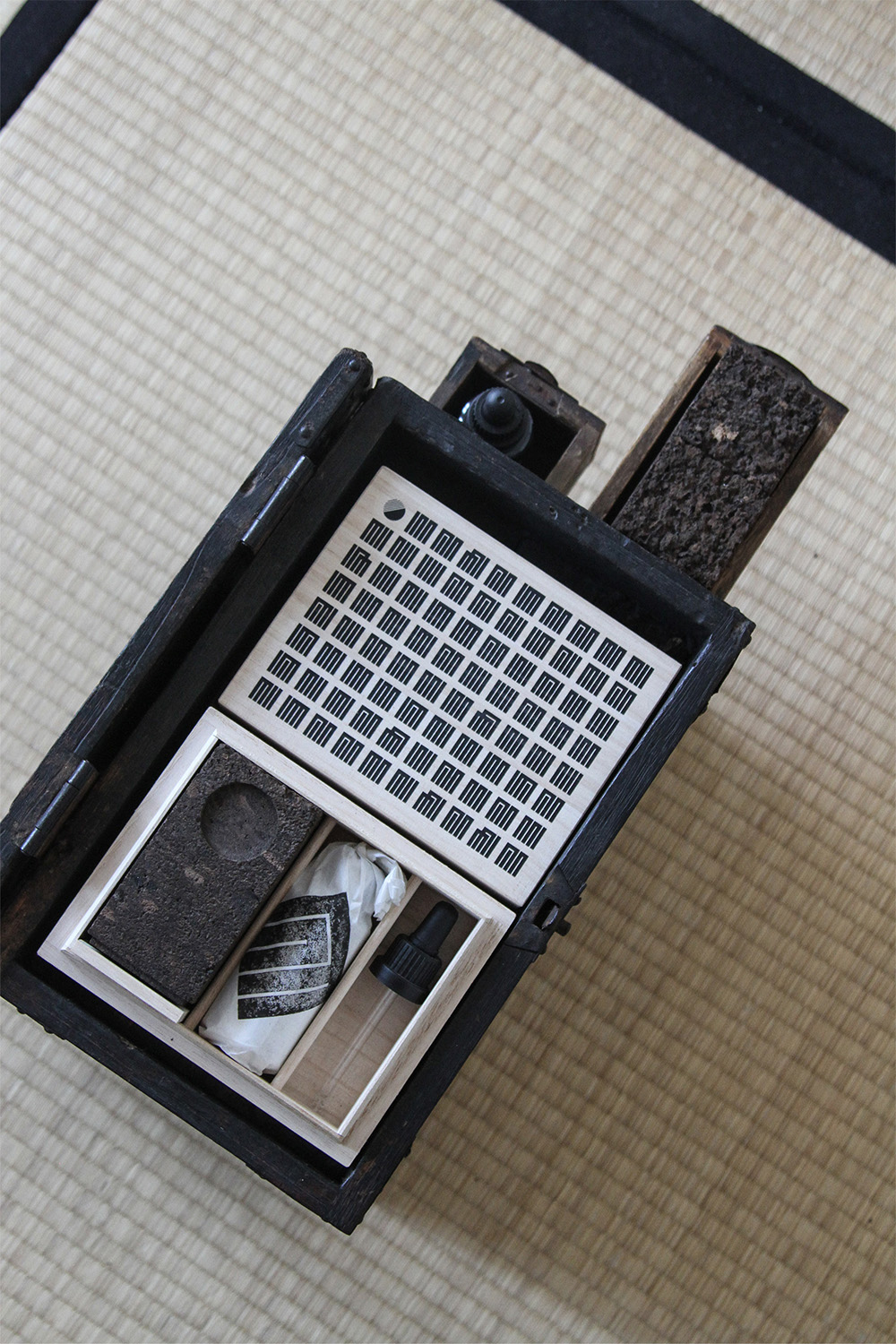
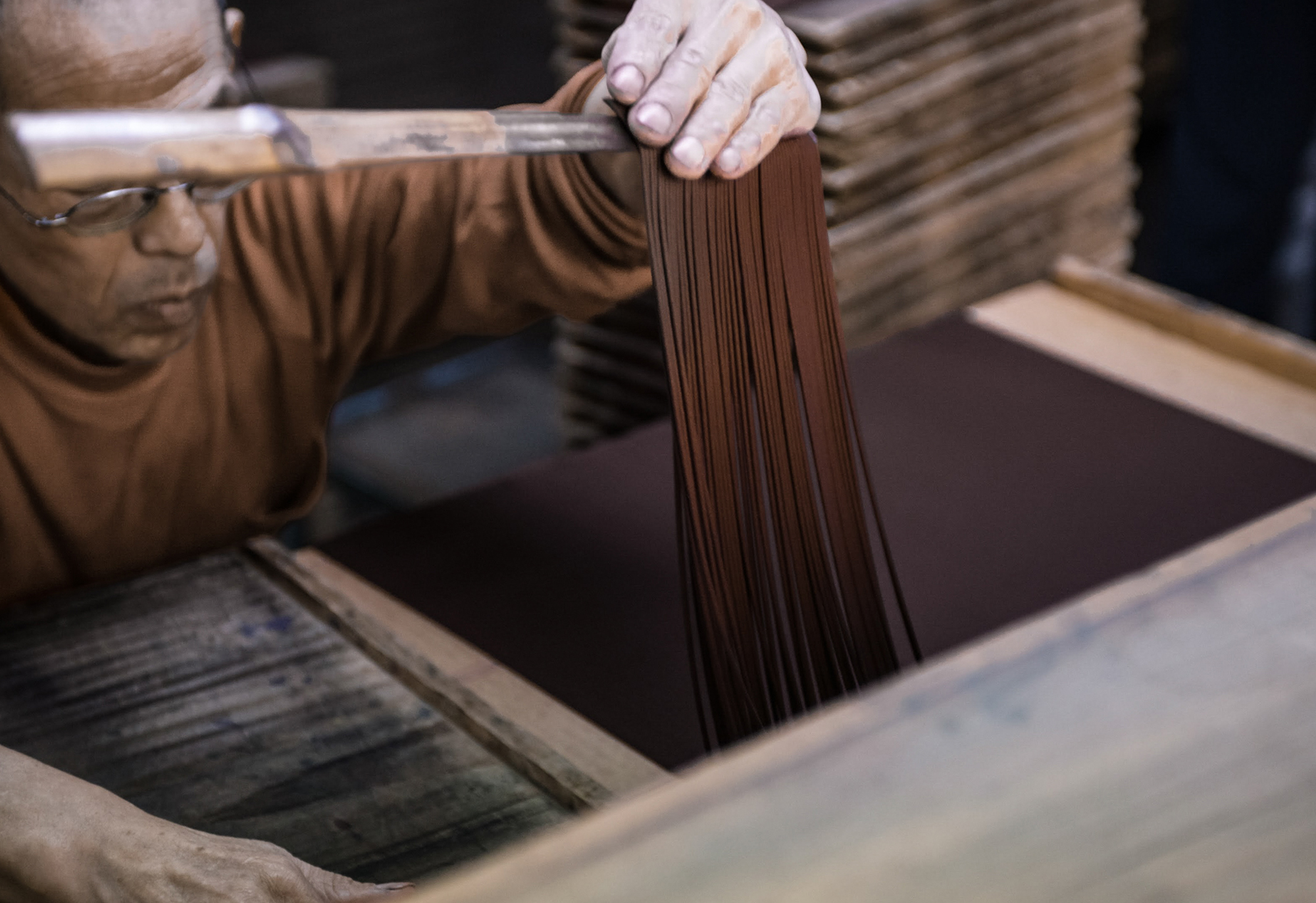
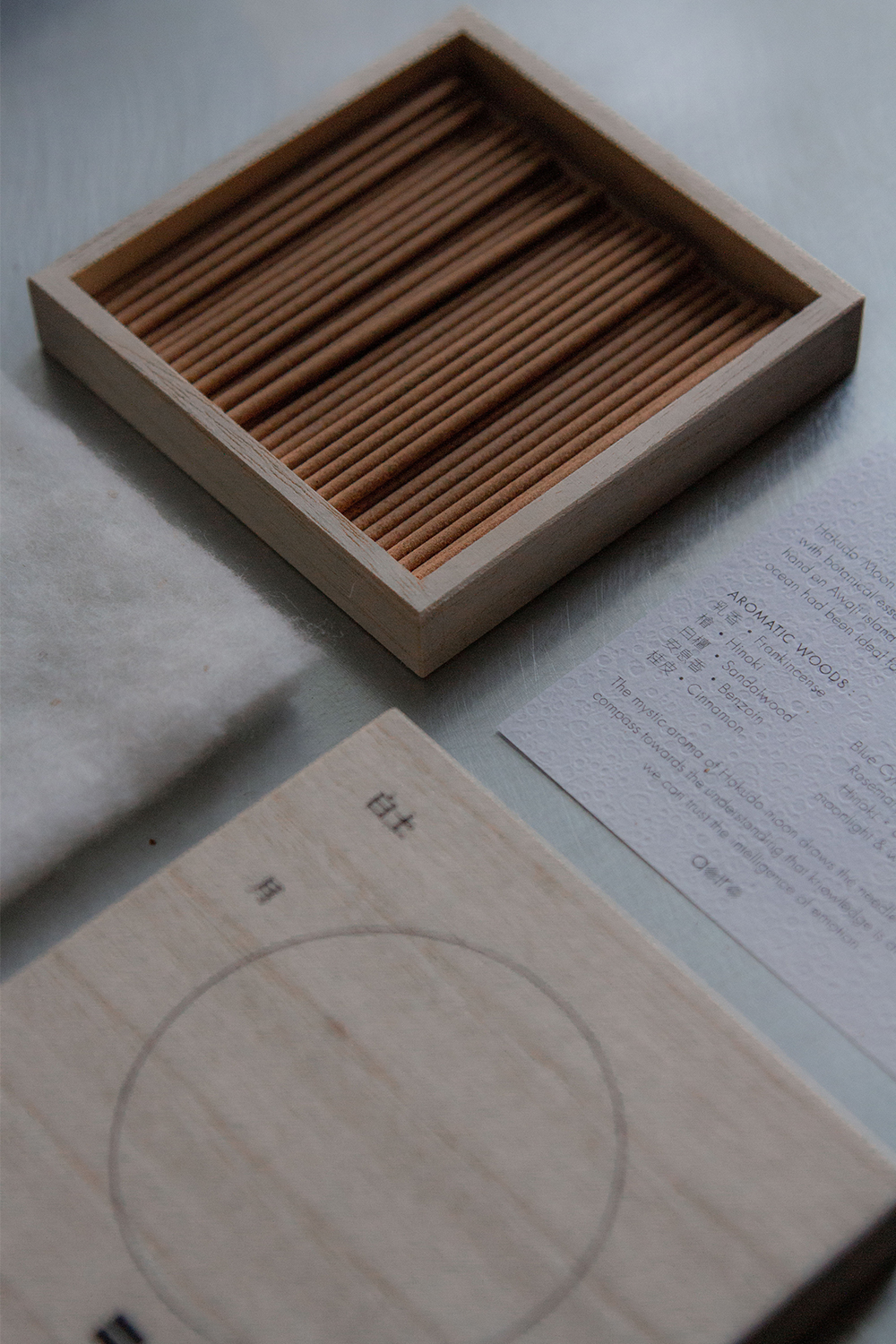
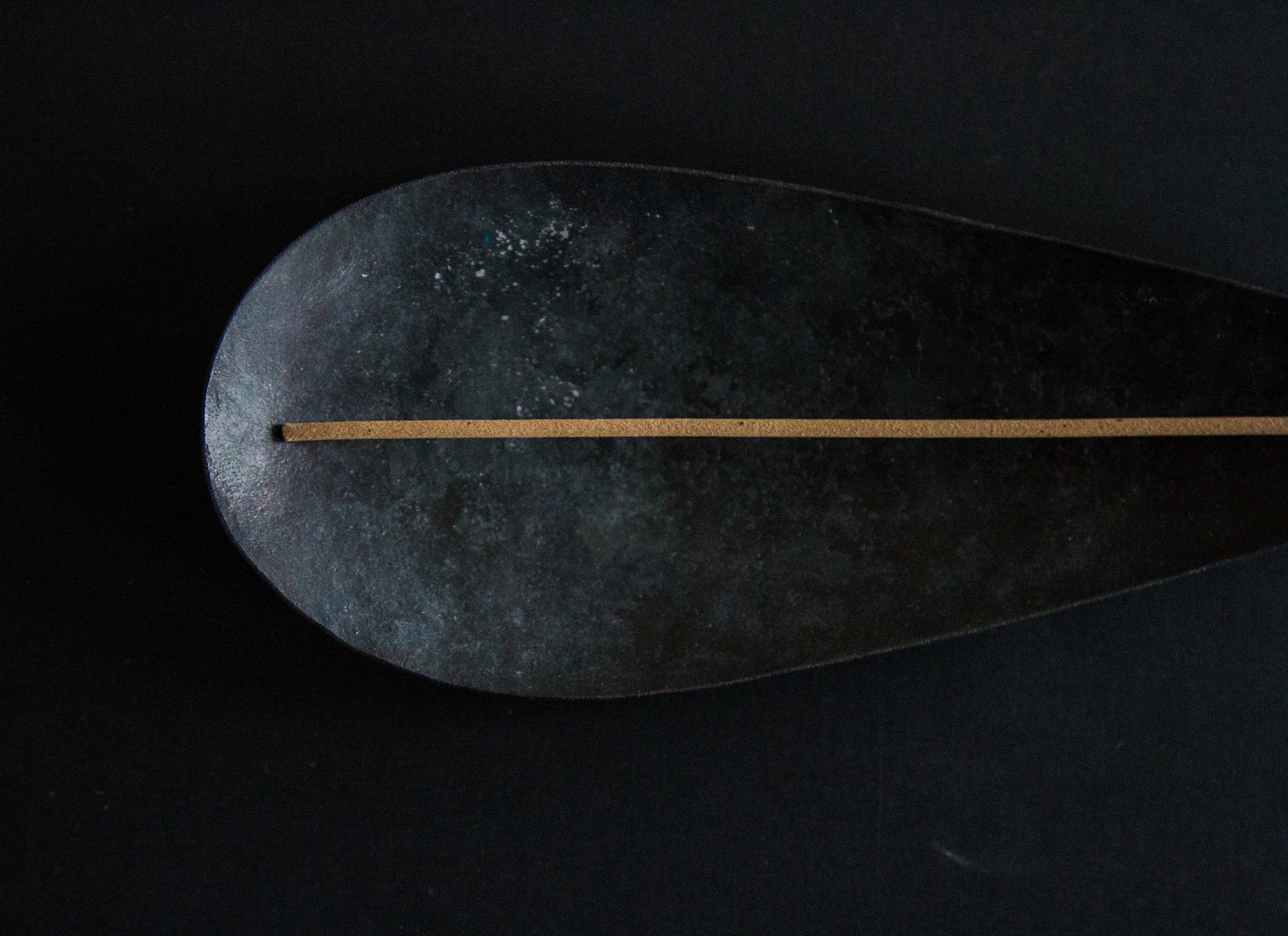
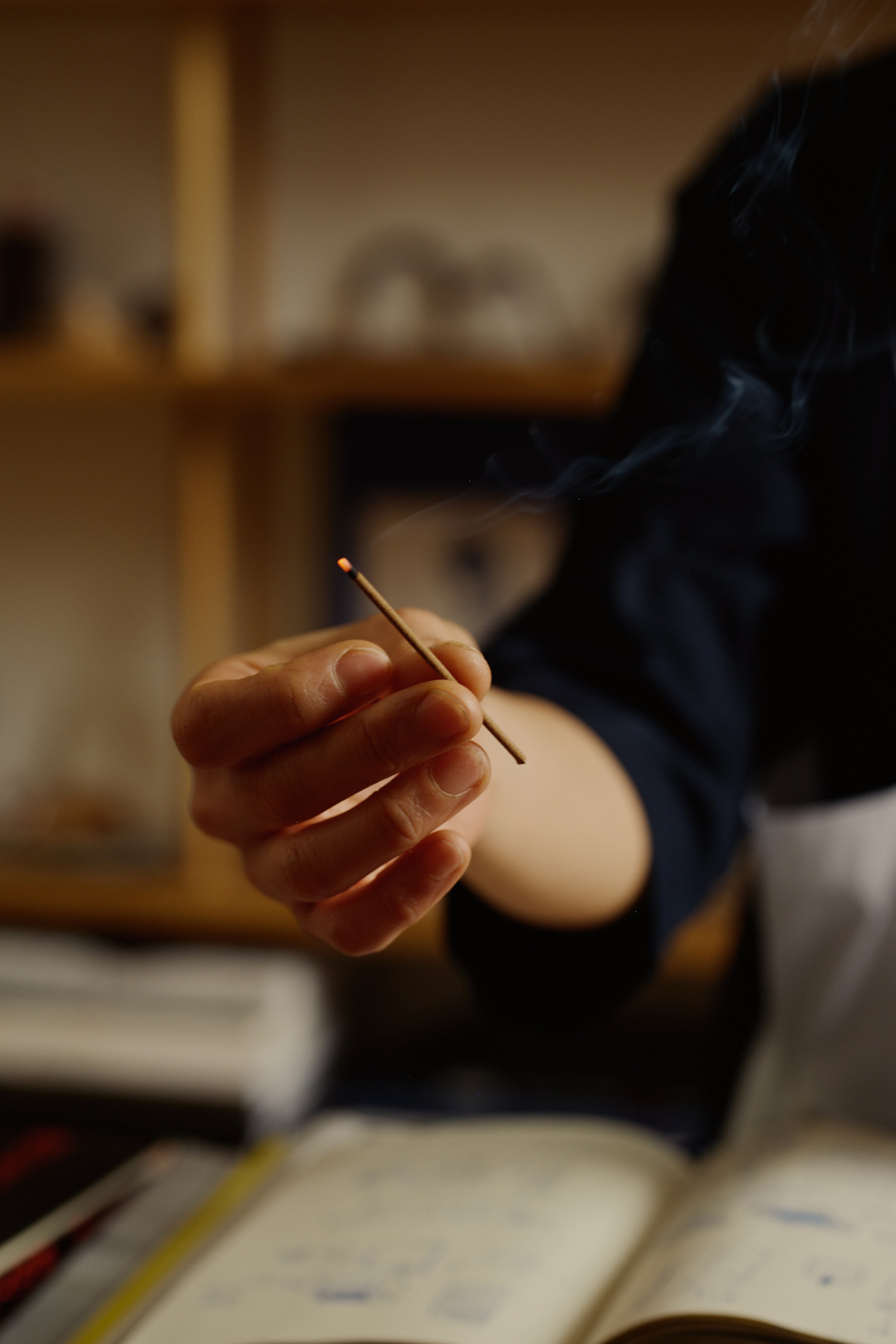
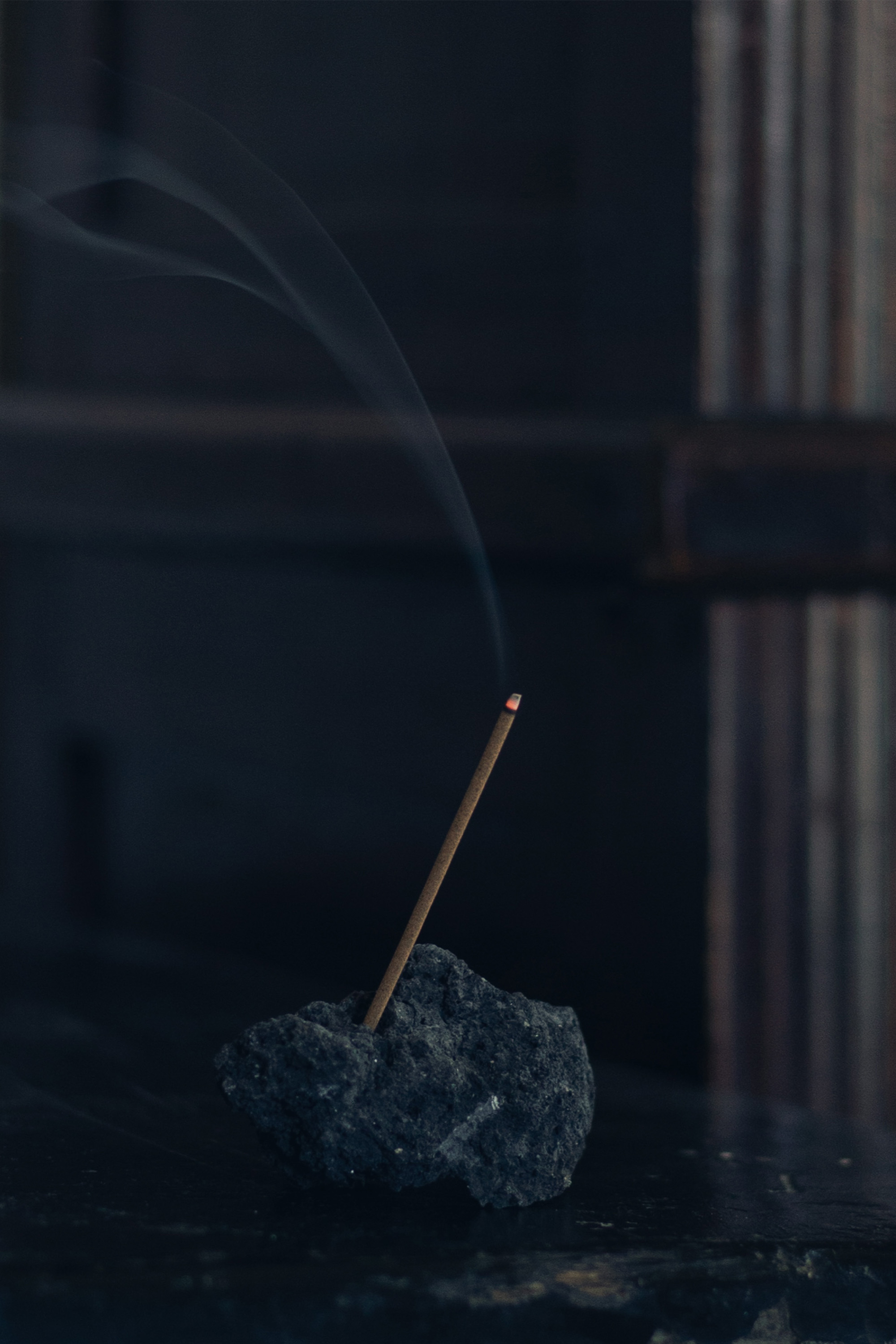
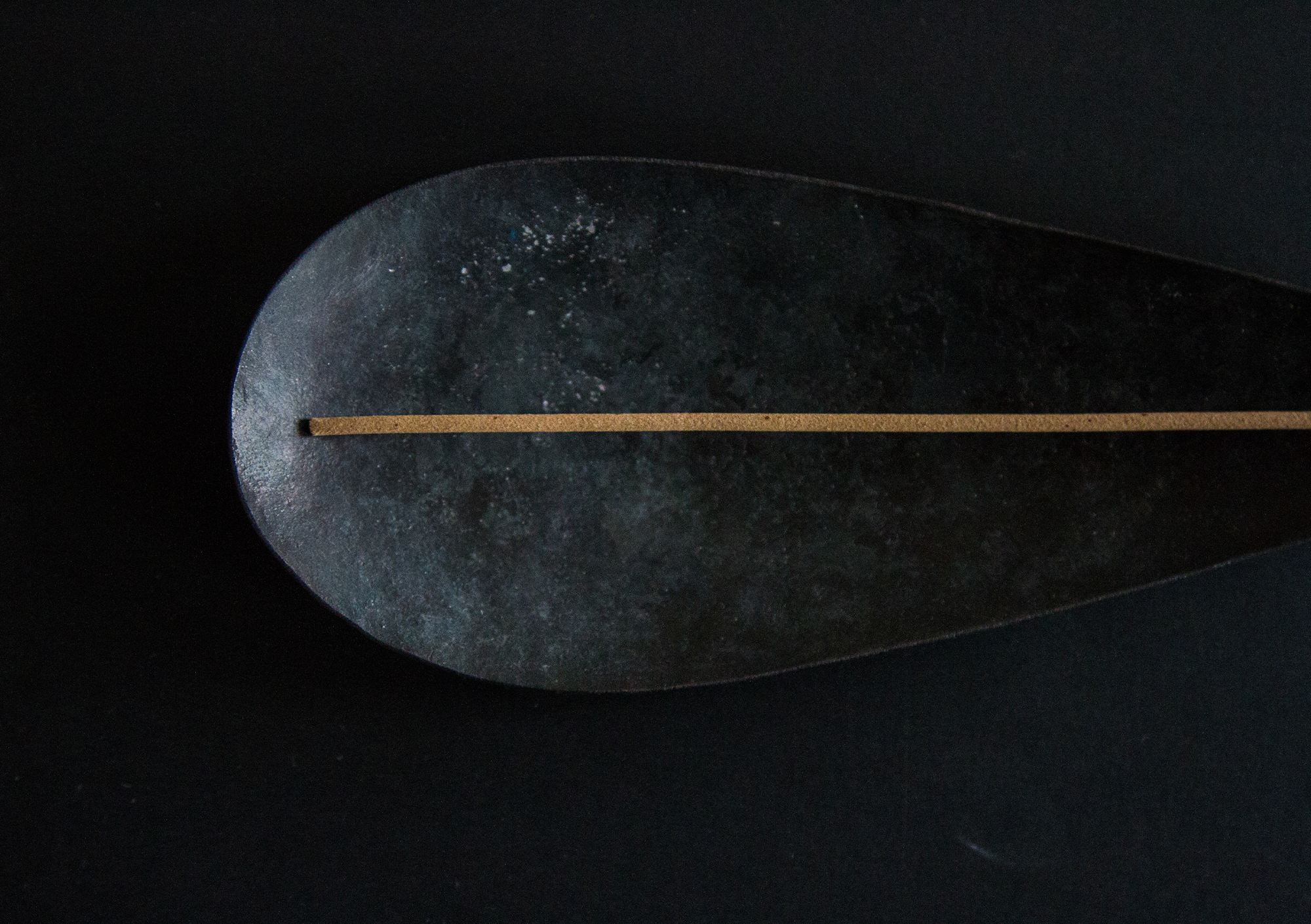
Scent carries emotional memory and shapes the rhythm of everyday life. For Shizuko Yoshikuni and Manuel Kuschnig, choosing an essence or scent is closely tied to their state of being in the moment. At times, they gravitate toward seasonal notes; at others, they may spend several days immersed in the aroma of a newly encountered material, taking time to truly become acquainted with it. In recent years, they have developed a particular affinity for resinous materials—pure and crystalline, with balsamic sweetness and a fresh acidity—that gently clear both mind and space. They also use incense or scented smoke as a way to recalibrate their rhythm, drawing a subtle threshold between different moments of the day.
The connection between scent and memory keeps them attuned to the world around them. Since founding AOIRO, the two have deliberately set aside time to travel, stepping away from daily routines to visit places distinguished by their natural or architectural qualities. On these journeys, the texture of the air, seasonal sounds, and sensory experiences intertwined with the surrounding environment work together to reopen perceptual channels. They return to their practice with renewed sensitivity—not in search of answers, but in order to remain within a state of continual becoming.
公开 不公开