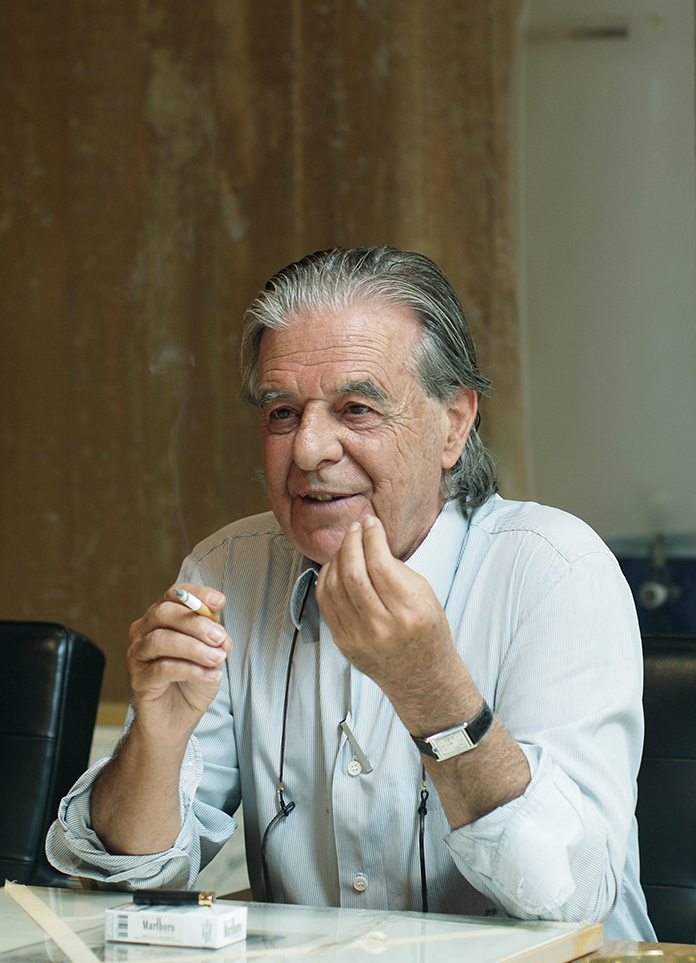
A holiday without ifs or buts: with Holzrausch, Munich entrepreneur Alexander Springer is creating places of rare intensity. What begins as a search for exceptional locations becomes something more deliberate—an ambition to shape retreat as a craft, stone by stone and idea by idea. Over the years, Springer and Holzrausch co-founder Tobias Petri have developed a shared approach to building hideaways that remove disturbance, reduce visual noise, and make space for a rare kind of calm. “Holiday home” feels almost too small a term for these projects: they are environments designed to suspend everyday life.

Springer’s role is defined by the mindset of a host and the sensibility of a guest—an understanding of what discerning travelers truly value because he shares the same expectations. His collaborations with Holzrausch reflect this: a commitment to architecture and interior design at the highest level, and an emphasis on the process of developing, testing, and refining ideas as much as the final result.

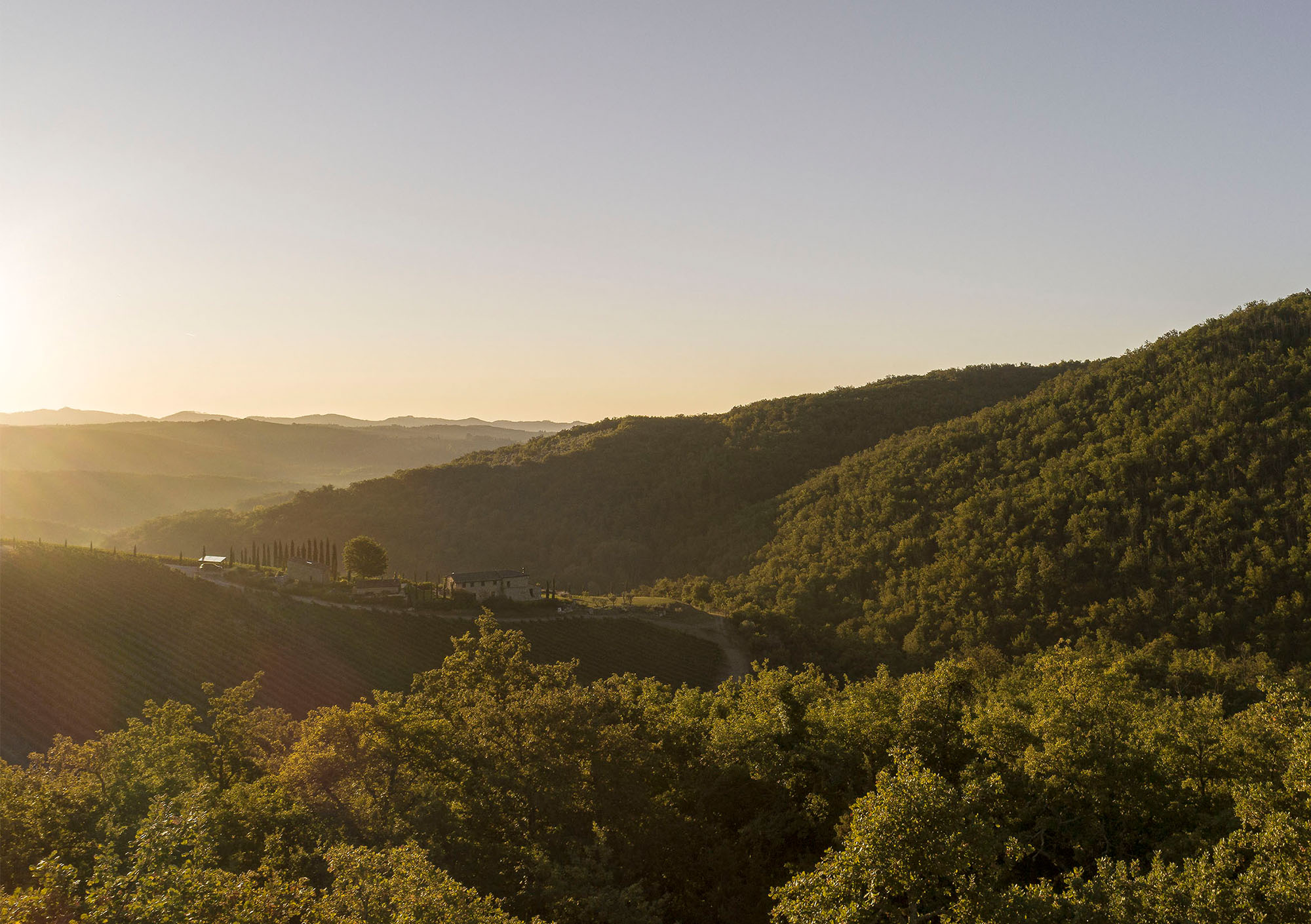
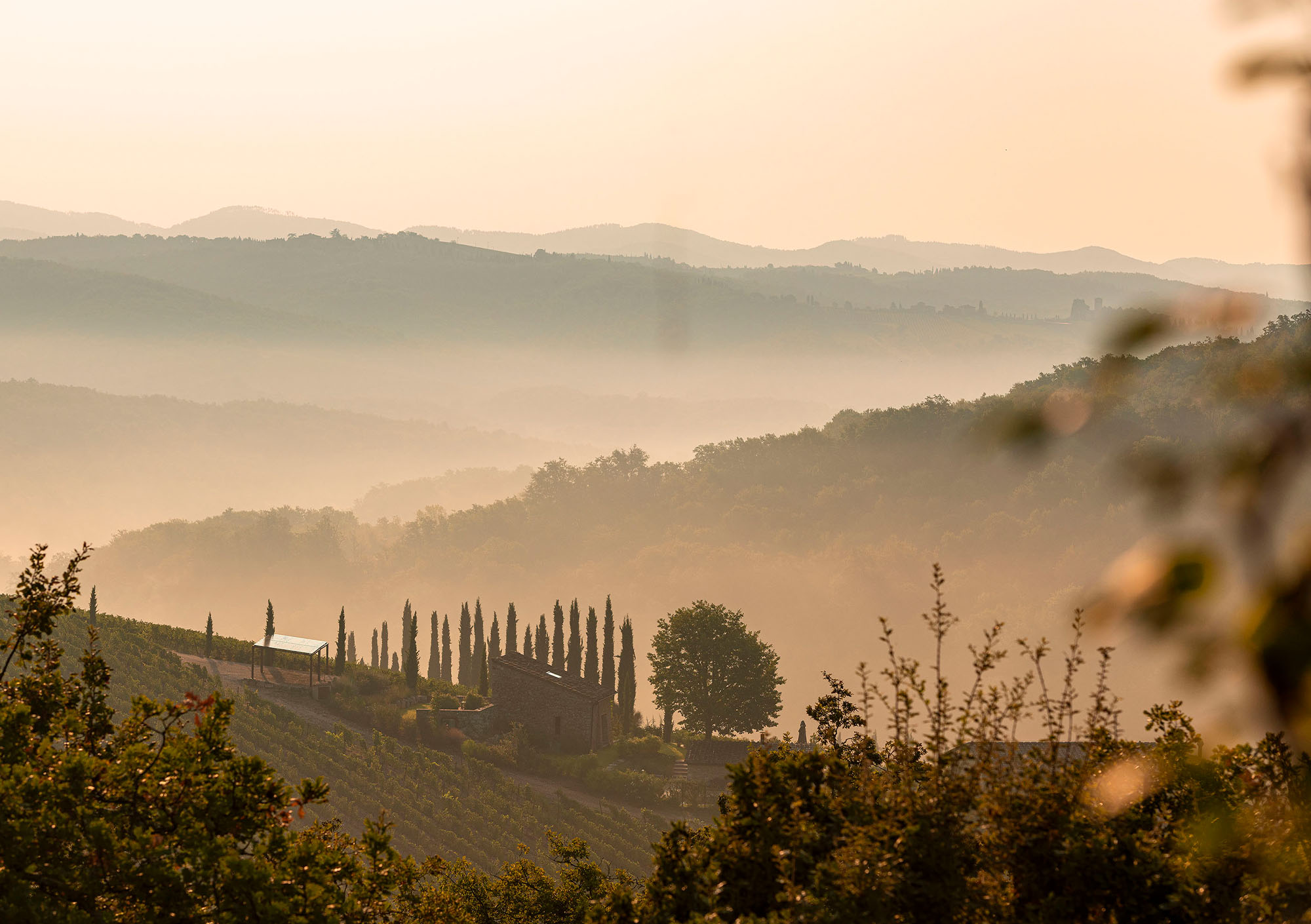
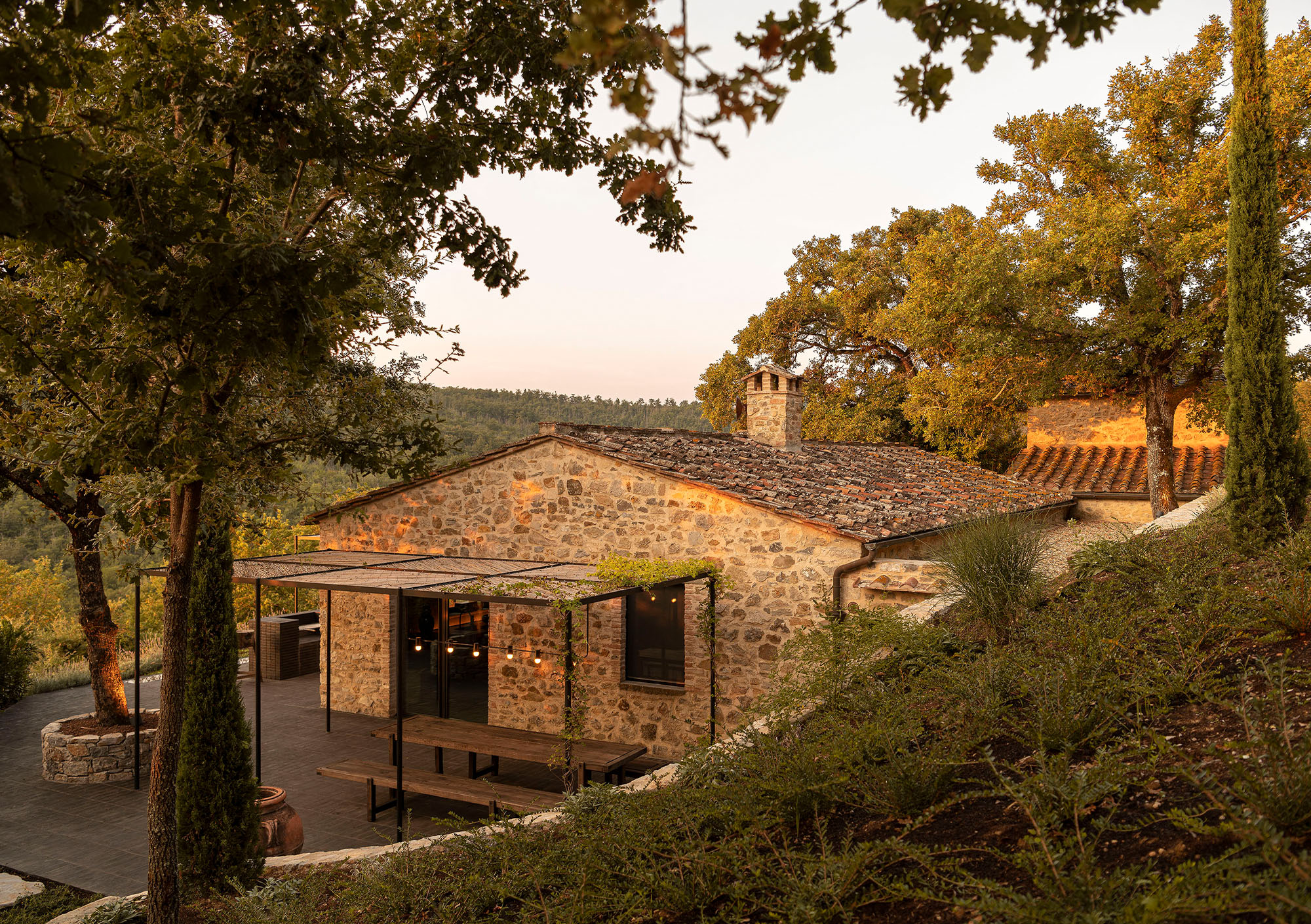
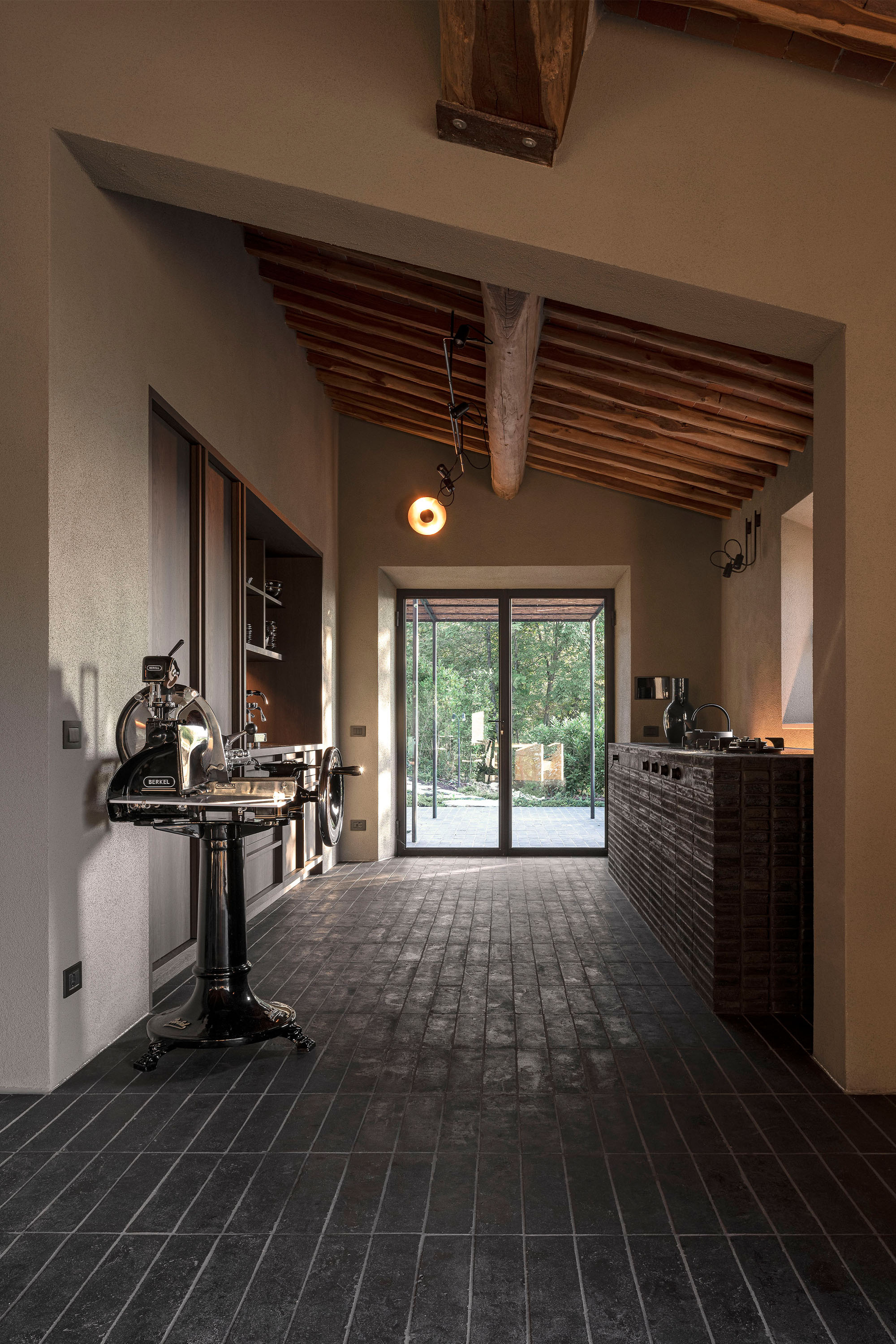
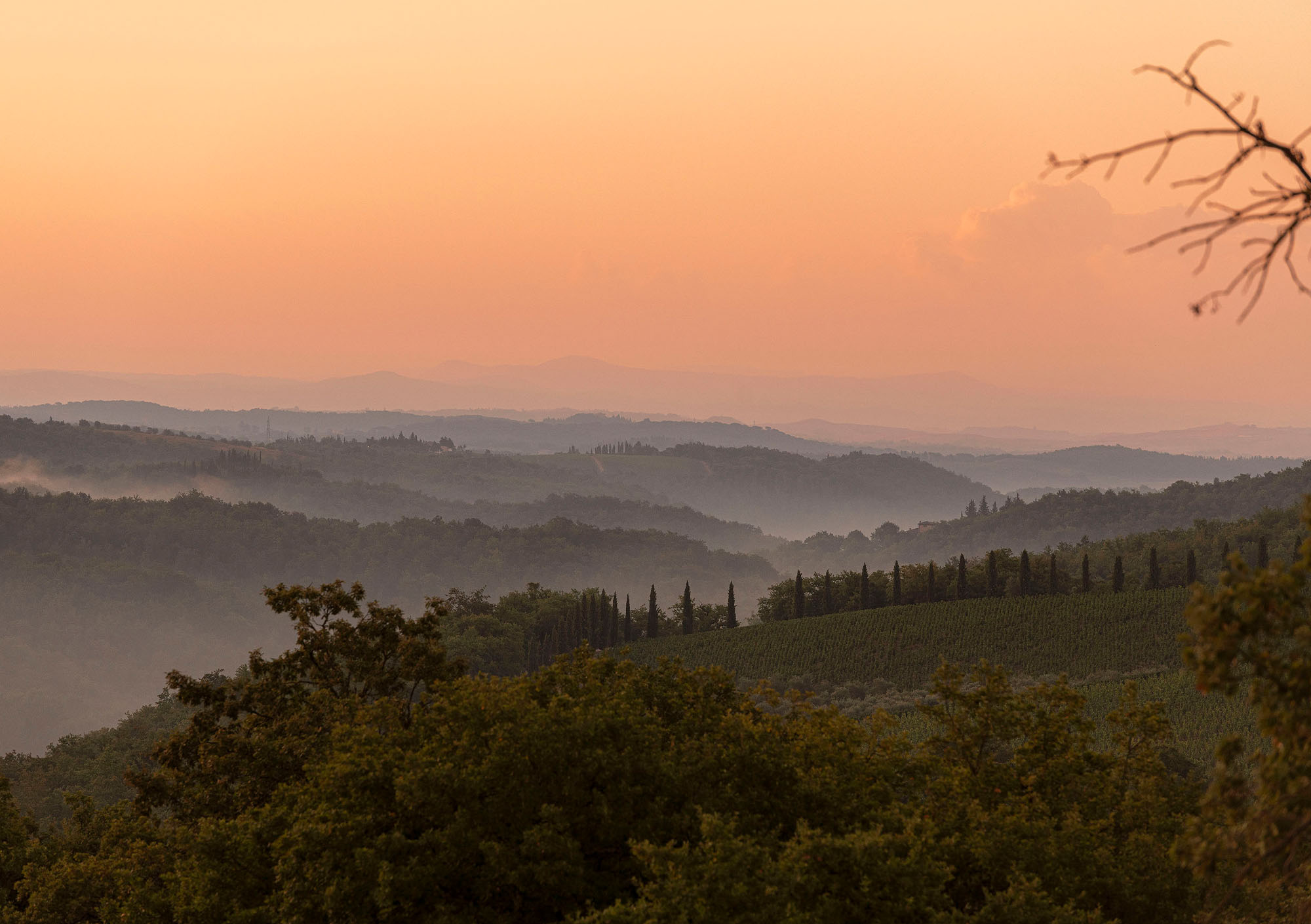
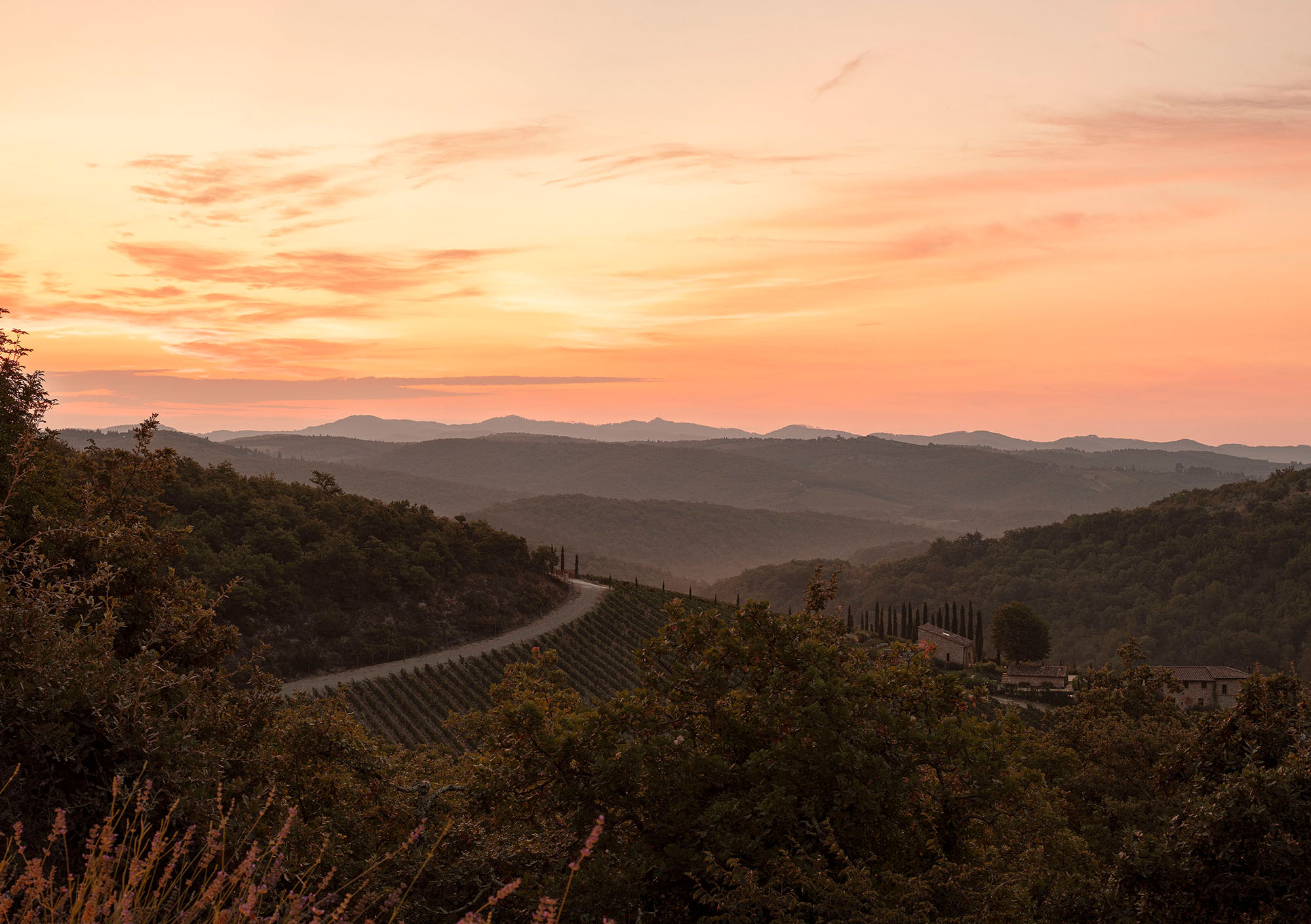
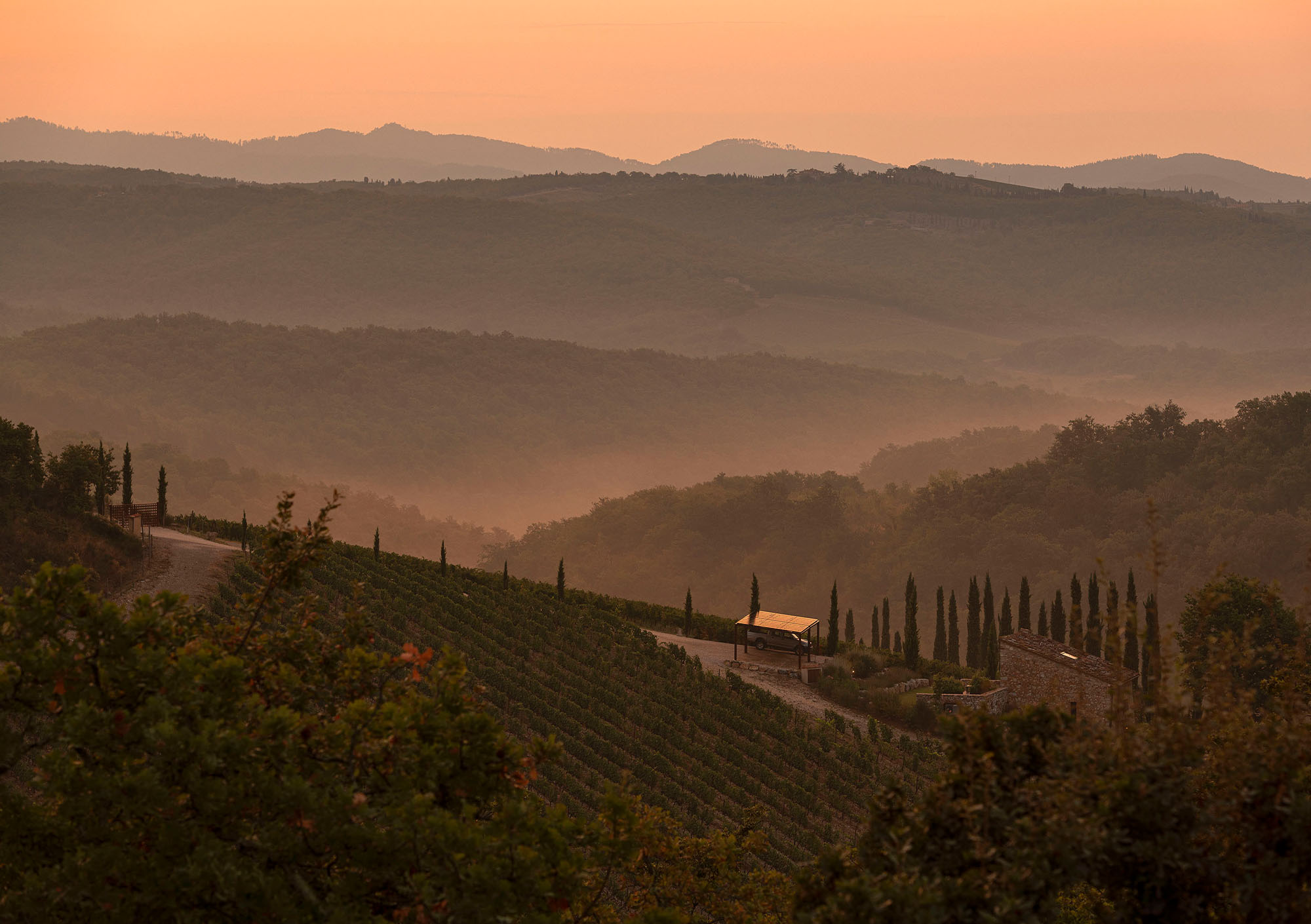
Set amid the wine hills of the Chianti Classico, Casa Morelli takes the familiar imagery of Tuscany—rolling landscapes, olive trees, holm oaks, and historic towns within easy reach—and reframes it through a distinctly contemporary spatial experience. Reached via a dusty road that winds up to a cluster of stone farmhouses, the house blends into its borgo from the outside. The surprise reveals itself upon entry: following the local tradition, one enters through the kitchen—and steps into a loft-like, open volume that feels both grounded and unexpected.

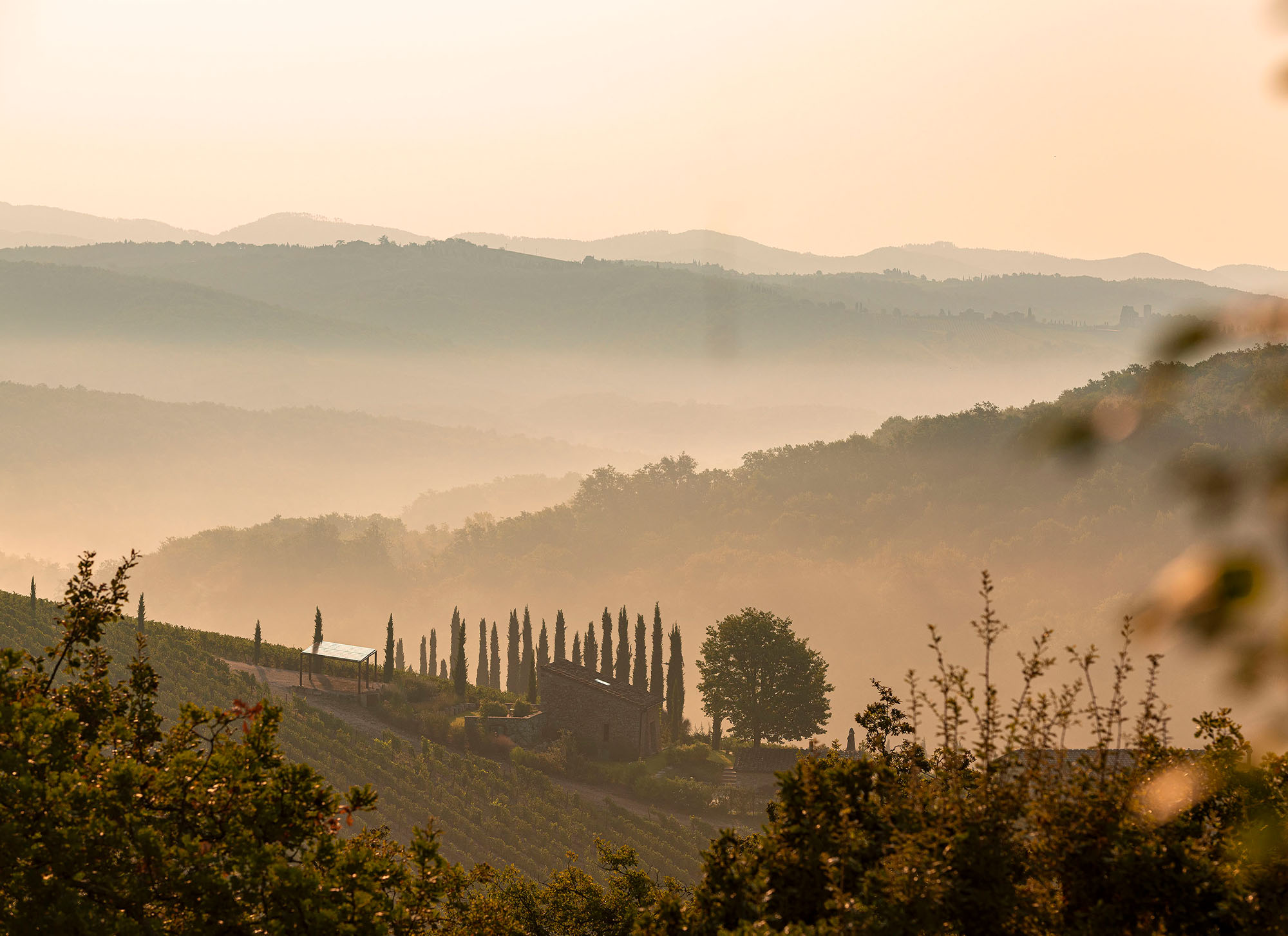
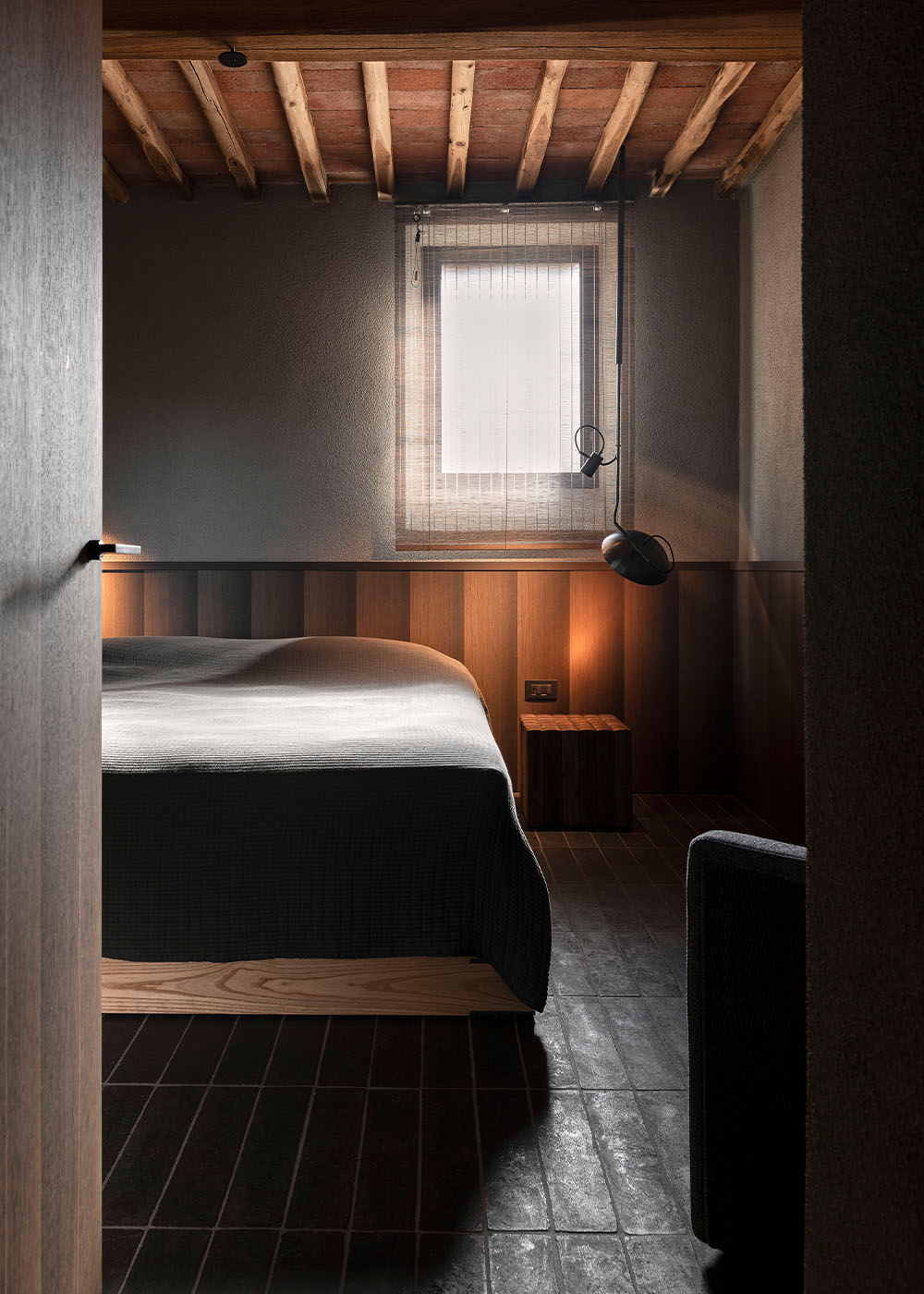
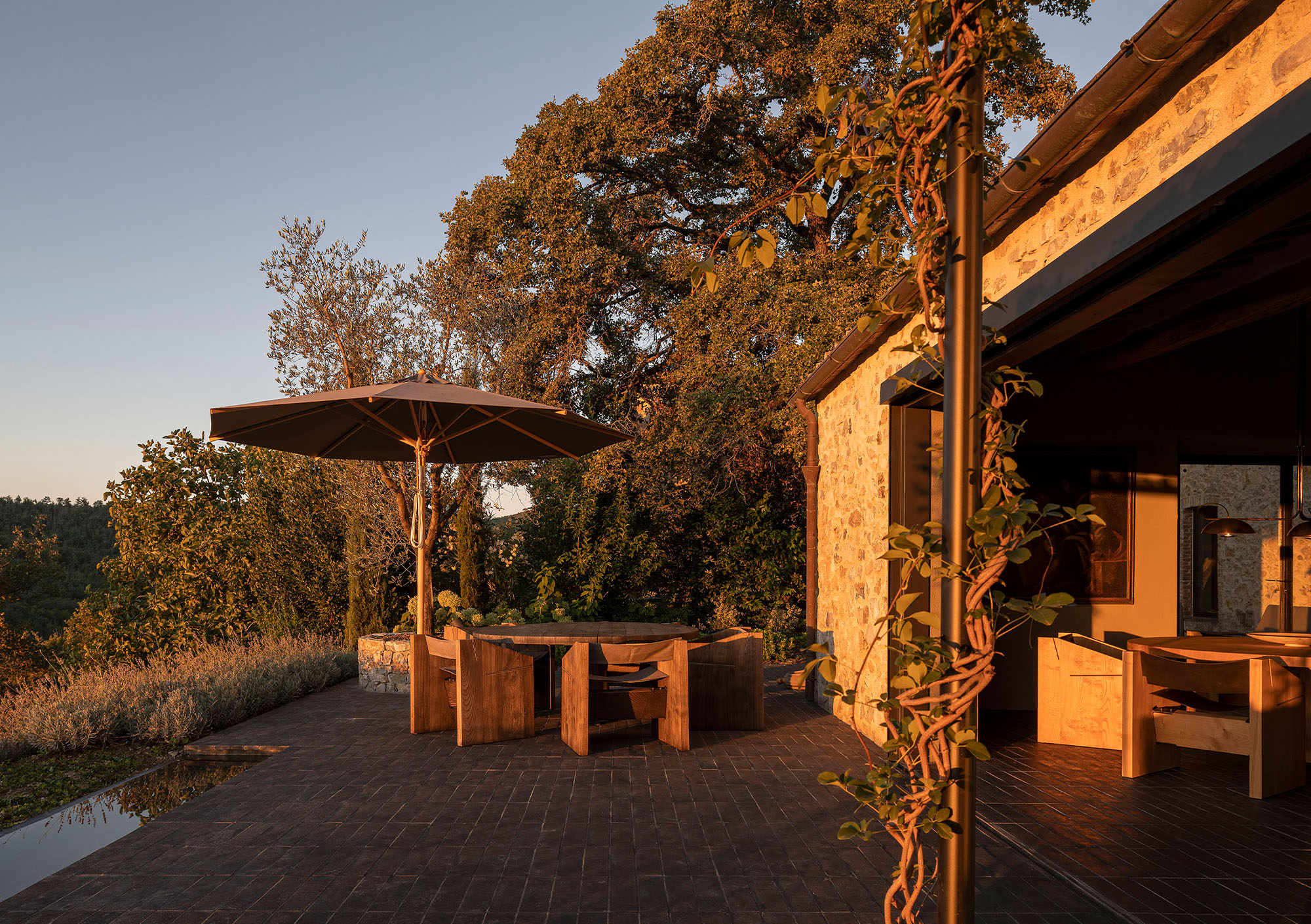
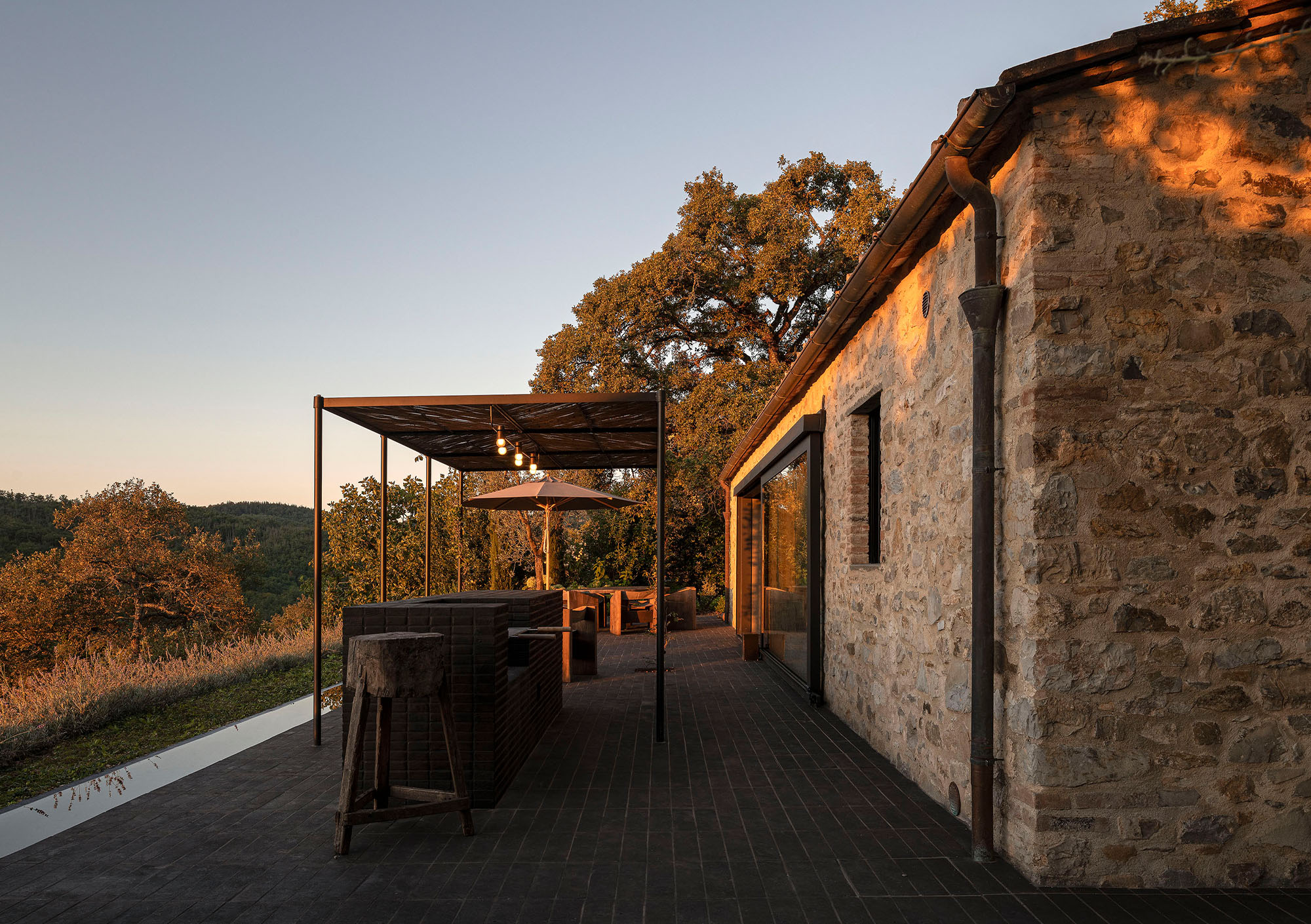
Casa Morelli had stood for years as a shell in the hills, its origins tied to Petri’s family. When the partially completed house transitioned to Springer, Holzrausch took the lead in bringing the structure to life. The ensemble consists of two primary parts: a “sleeping house” whose foundations date back to the 15th century, and a newer volume containing the living spaces. The two are connected by an airy linking element that maintains separation while allowing the project to read as one continuous retreat.

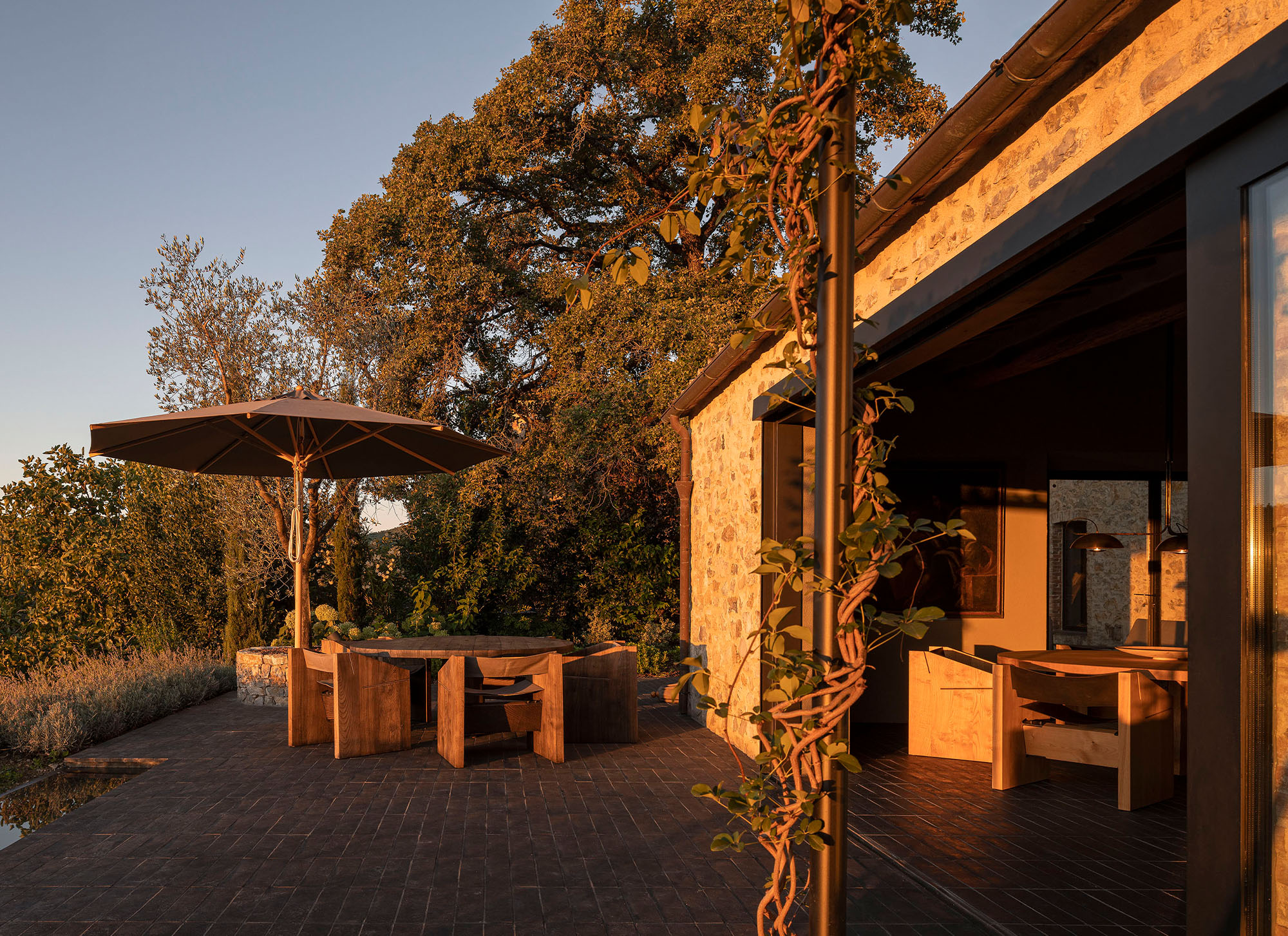
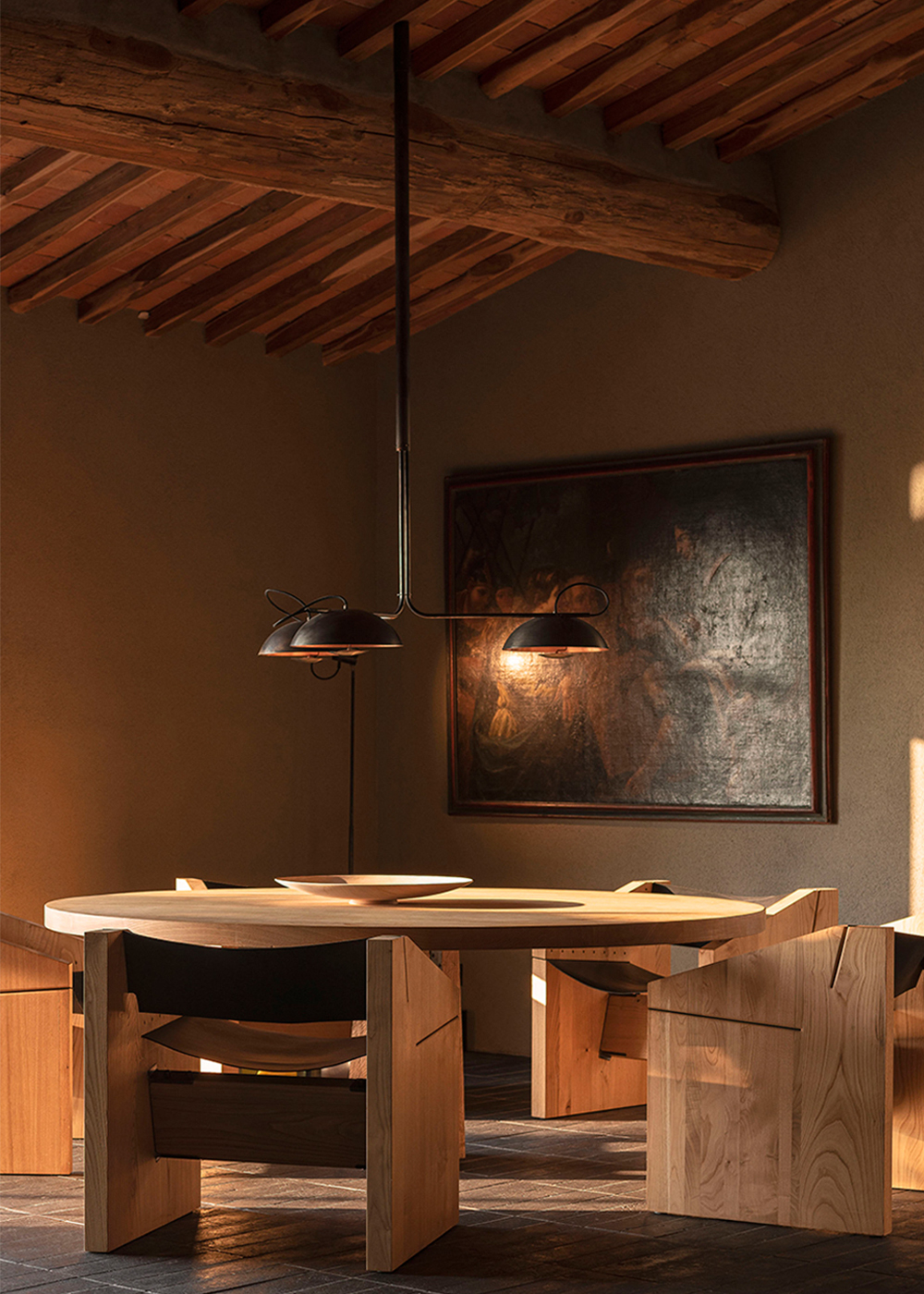
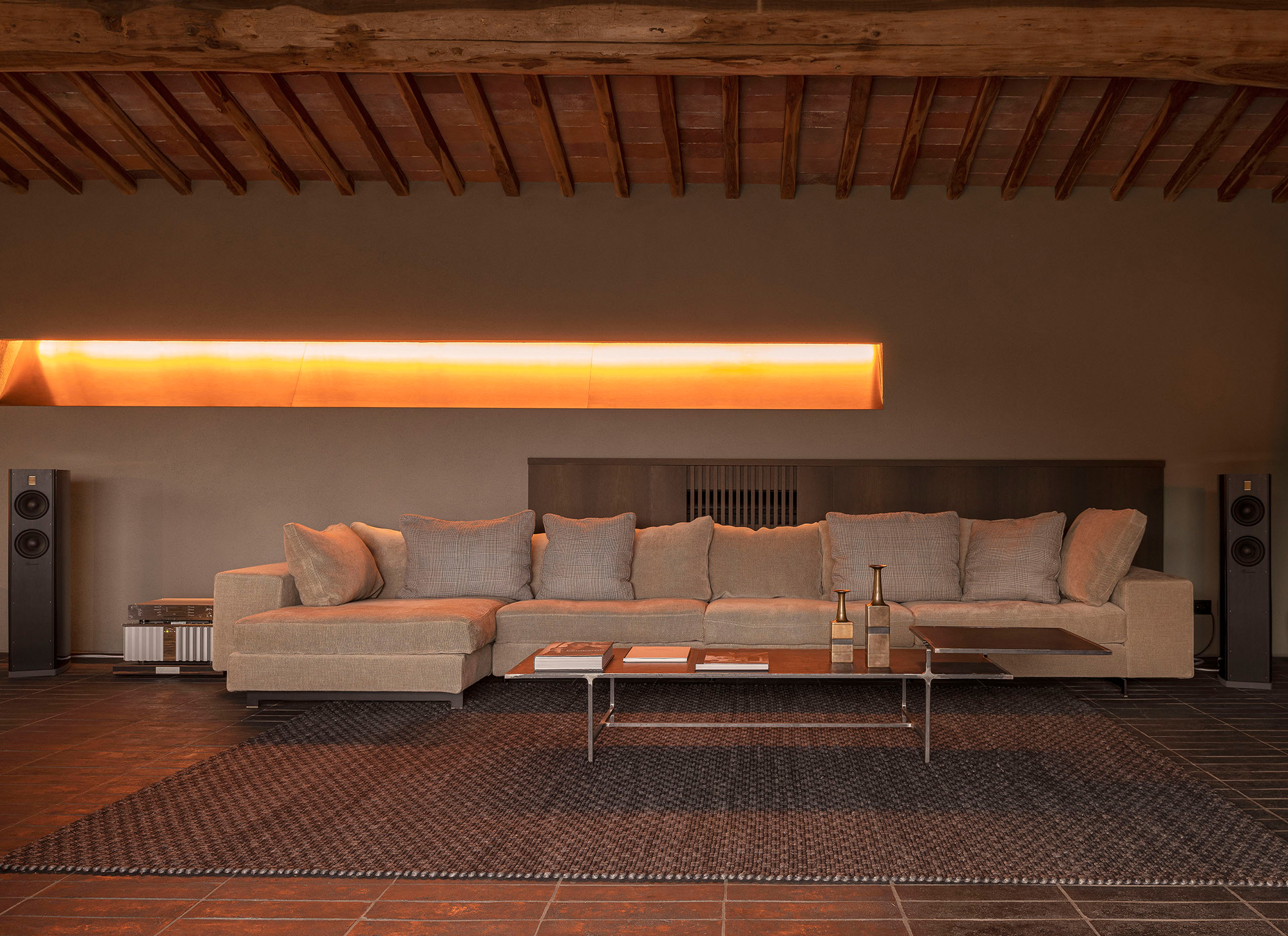
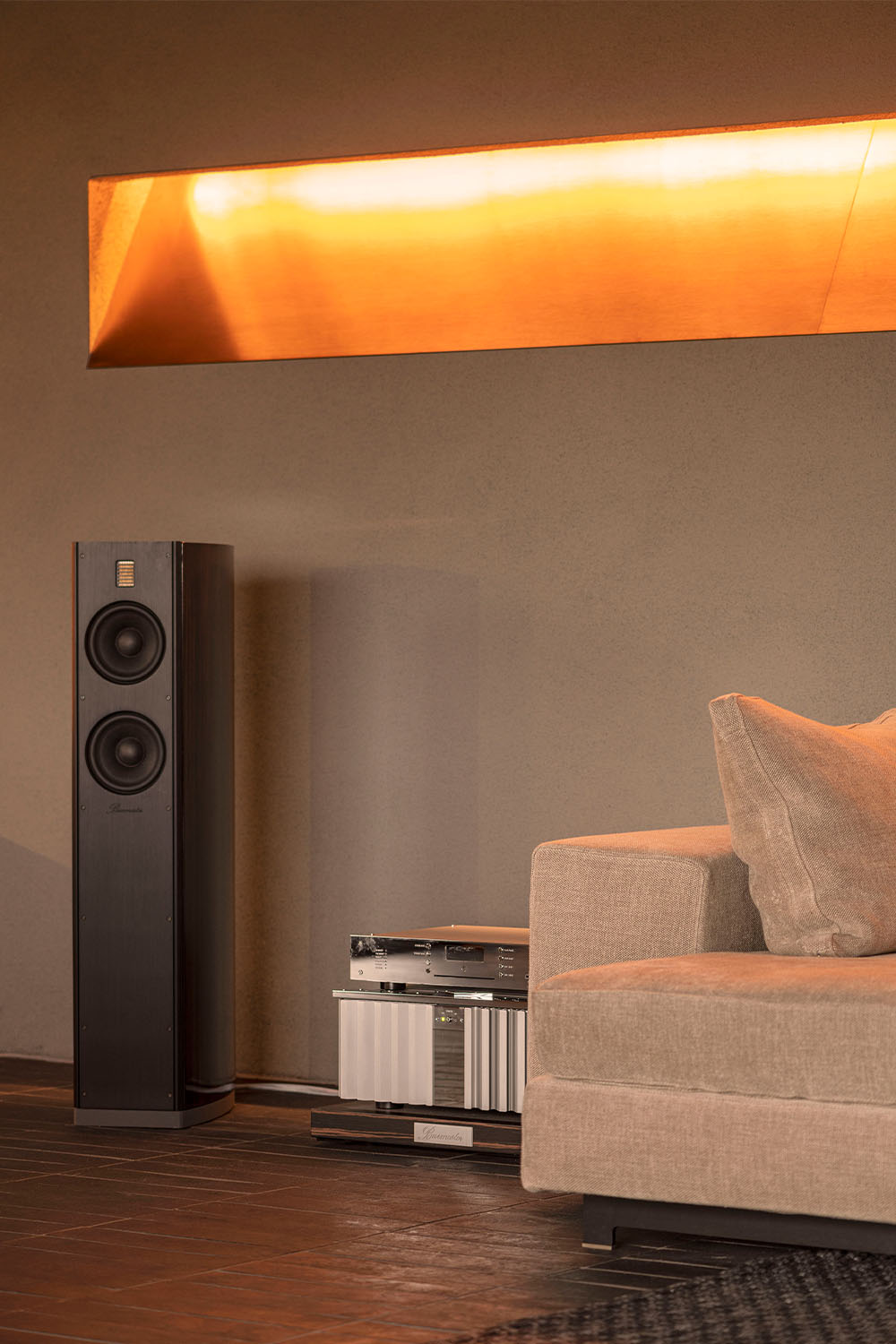
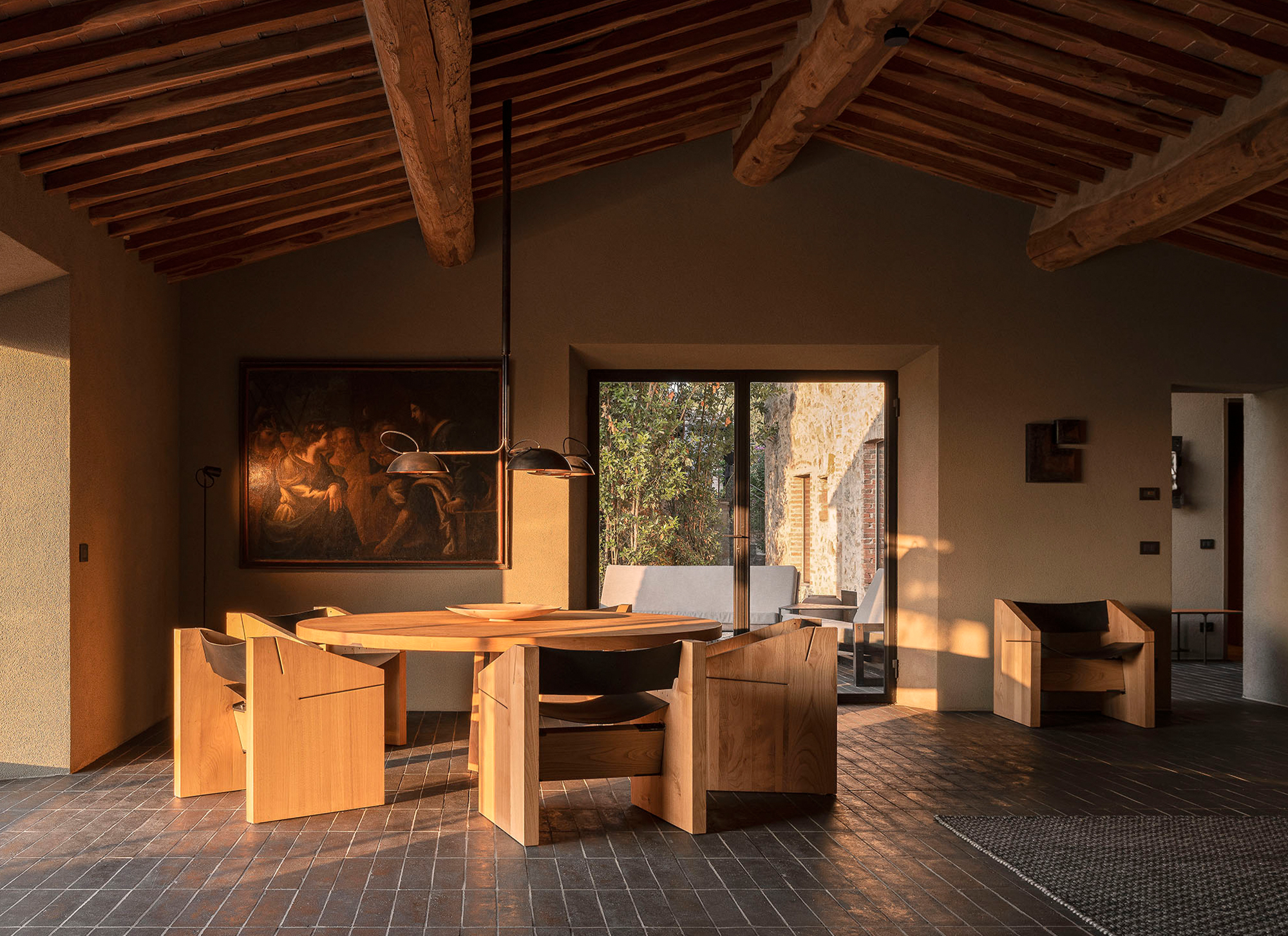
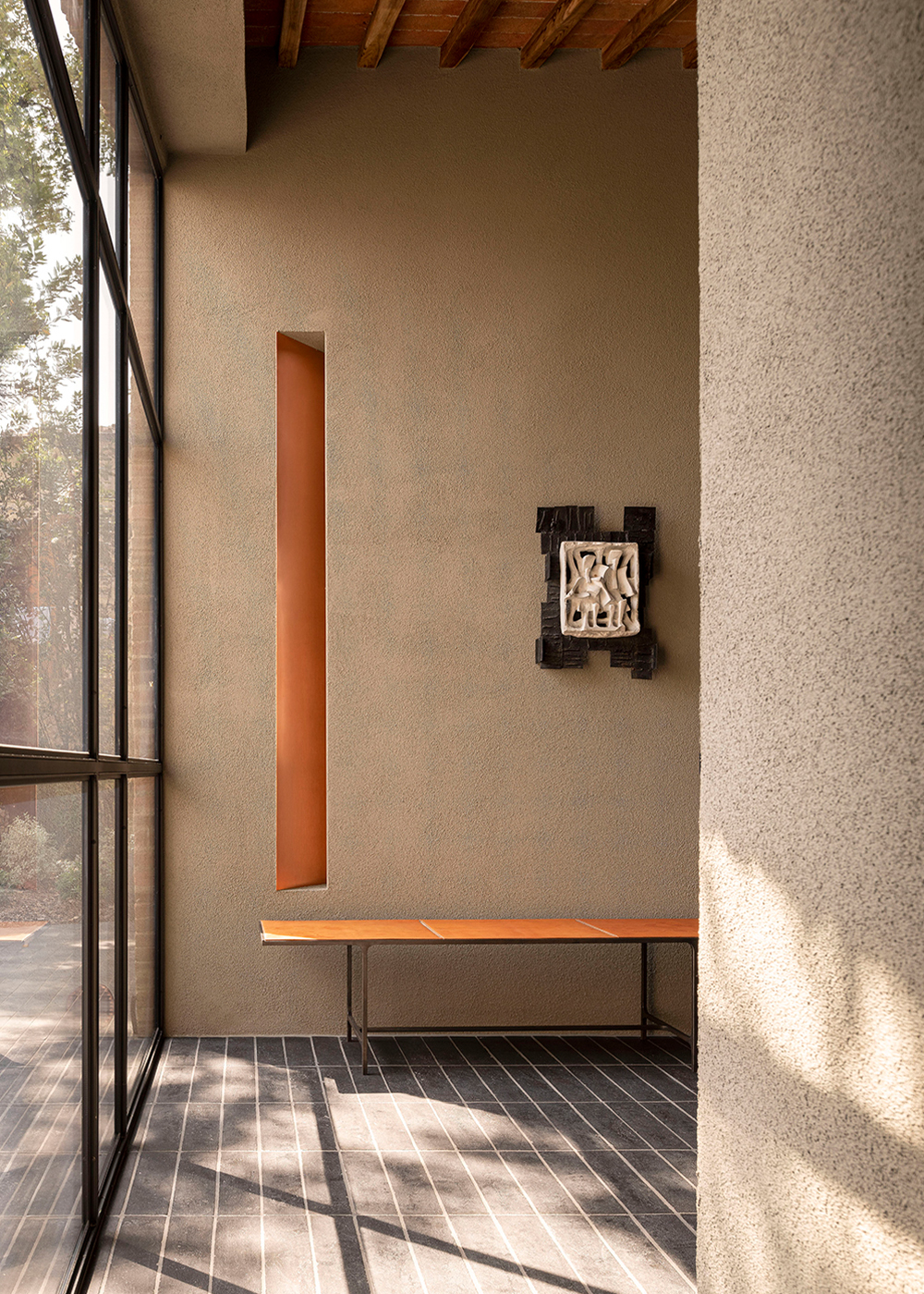
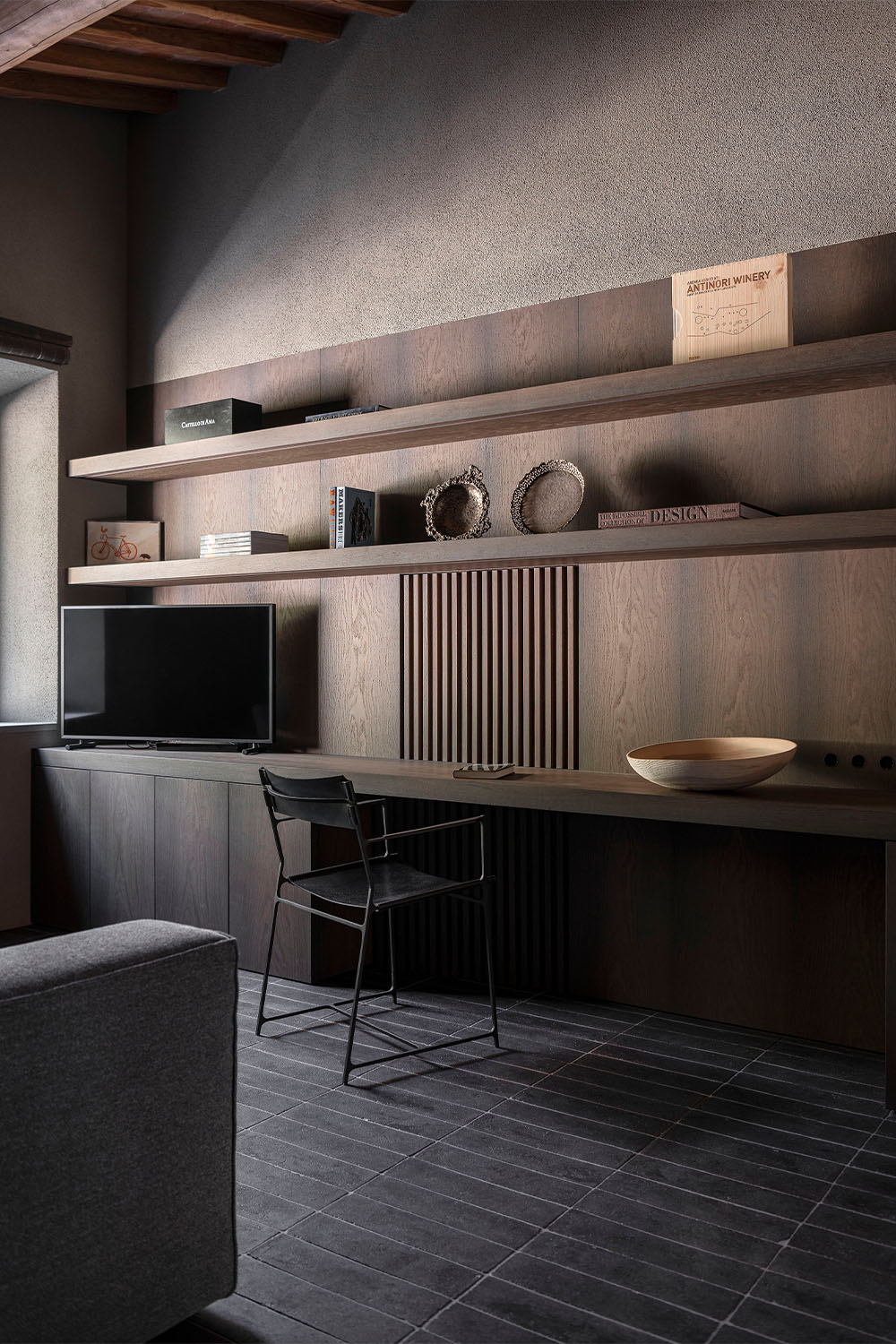
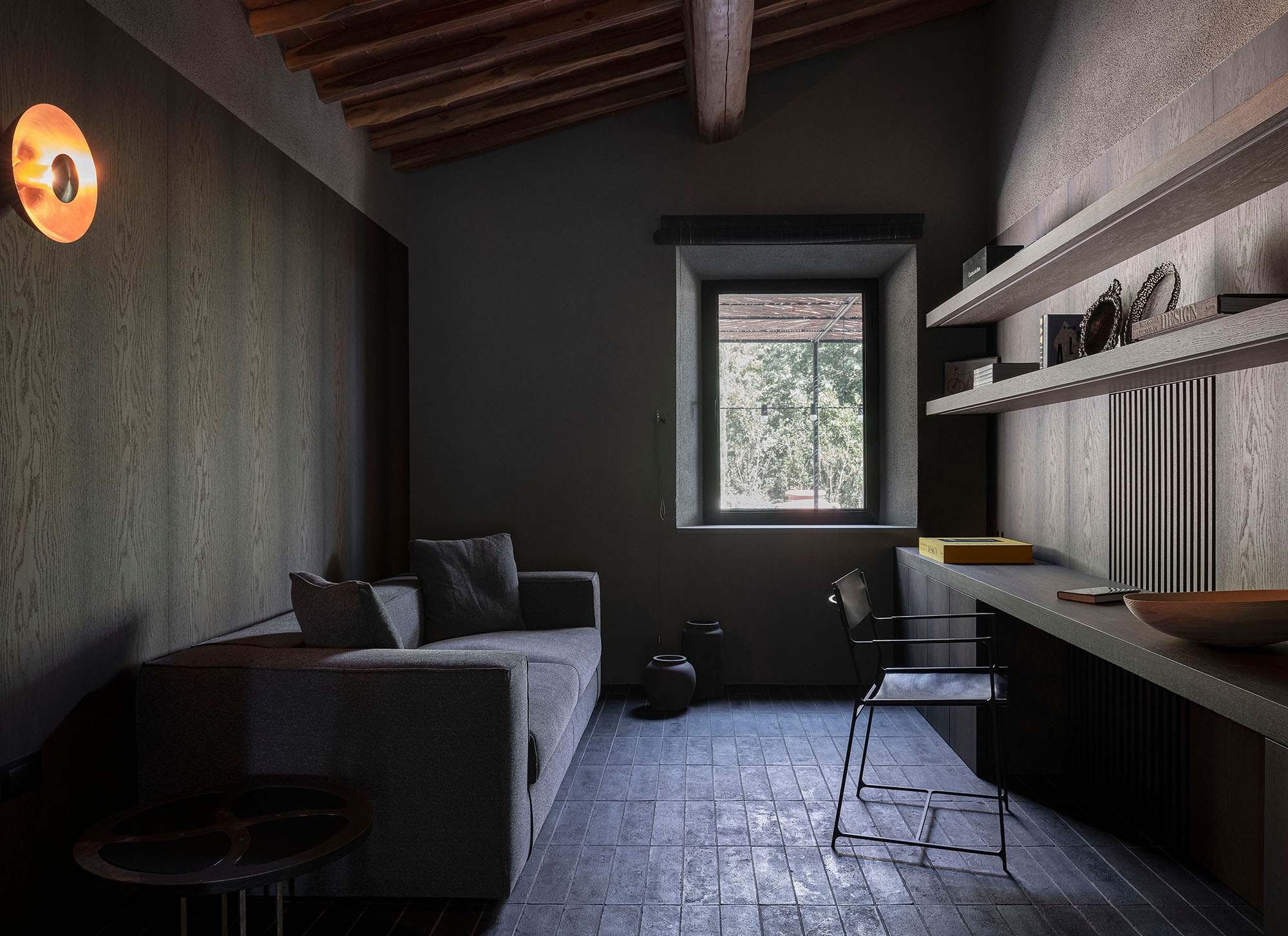
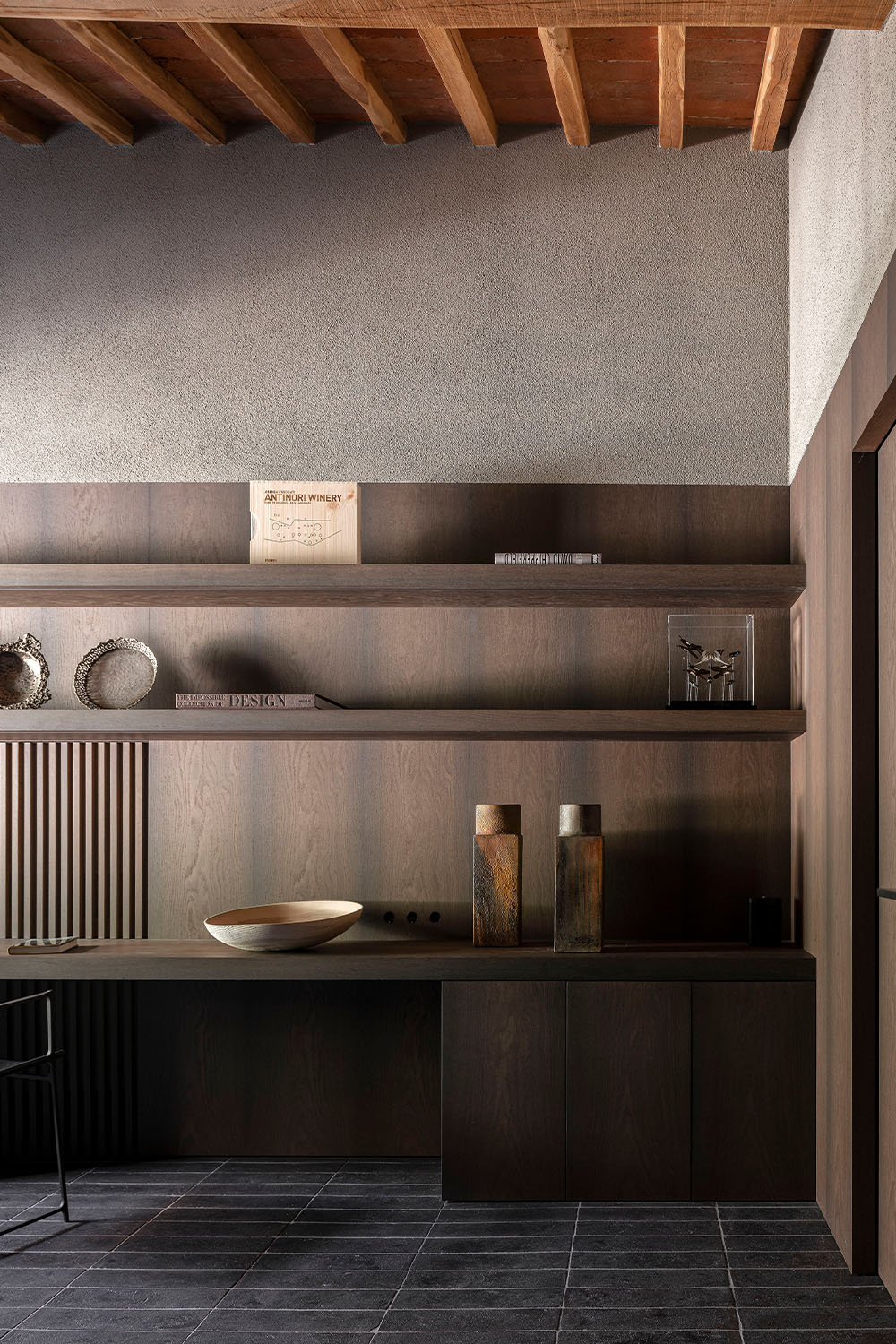
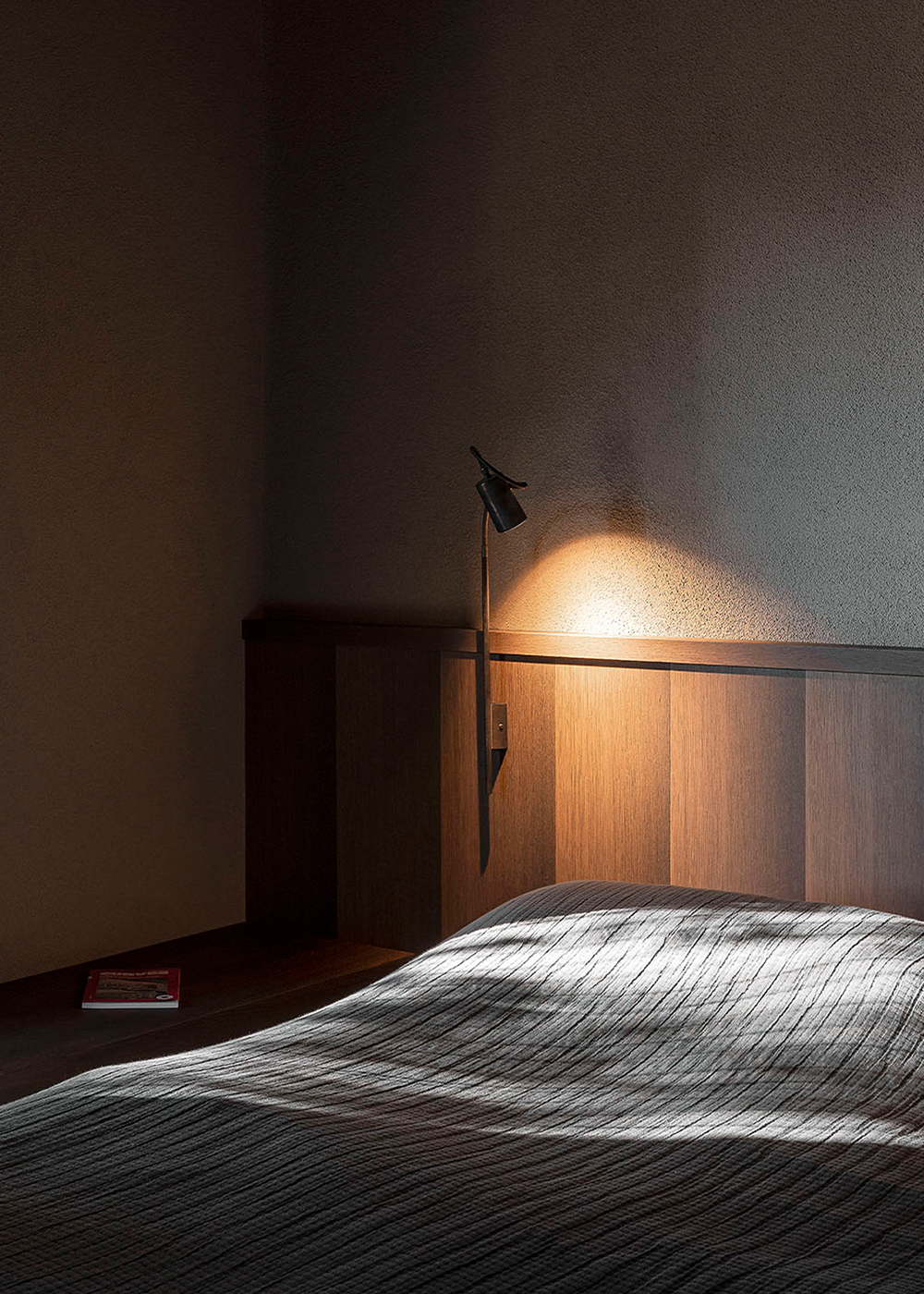
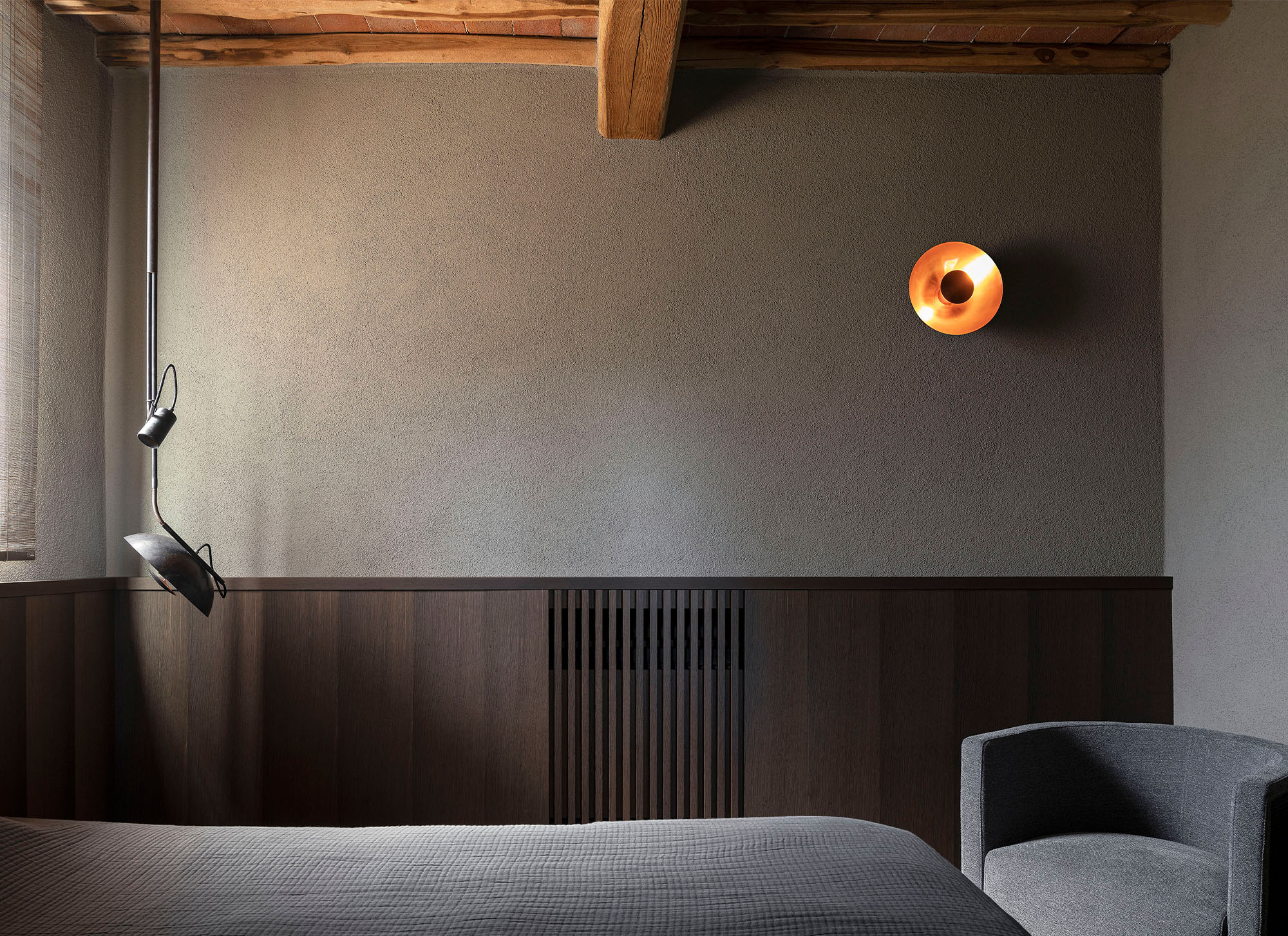
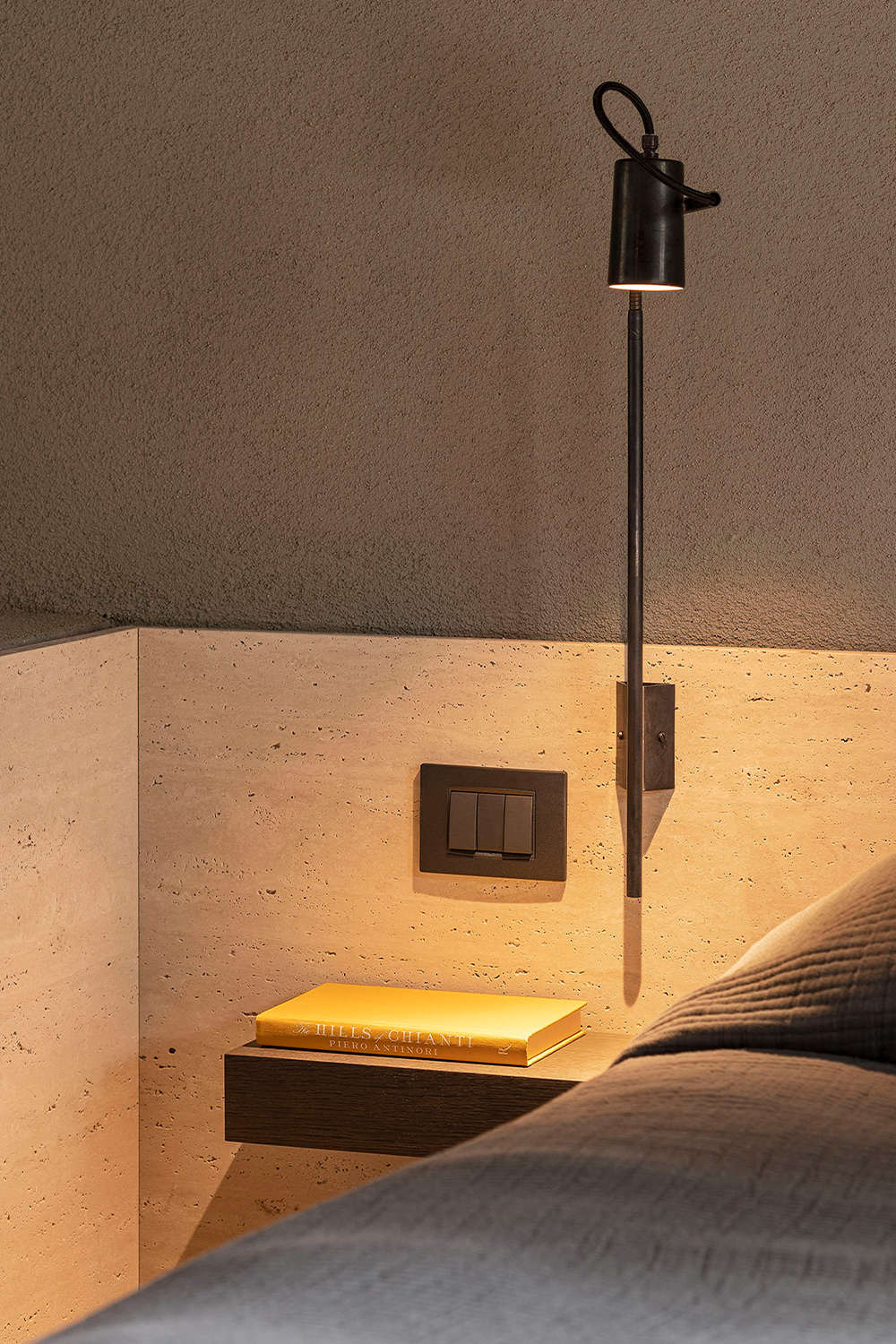
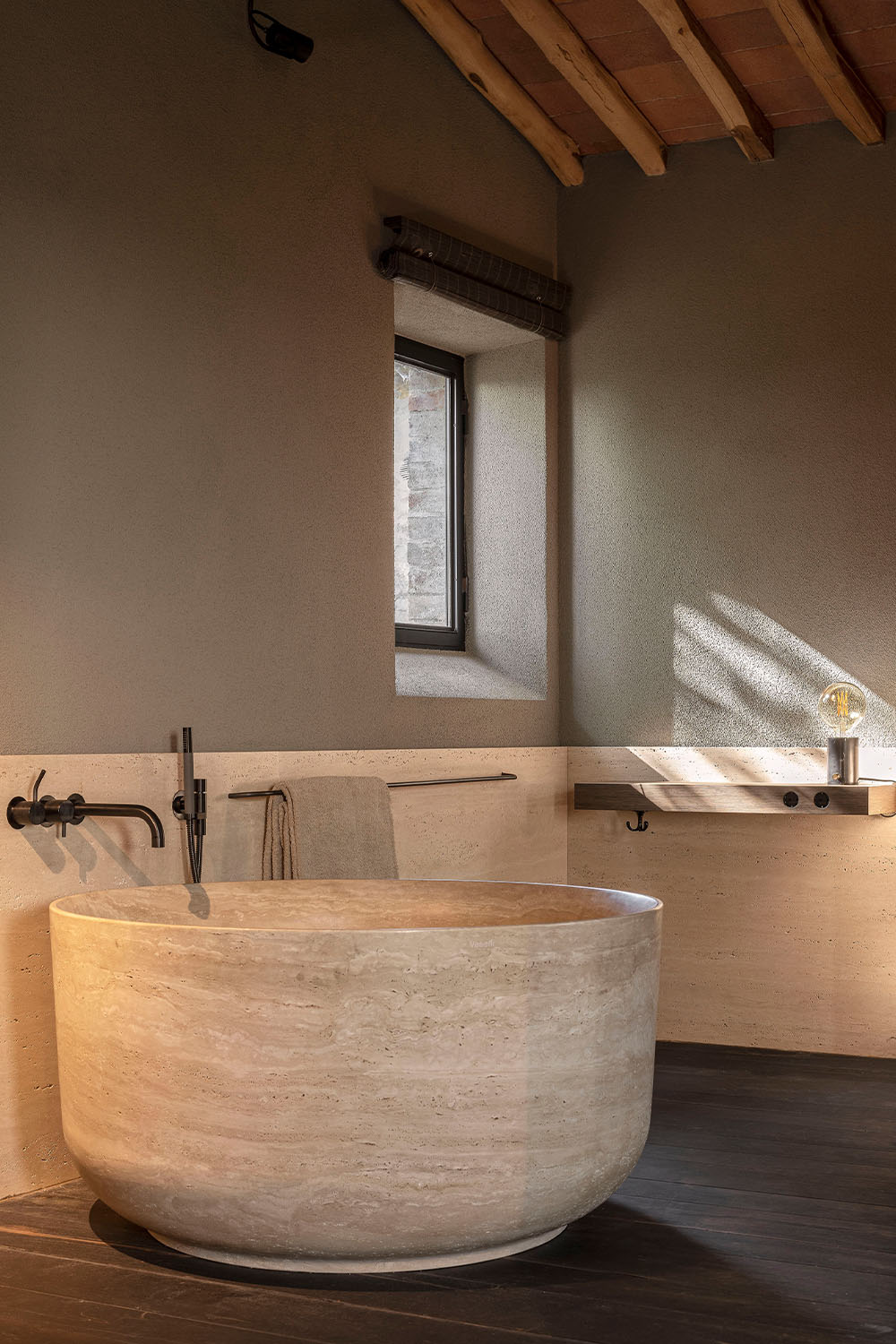
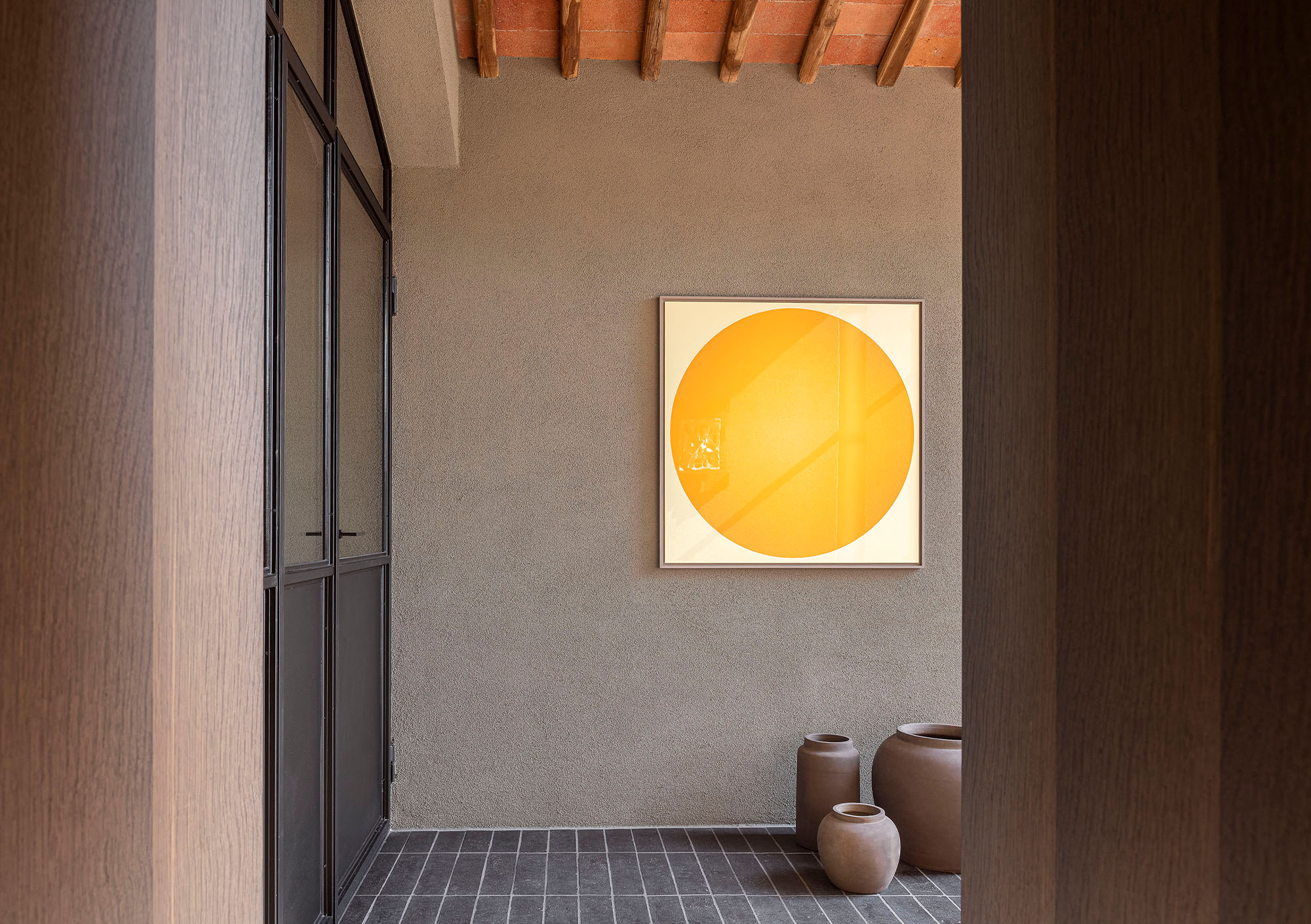
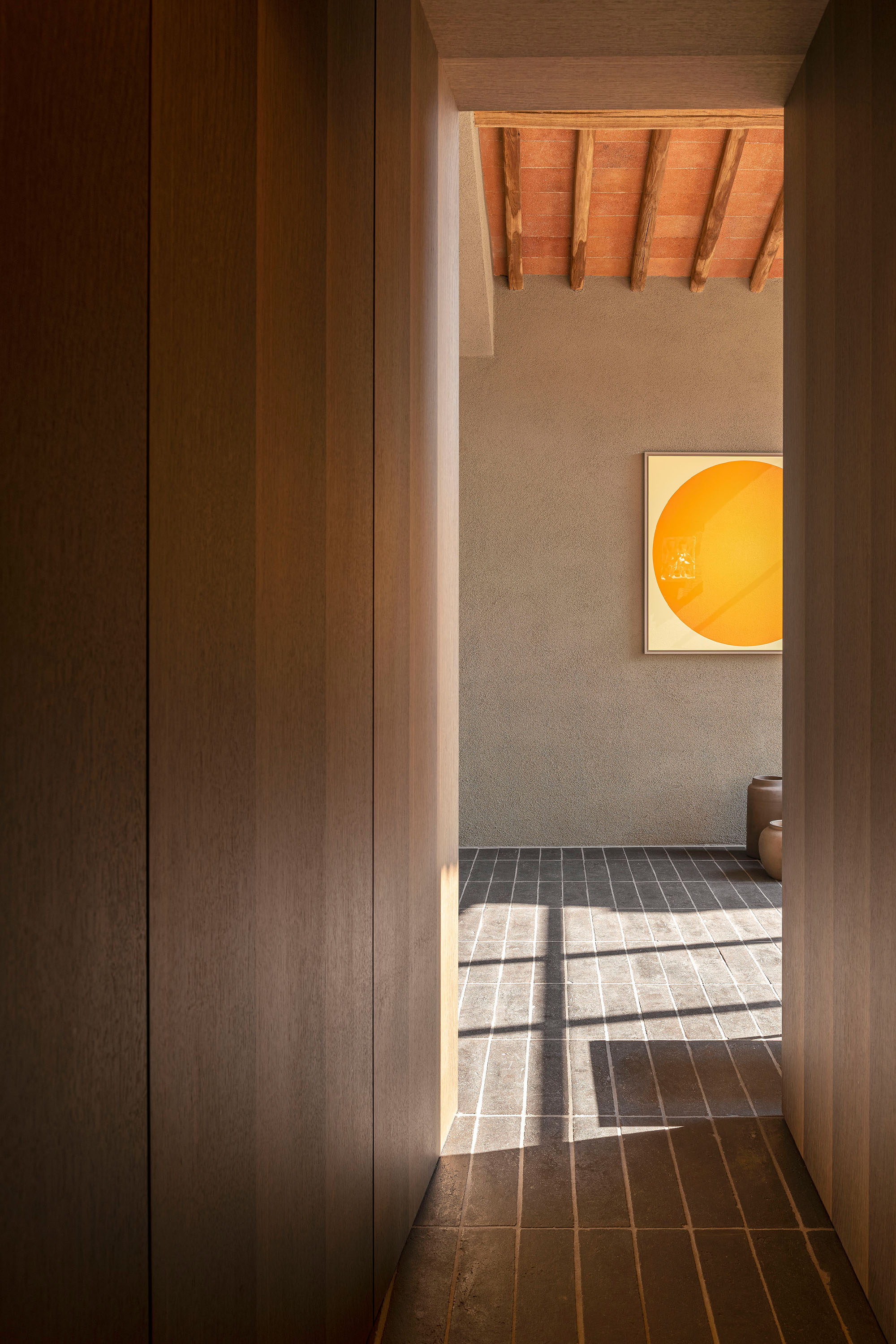
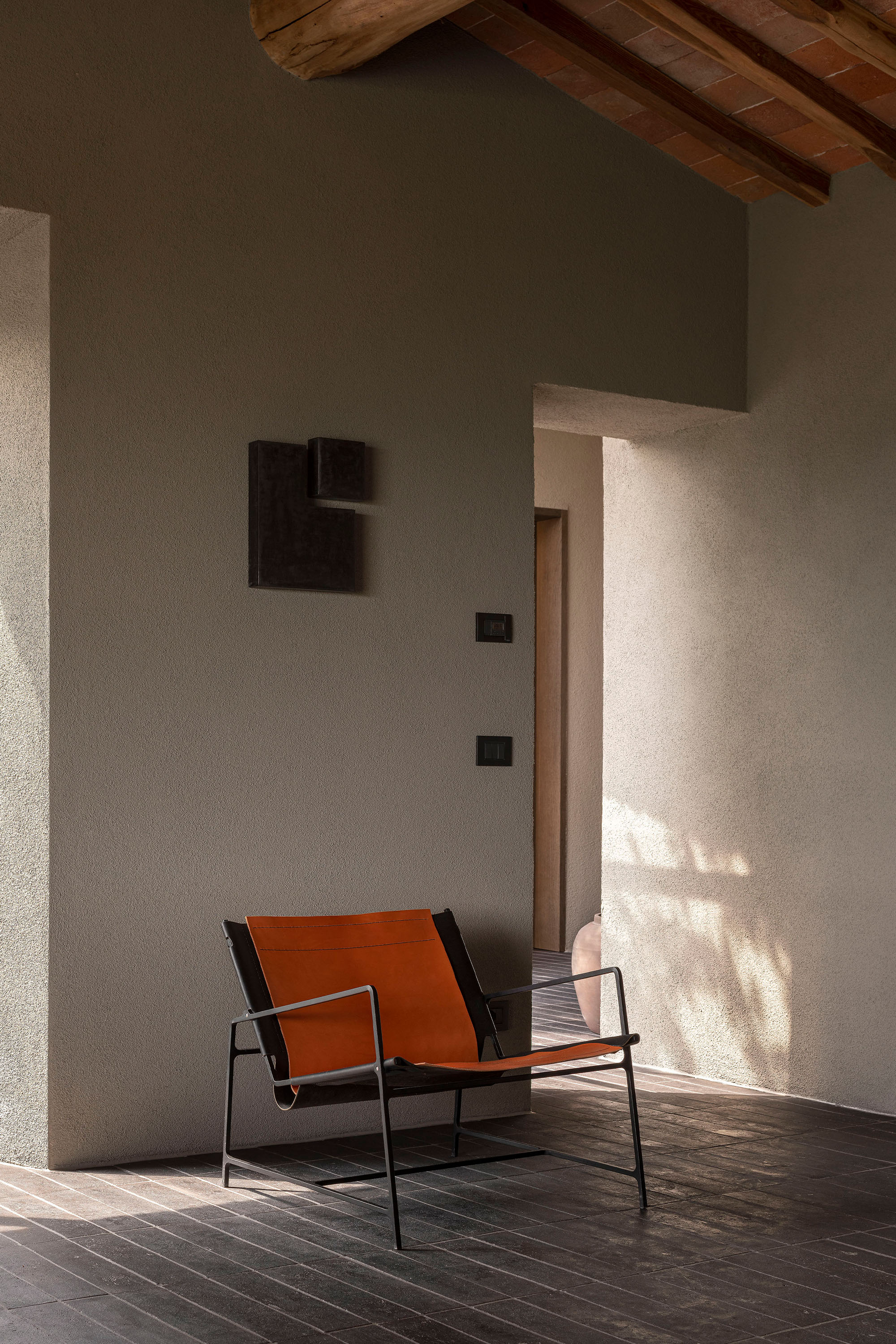
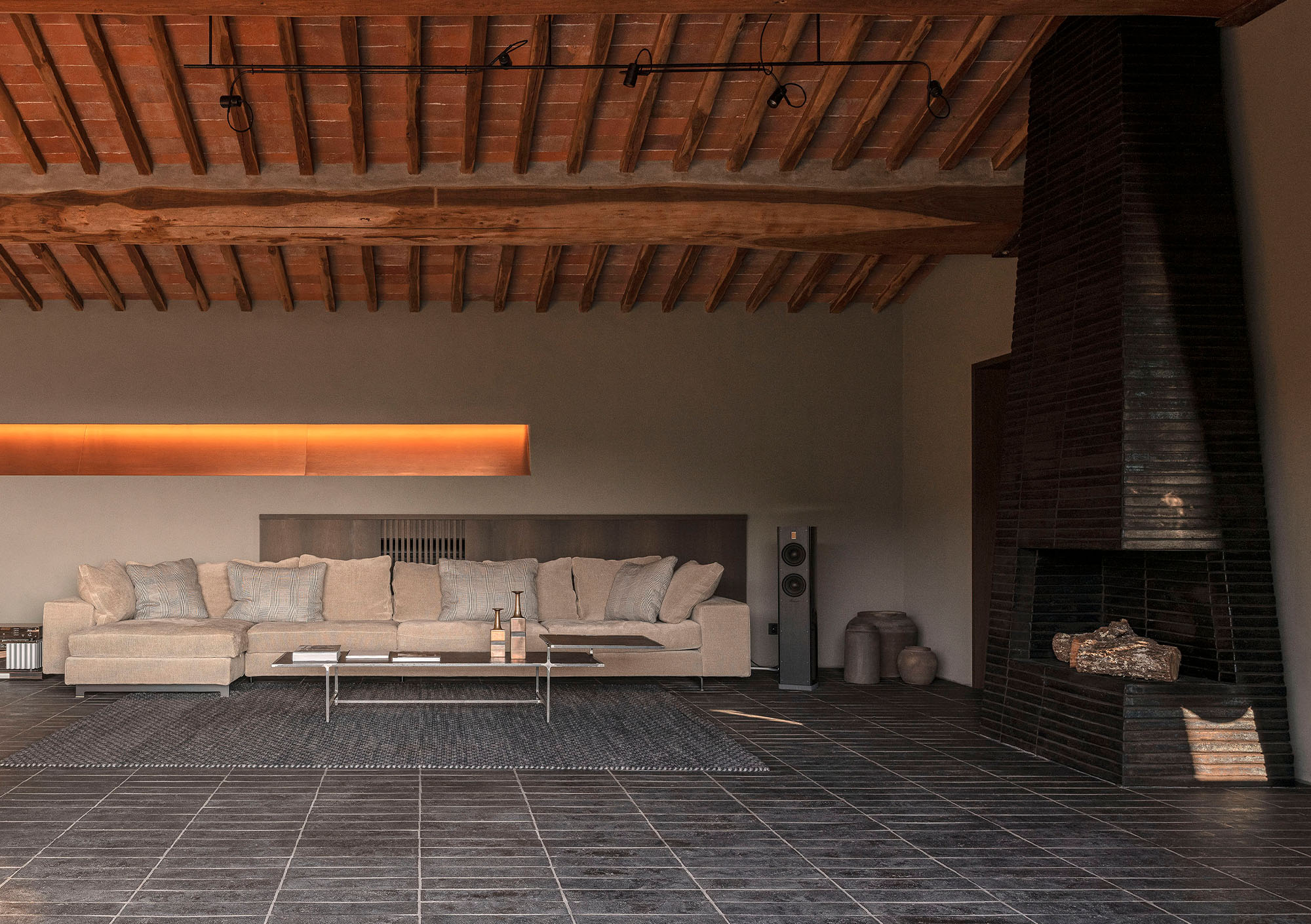
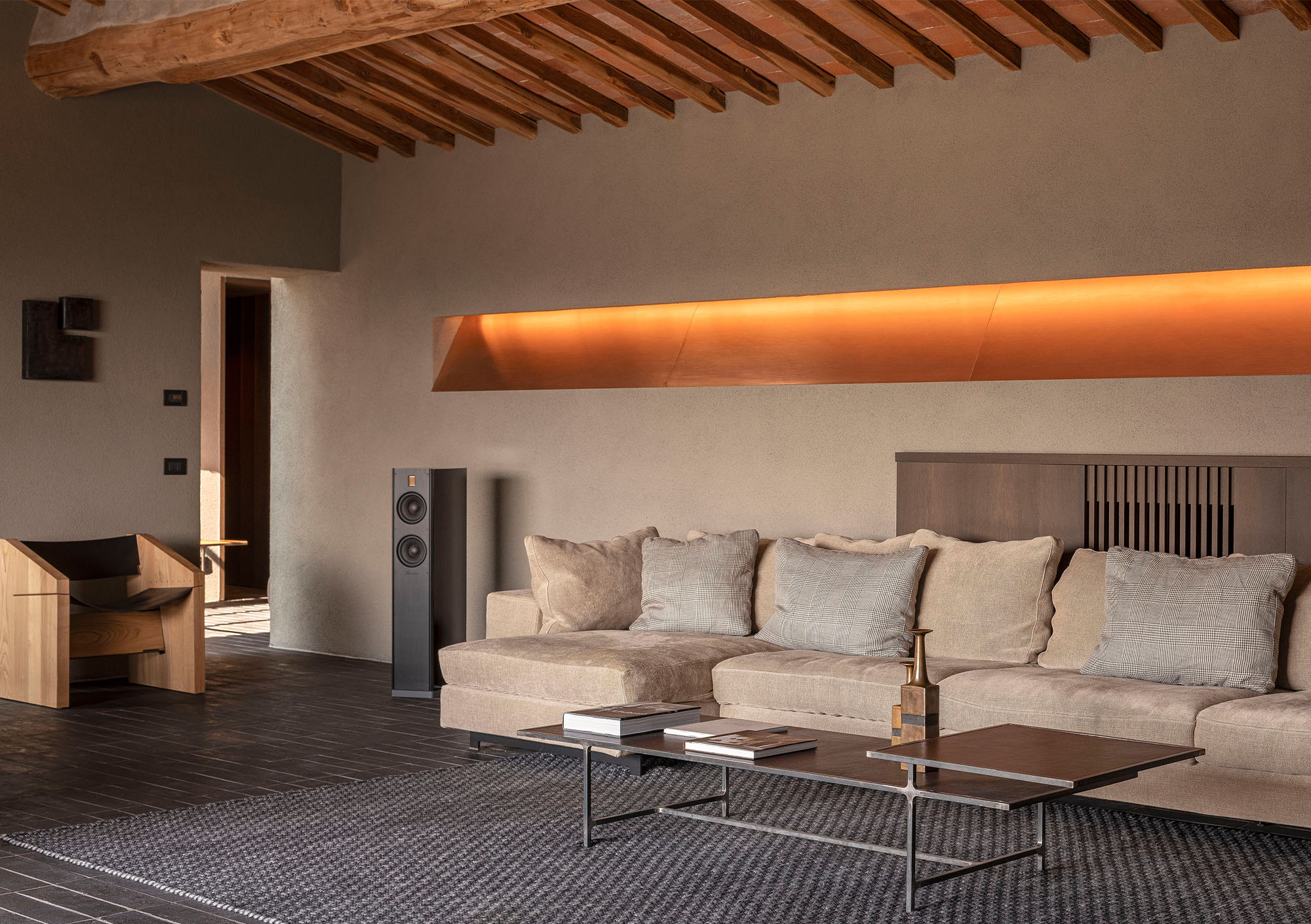
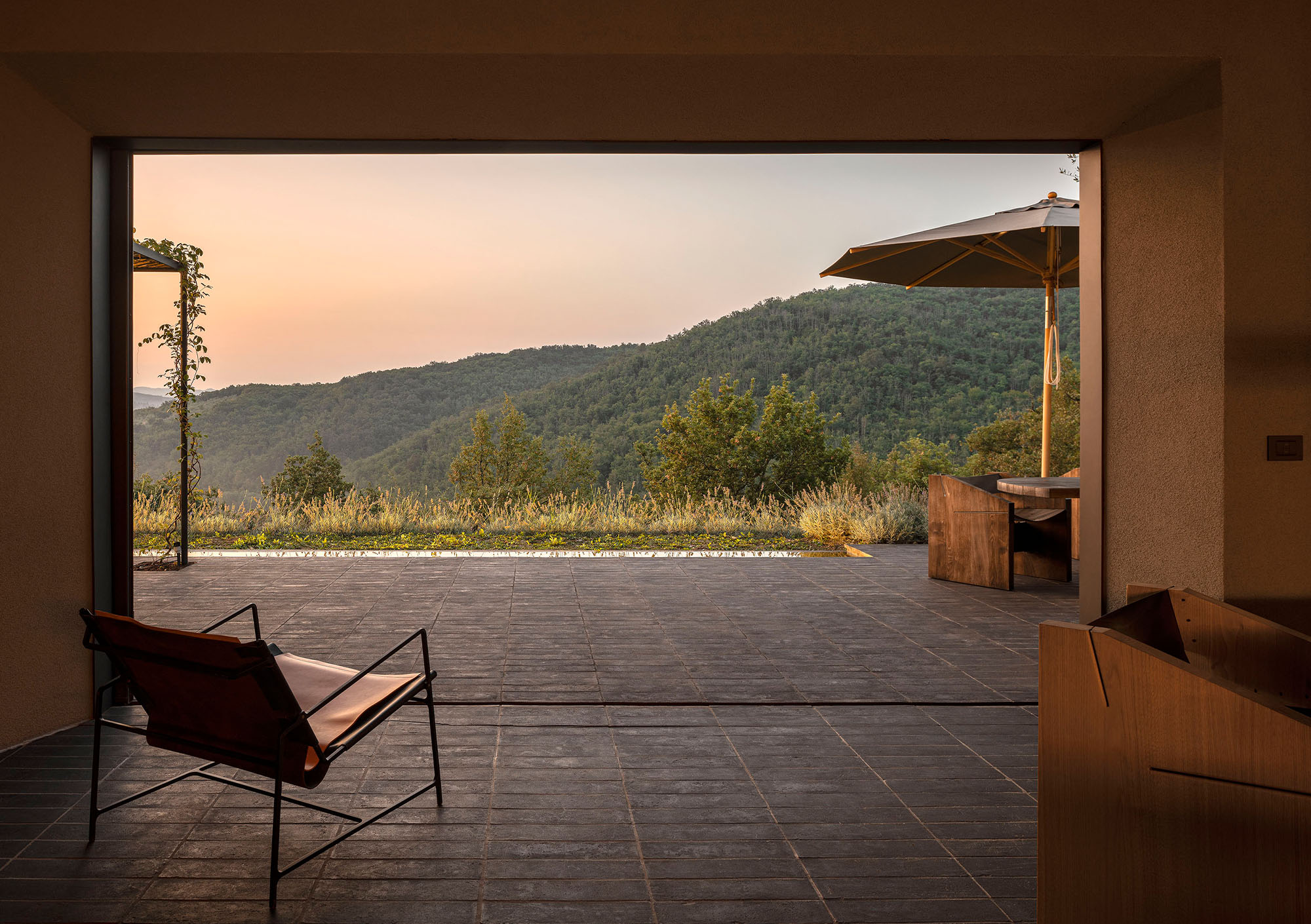
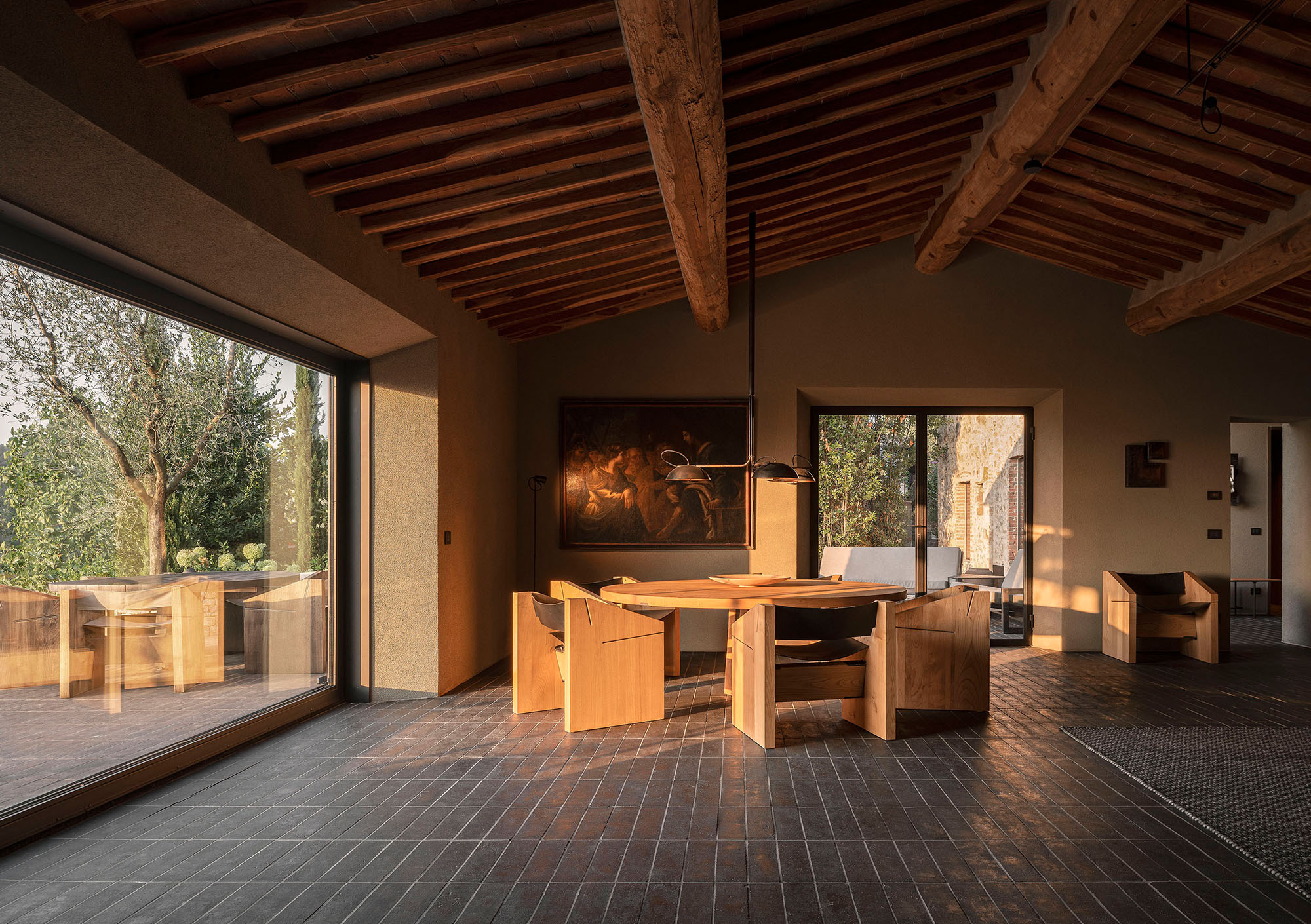
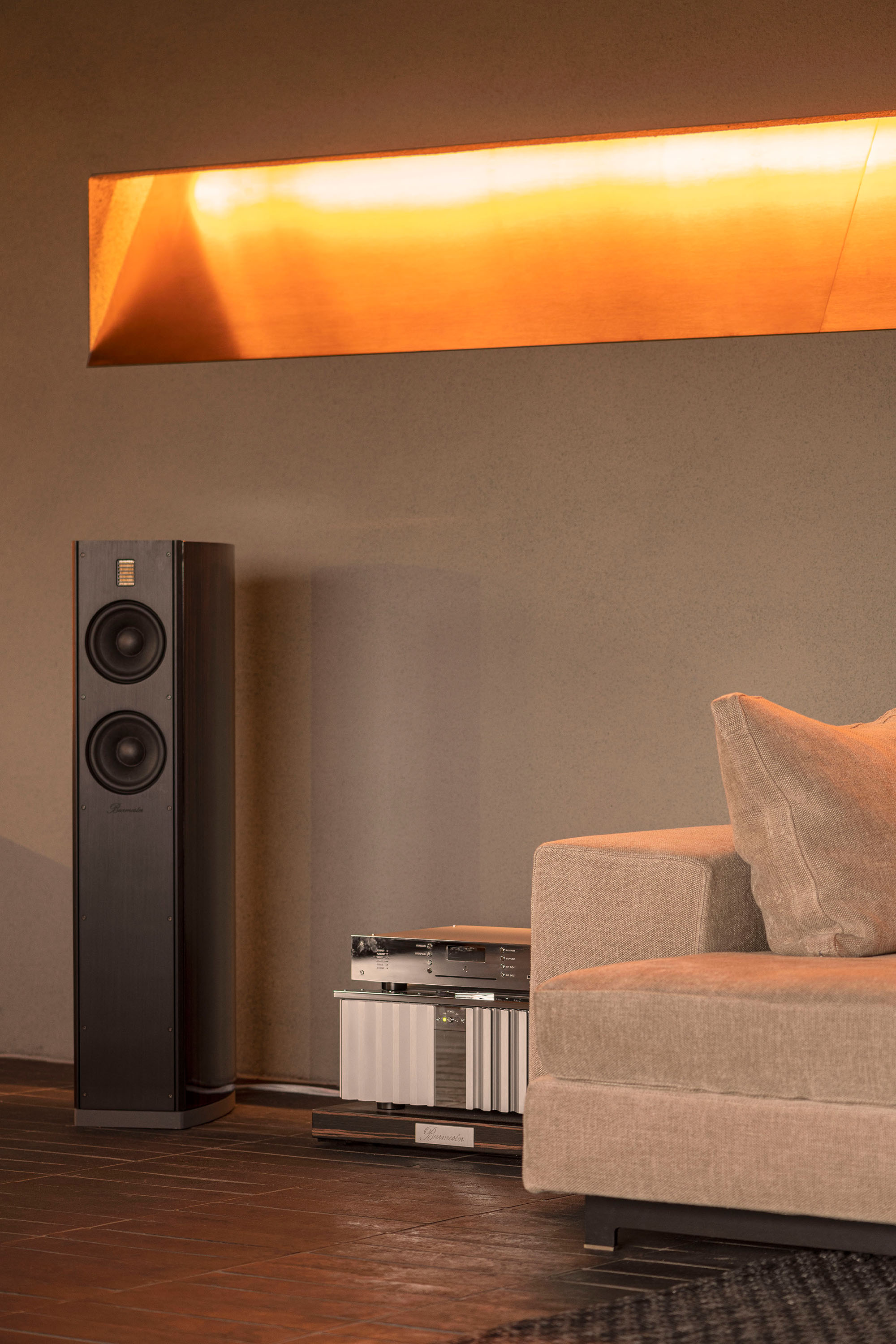
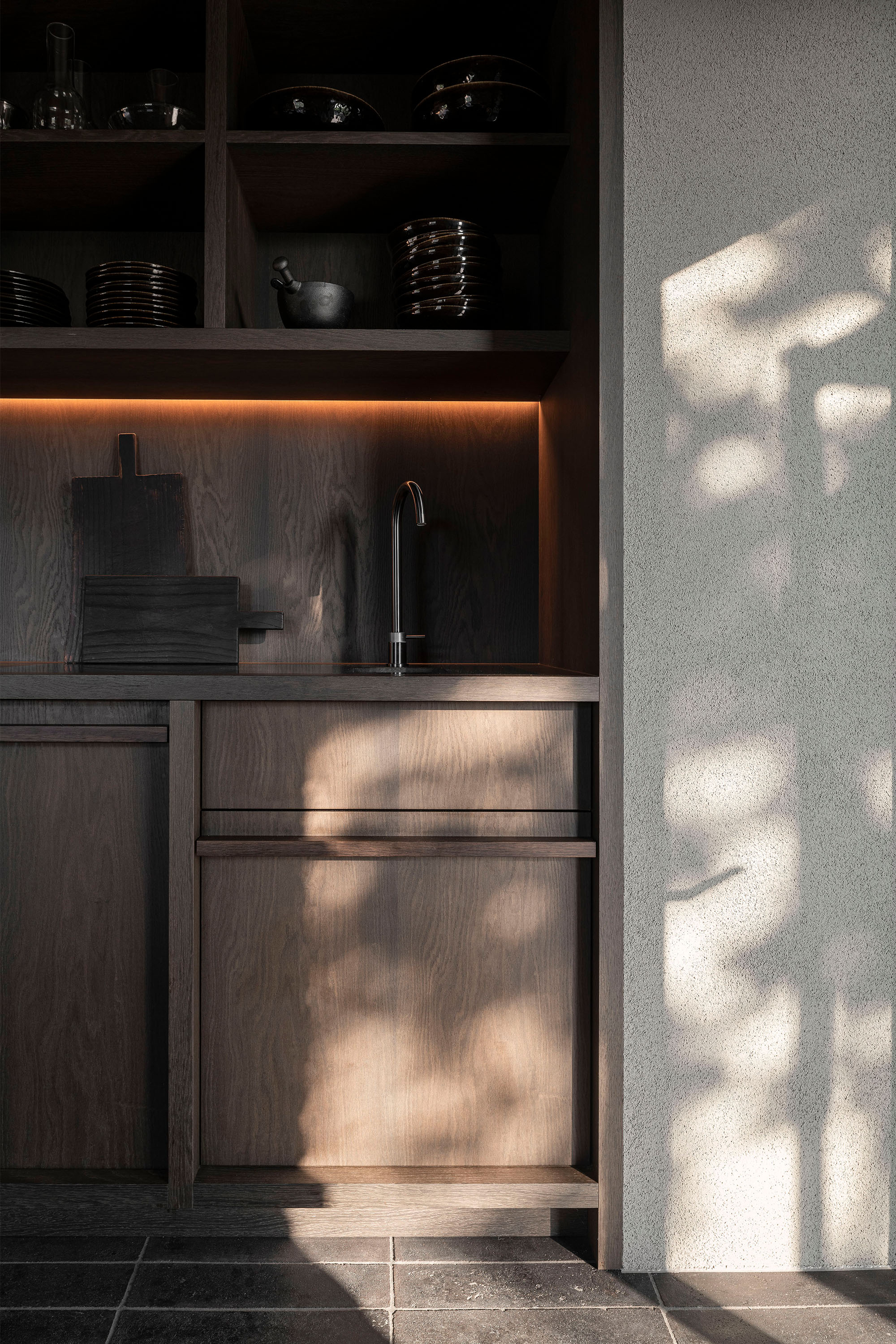
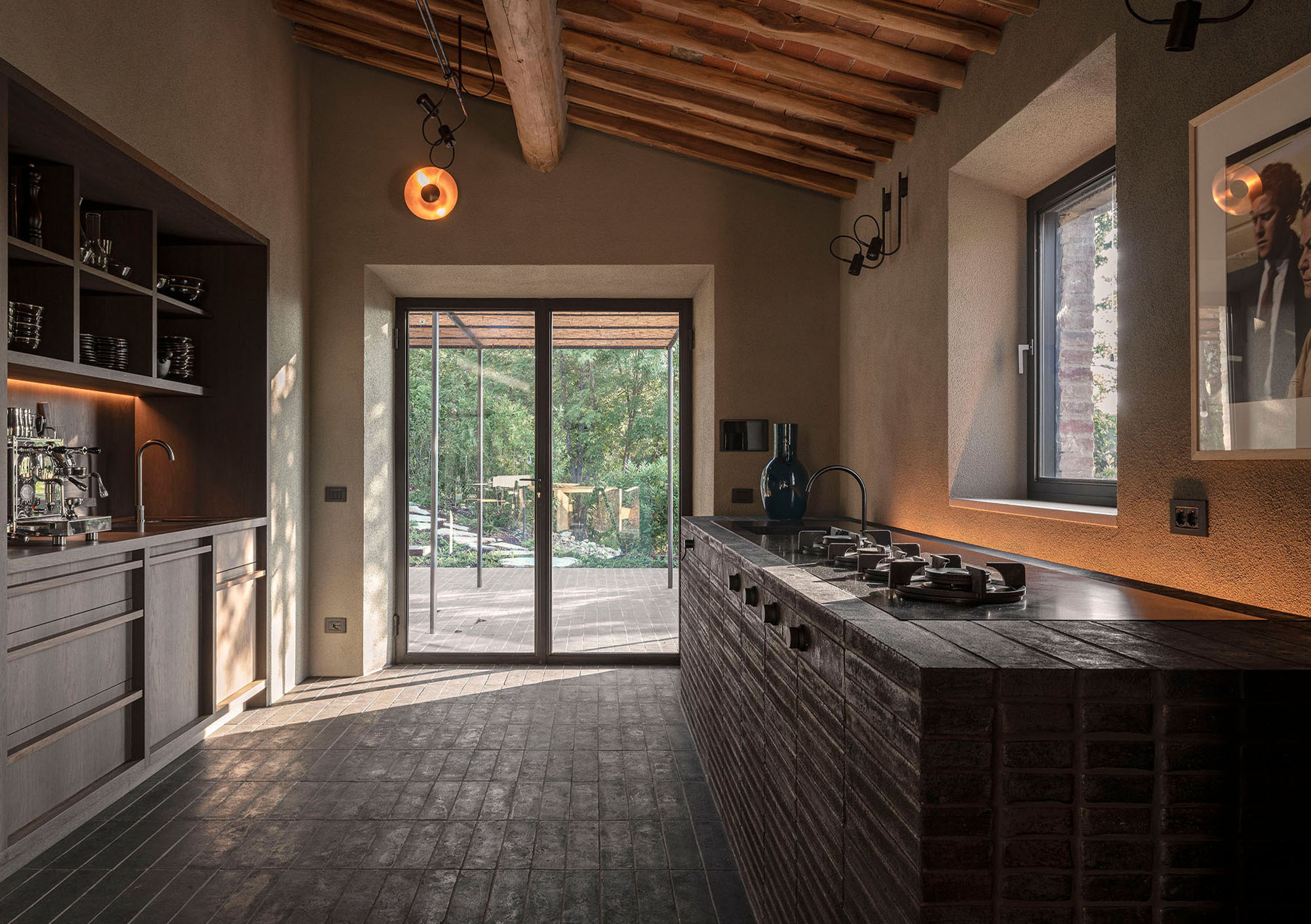
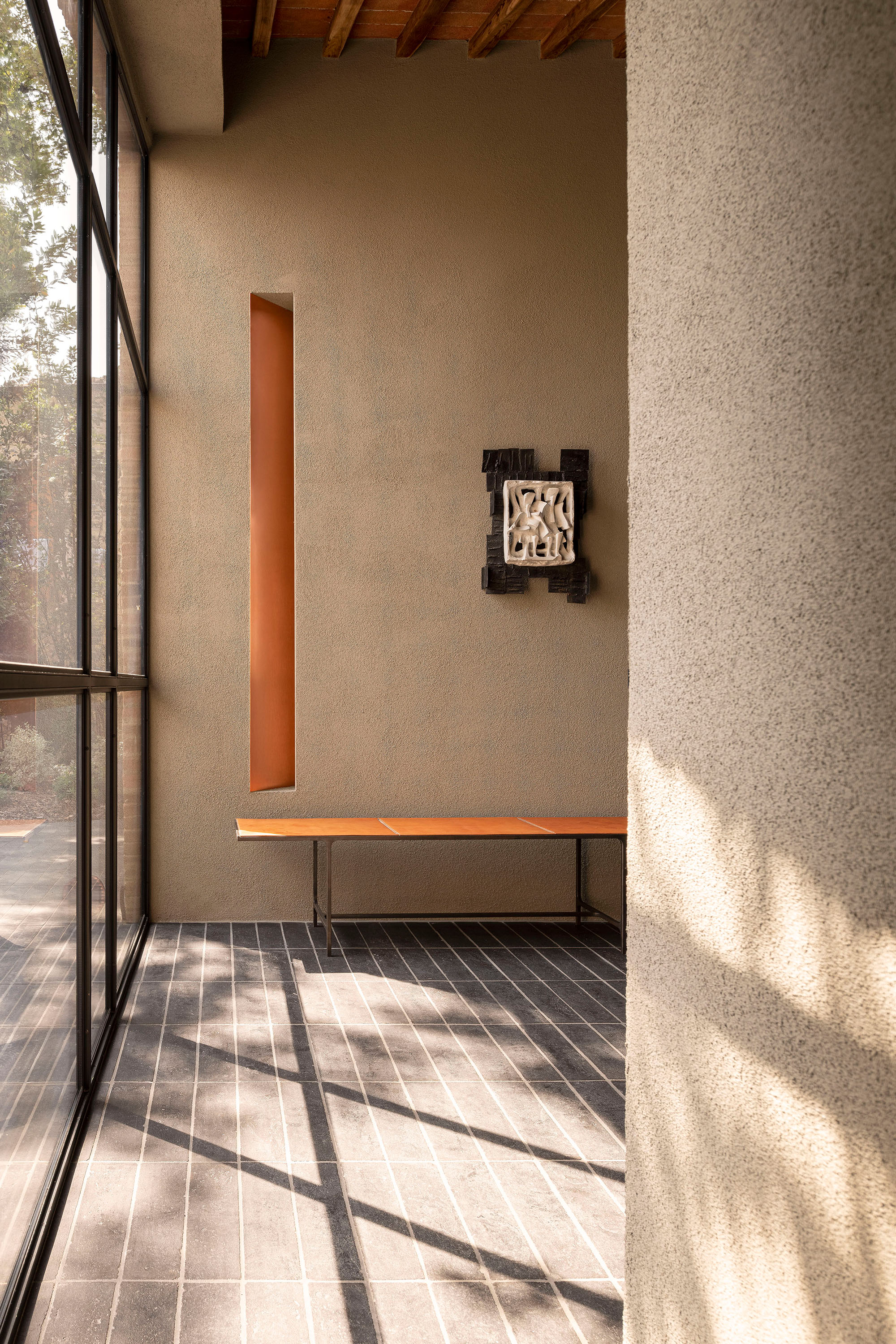
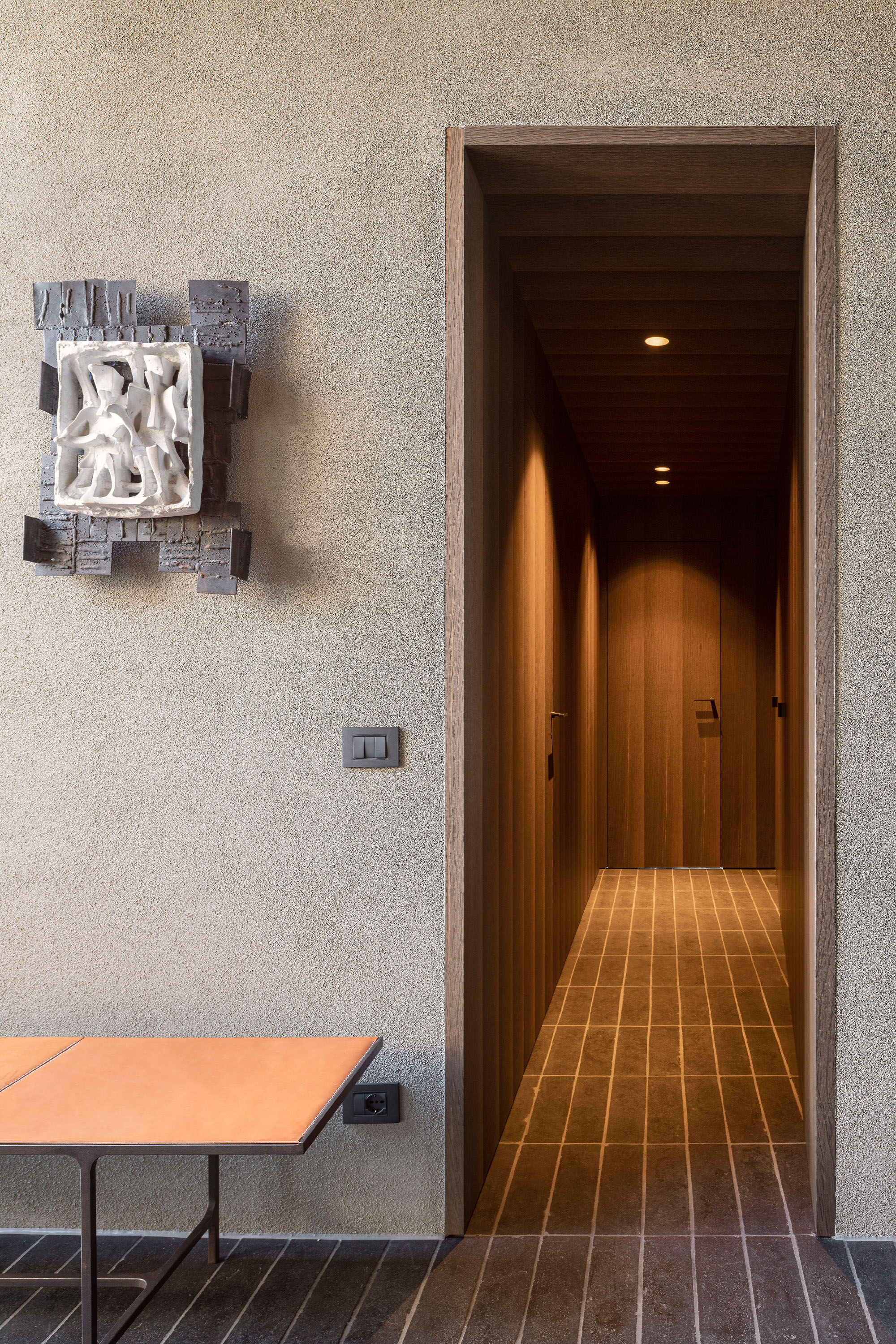
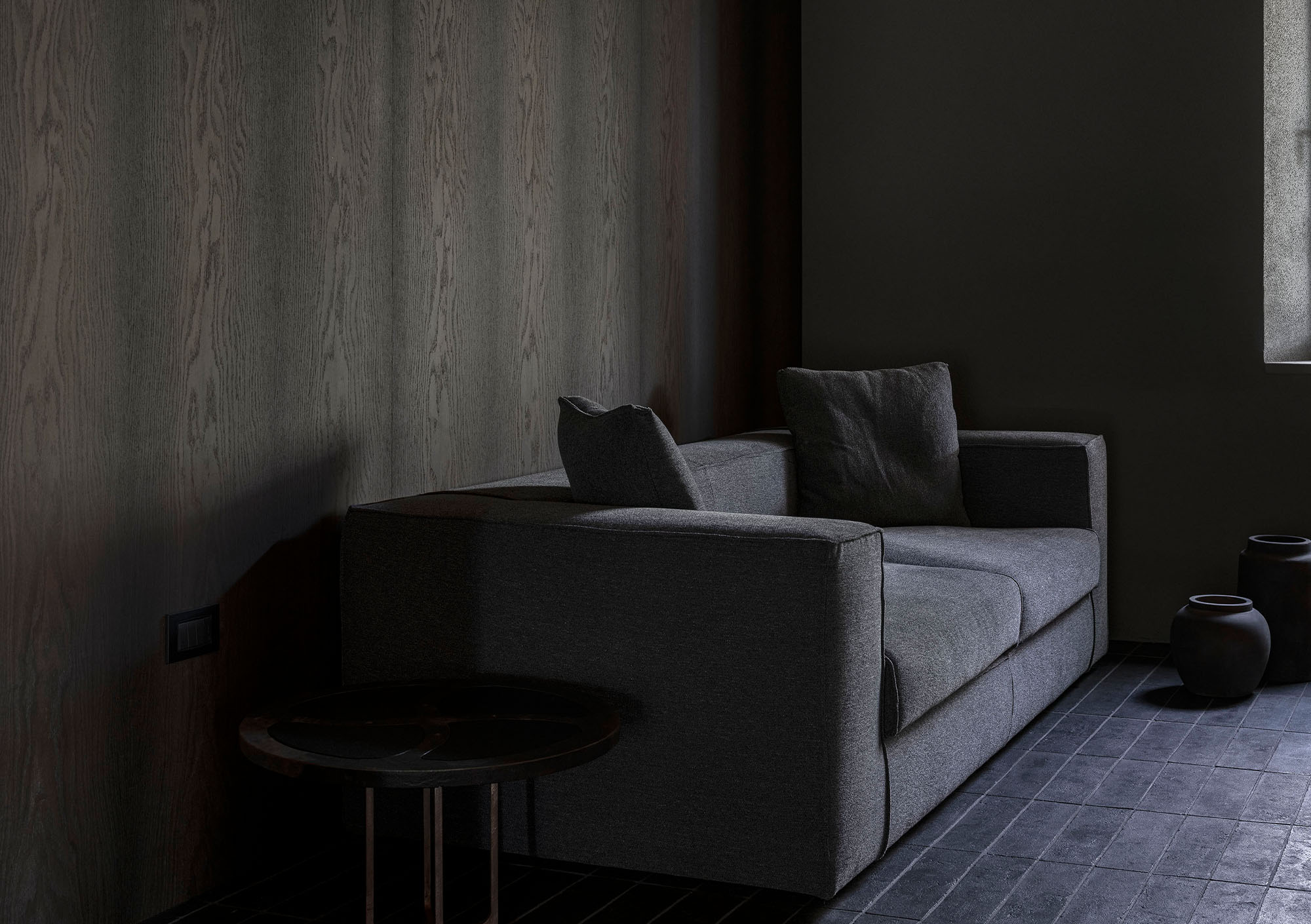
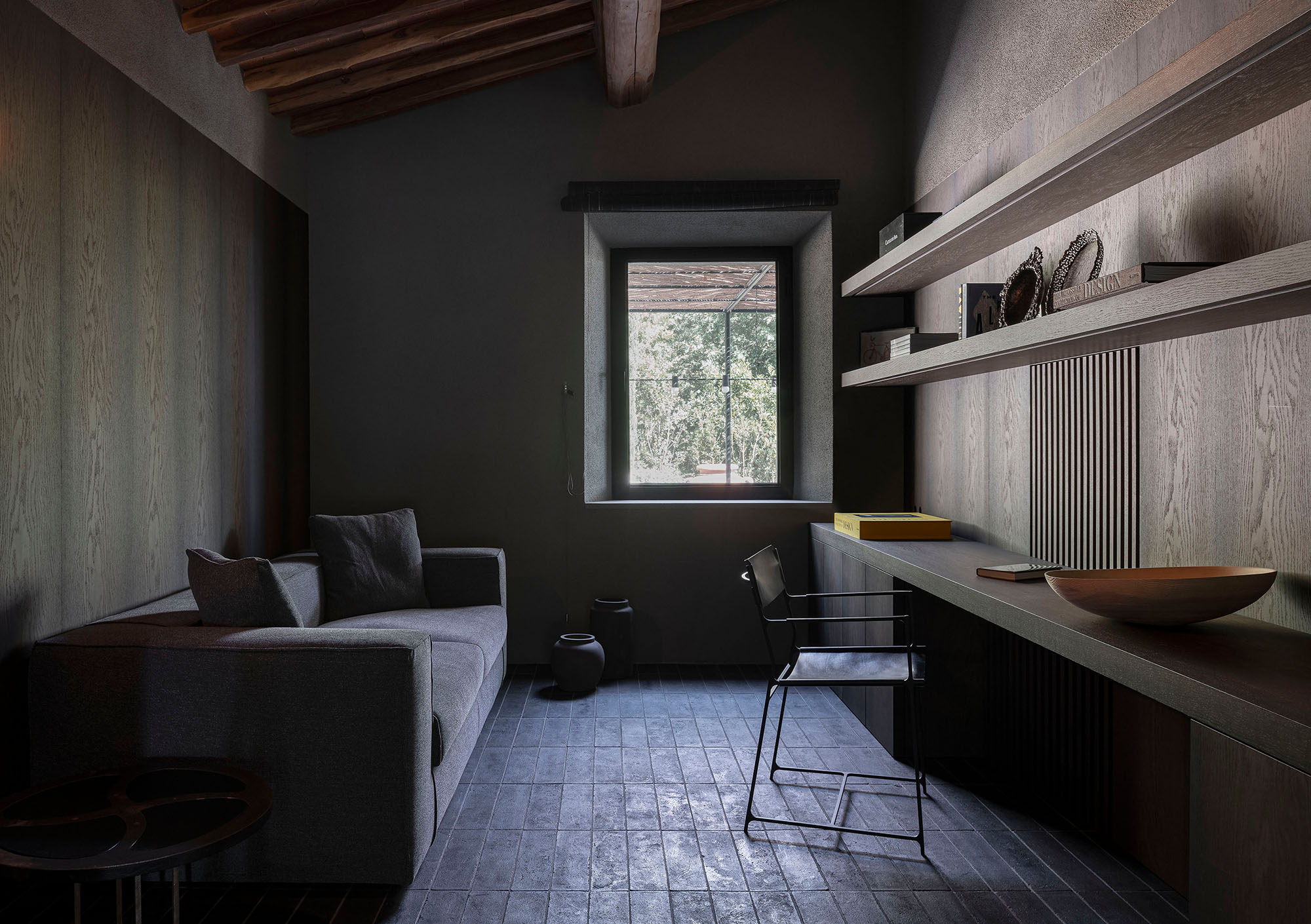
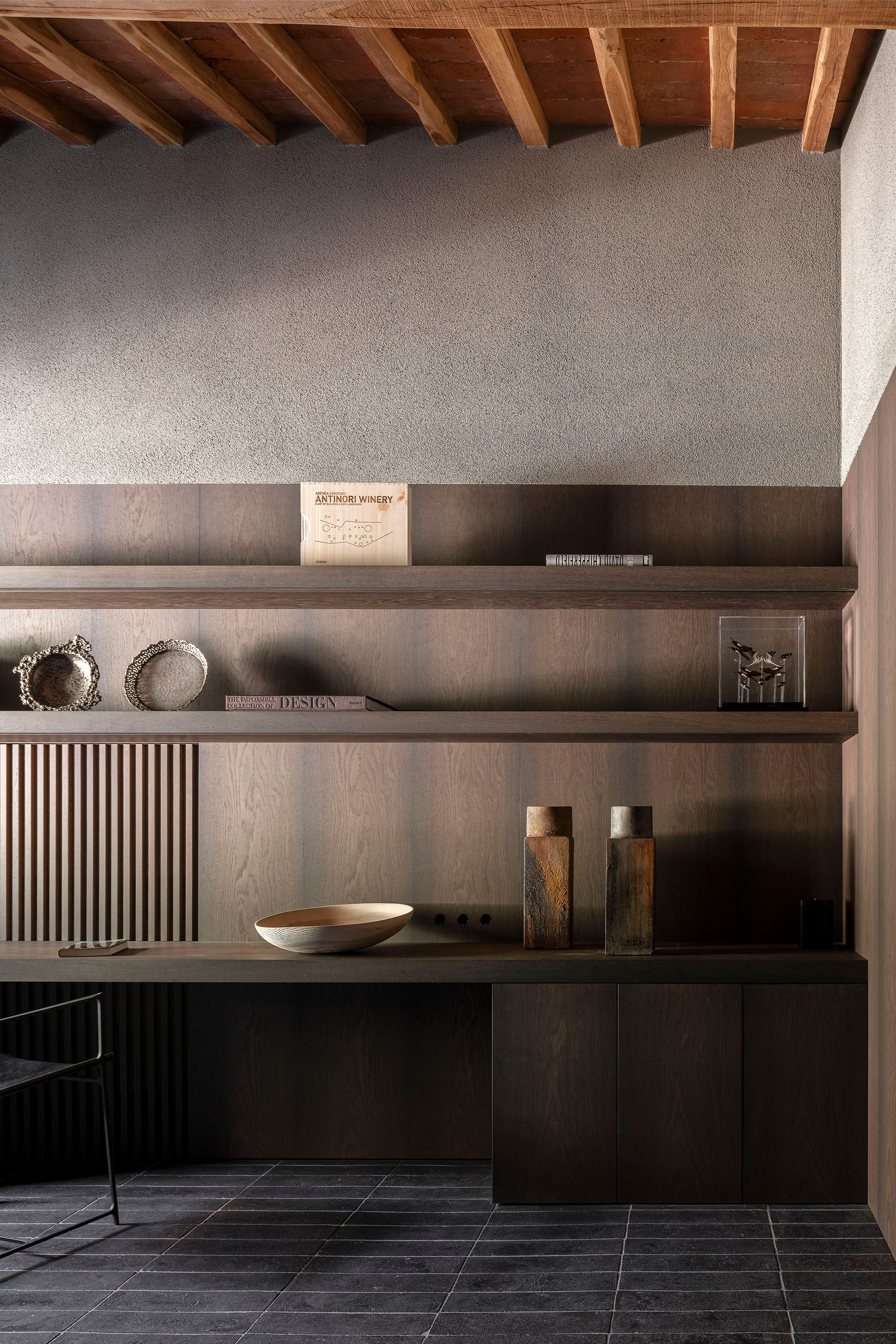
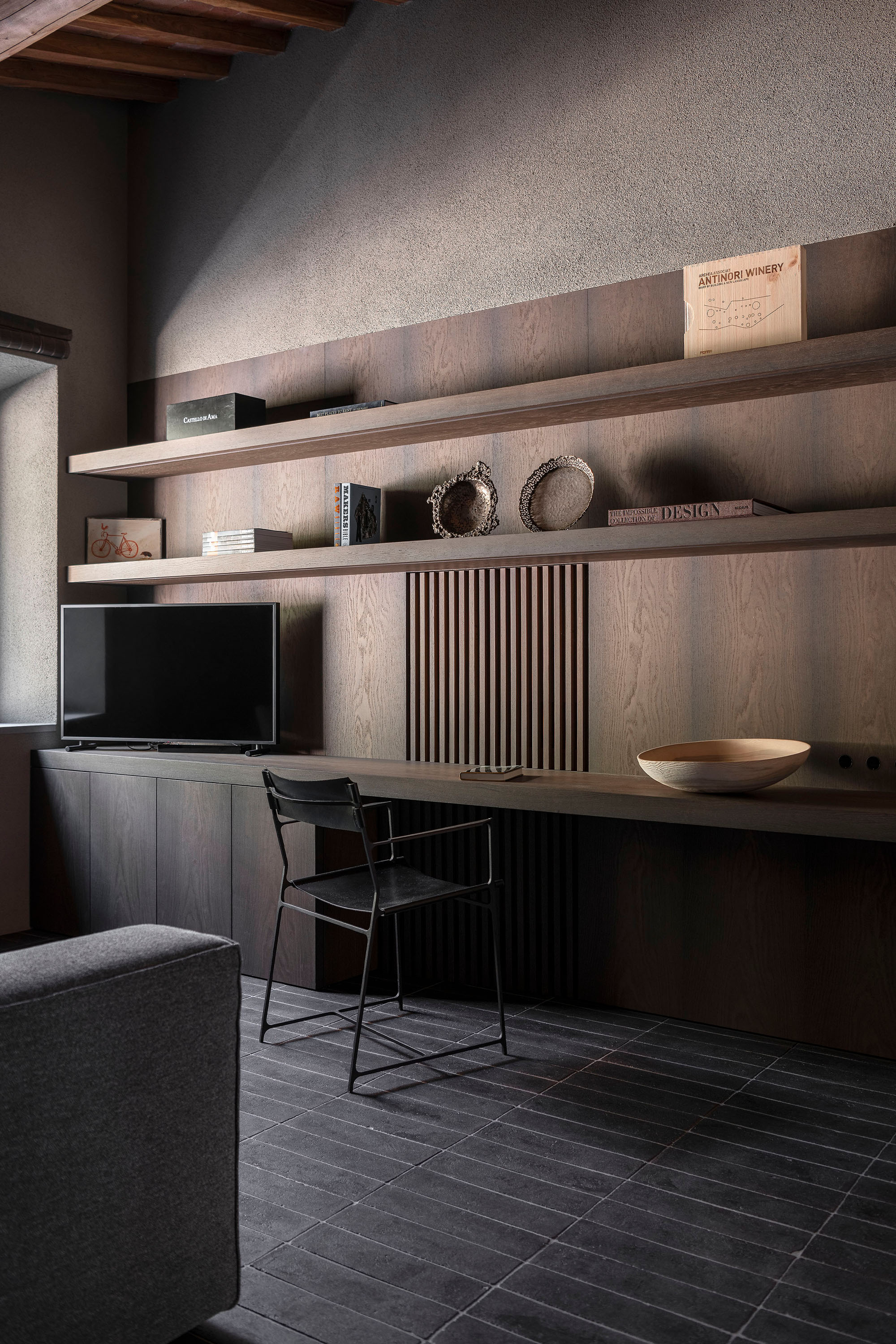
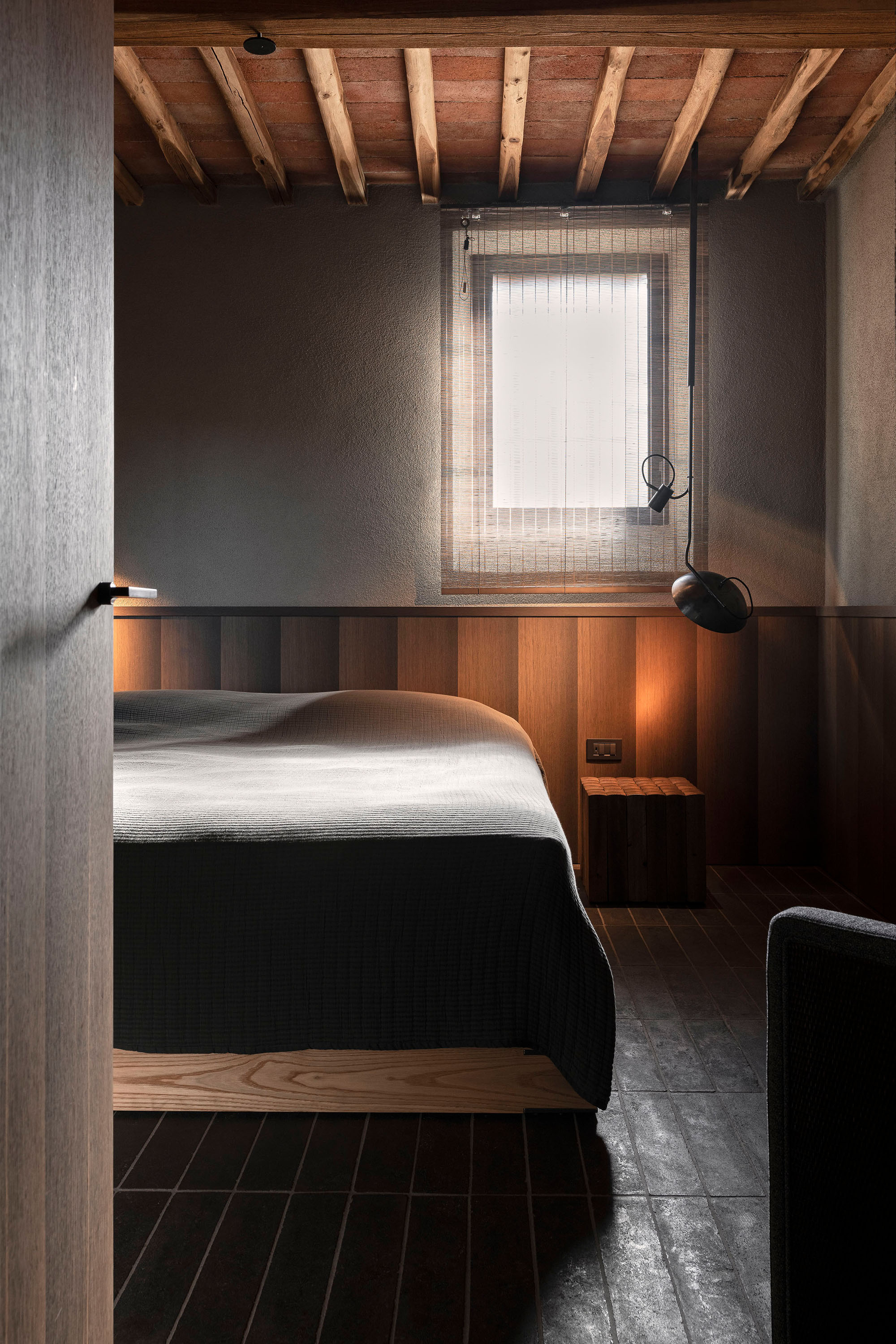
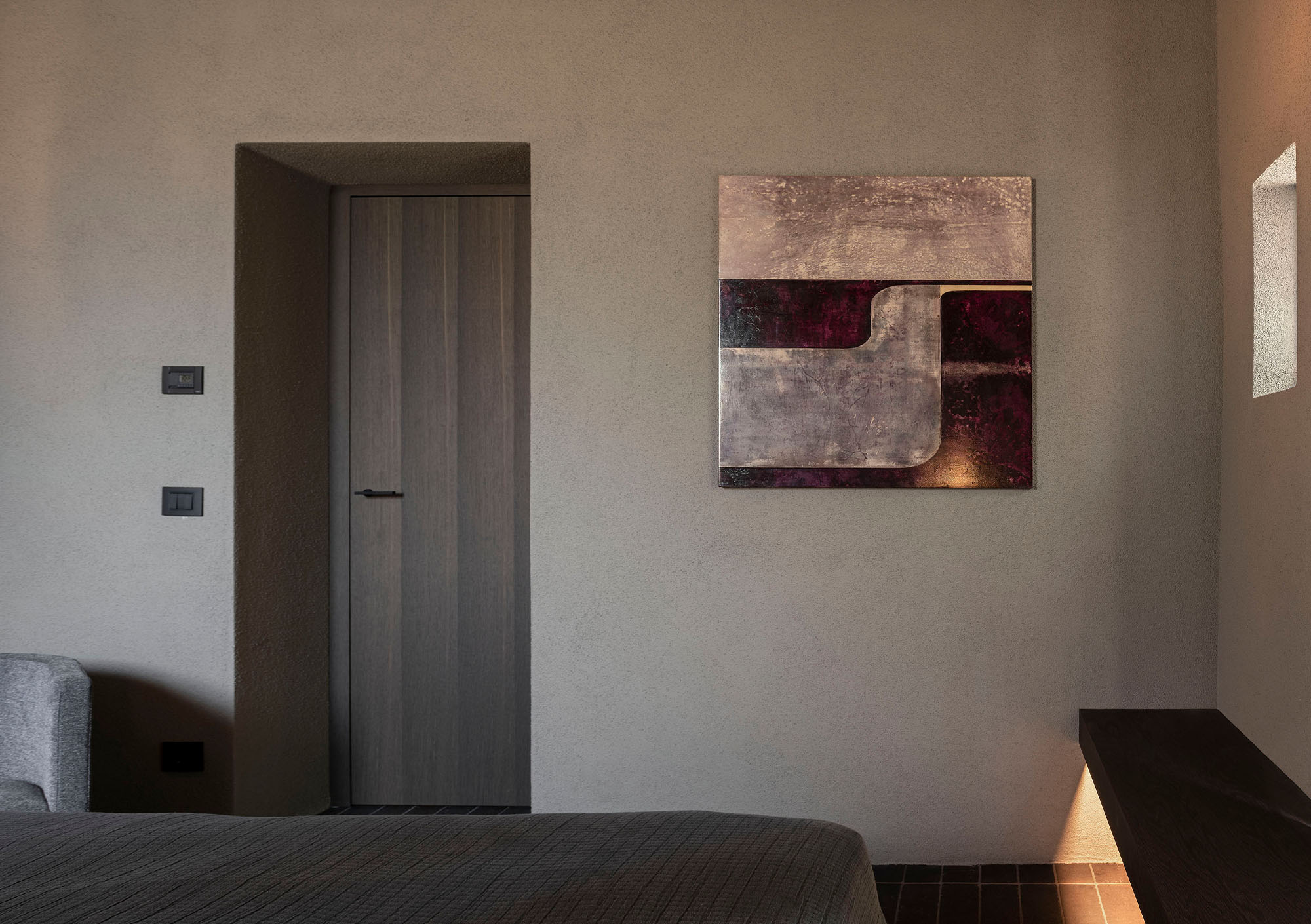
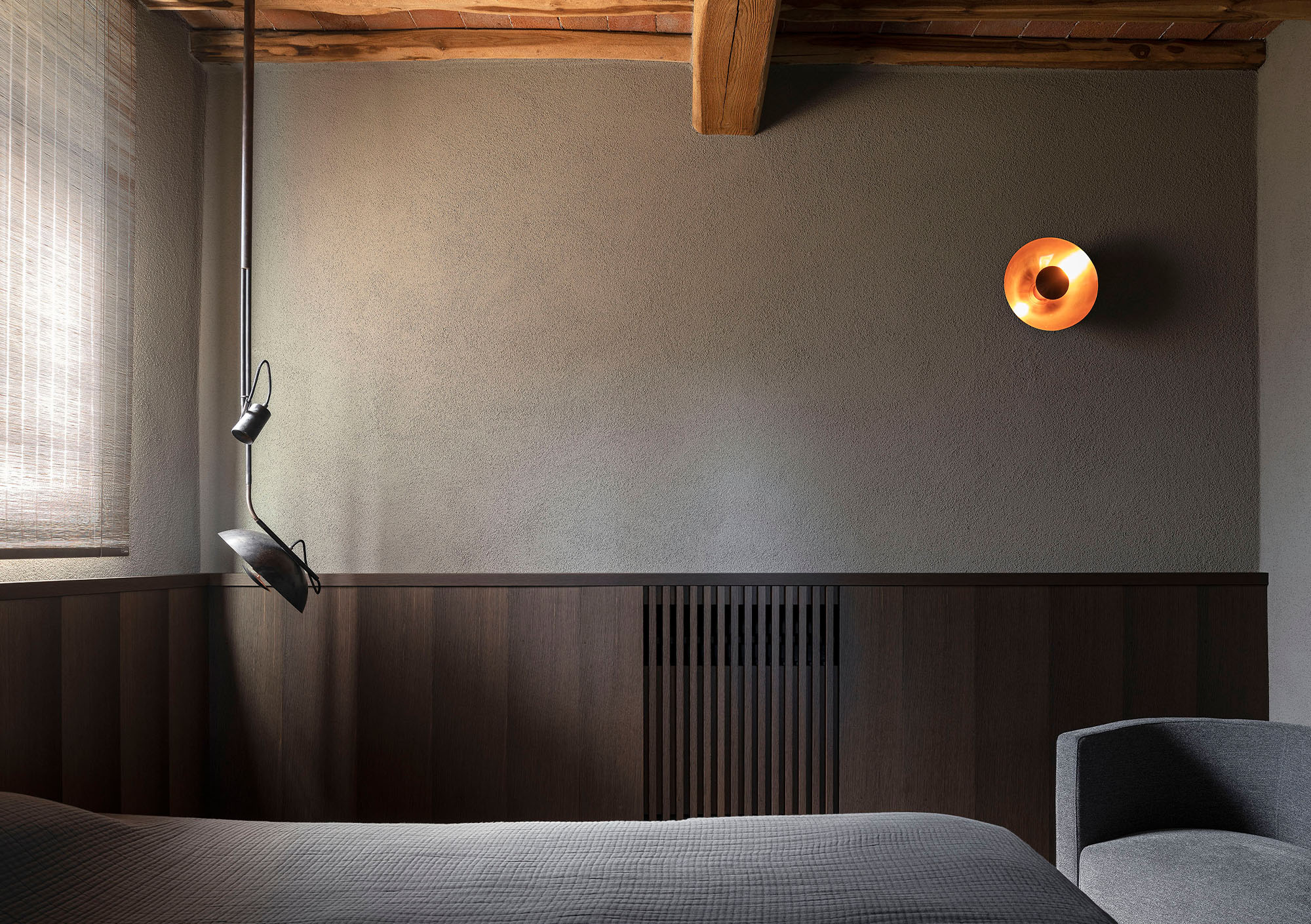
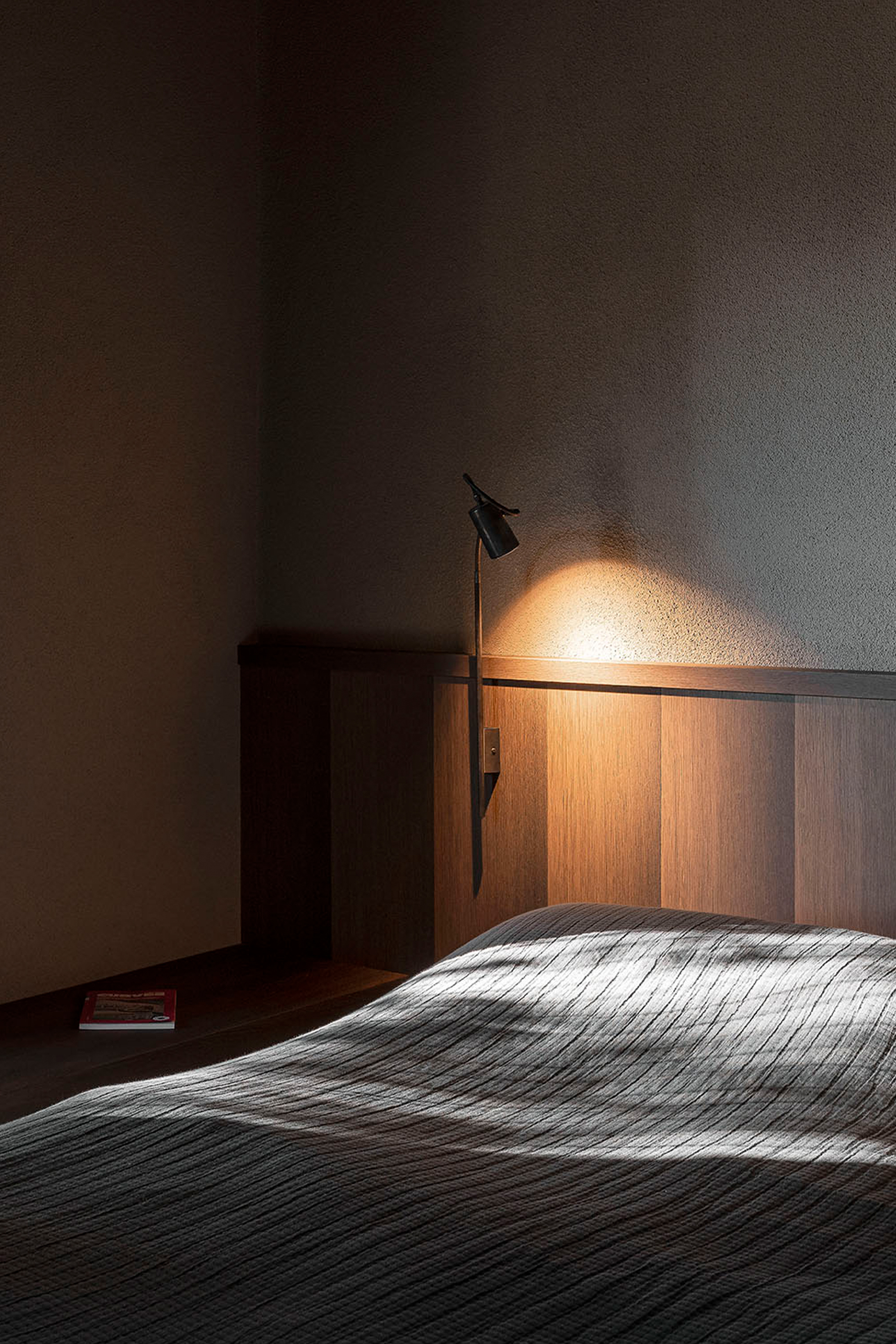
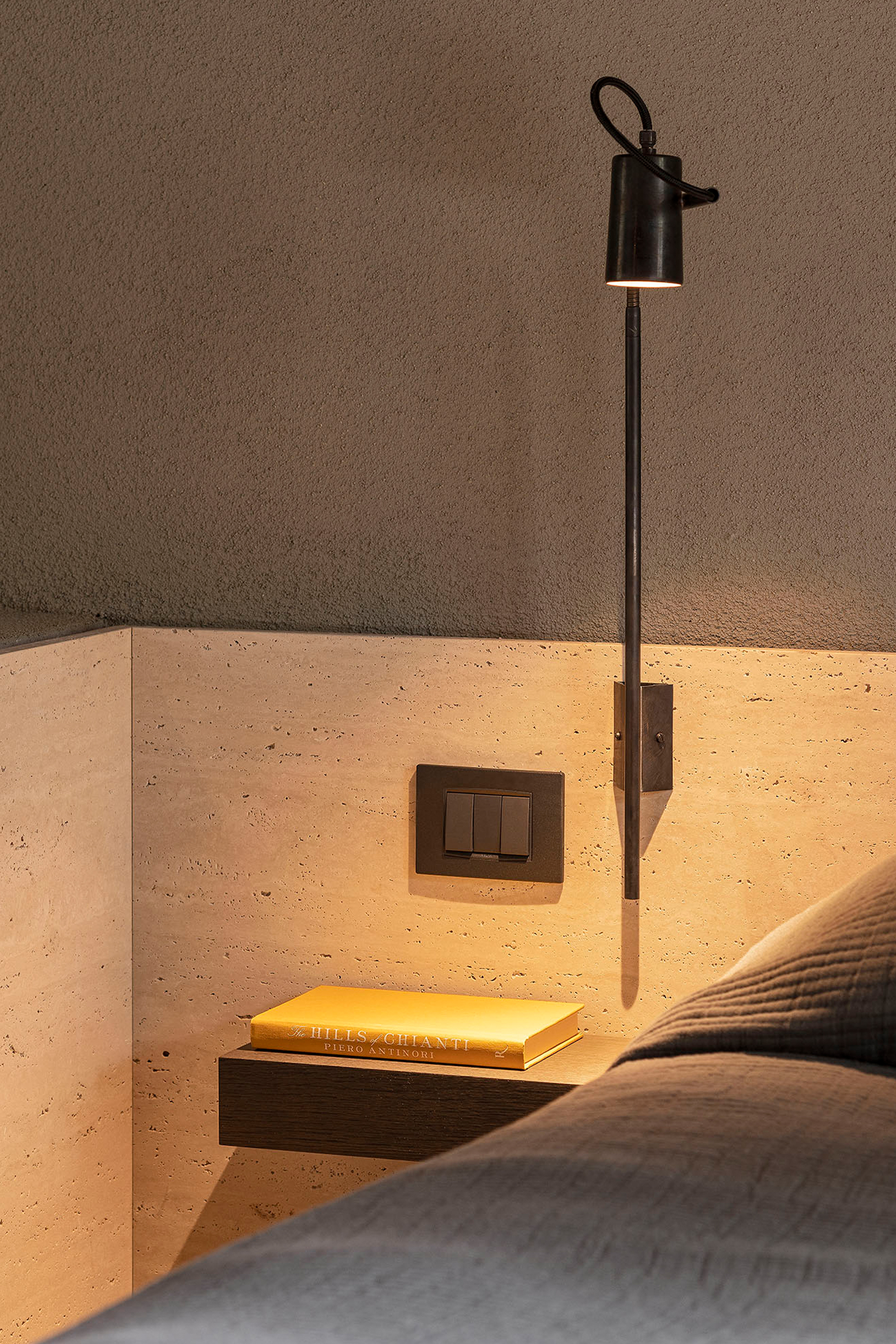
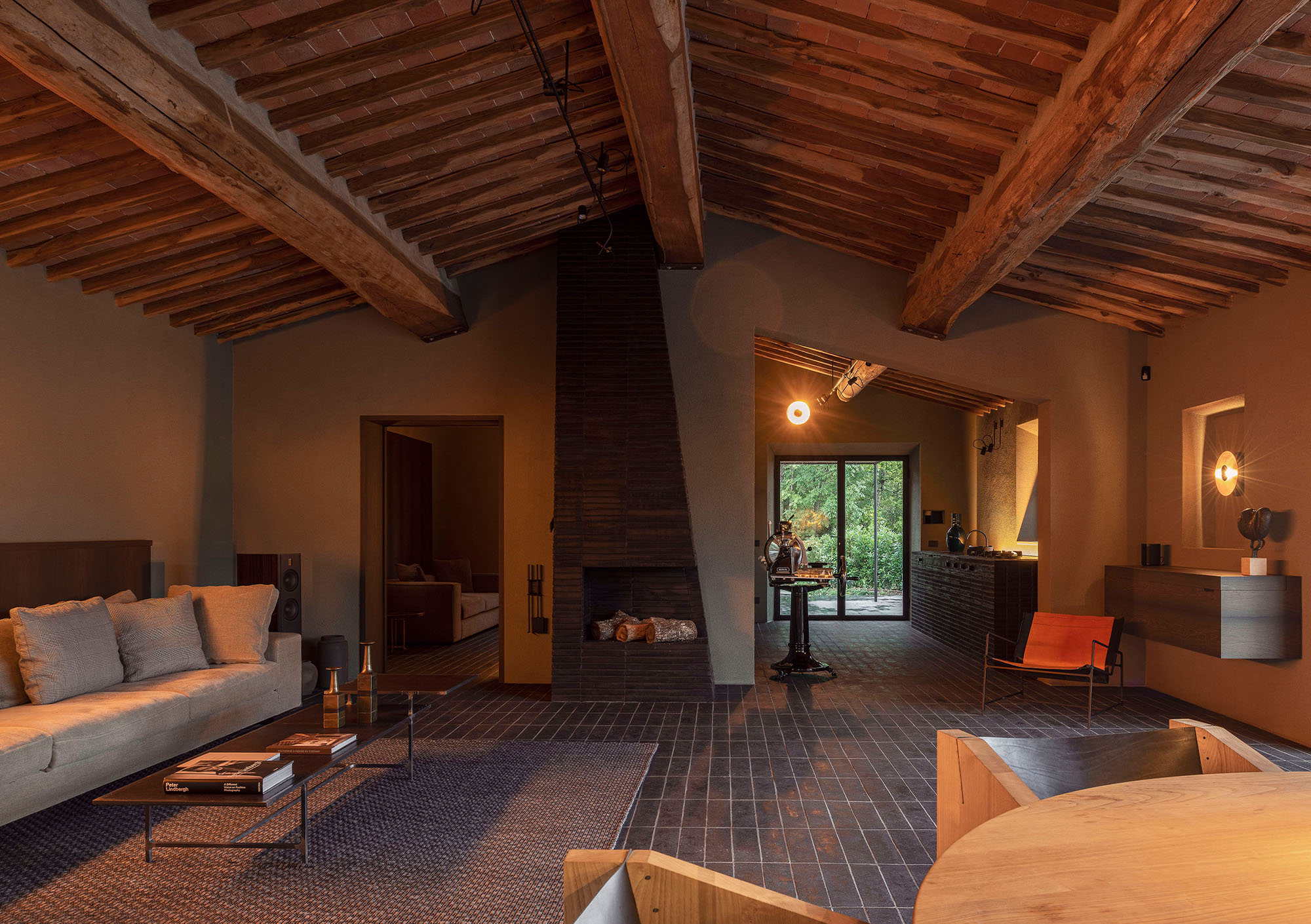
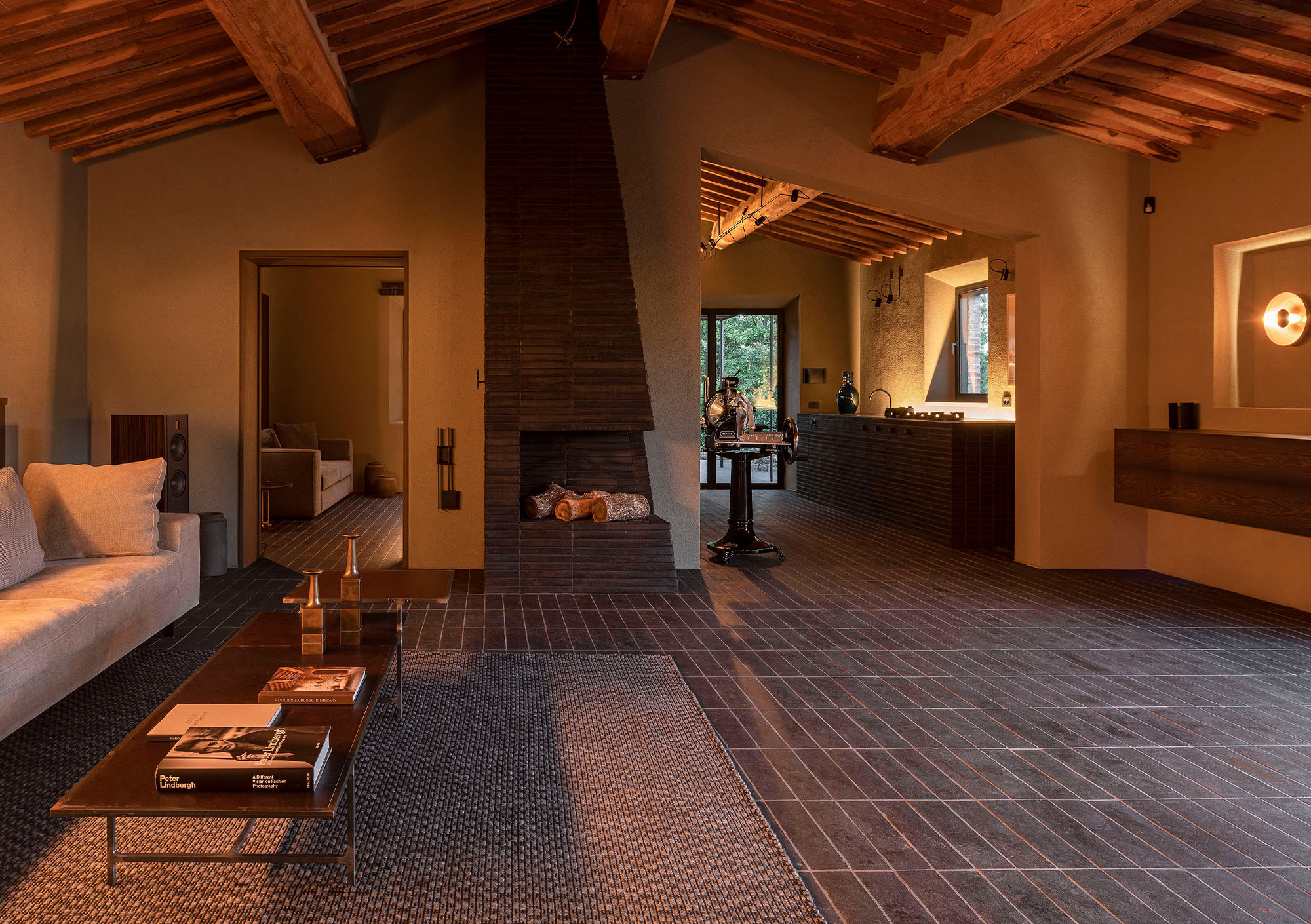
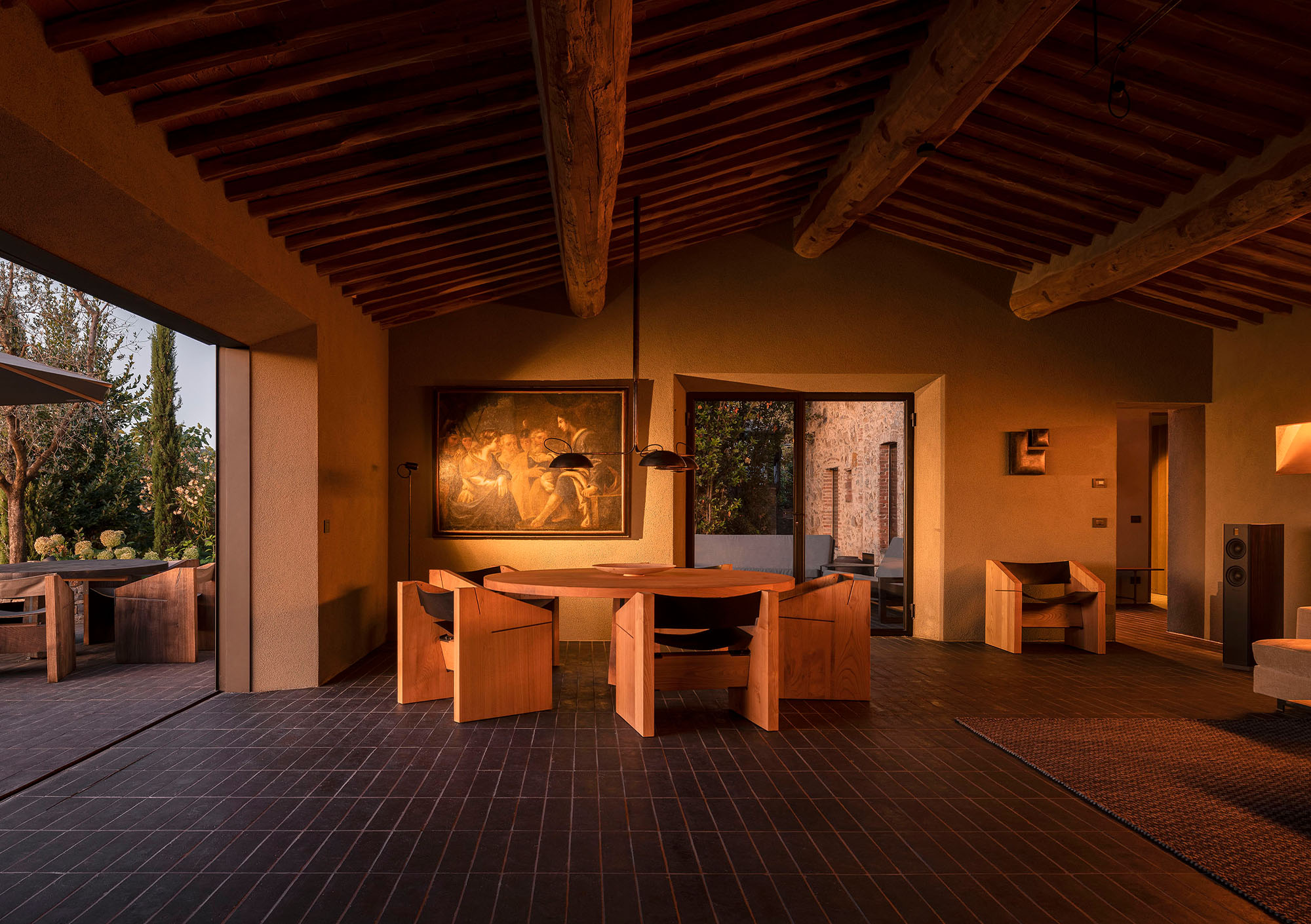
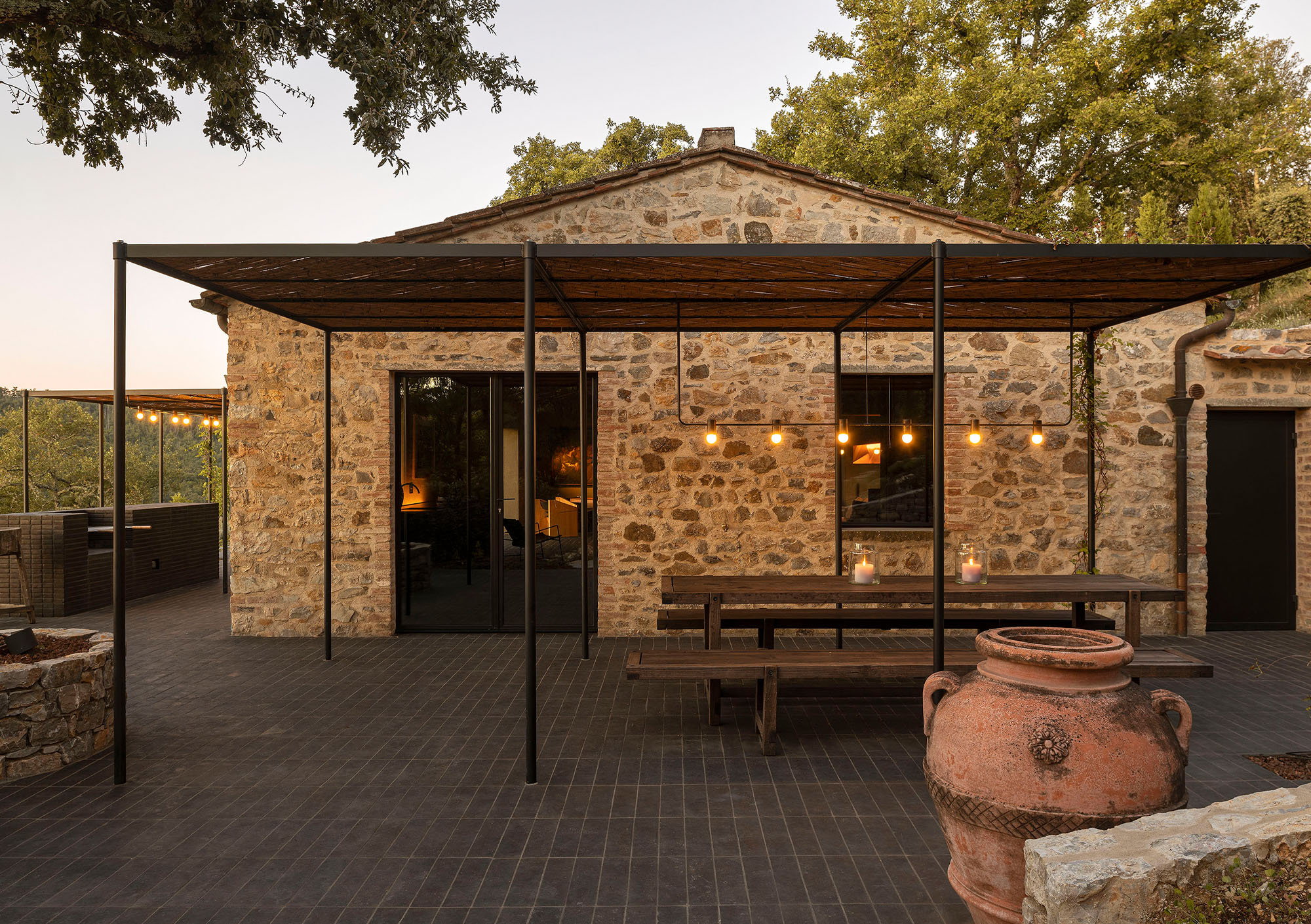
Inside, the atmosphere is intentionally warm and dark—an inversion of the typical bright summer-house palette. Anthracite cotto floors, built-ins in bog oak, and a granular plaster finish act as a counterpoint to the Tuscan sun, offering a sense of shade and calm. Openings are expansive—so generous that the categories of inside and outside begin to dissolve. Black steel frames define the glazing, while a panoramic opening—conceived like a barn door applied to the façade—can lift fully away to leave the landscape uninterrupted.
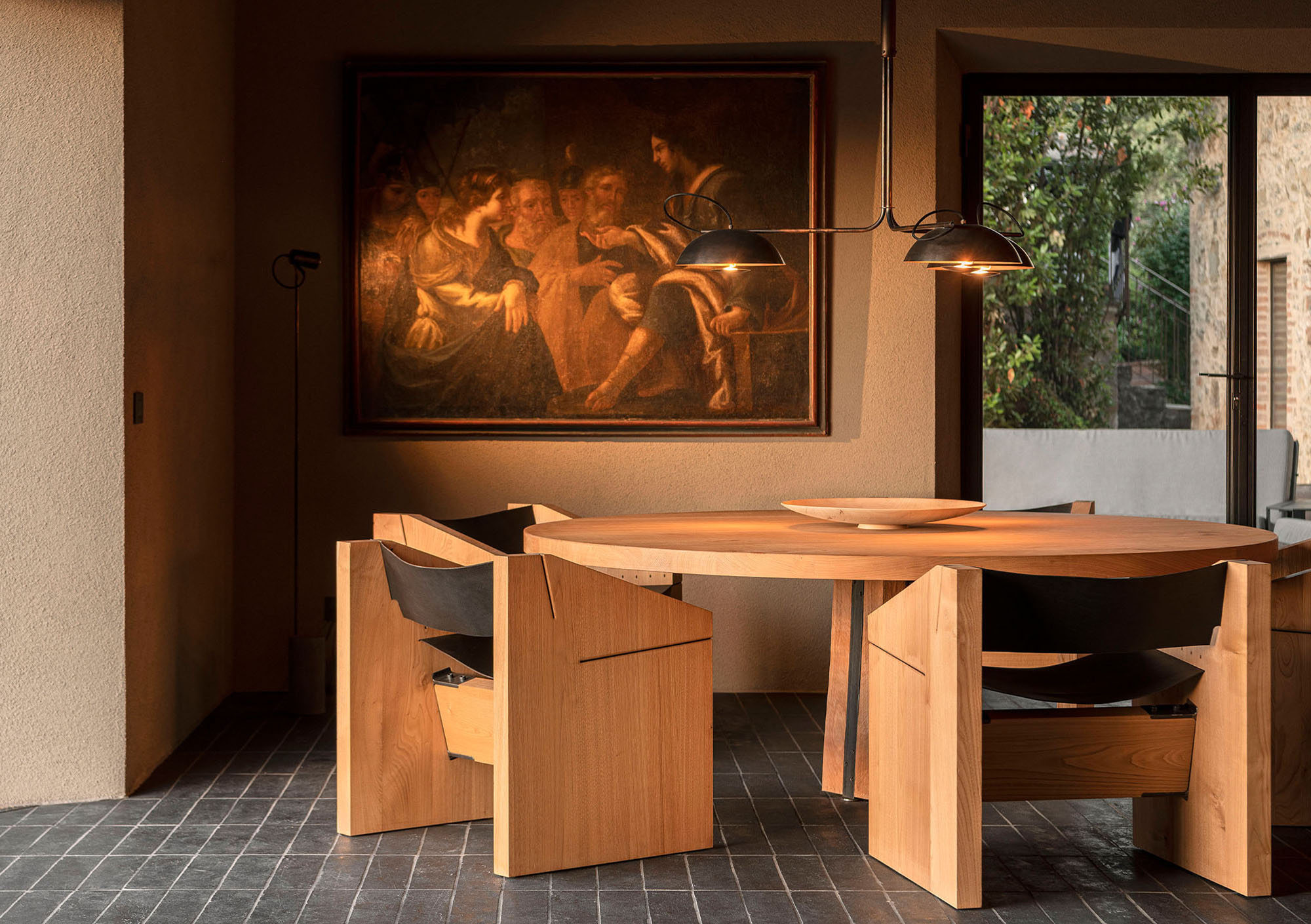
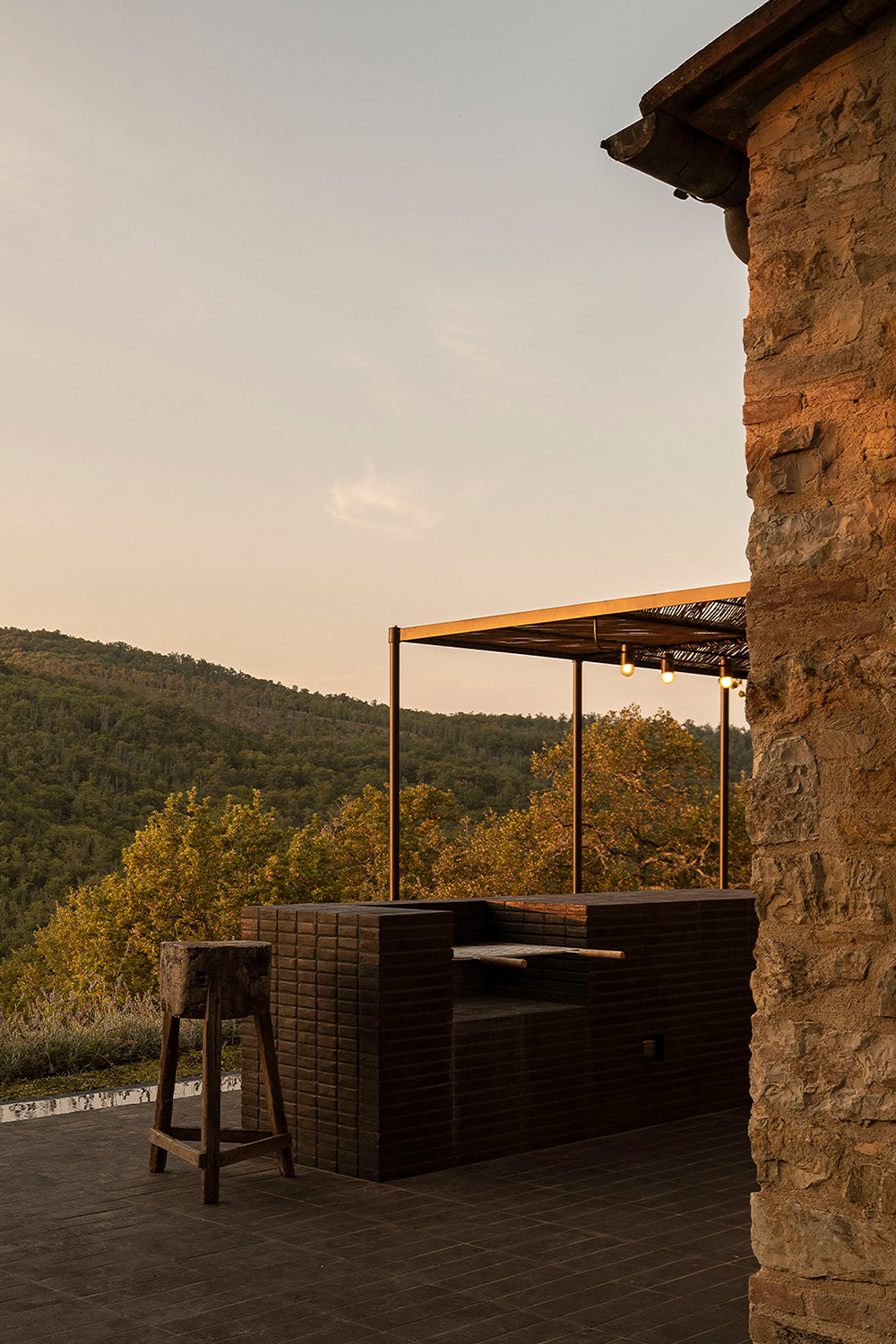
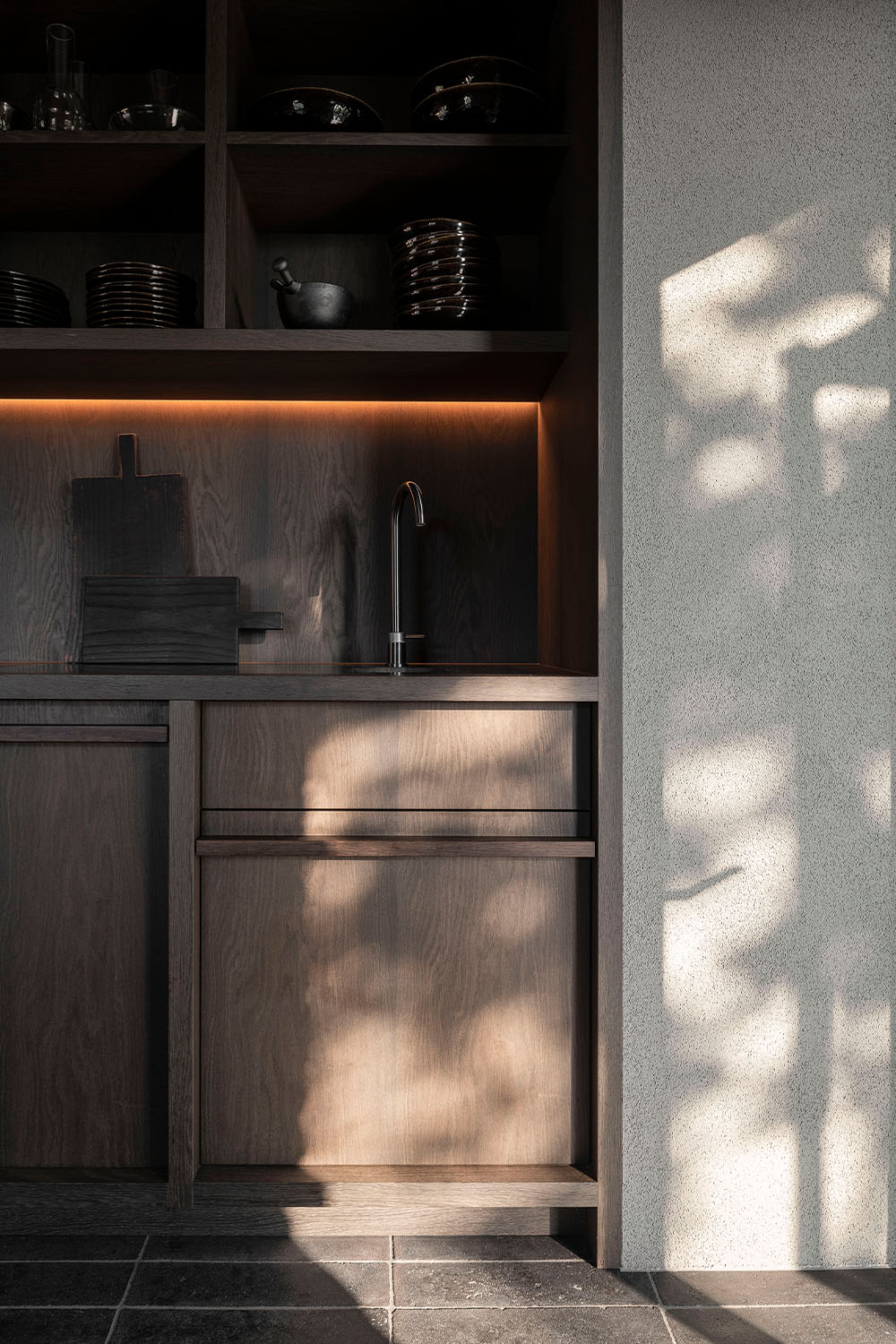
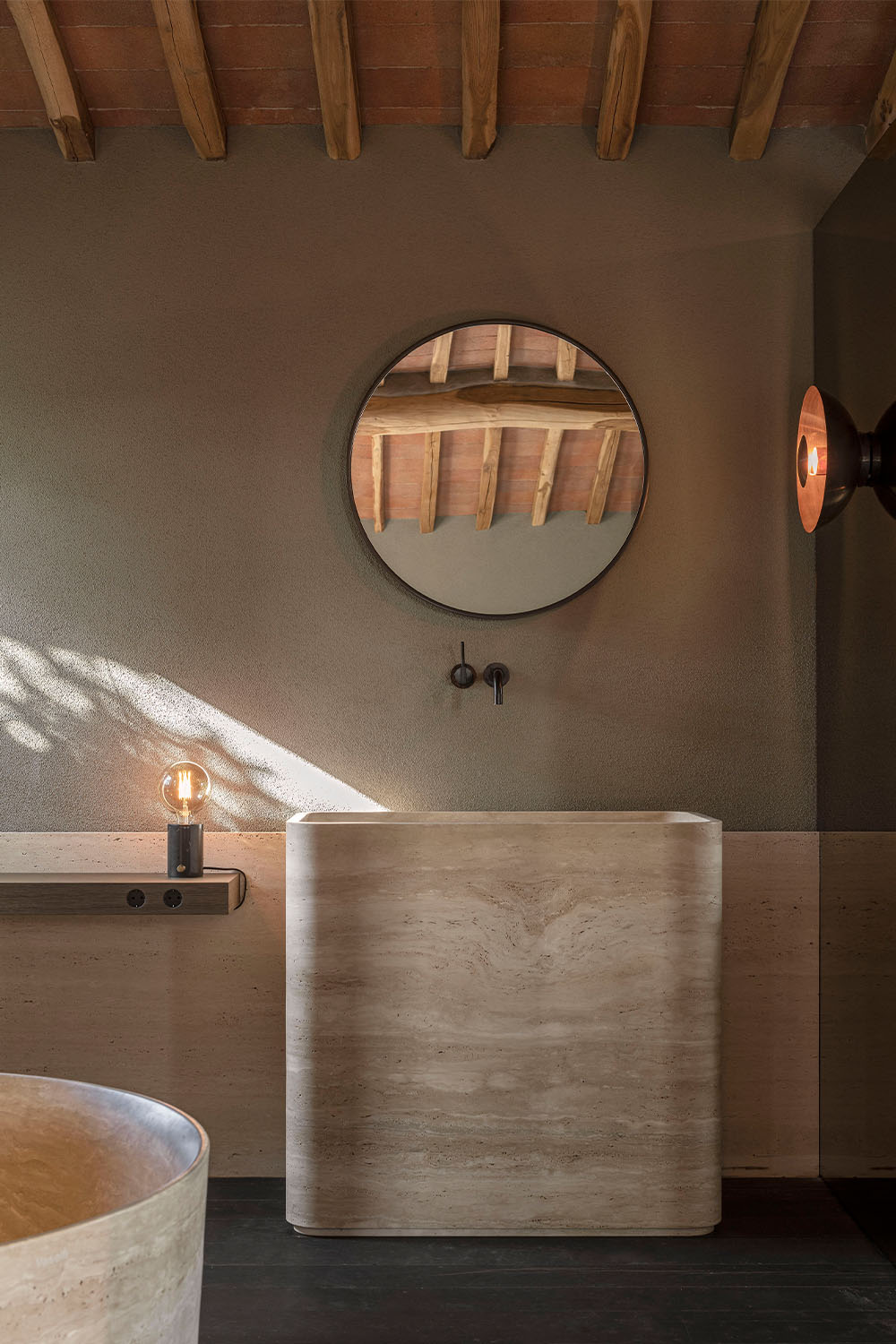
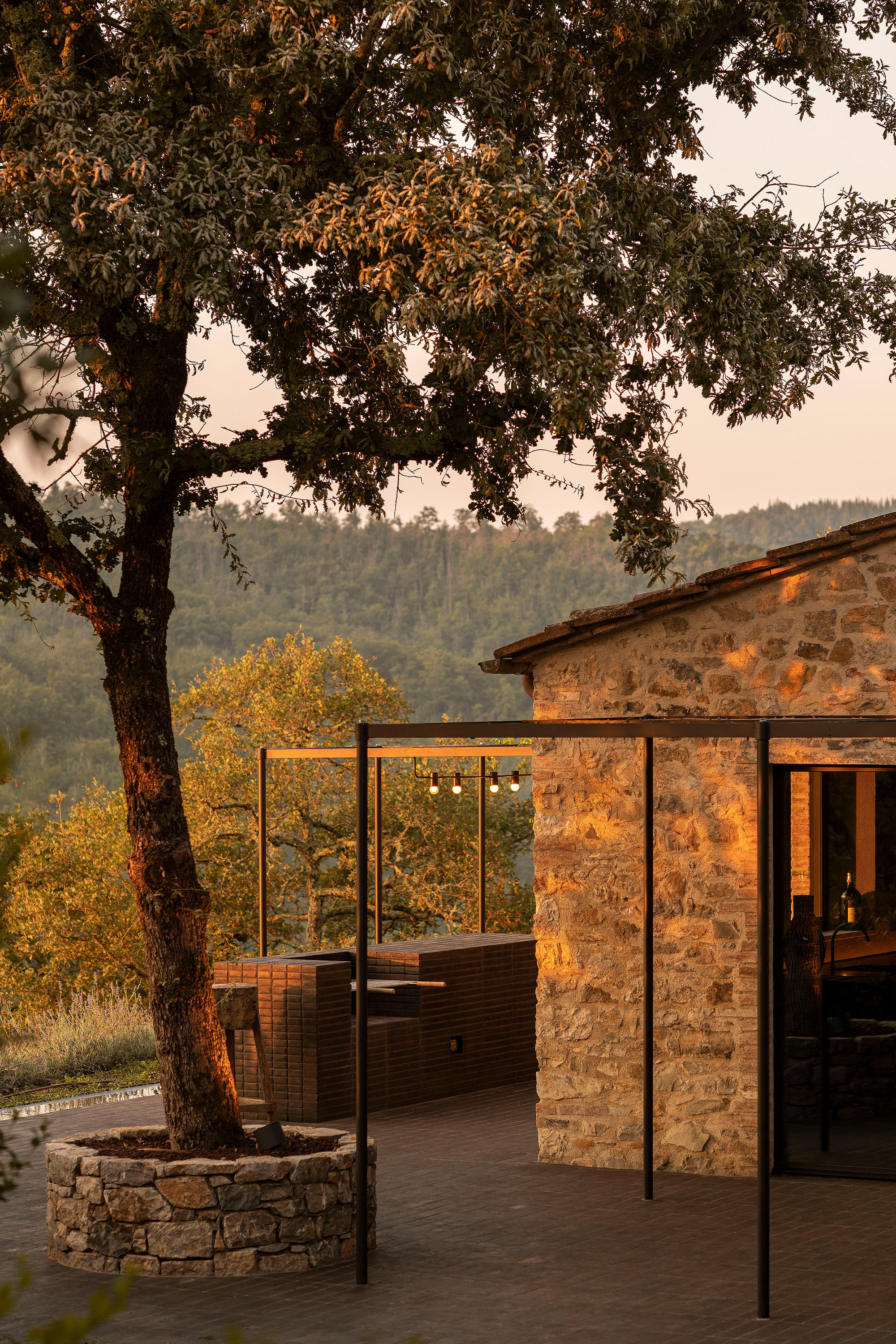
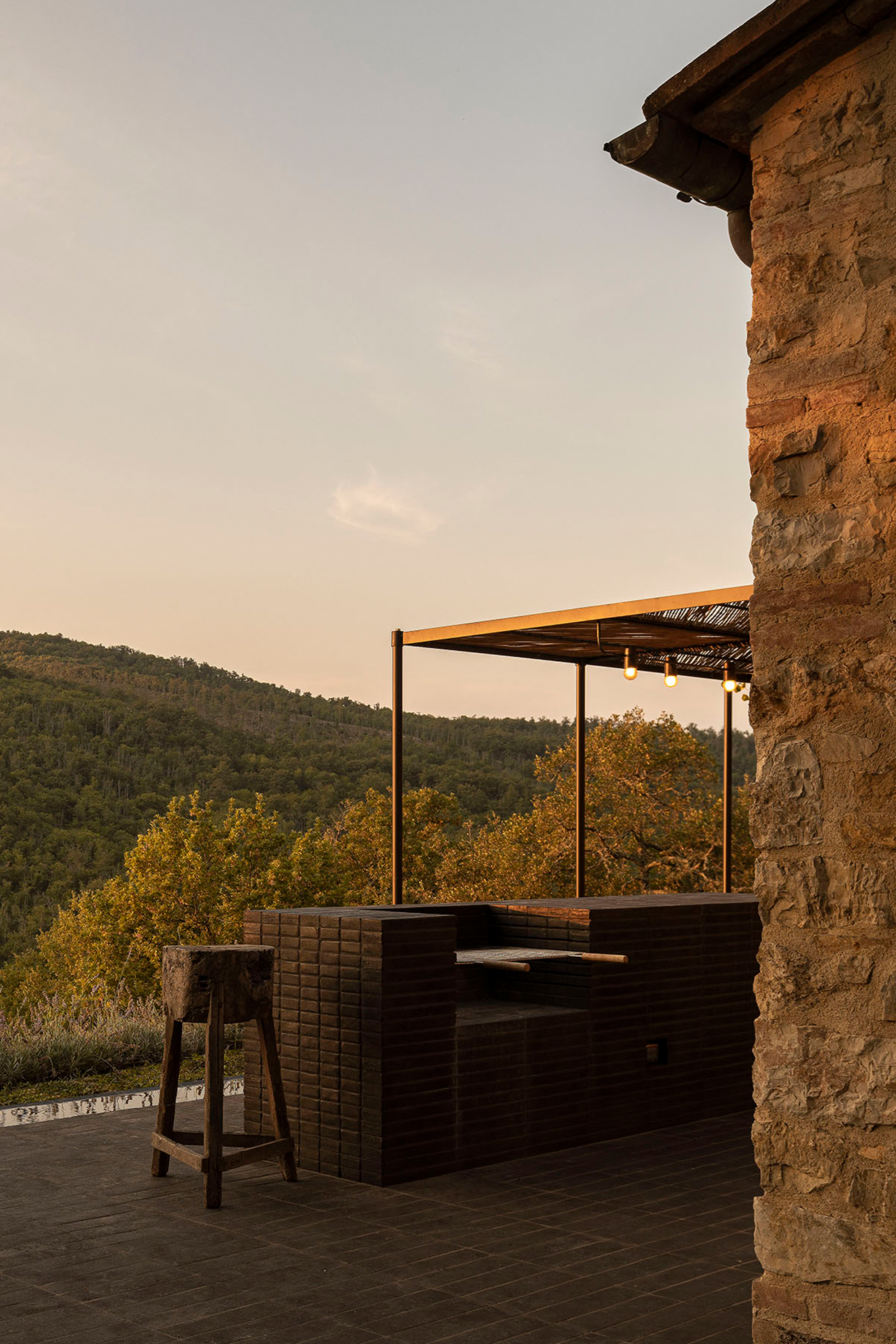
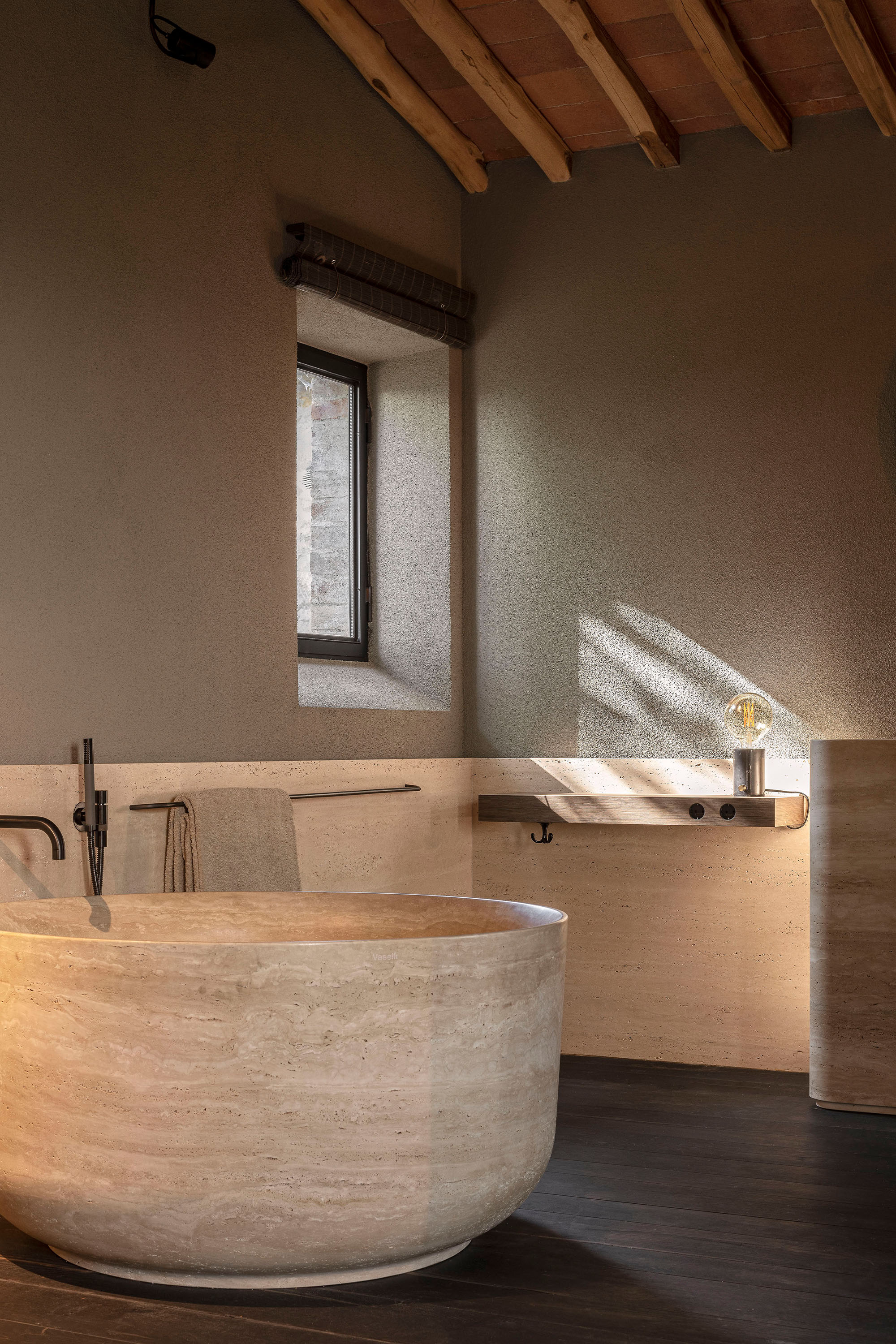
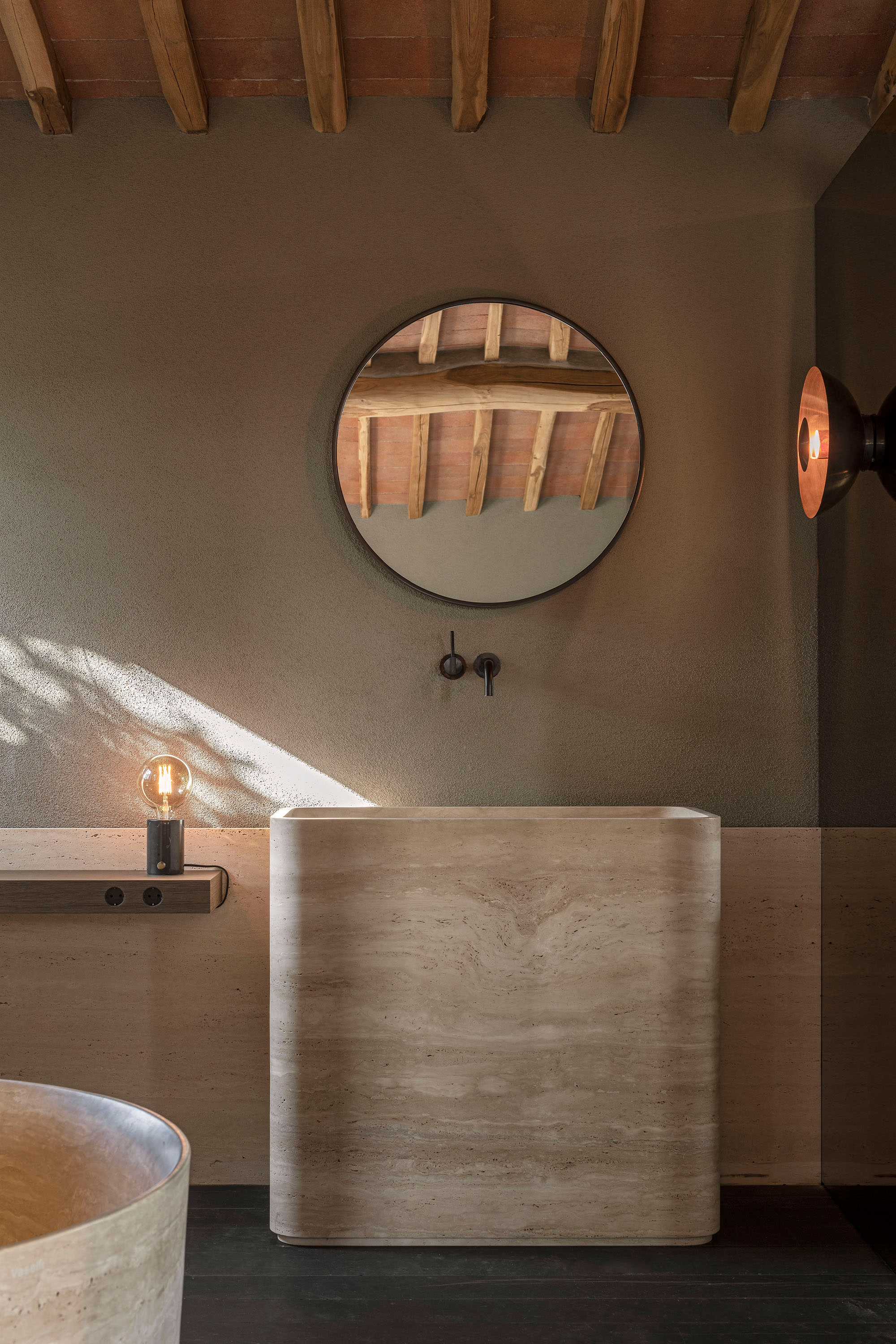
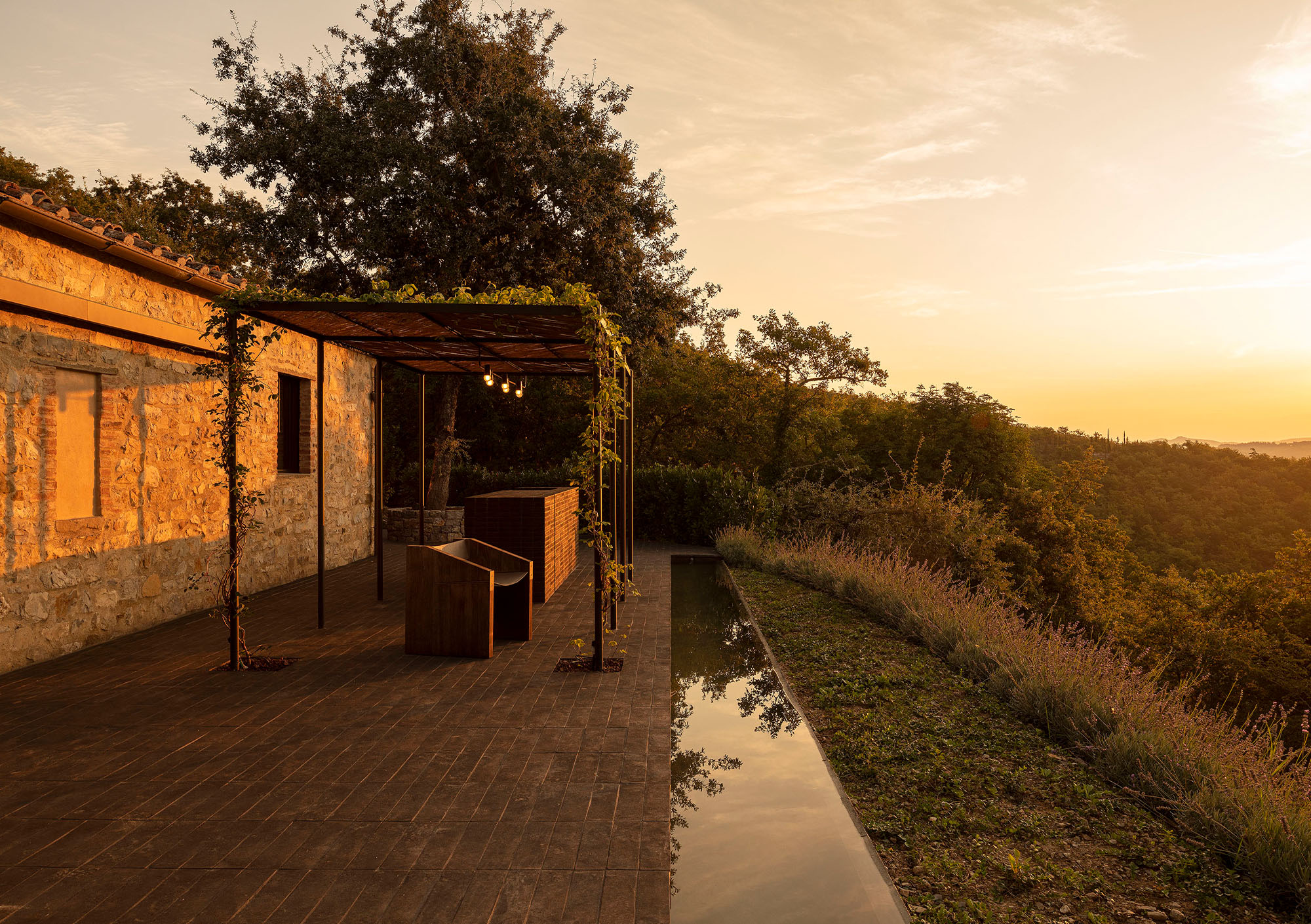
Material continuity is treated as a design principle. Together with the local manufactory Manetti, Holzrausch developed a smoky anthracite tone for the cotto. Thousands of small, hand-made bricks were produced to clad not only floors but also fireplace, bathrooms, and both indoor and outdoor kitchen elements—so surfaces flow seamlessly across rooms and thresholds. The kitchen itself is a custom fabrication by Holzrausch, integrated into the same tonal system rather than presented as a separate object.
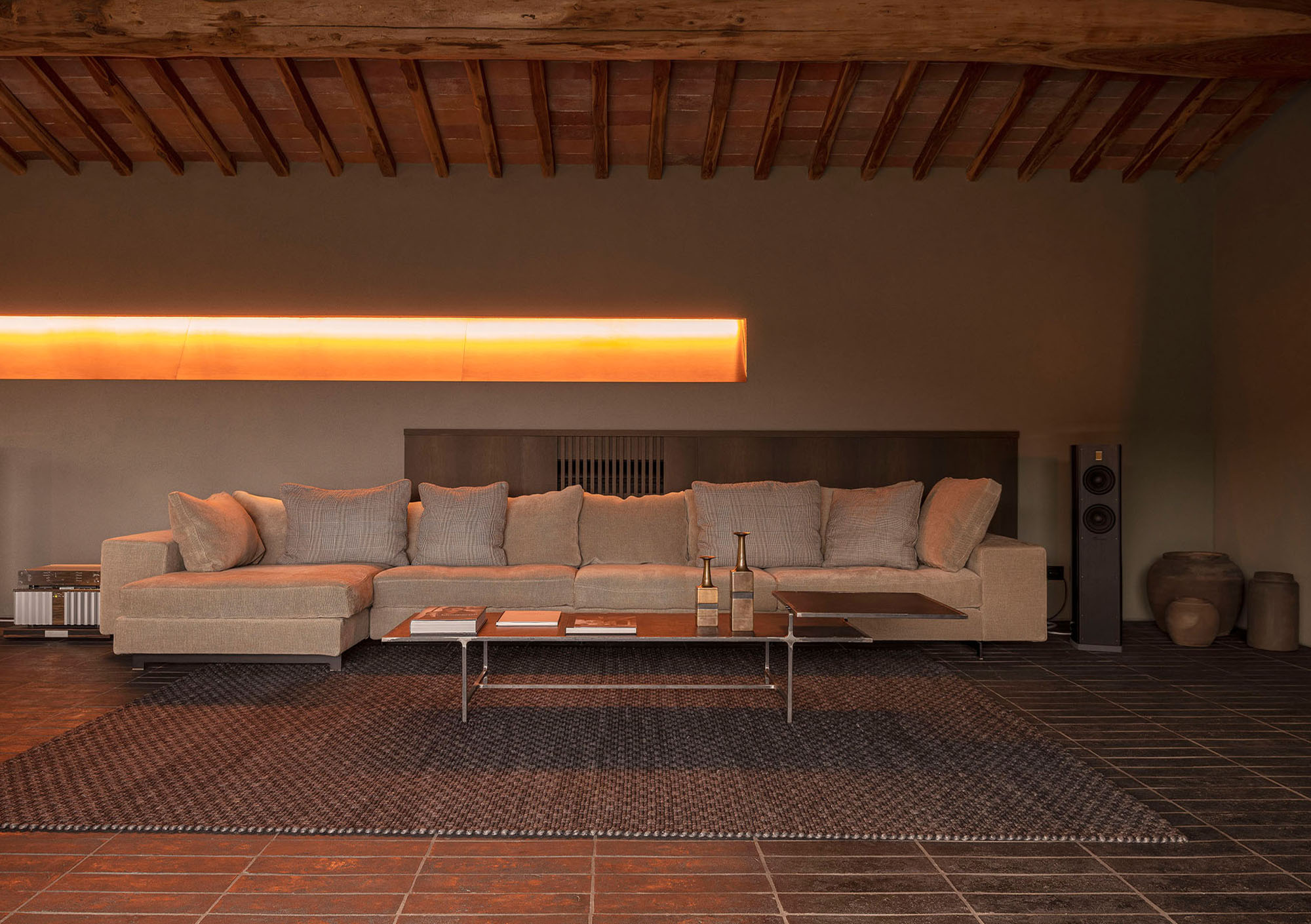
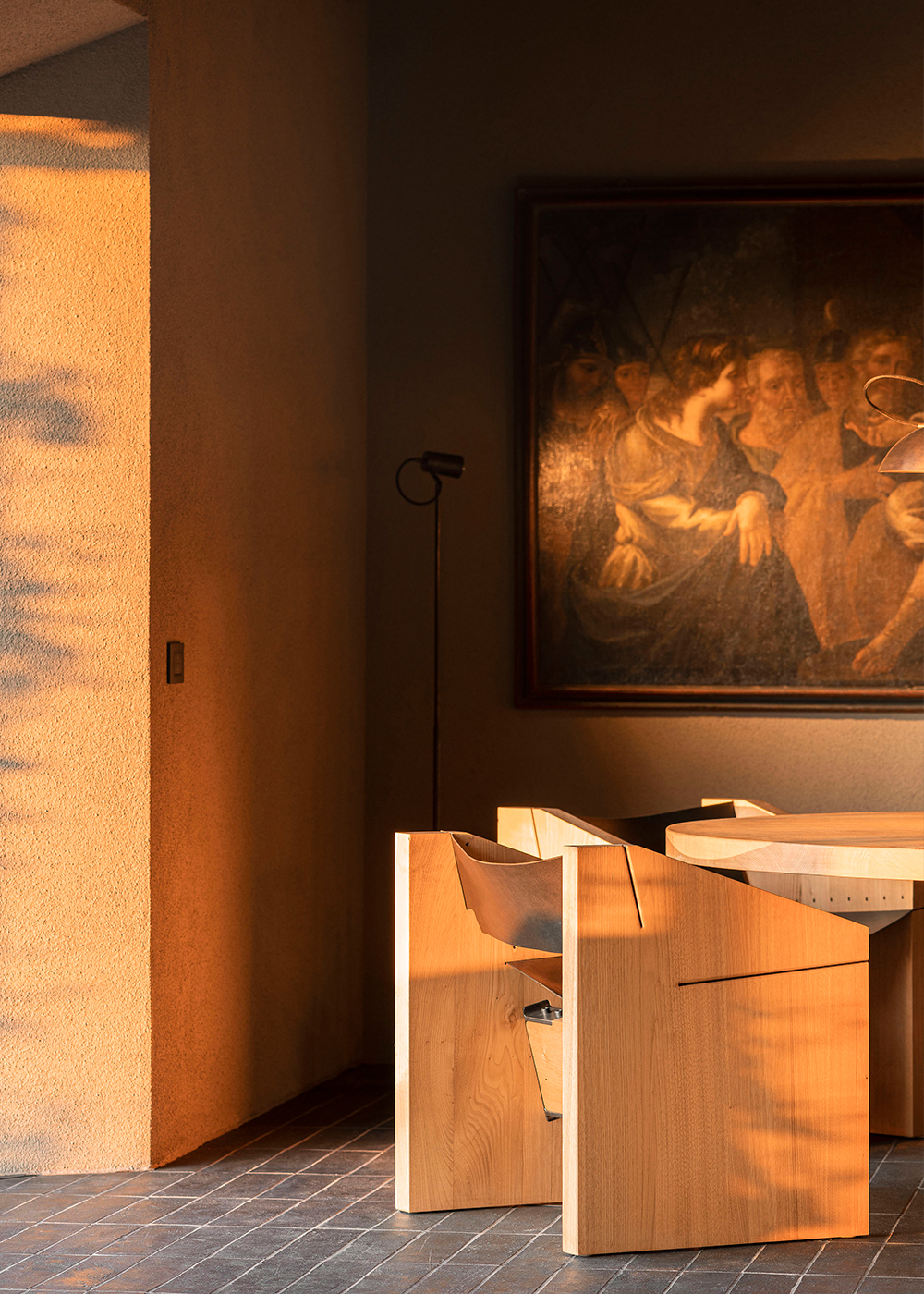
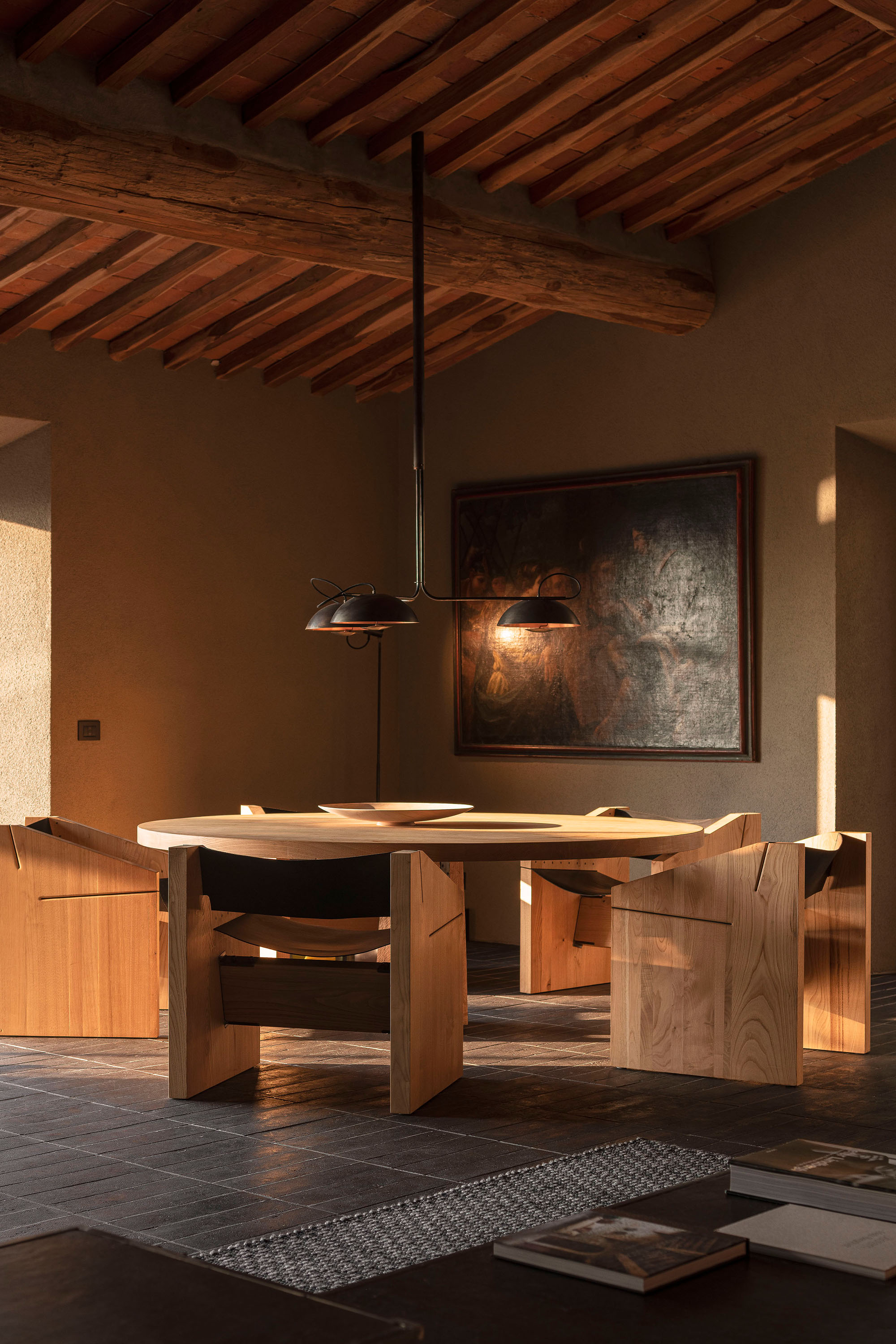
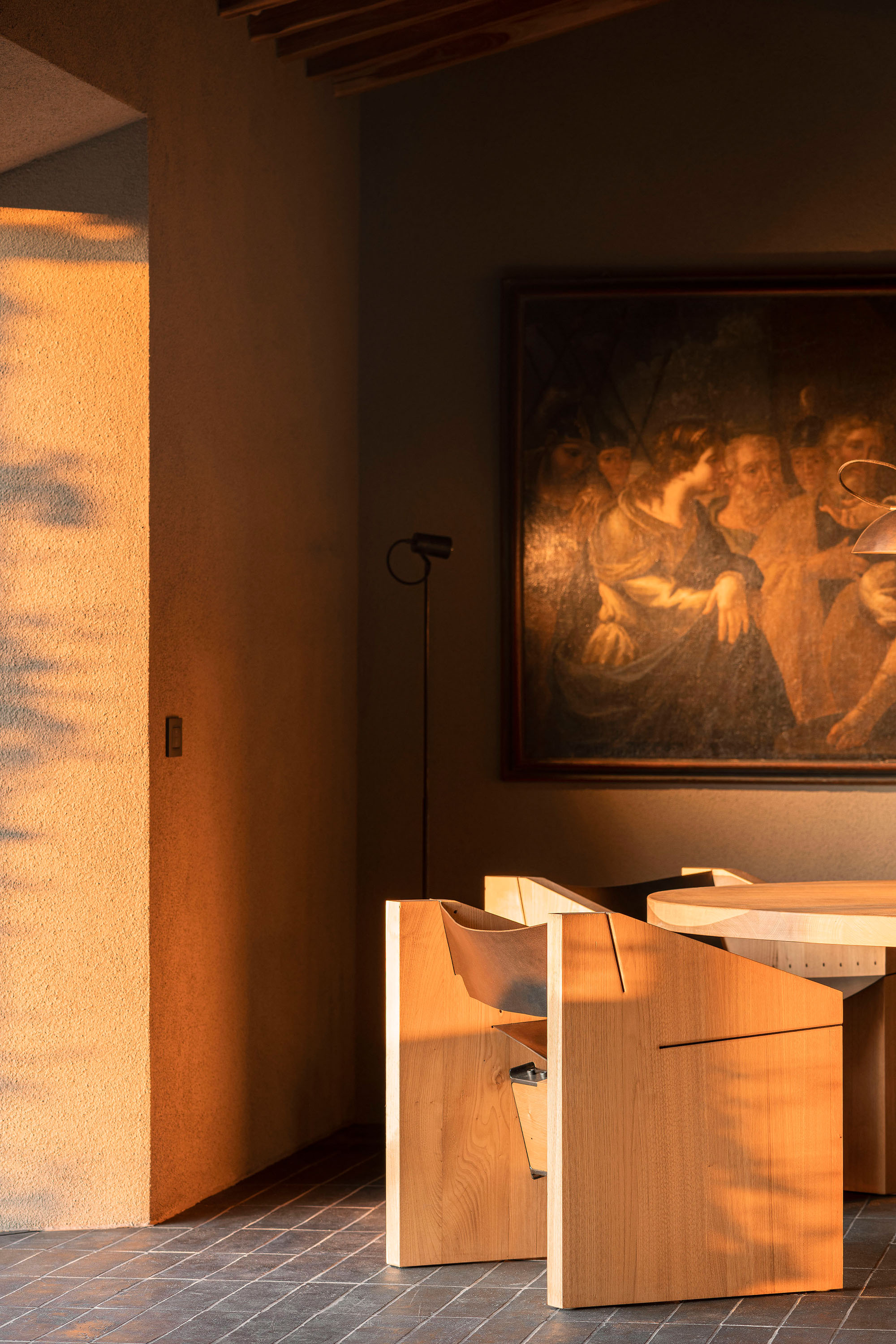
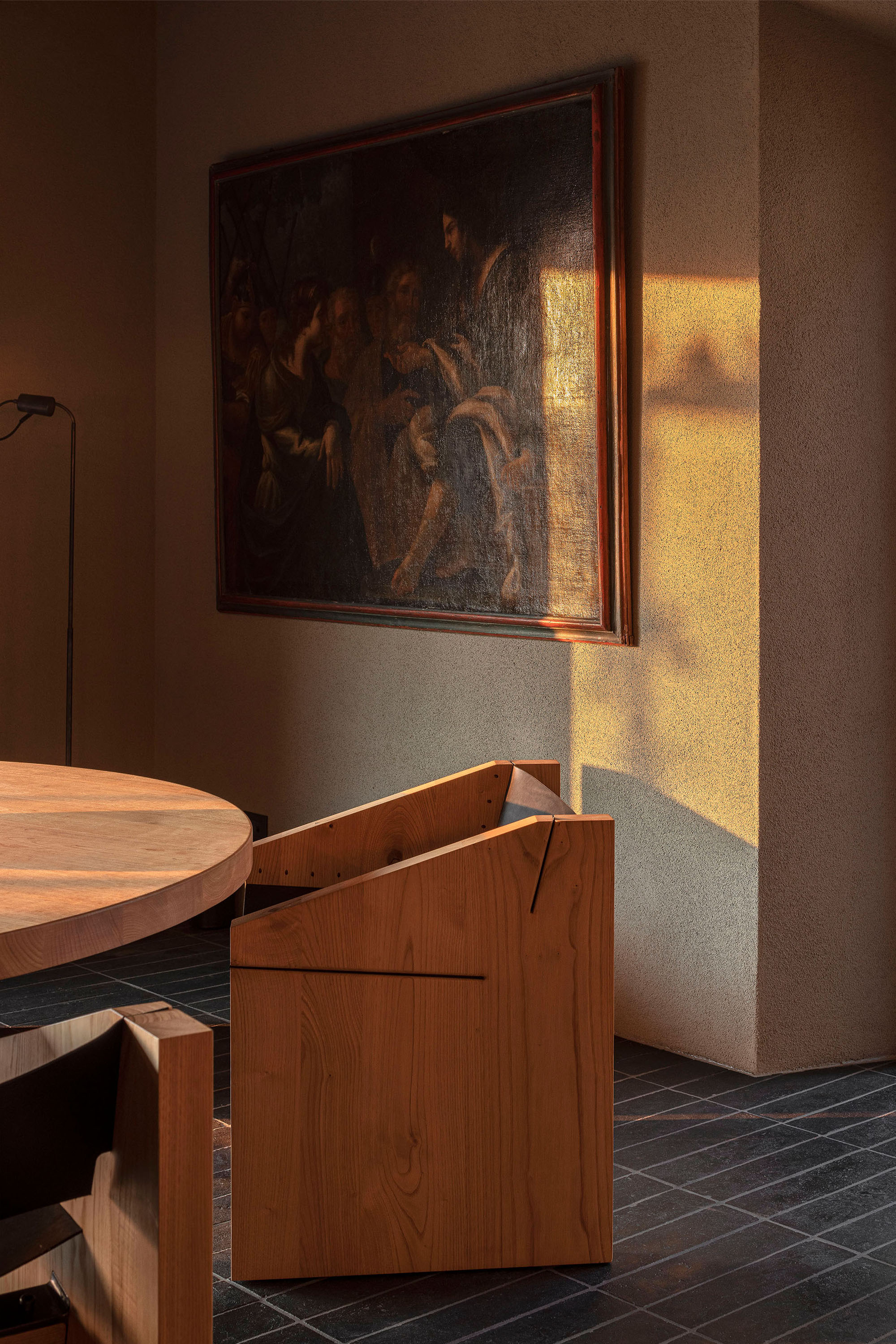
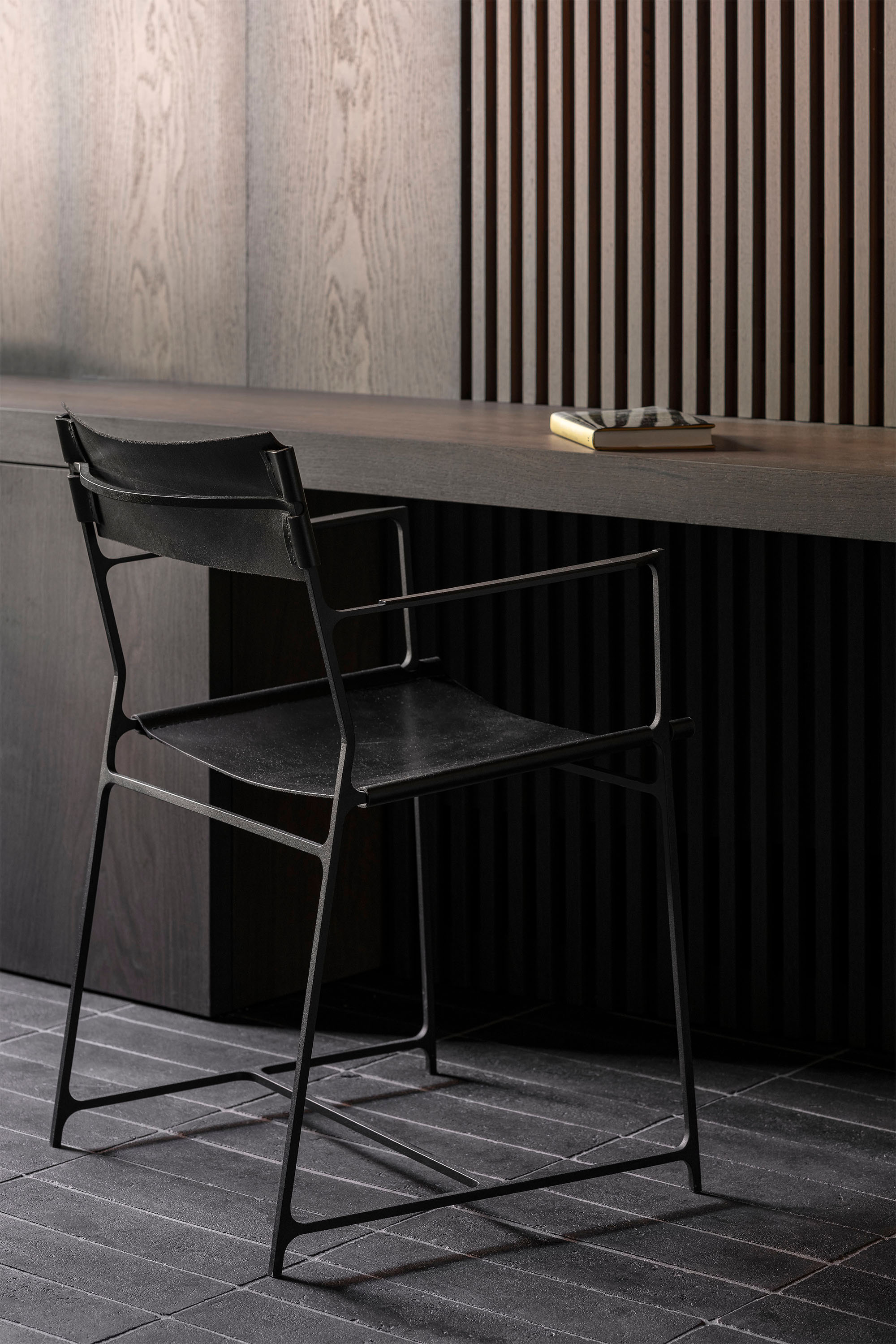
Within this fluid, continuous envelope, furniture is placed with architectural weight. A monolithic dining ensemble—round table and six chairs in solid oak with leather seats—anchors the loft-like space with geometric clarity. The house’s loose furnishings were designed and crafted by Austrian designer Klaus Lichtenegger, contributing a physical presence that matches the project’s emphasis on material integrity.

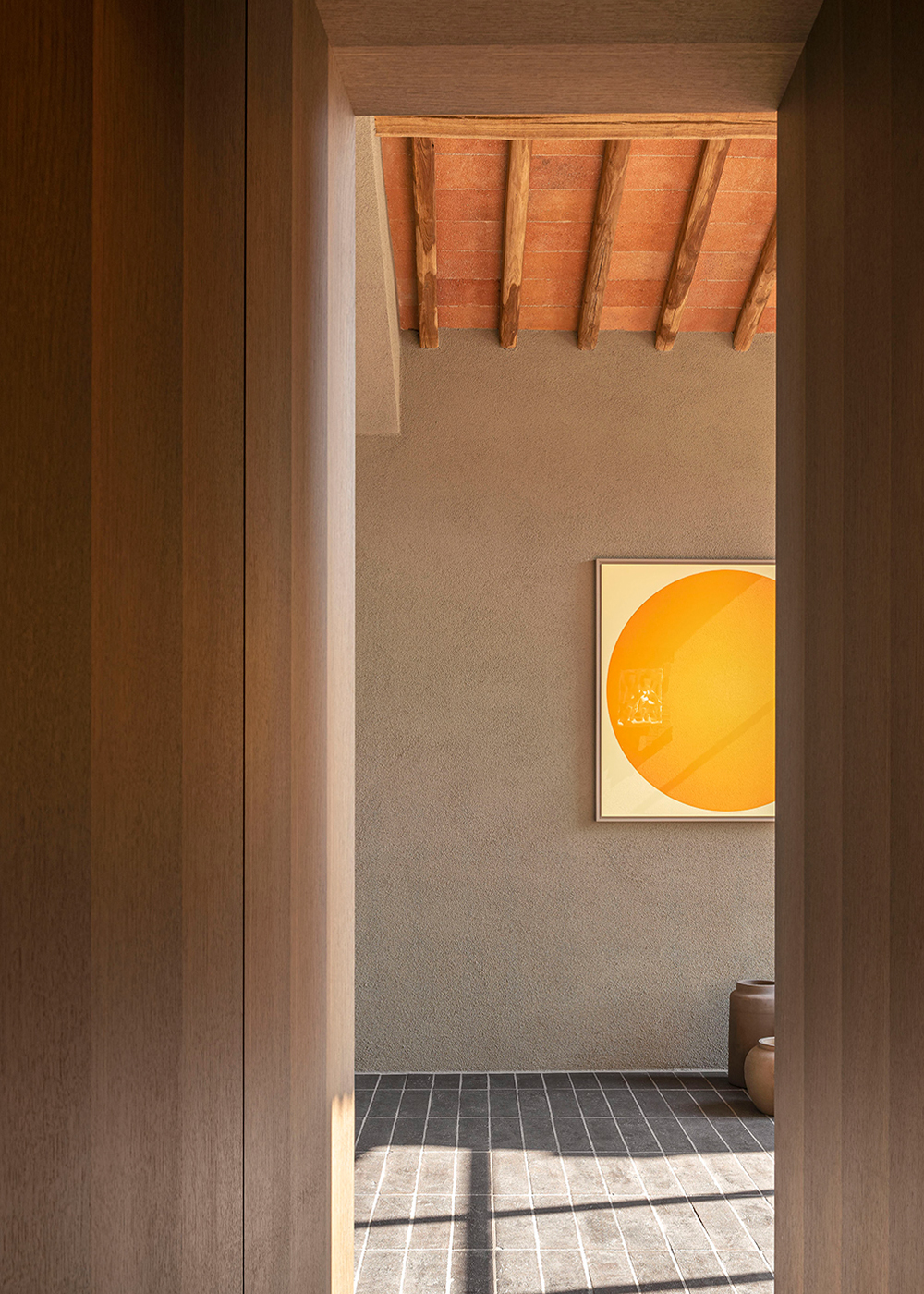
Every detail is treated as part of one orchestration: windows, lights, and door hardware were developed specifically for the house and executed through a network of local manufactories and trusted craftspeople. The walls, in particular, were the subject of extensive testing to achieve an exact color, grain, and texture—then applied consistently throughout, even in areas that had previously been considered “finished.” The result is a retreat defined by precision: not through spectacle, but through the quiet authority of surfaces, proportions, and craftsmanship.

The project’s technical ambition is present, but never decorative. A lift-up panoramic opening reframes the landscape; and a long, narrow water feature extends light and view across the terrace like a reflective infinity edge—small gestures that intensify the sense of stillness rather than interrupt it.

MORE PHOTOS