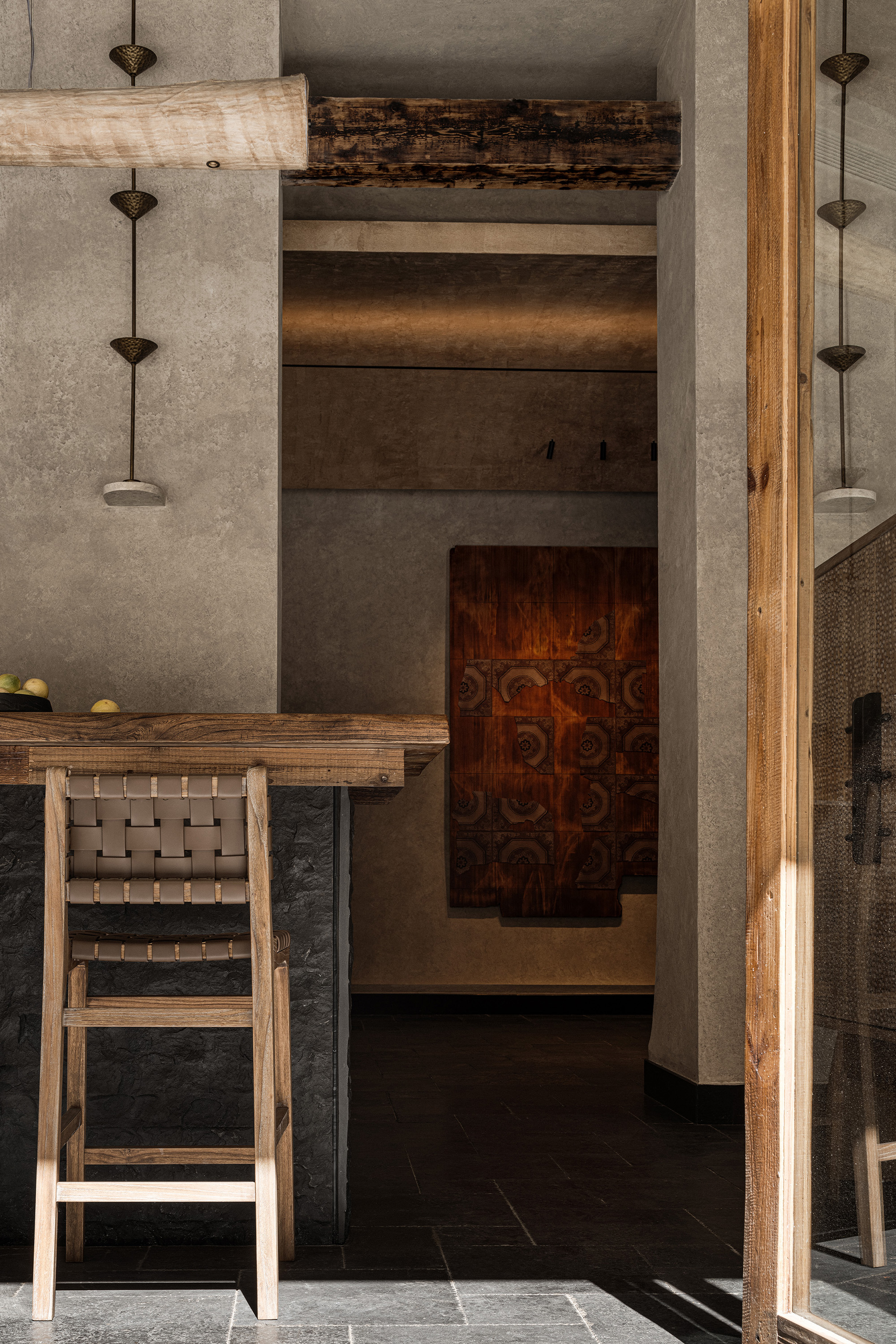
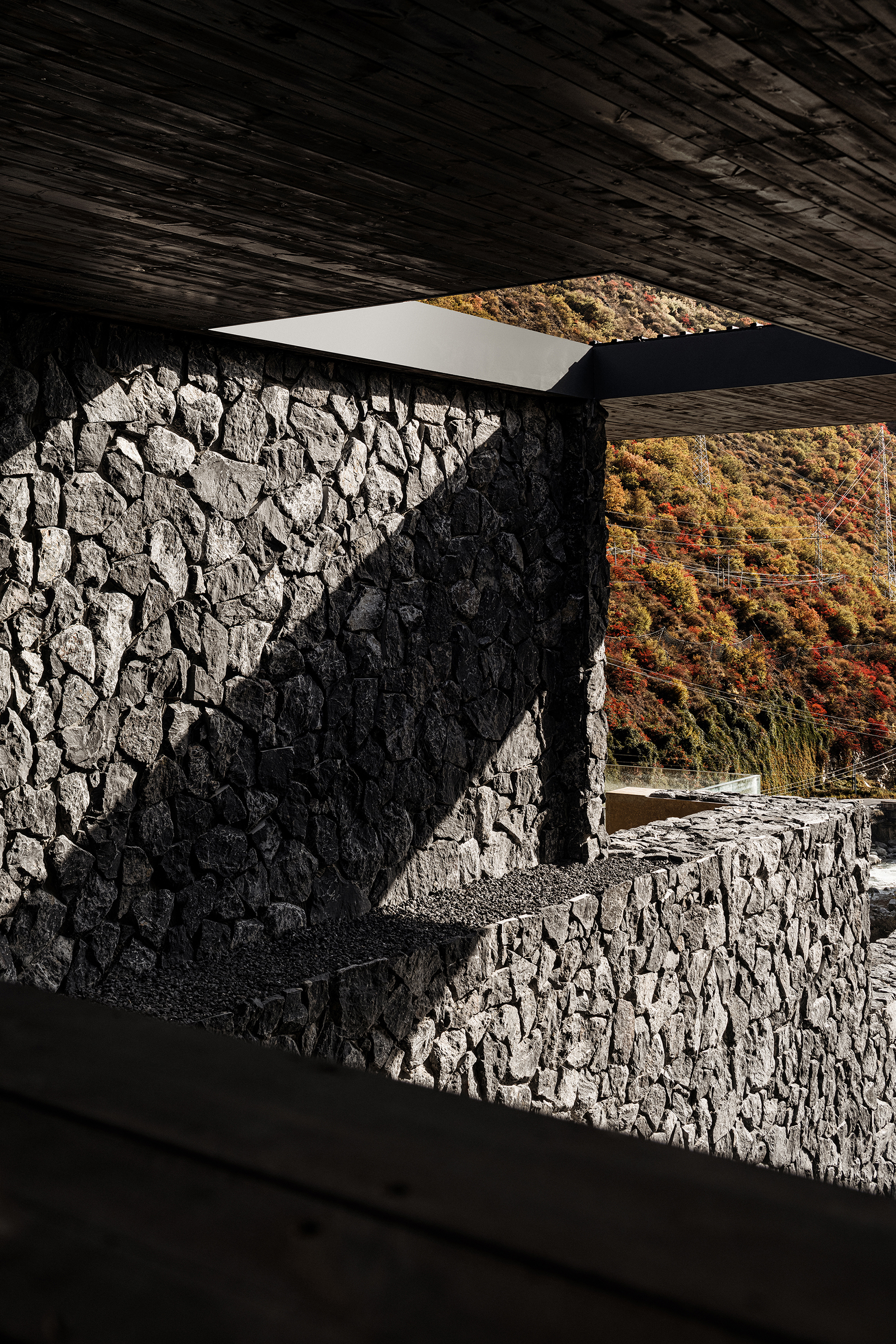
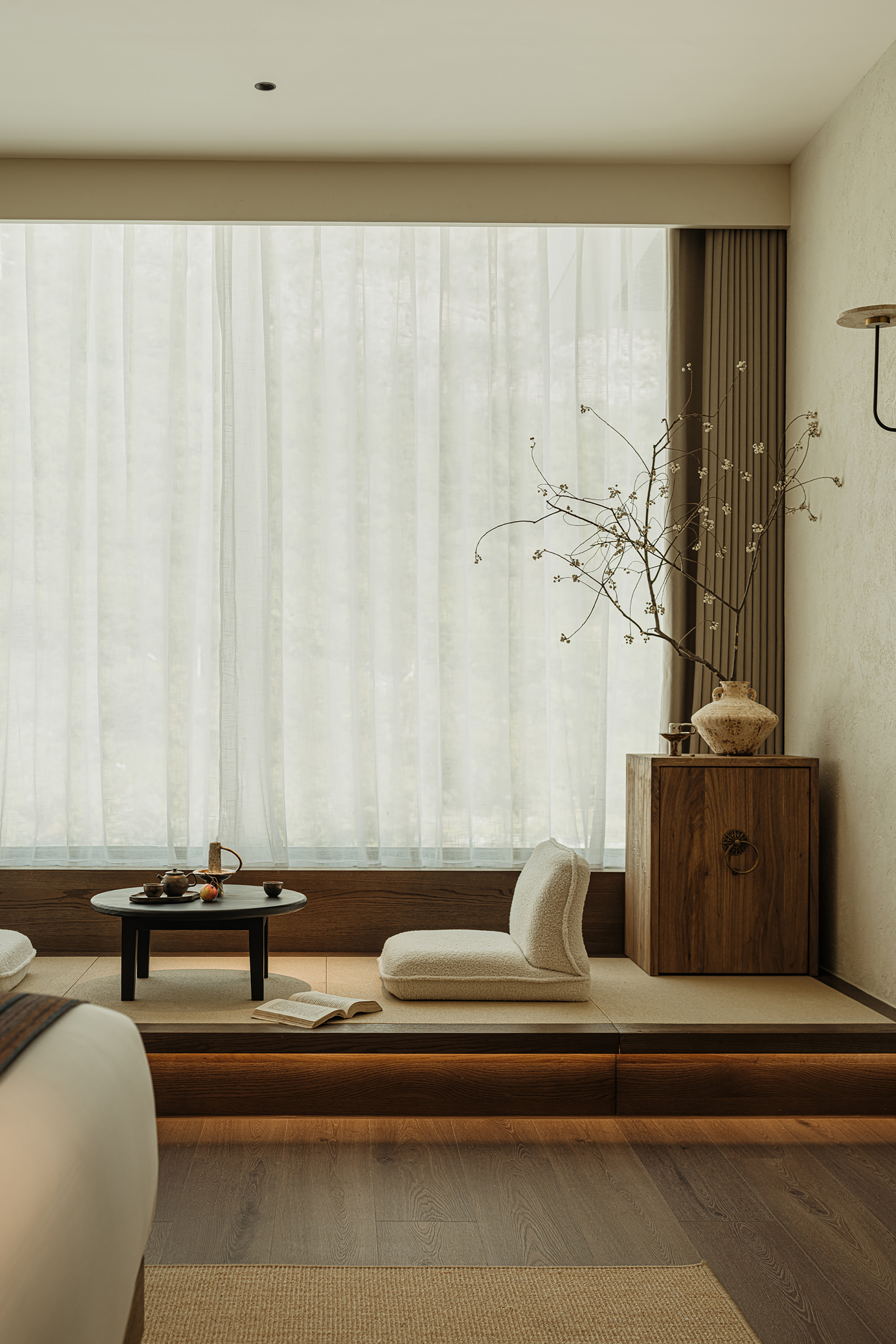
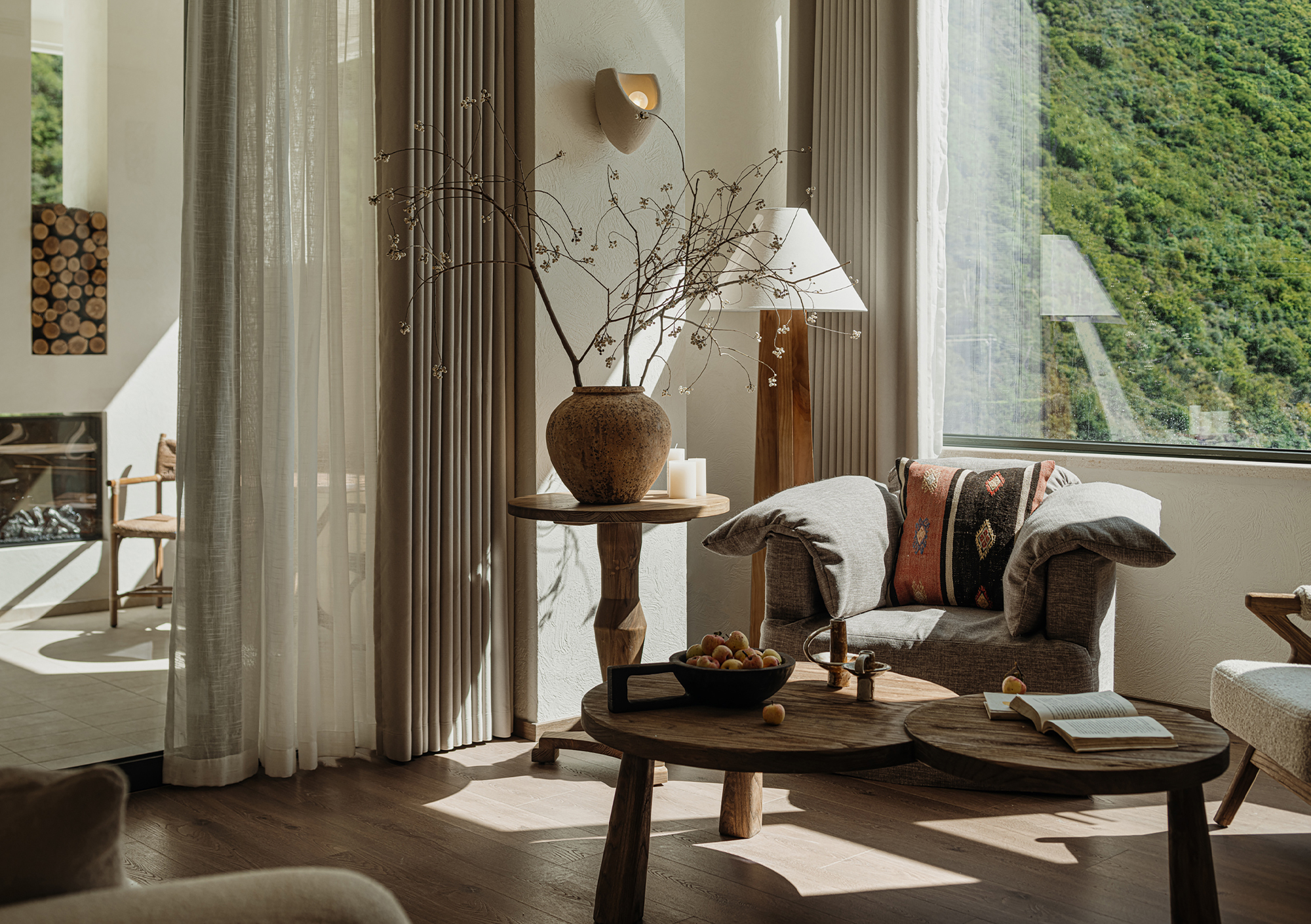
Grasslands, gorges, snow-capped mountains, Sertar, Dege, Changdu, Dingqing, Wuming Buddhist College, Dege Printing House, Zizhu Monastery, Traditional Tibetan villages, large and small, Nomadic settlements, wherever they roam... Westward along Highway 317, Perhaps what we need most is reverence and devotion. The project is a modern Tibetan-style residential hotel that preserves its traditional core, located in Guergou, Li County, Sichuan. Just outside its gates lies the Sichuan-Tibet Northern Route National Highway 317, renowned as the “Tibetan Cultural Corridor”—a veritable pilgrimage route through Tibetan lands. Anchored by National Highway 317 and Tibetan culture, the project draws its spatial energy from the devout Tibetan faith, ancient reverence for nature, and authentic ethnic symbols. Here, the sacredness of space transcends mere atmospheric ambiance, embodying the tangible daily lives and spiritual aspirations of the Tibetan people.
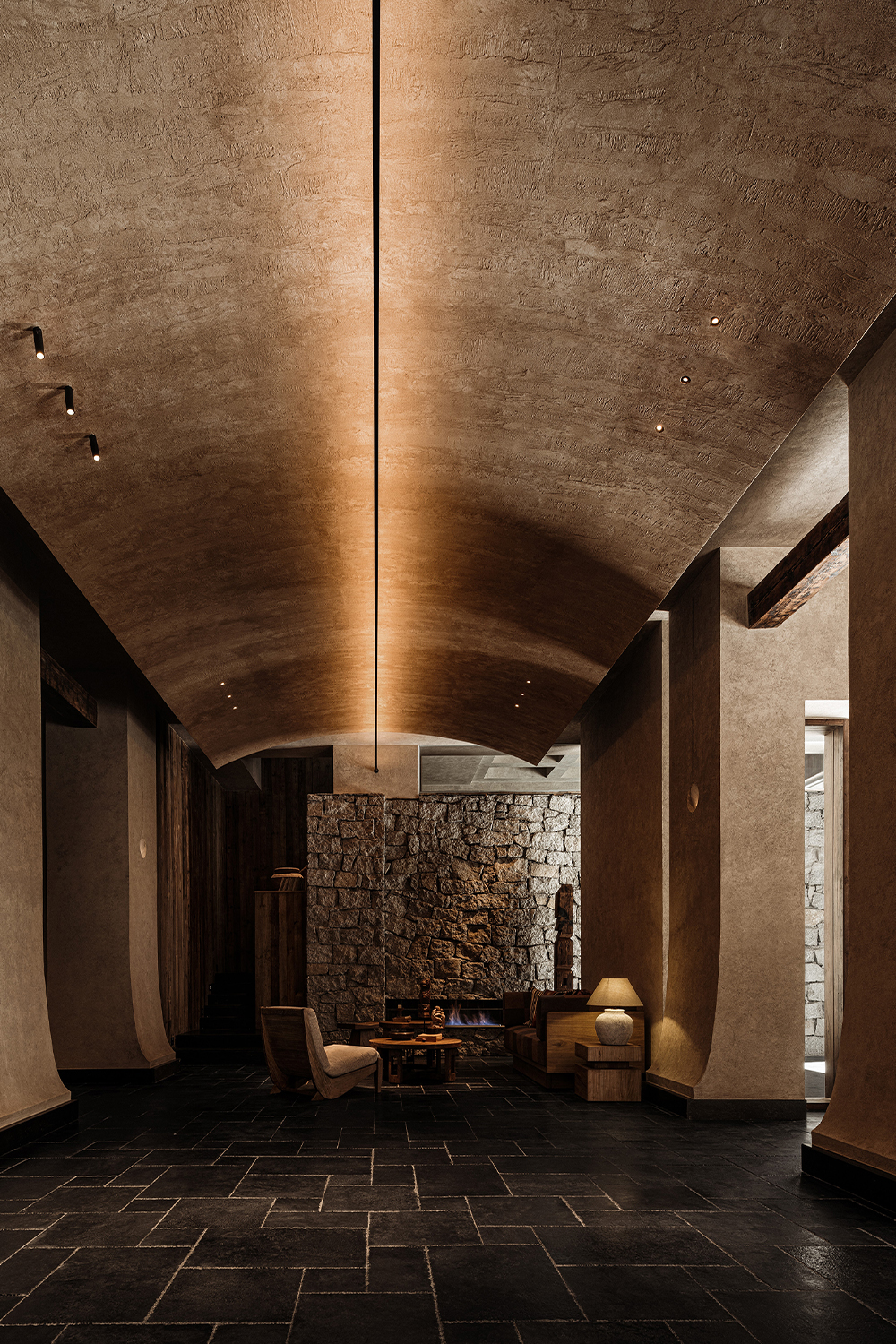
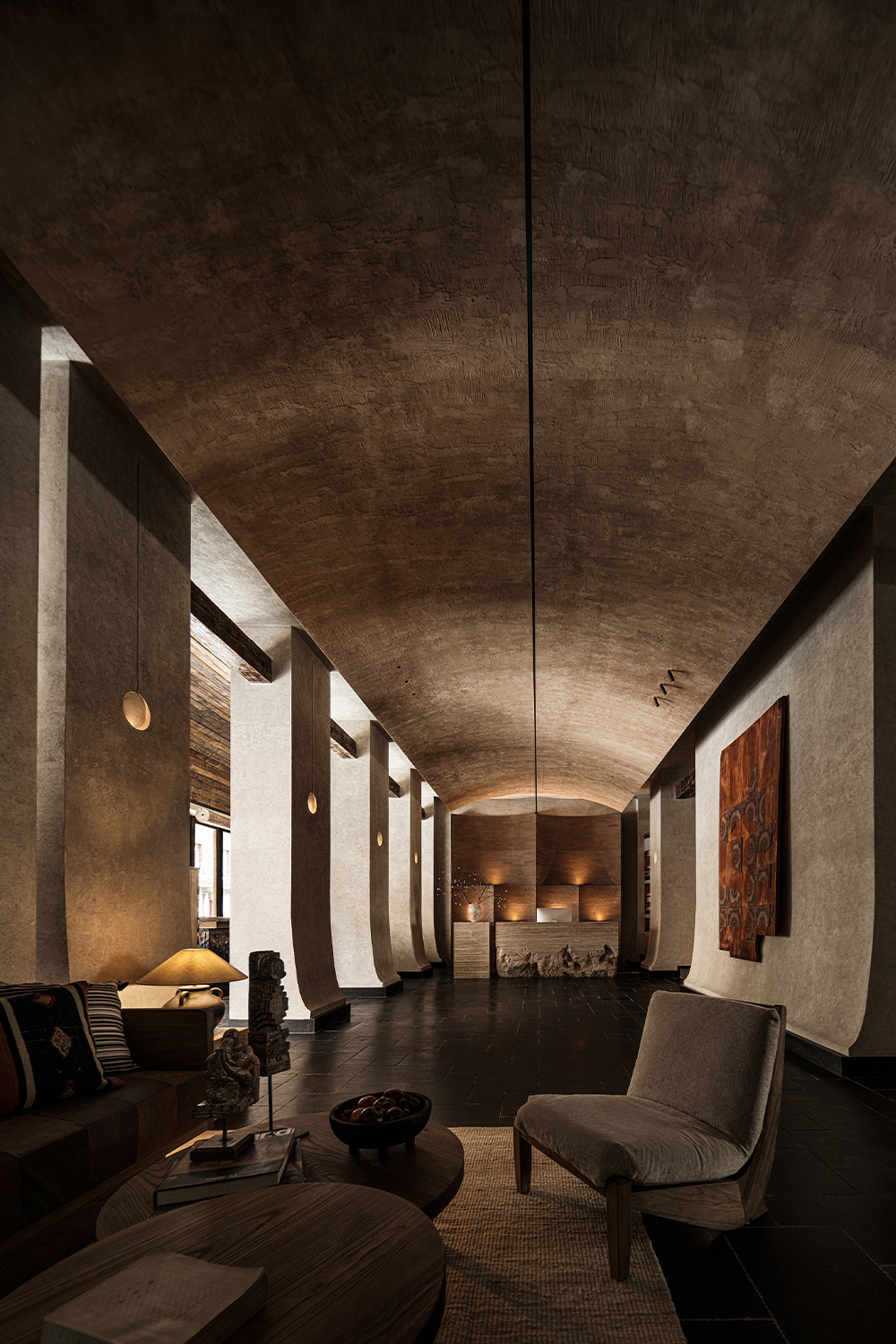
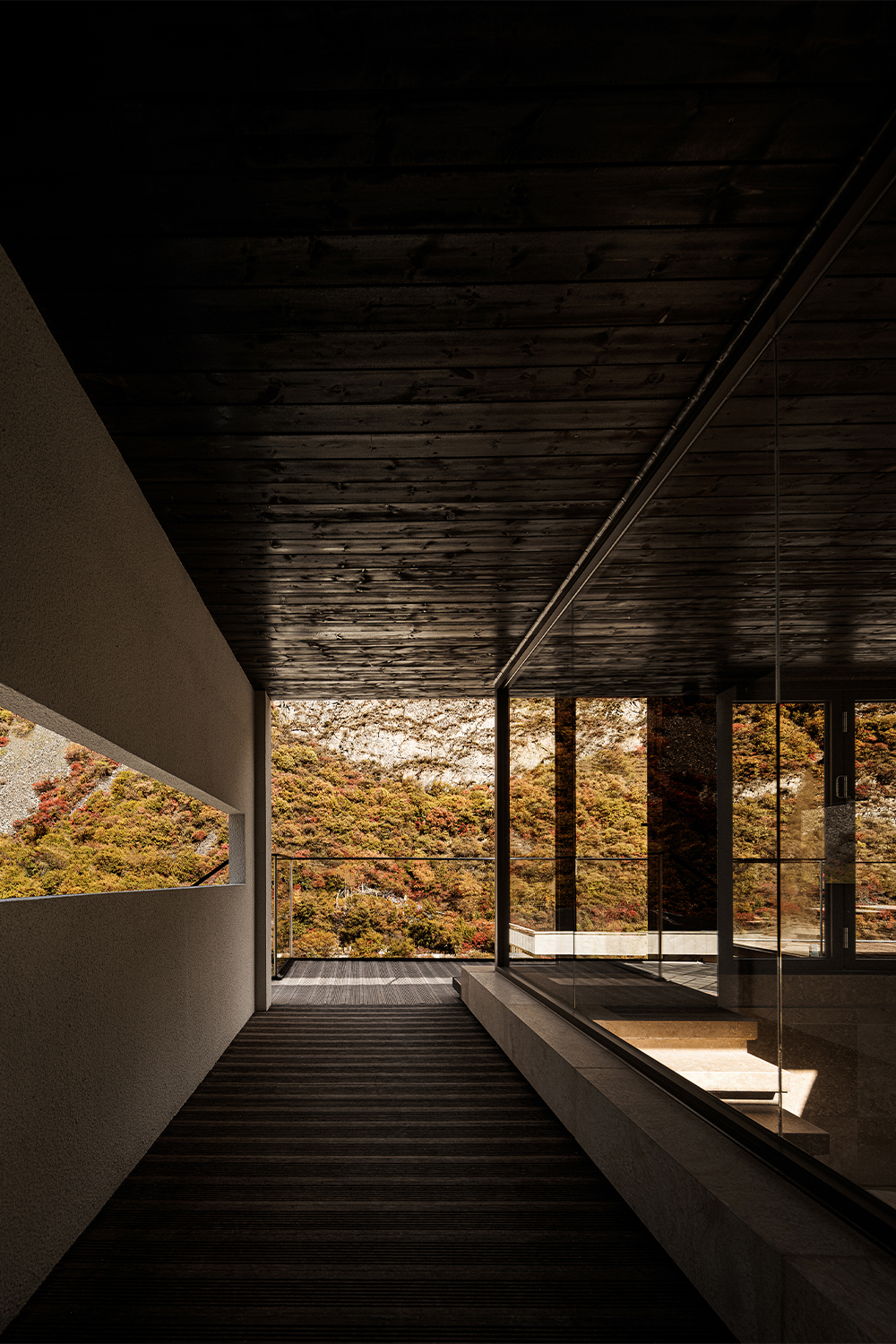
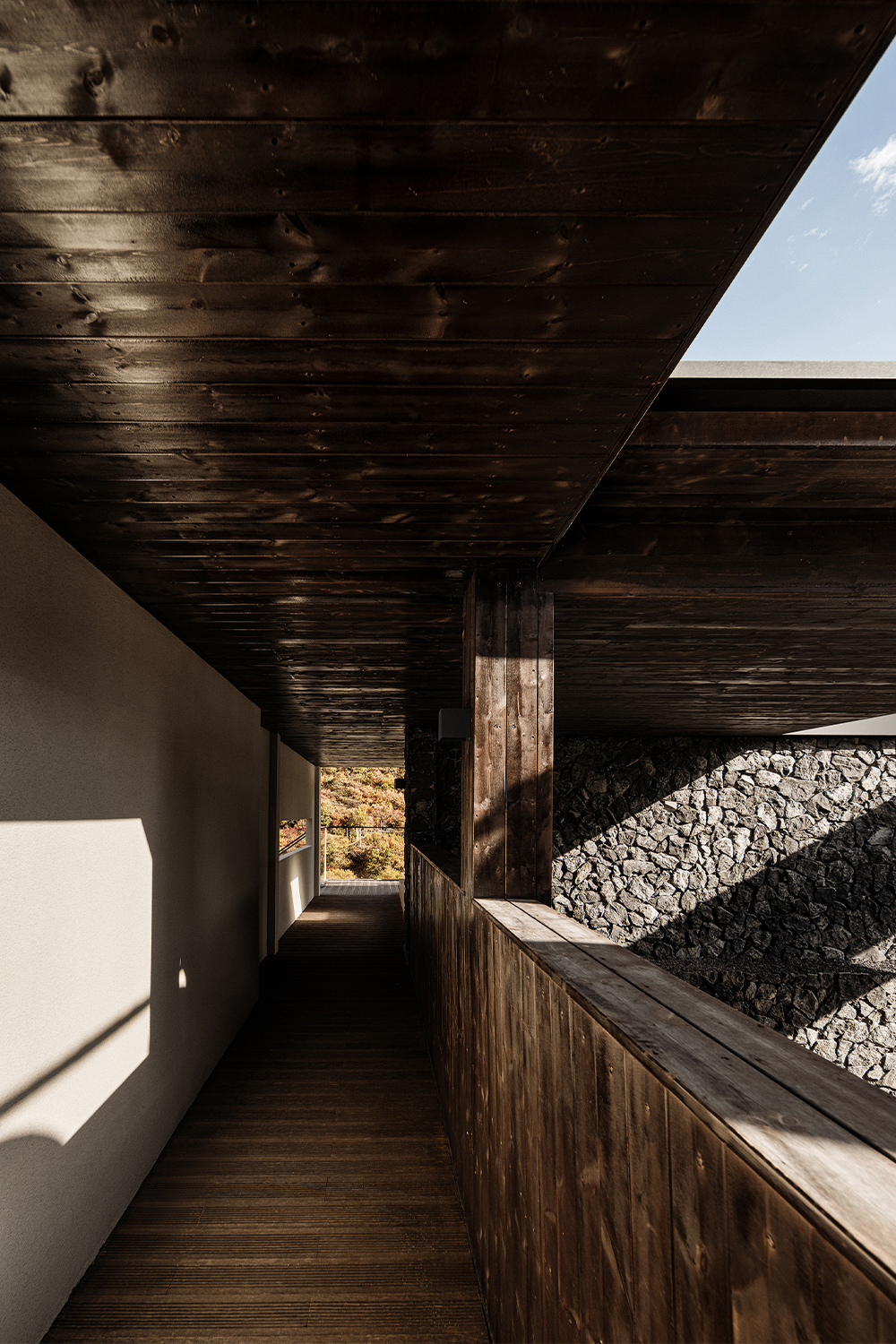
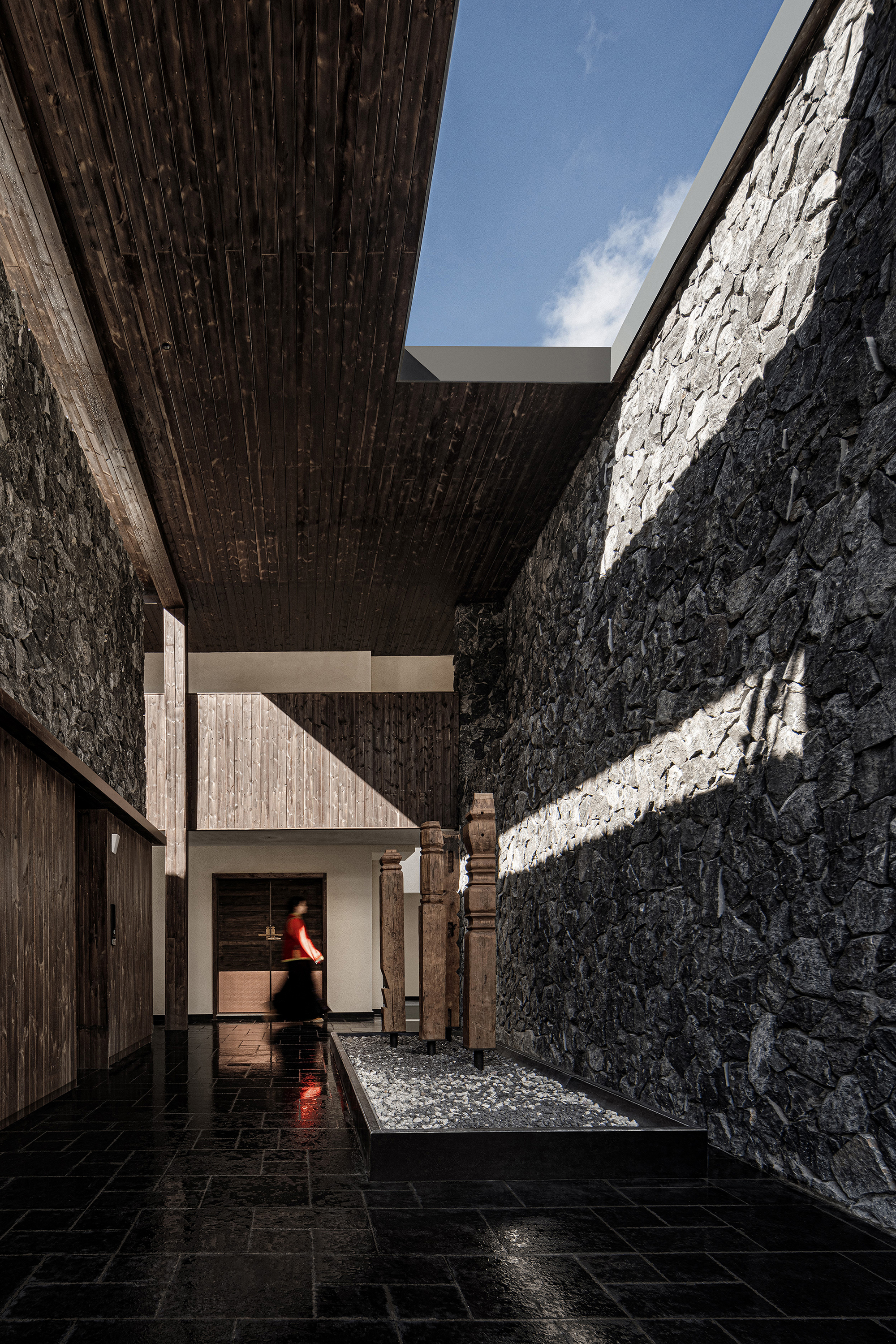
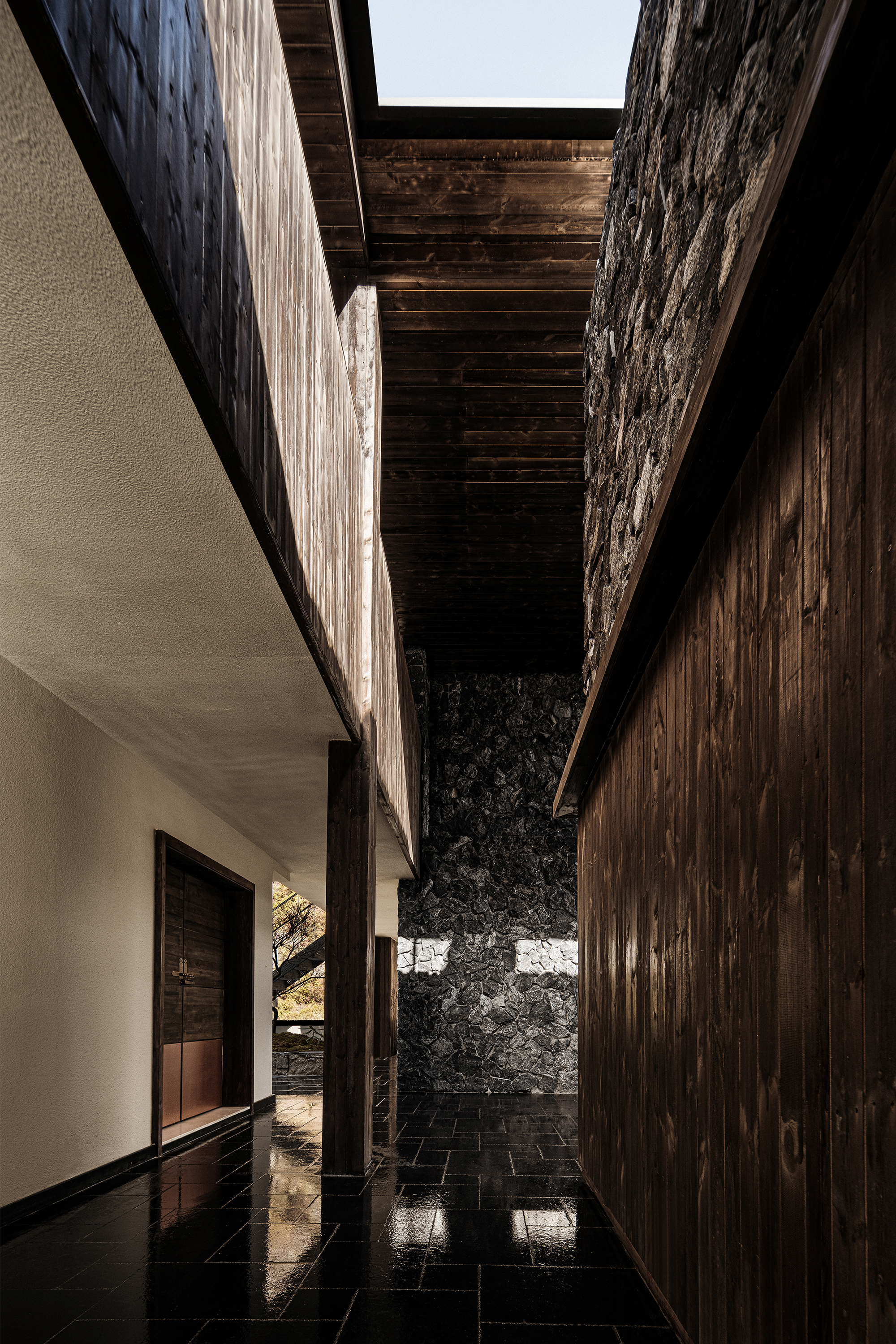
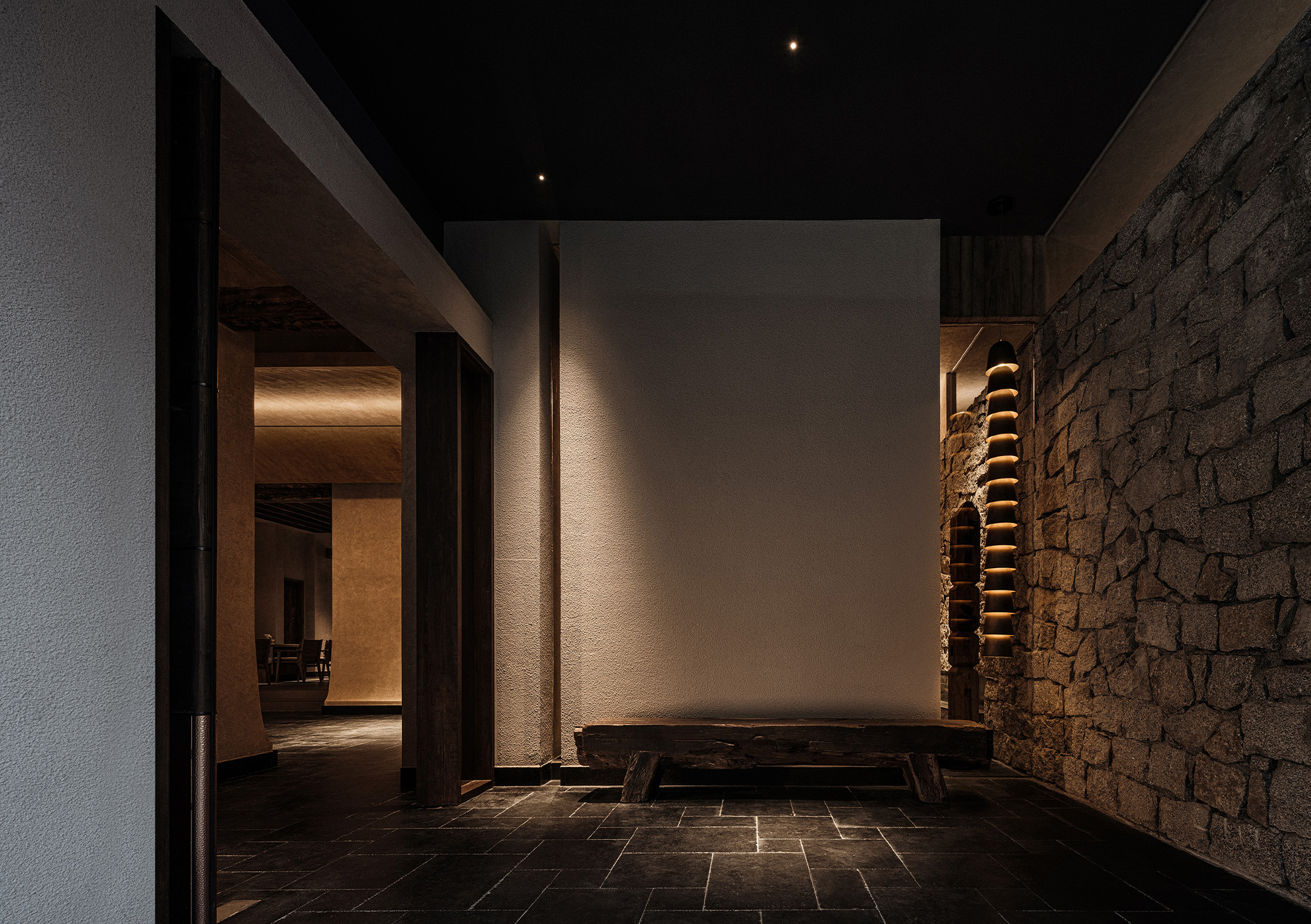
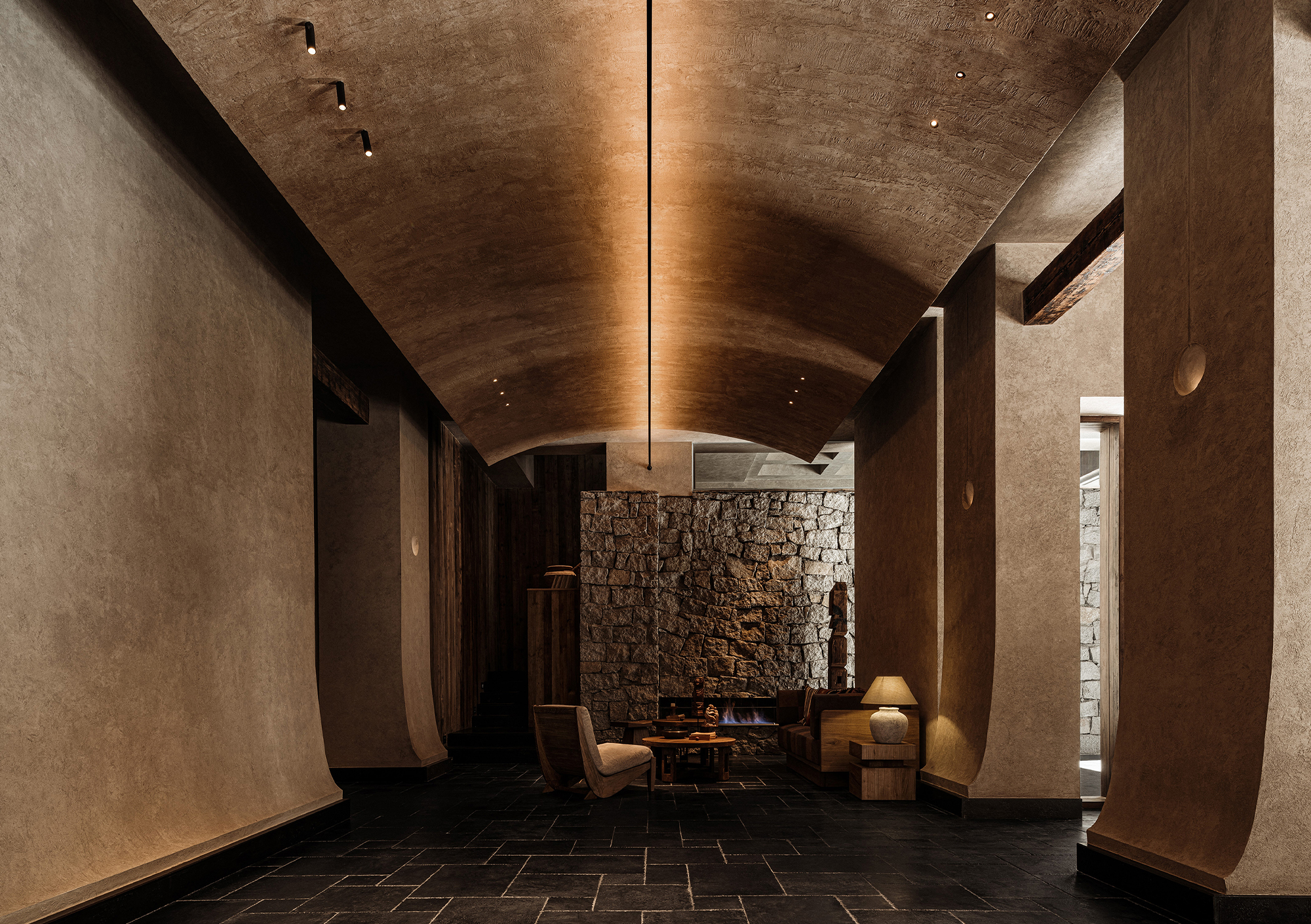
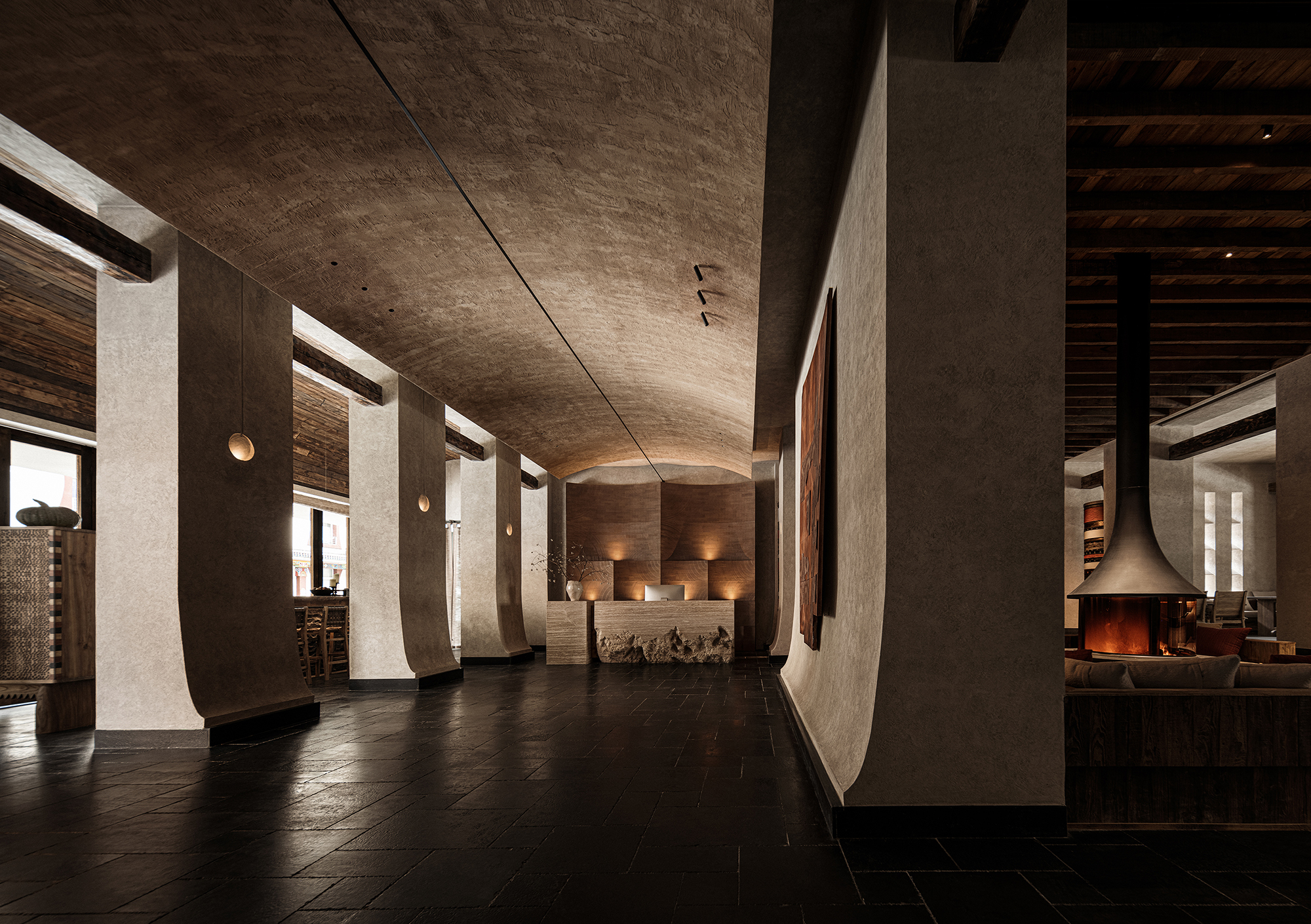
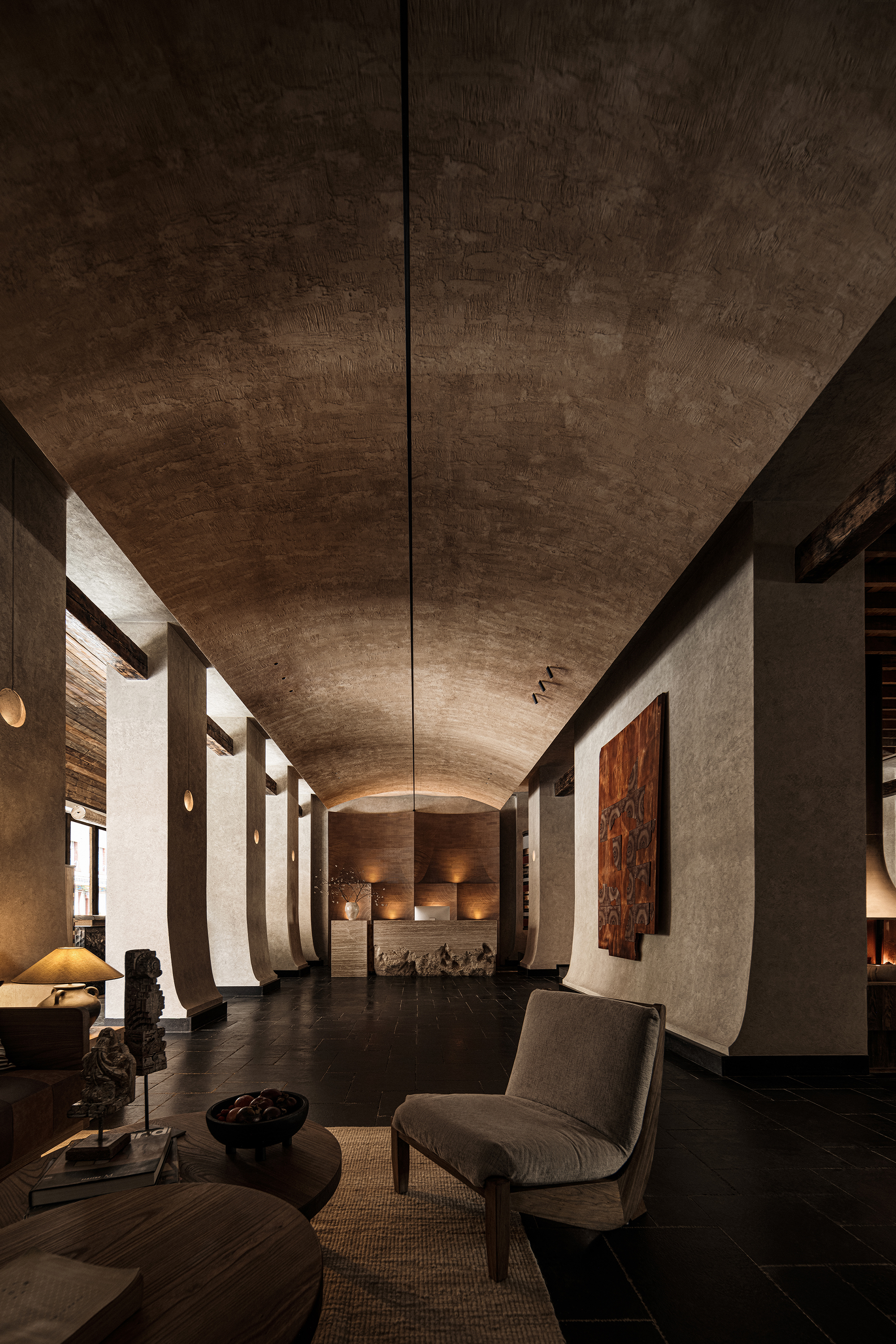
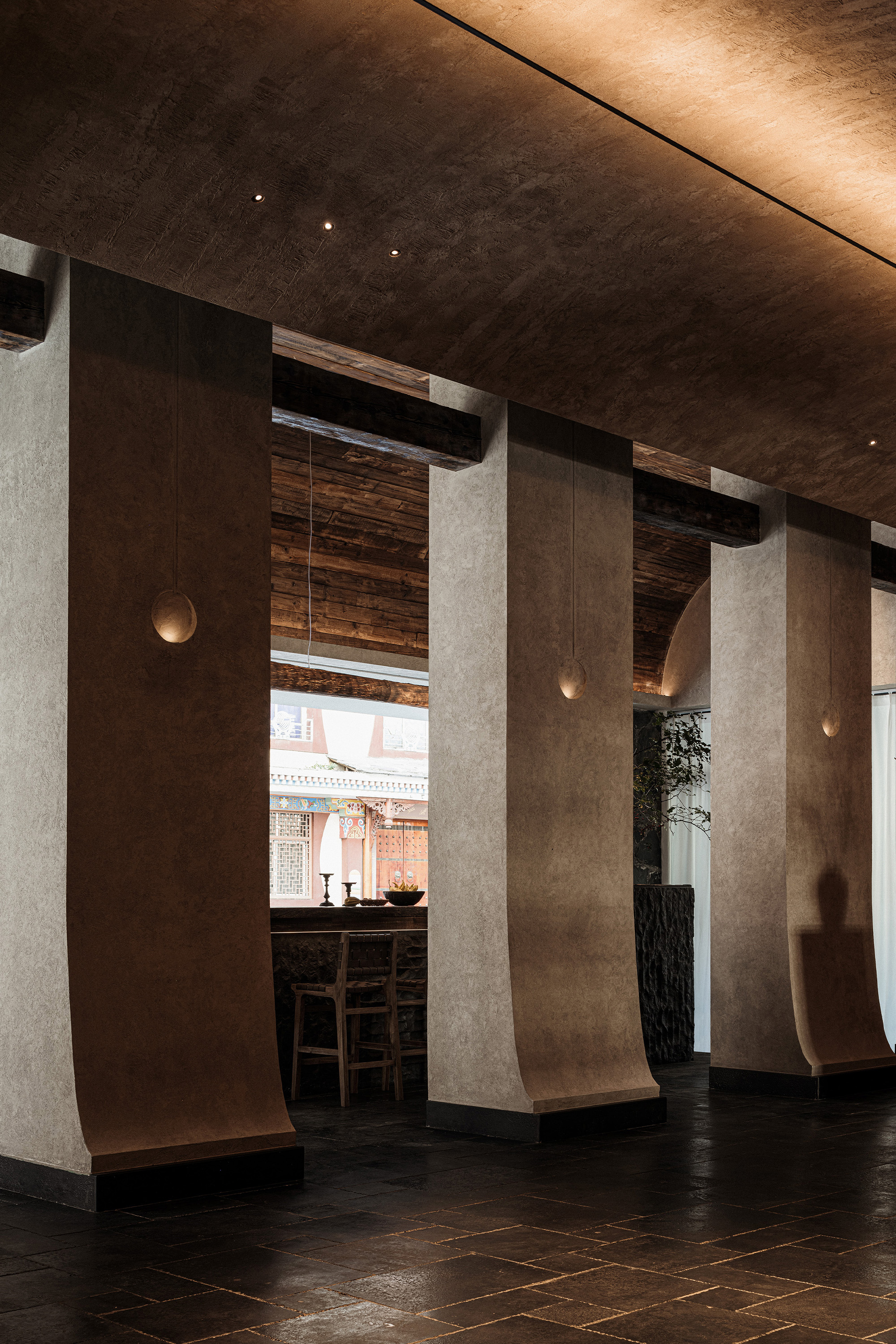
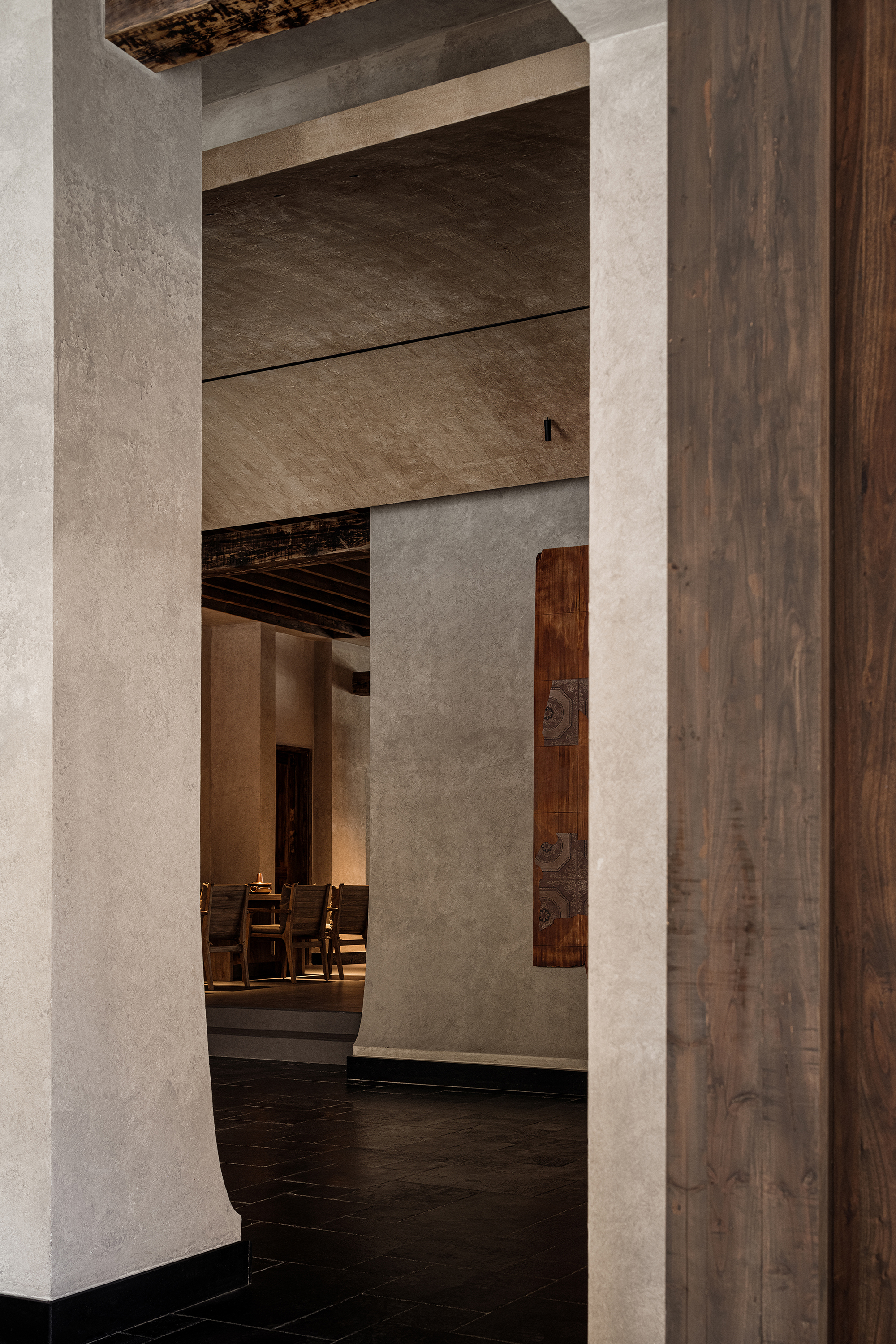
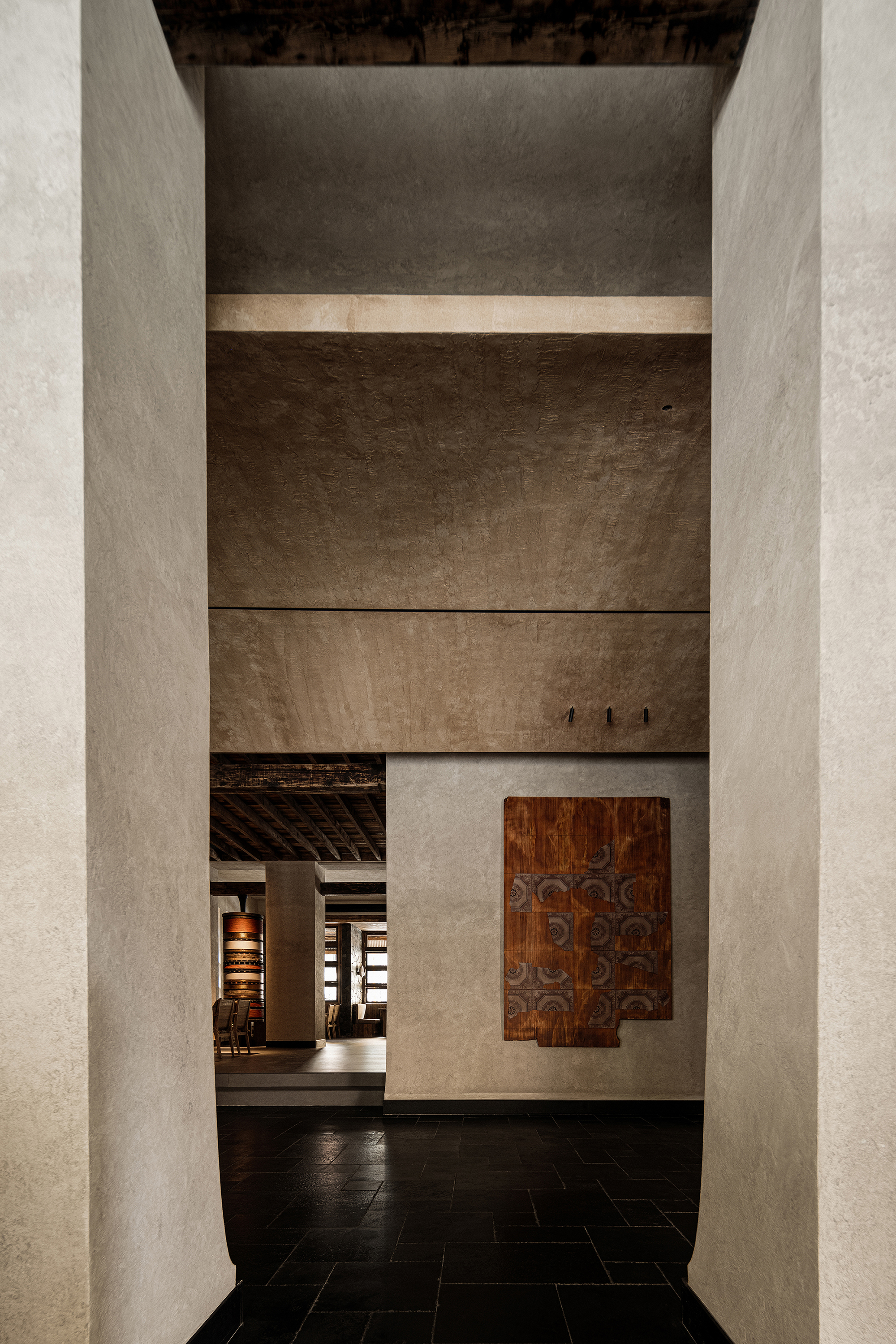
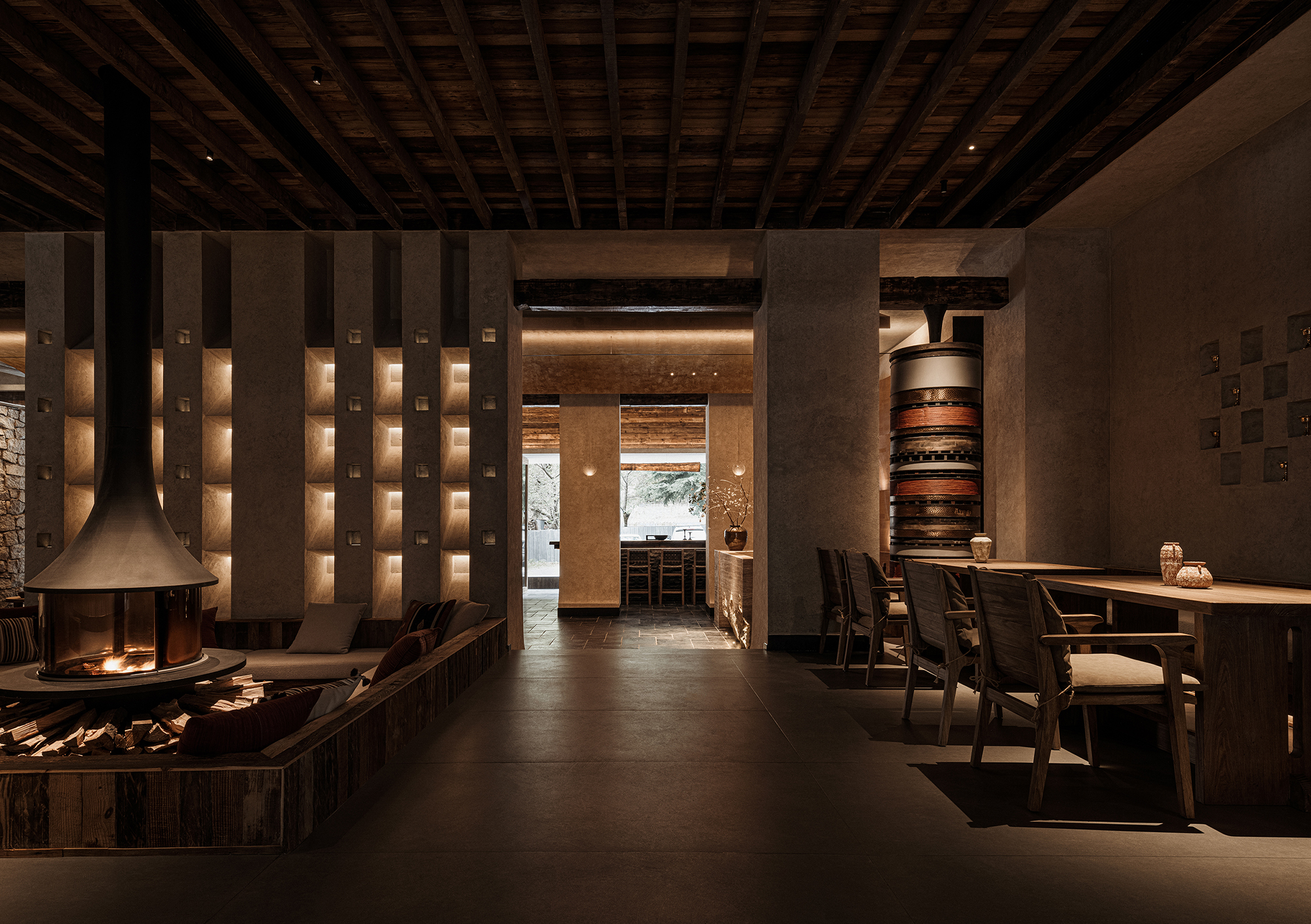
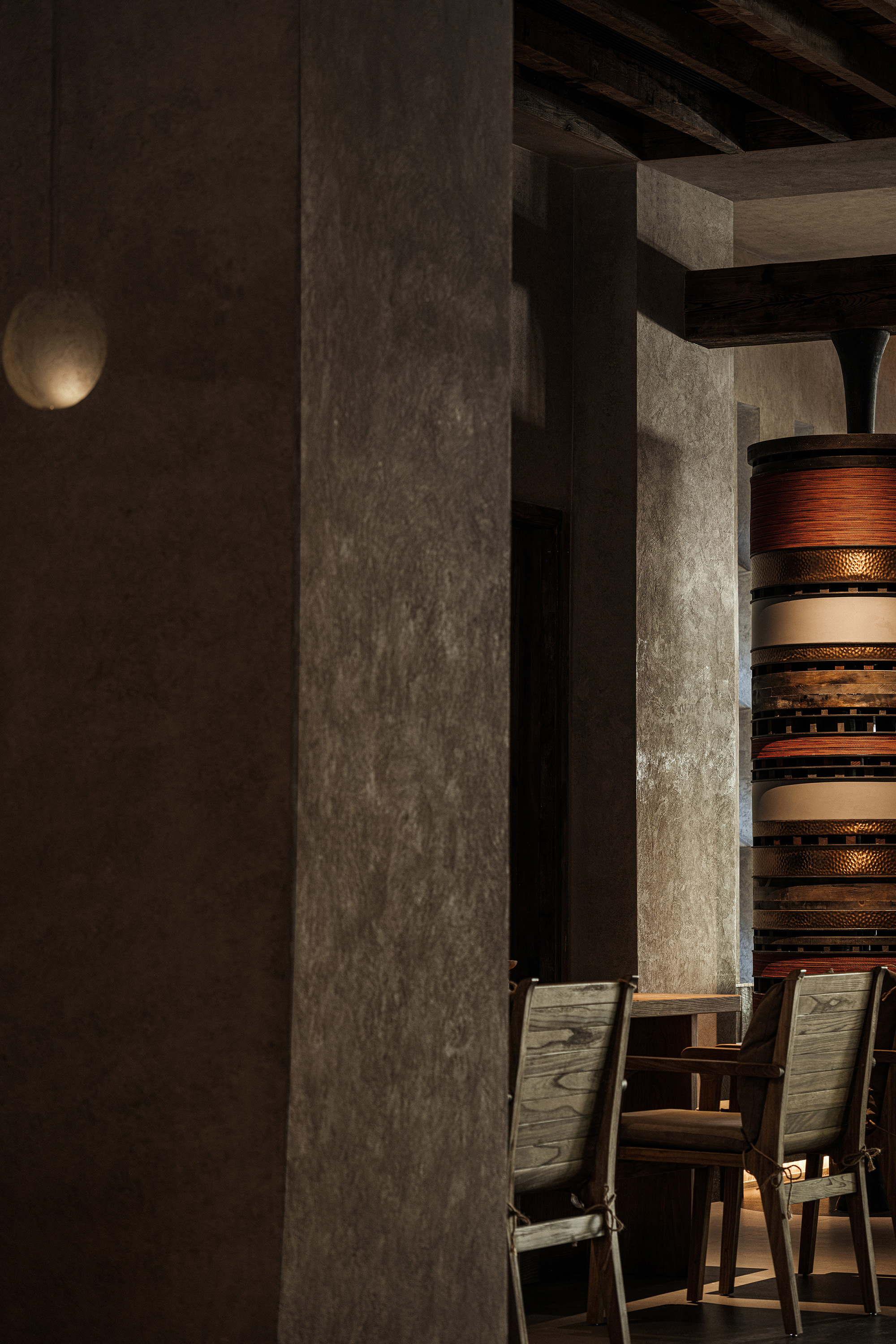
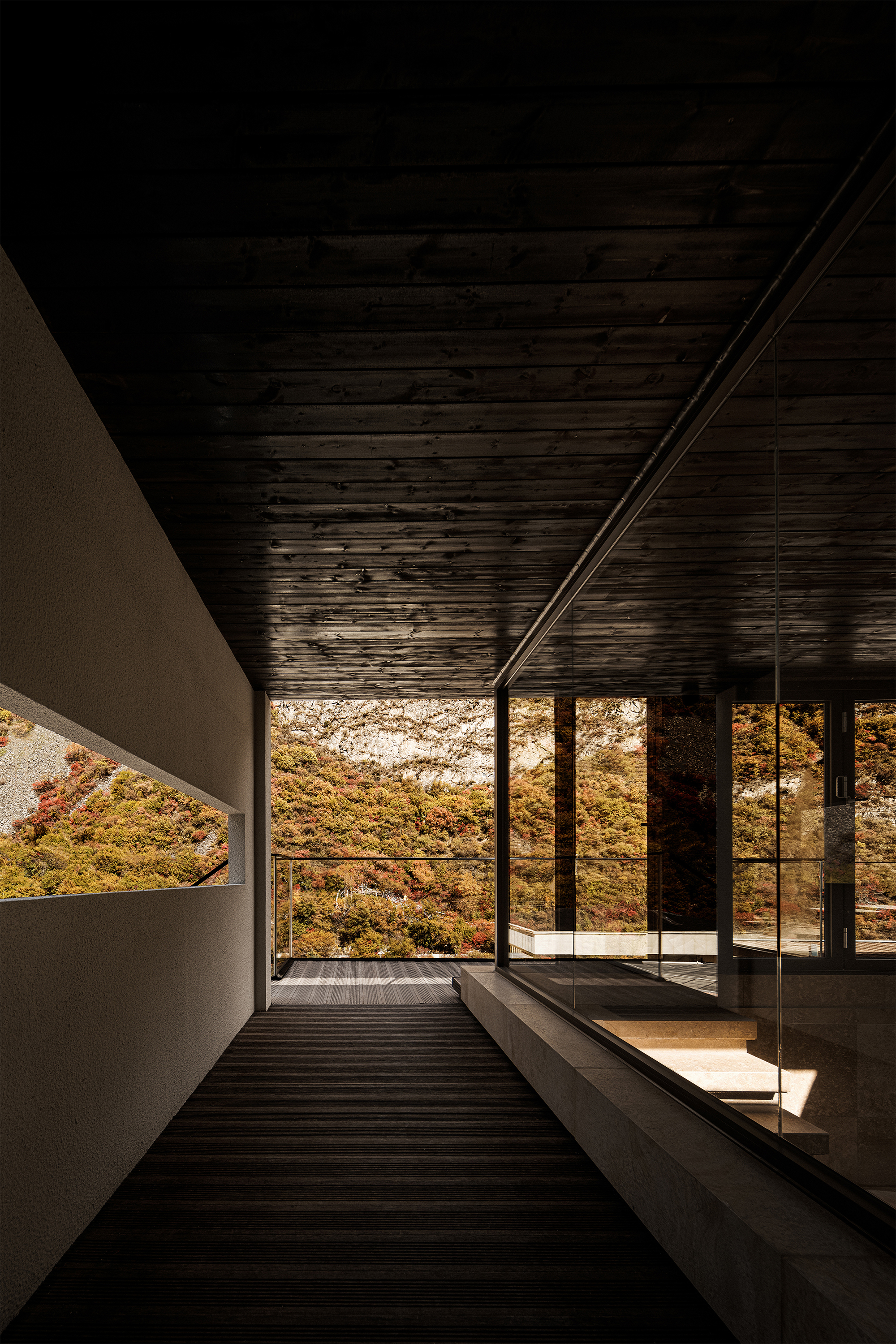
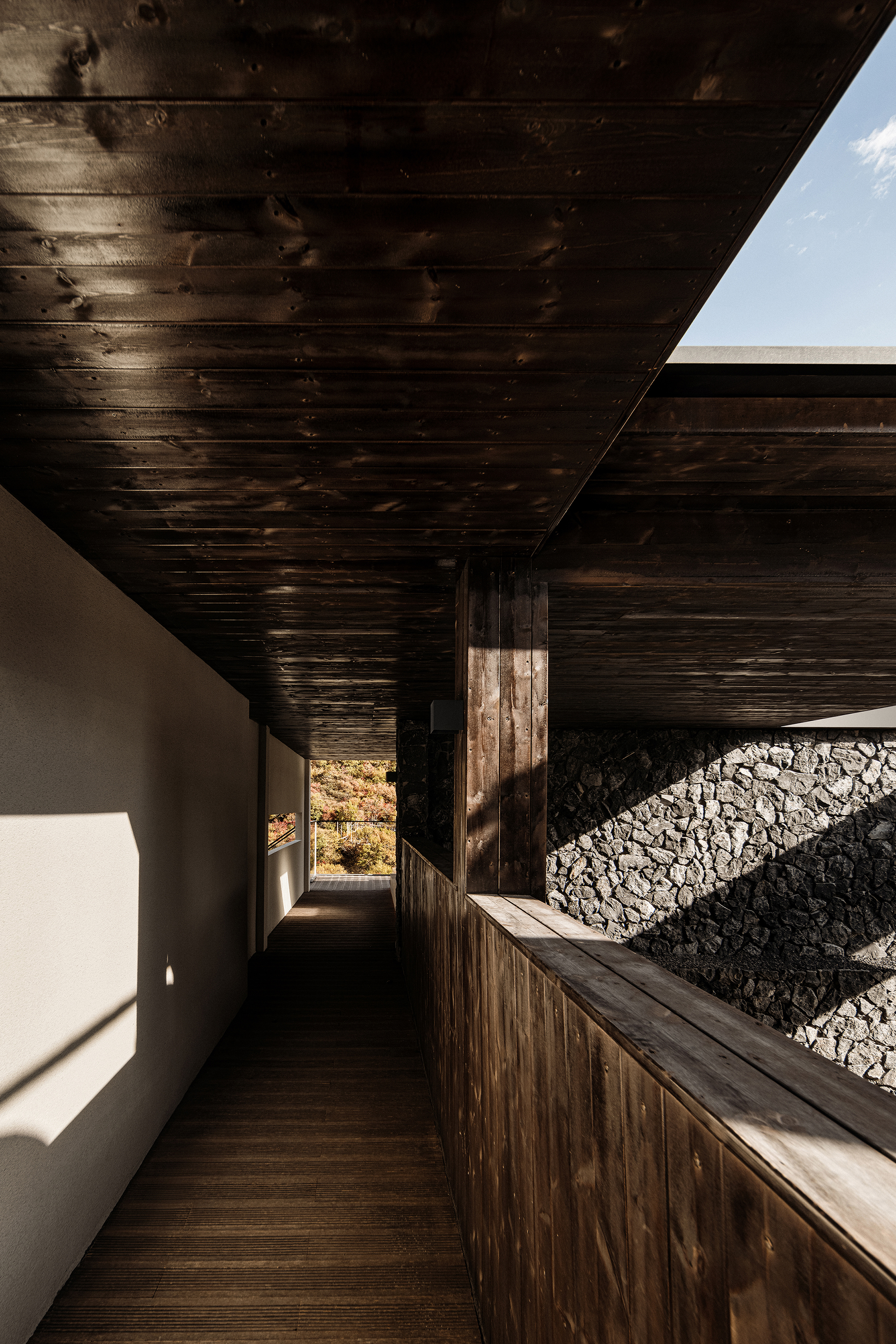
Entering the sacred interior from the bustling National Highway 317 requires passing through a relatively narrow and dim L-shaped passageway. As a transitional space, the abrupt dimming of light prompts the body, responding to experiential intuition, to immediately enter a state of complete immersion. Attention begins to focus inward, inner tranquility takes hold, and multiple senses actively seek spiritual enlightenment from the surroundings. The core area of the space is a colonnaded hall reminiscent of a traditional temple. The columns are substantial and rugged, blending the symmetry and proportion of Western classical architecture with the sacred aura of Tibetan-style architecture's high walls and pillars. A harmony of strength and beauty is achieved between the minimalist geometric forms and the gentle curves of the column bases.
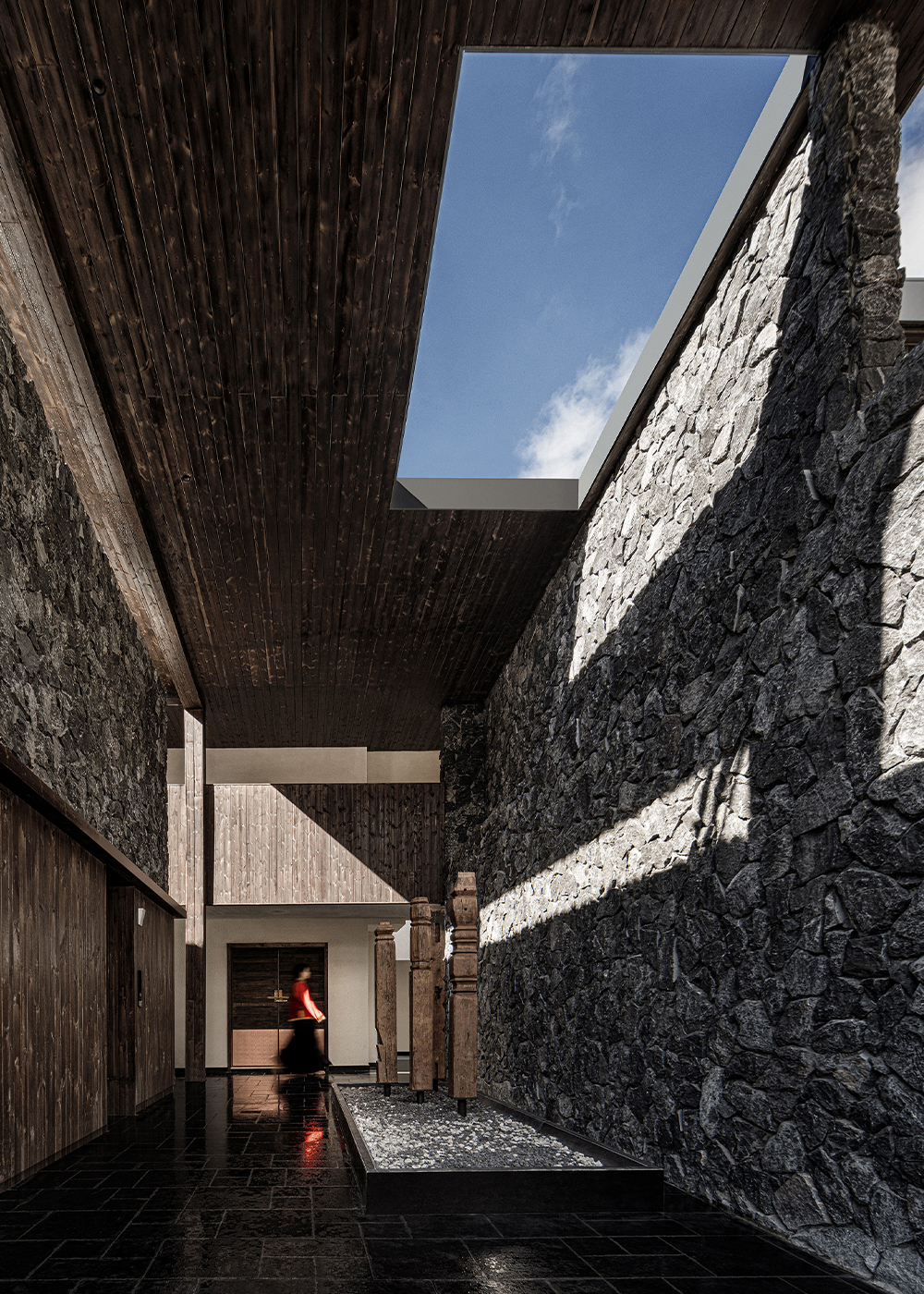
The curved vaulted ceiling echoes the arched column bases. From the rugged brick and stone wall at the entrance, extending to the layered, shrine-like wall constructed with multiple arcs at the opposite end, the sacredness of the space is pushed to its visual limit, becoming the most powerful convergence of ritualistic atmosphere. Here, whether through the vertical extension of the columns or the visual guidance along the spatial depth, a sacred and silent spatial tension is provided.
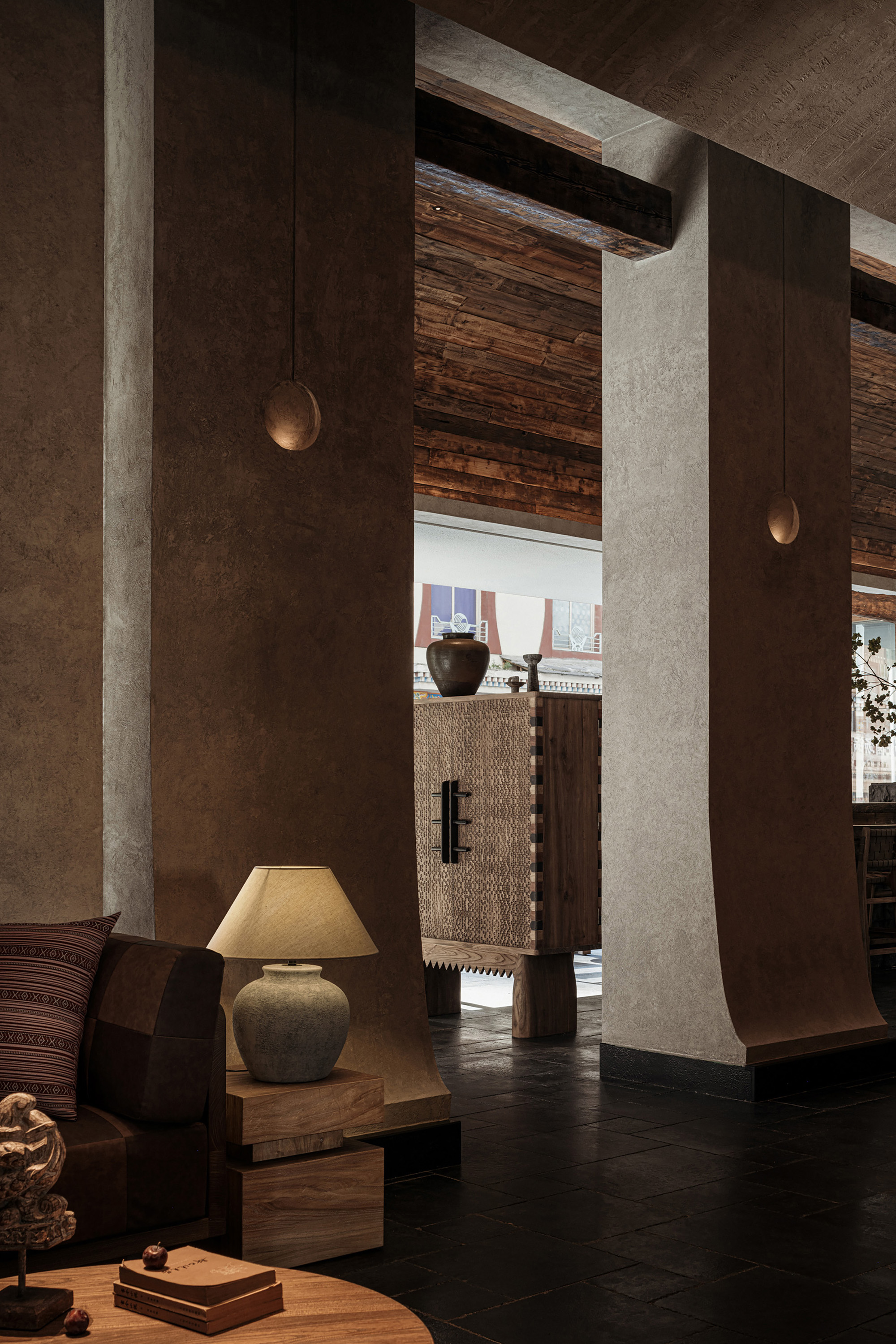
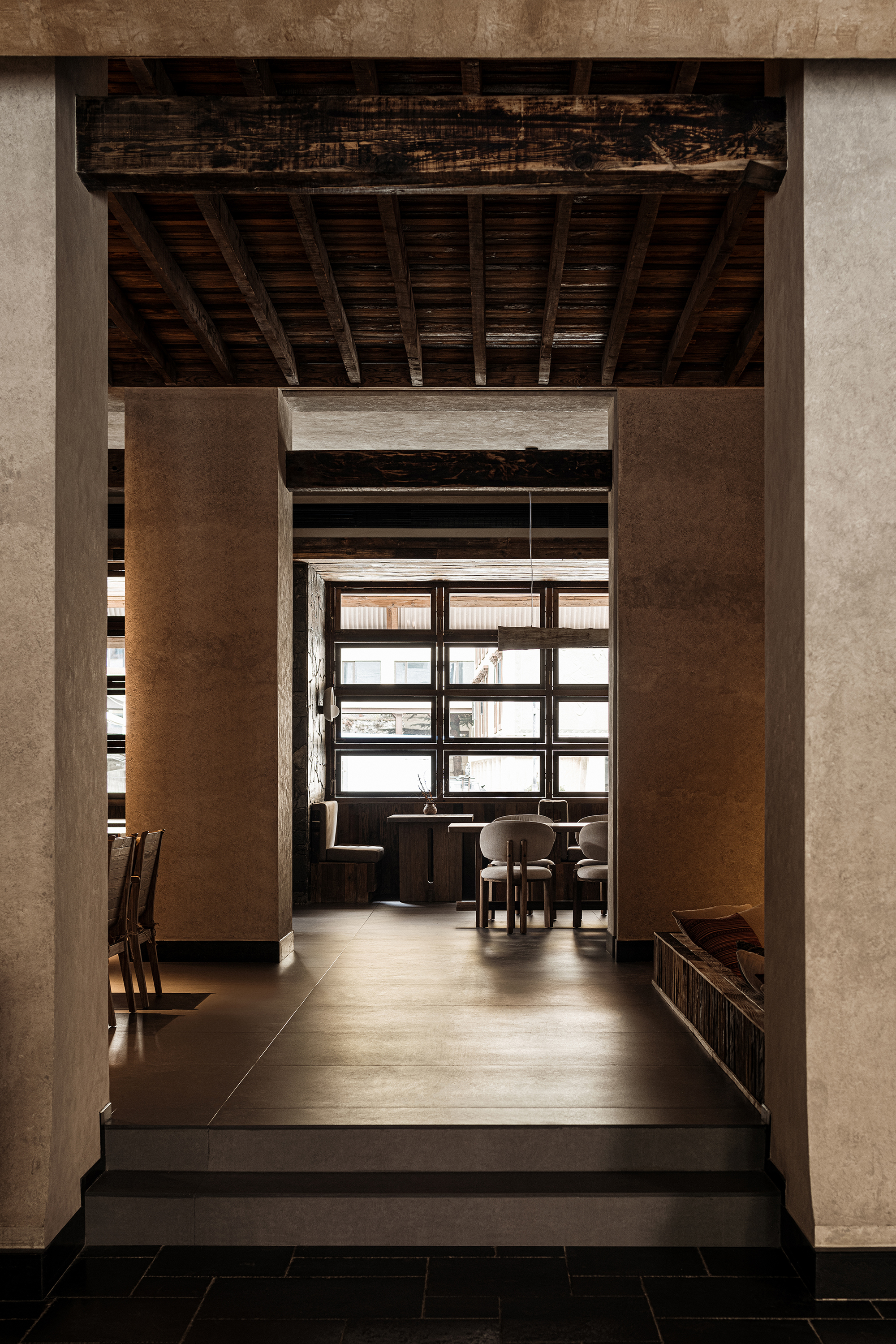
Centered on the mid-line of the arched dome, the spatial form and plan layout unfold sequentially toward both sides. Spatial symmetry is concentrated within the sacred colonnade zone. Orderly and solemn, the space conveys a sense of restraint and rational spirit through its balanced proportions and harmonious scale. The arrangement of the columnar structure serves not only as the spatial support system but also as the primary source of visual rhythm. It participates in constructing spatial order while symbolizing the covenant between humanity and the divine. Faith blossoms in the silence.
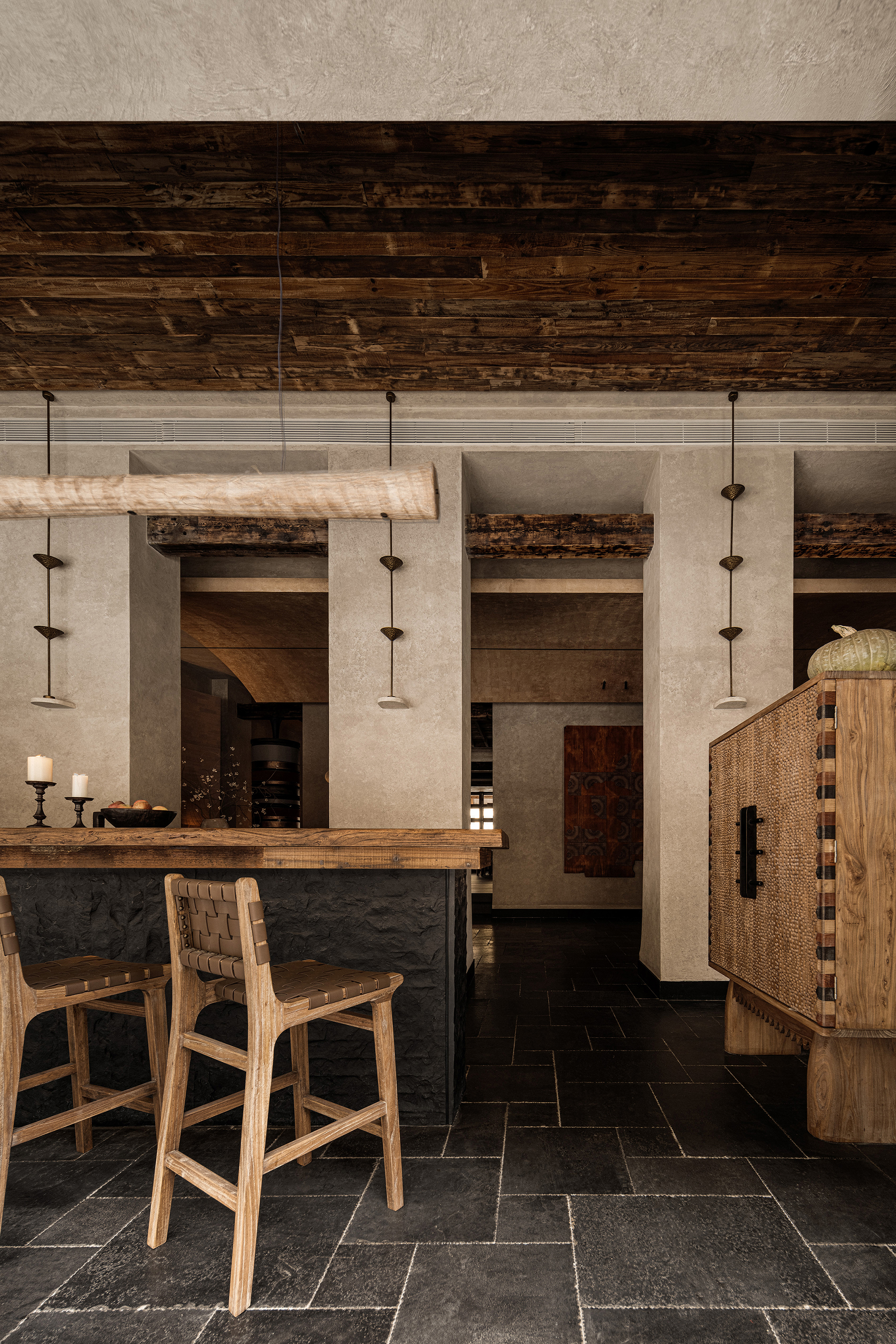
Here lies the key to transitioning from ritual space to secular space, hinting at a spatial shift from solemn reverence to relaxed freedom. As the space moves beyond the sequential columns, asymmetry disperses toward both ends, allowing the free and open modern plane to take effect. Through the layered progression of visual interplay, it inspires a spatial desire for movement and strolling. Spatial hierarchy relies not only on the rational layout and division of planes but also on the visual progression of layered interactions within the space. Here, the gaps between columns create a blurred boundary, encouraging visual penetration and layered access. The overall interactive experience achieves a balance between convergence and dispersion.
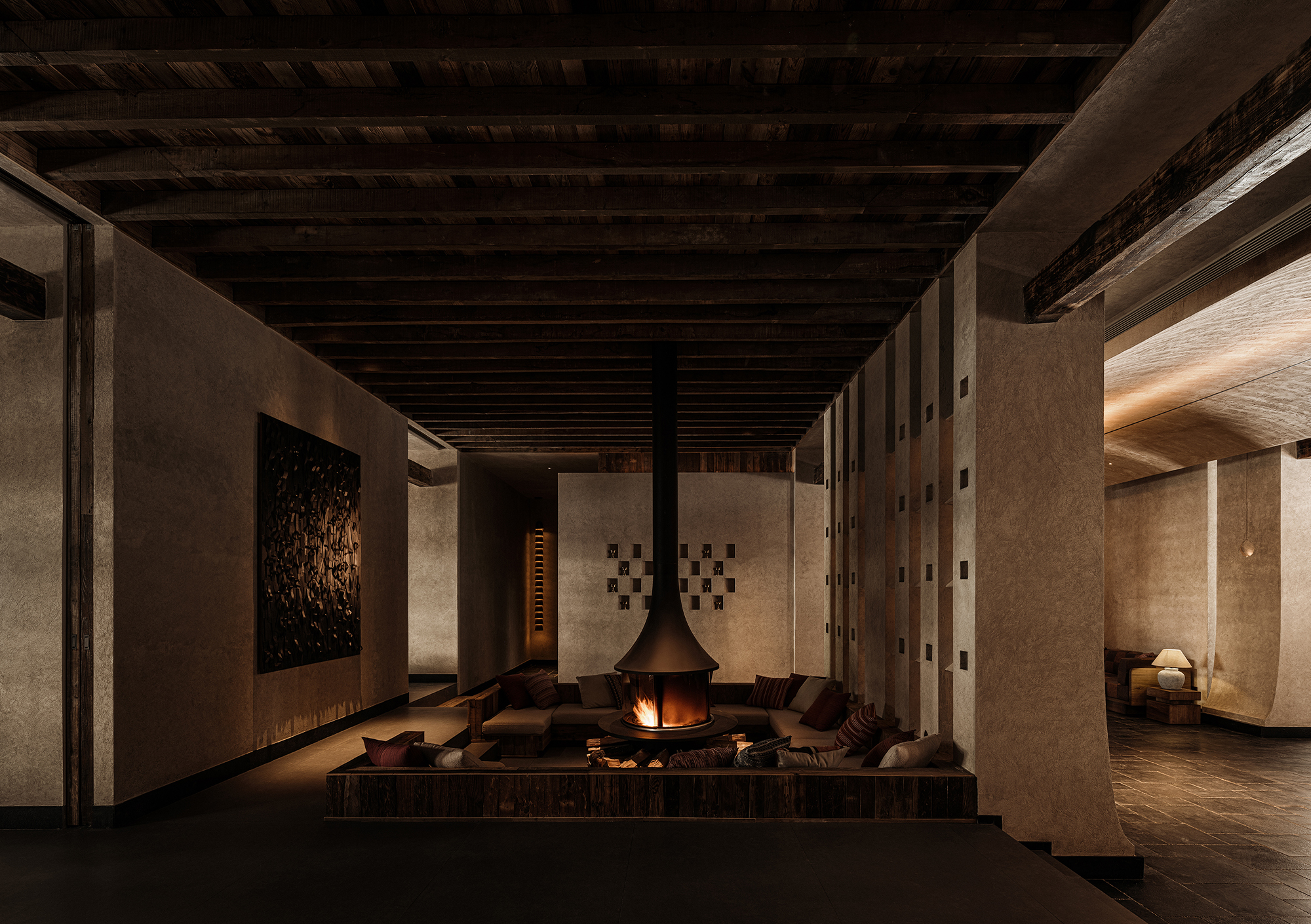
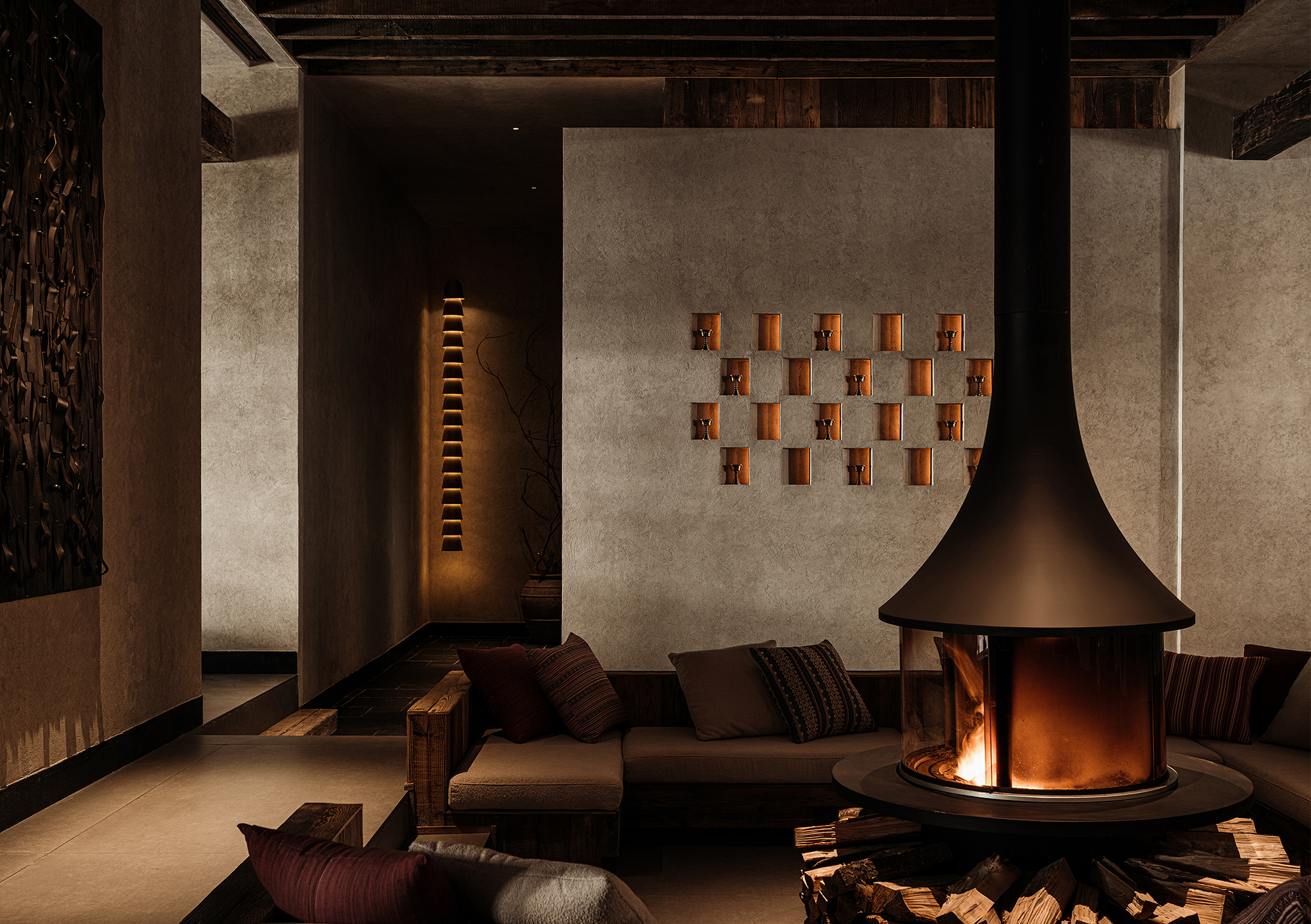
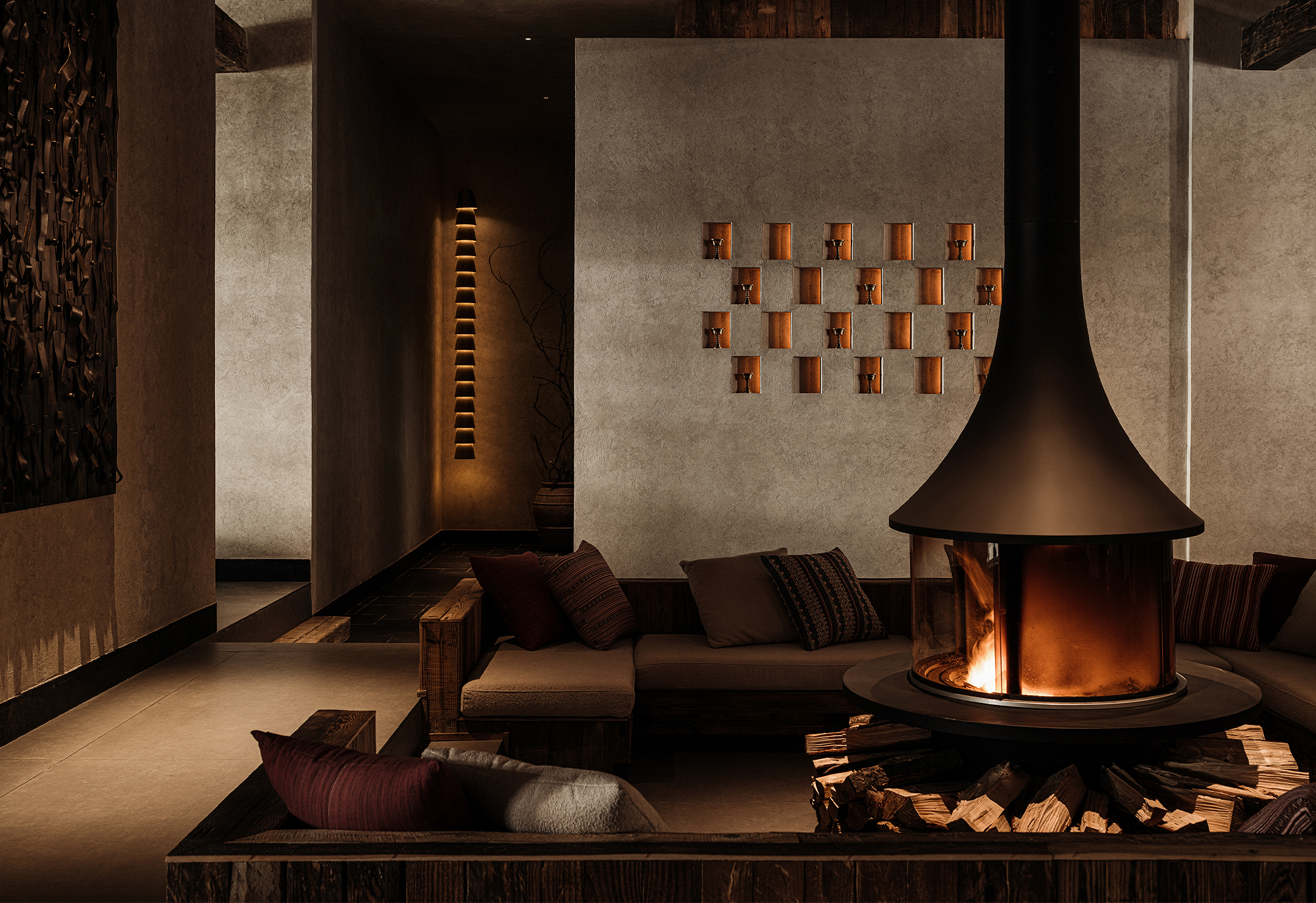
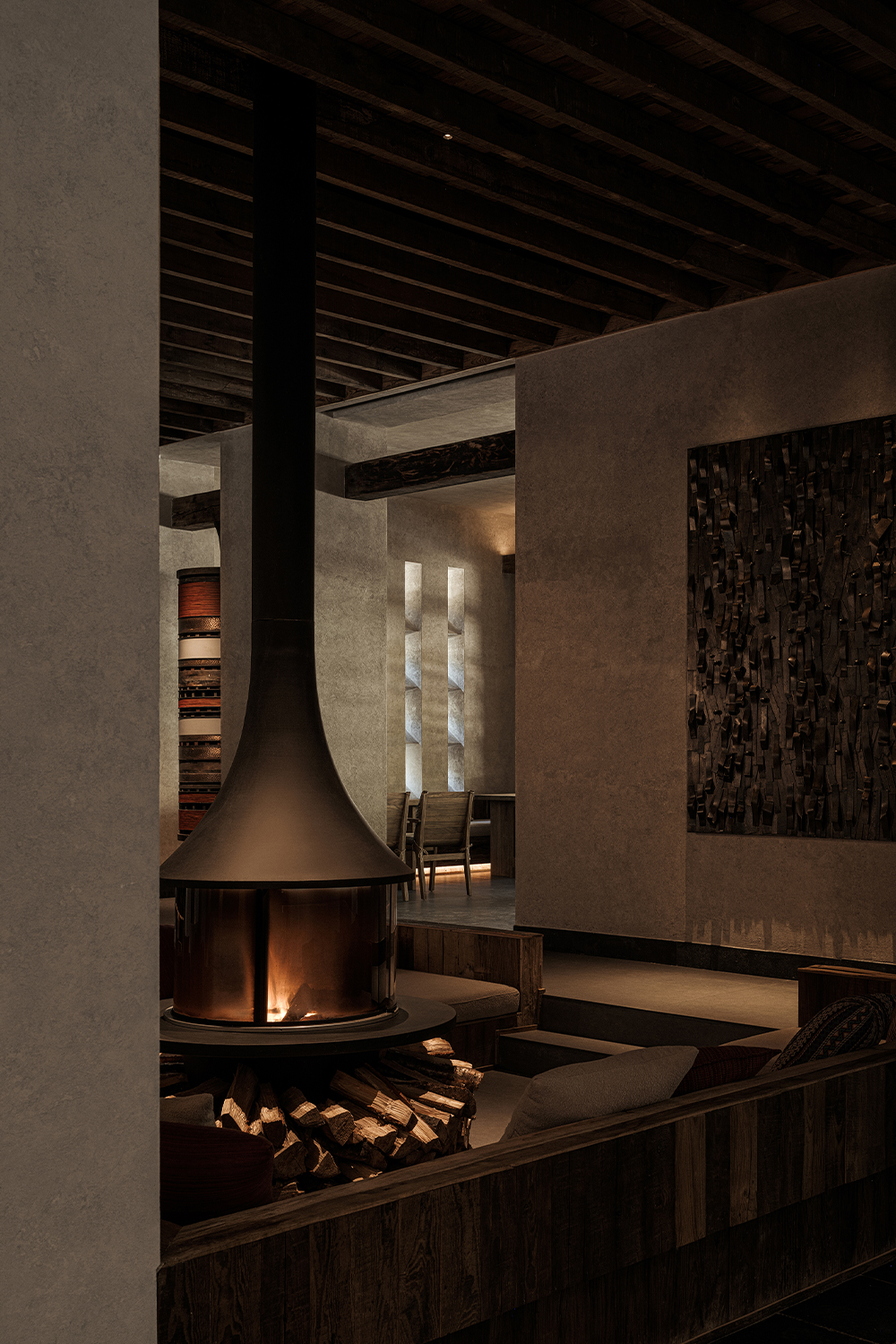
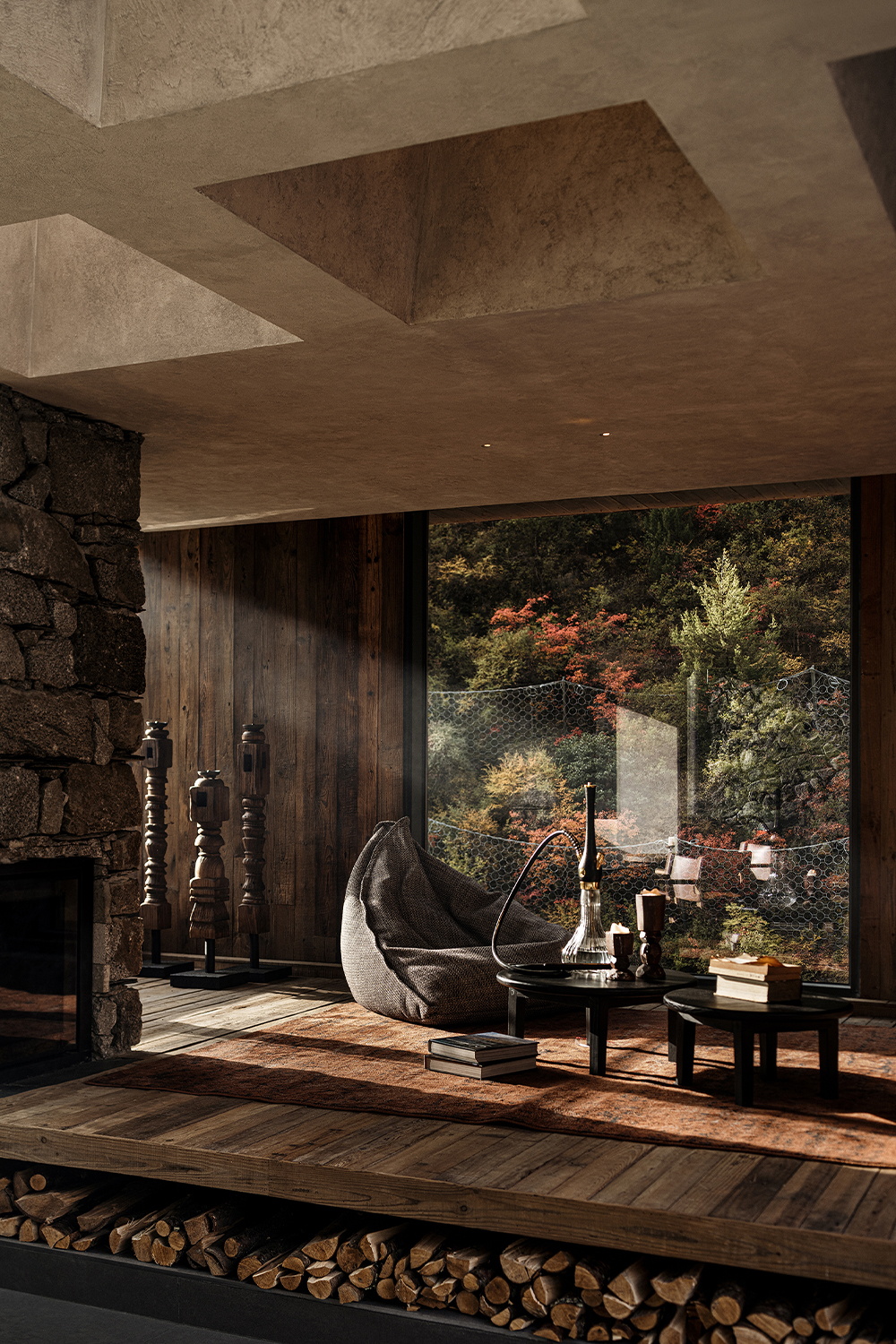
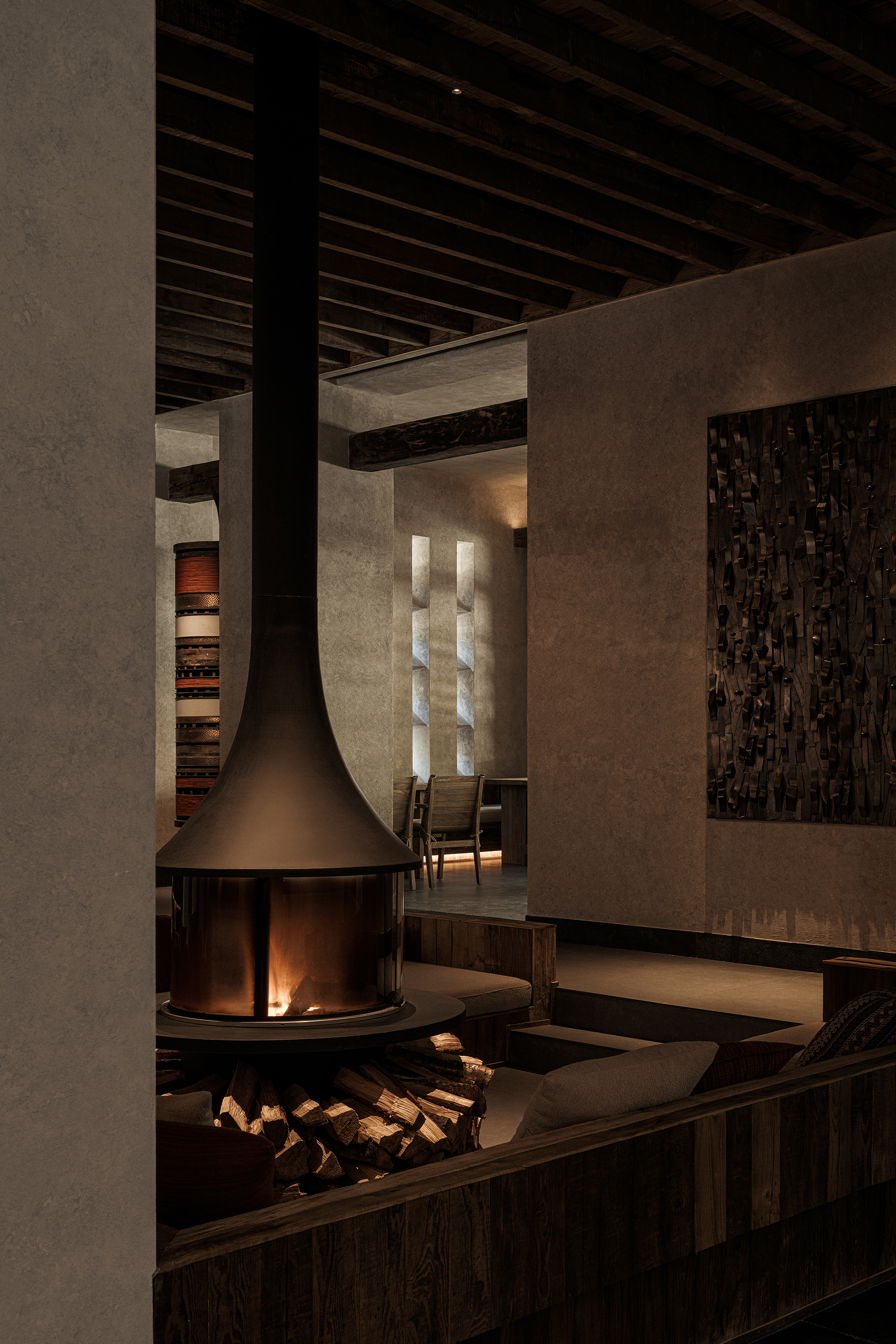
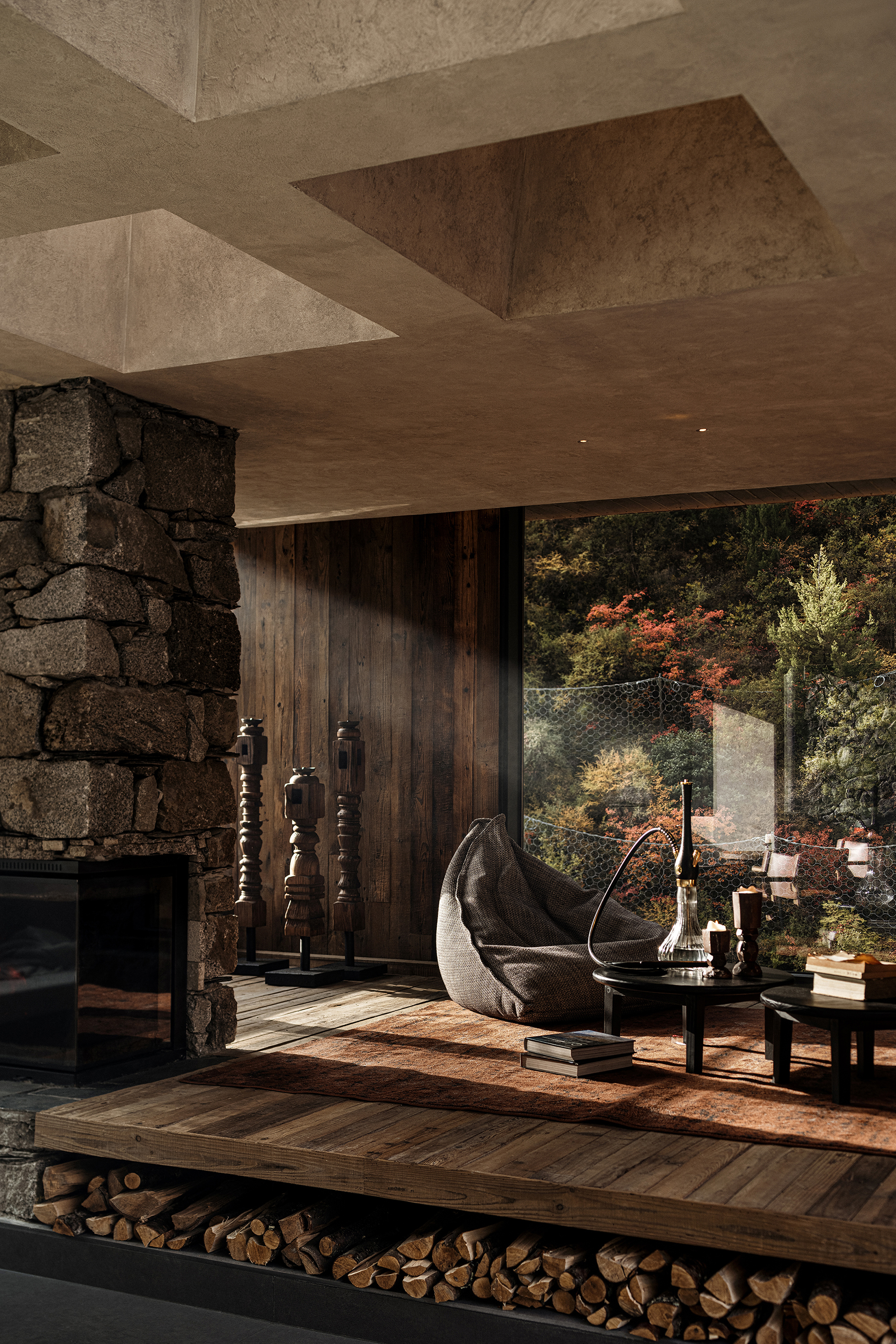
Fire was originally regarded as a microcosm of the sun. In other ancient civilizations, the sacred flame was always initially placed in a specific area before gradually being embraced by the living spaces of households. In Tibetan regions, daily life similarly revolves around the hearth. For Tibetans, fire is both material and spiritual—providing warmth and light. Here, the sunken hearth is emphasized by the space, creating a sense of cozy intimacy. The slightly dimmed surrounding light, the dancing flames within the hearth, and the crackling sound of burning wood all aim to offer a humanistic dimension that, while non-religious, still evokes spiritual resonance.
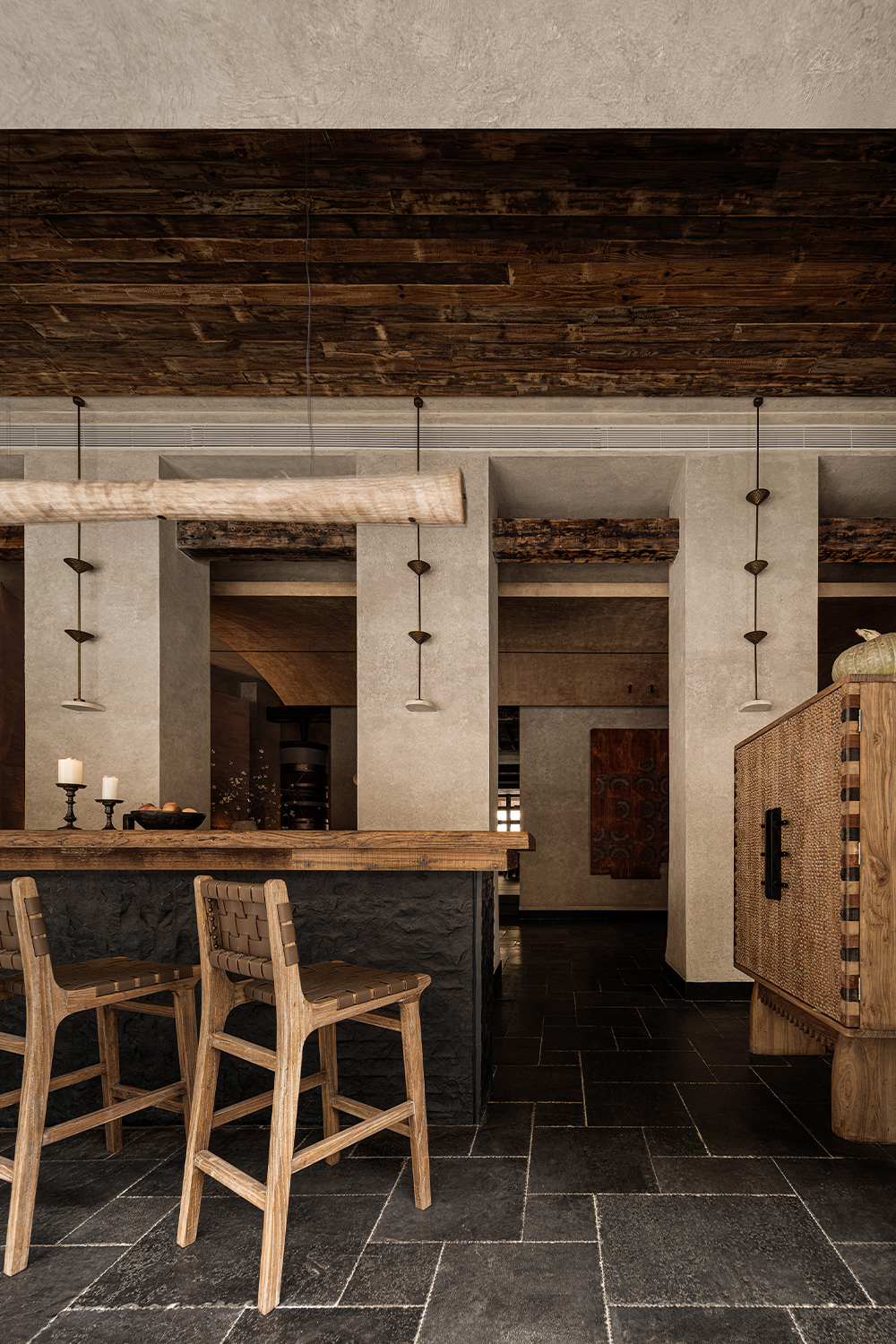
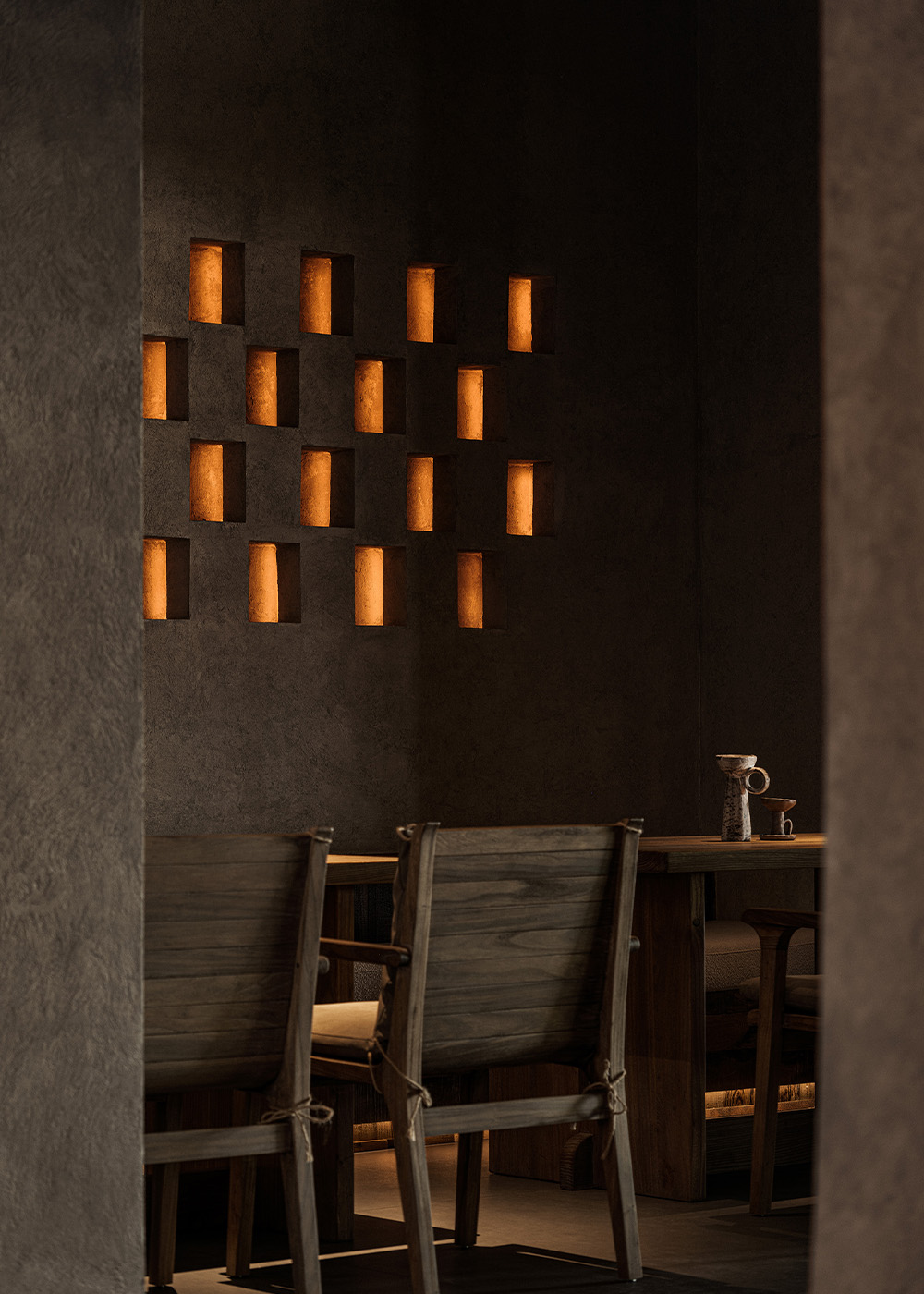
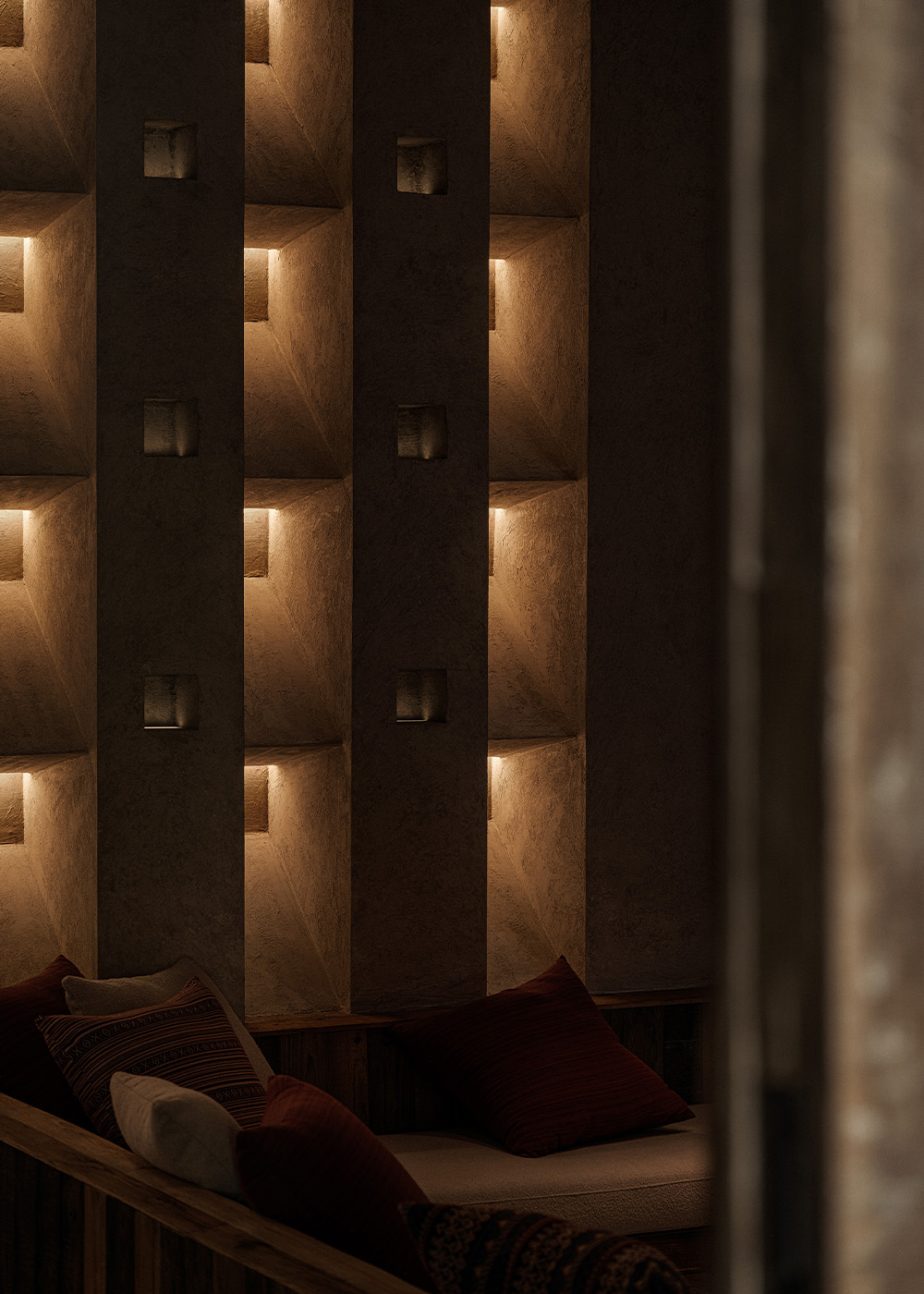
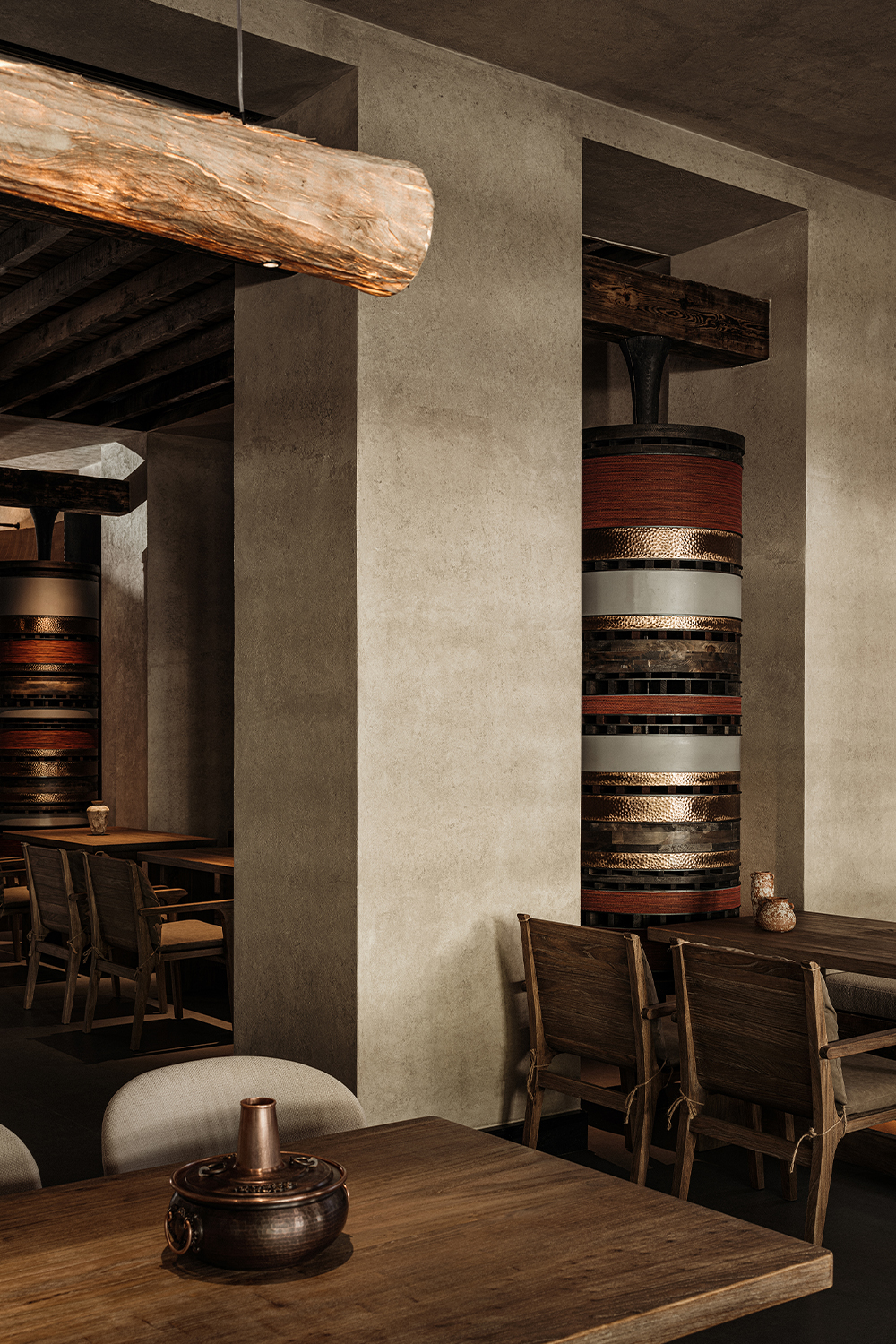
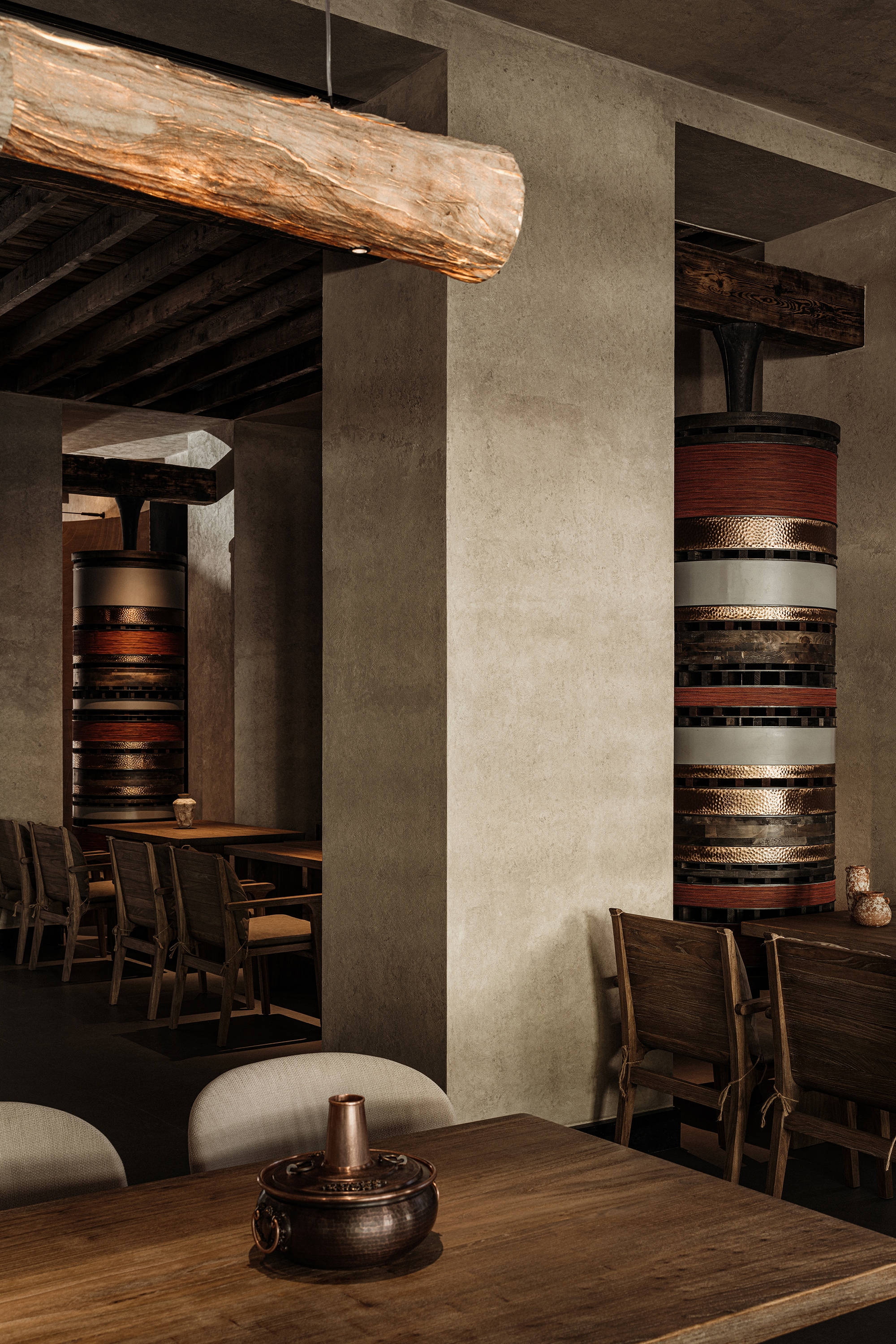
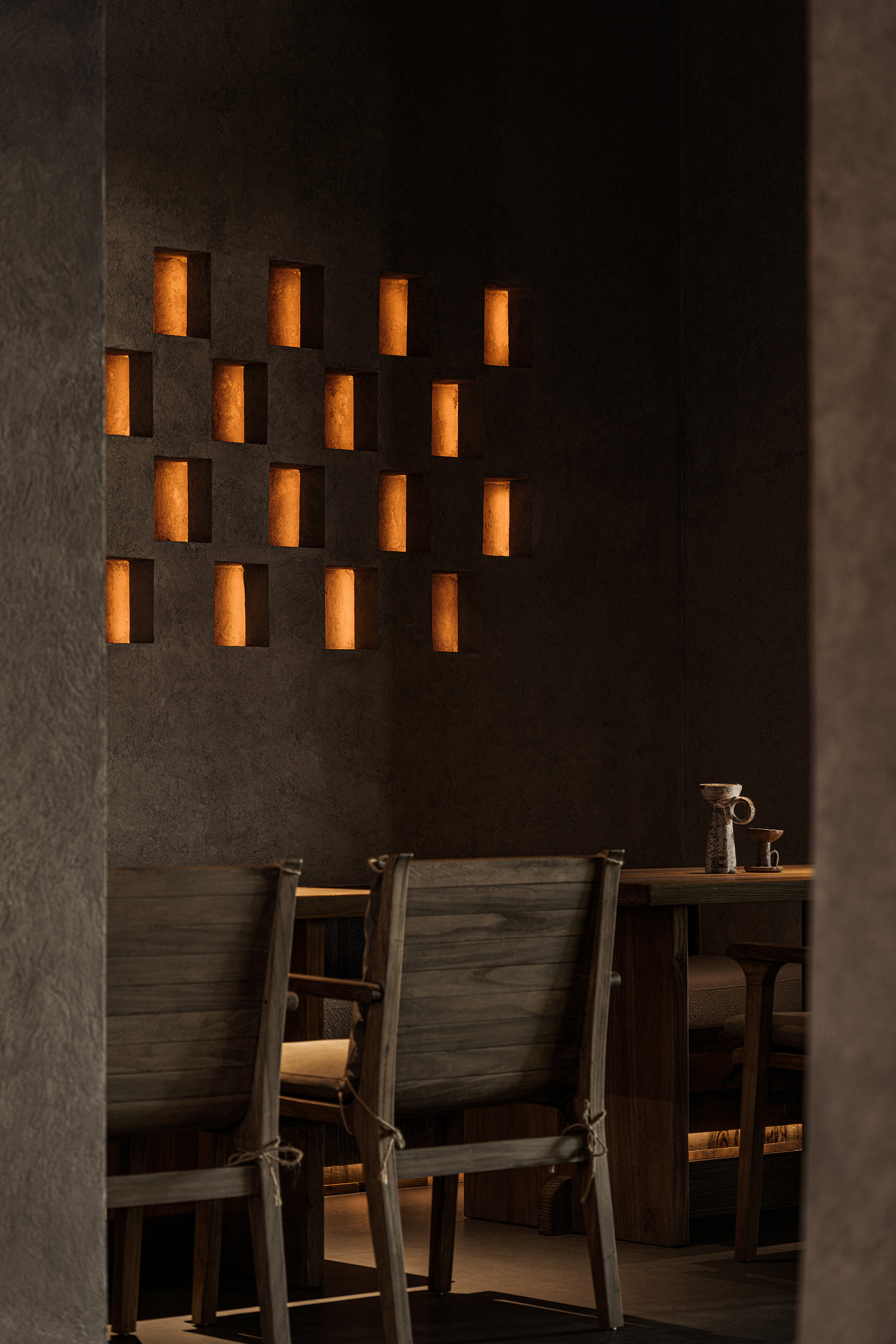
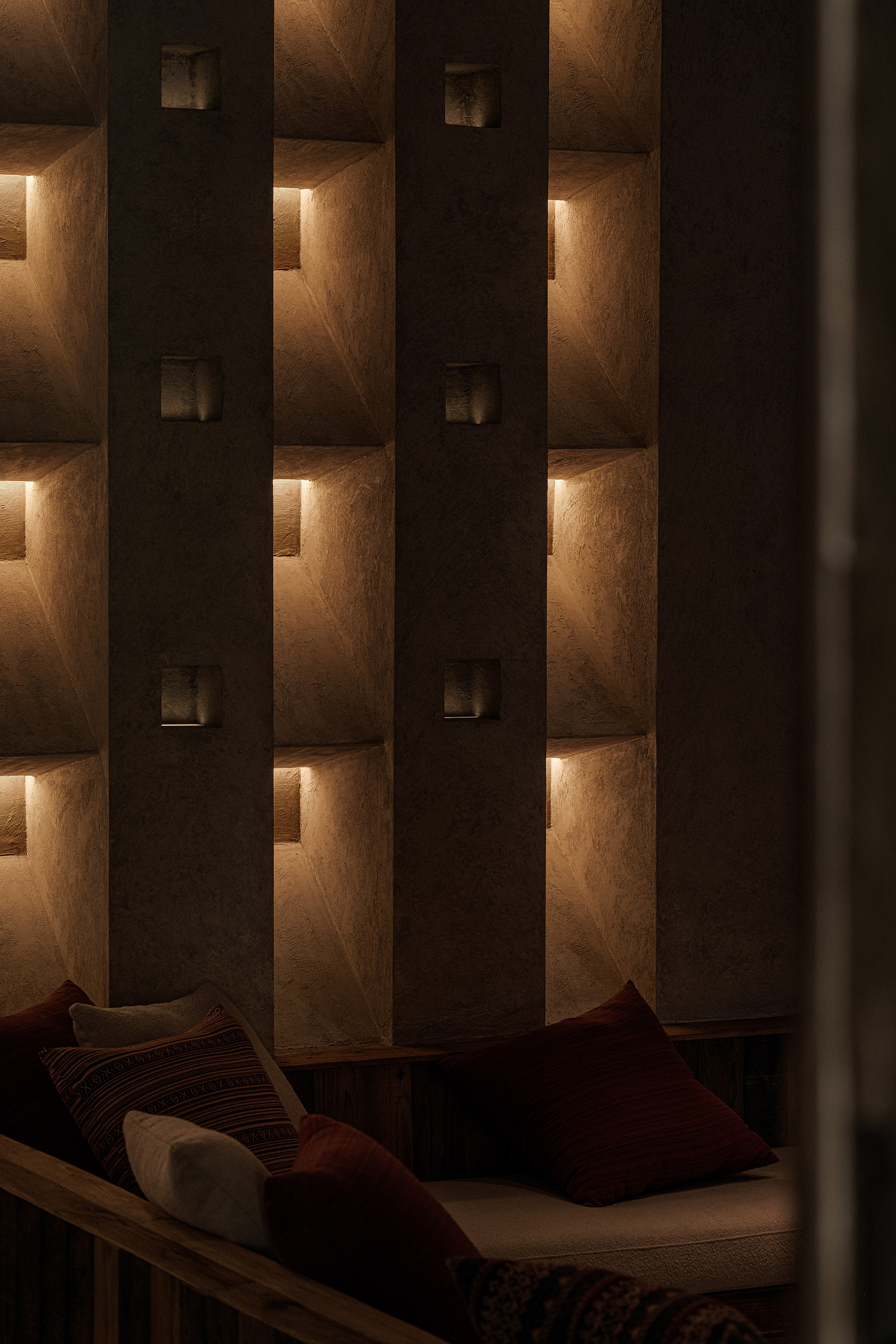
Gathering fleeting glimpses of humanistic essence from the details. The prayer wheel in the dining area, crafted from copper sheets, iron plates, and Tibetan red cotton thread, transforms religious ritual into an artistic installation. The wall hanging above the hearth features a copper-sheet composition resembling ravines, adorned with Tibetan bells. As the firelight dances across it, it casts shifting patches of light and shadow—a response to the rhythms of daily life. Meanwhile, small apertures in the thick walls allow light to seep through, gradually fading into a state of soft, permeating grayscale—a silent yet profound reflection of human culture's subtle influence. Thus, sacredness and everyday life intertwine, each enriching the other.
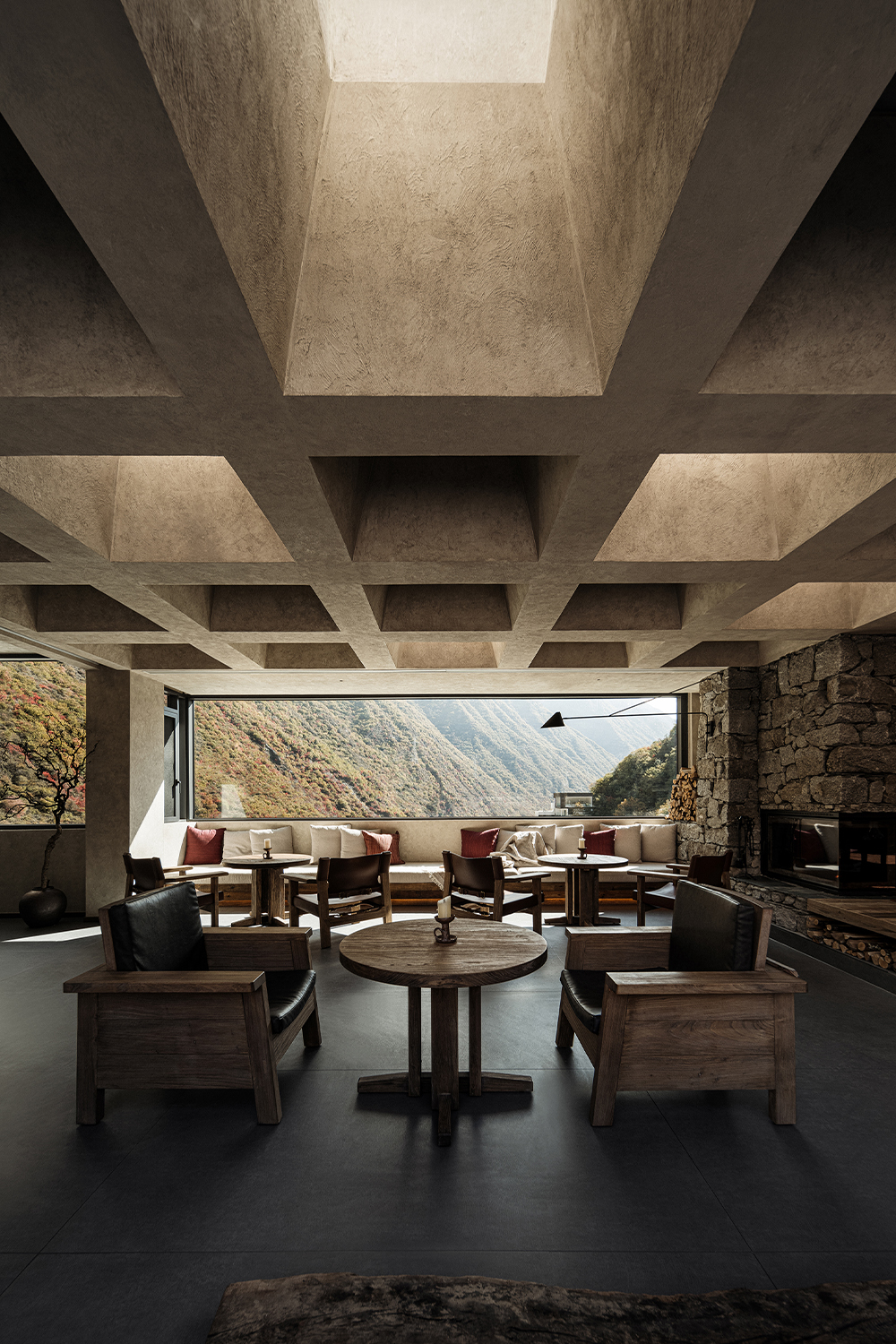
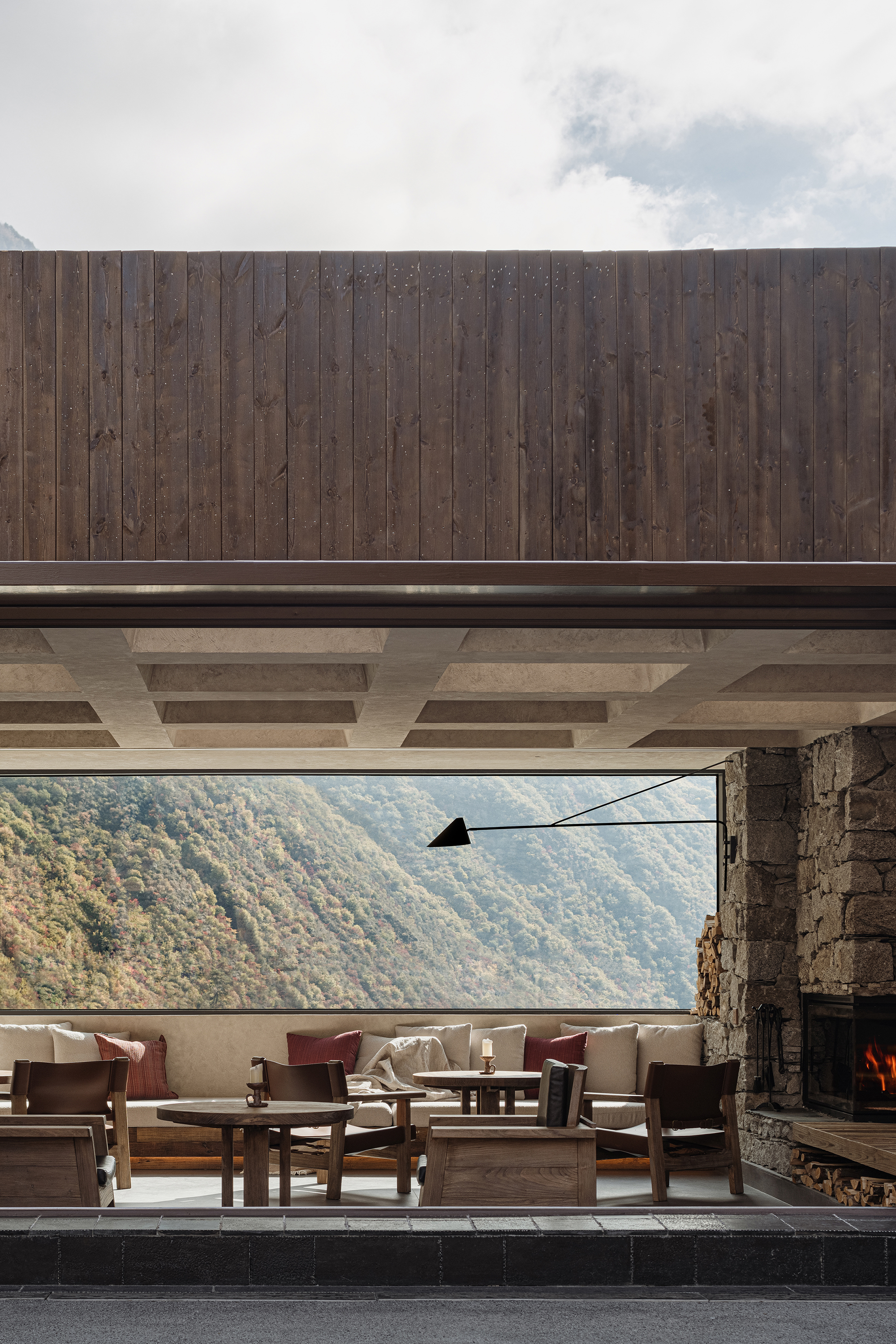
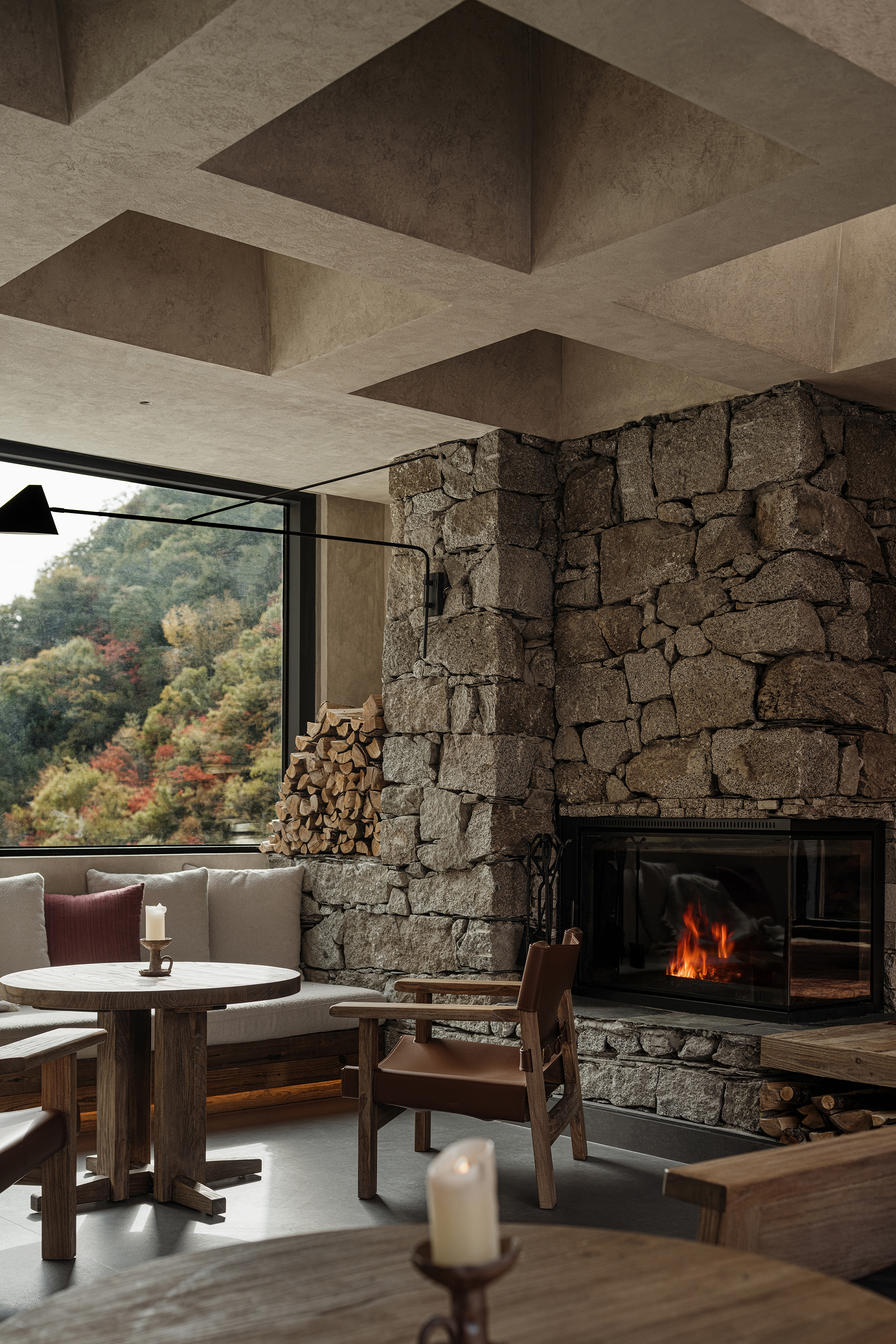
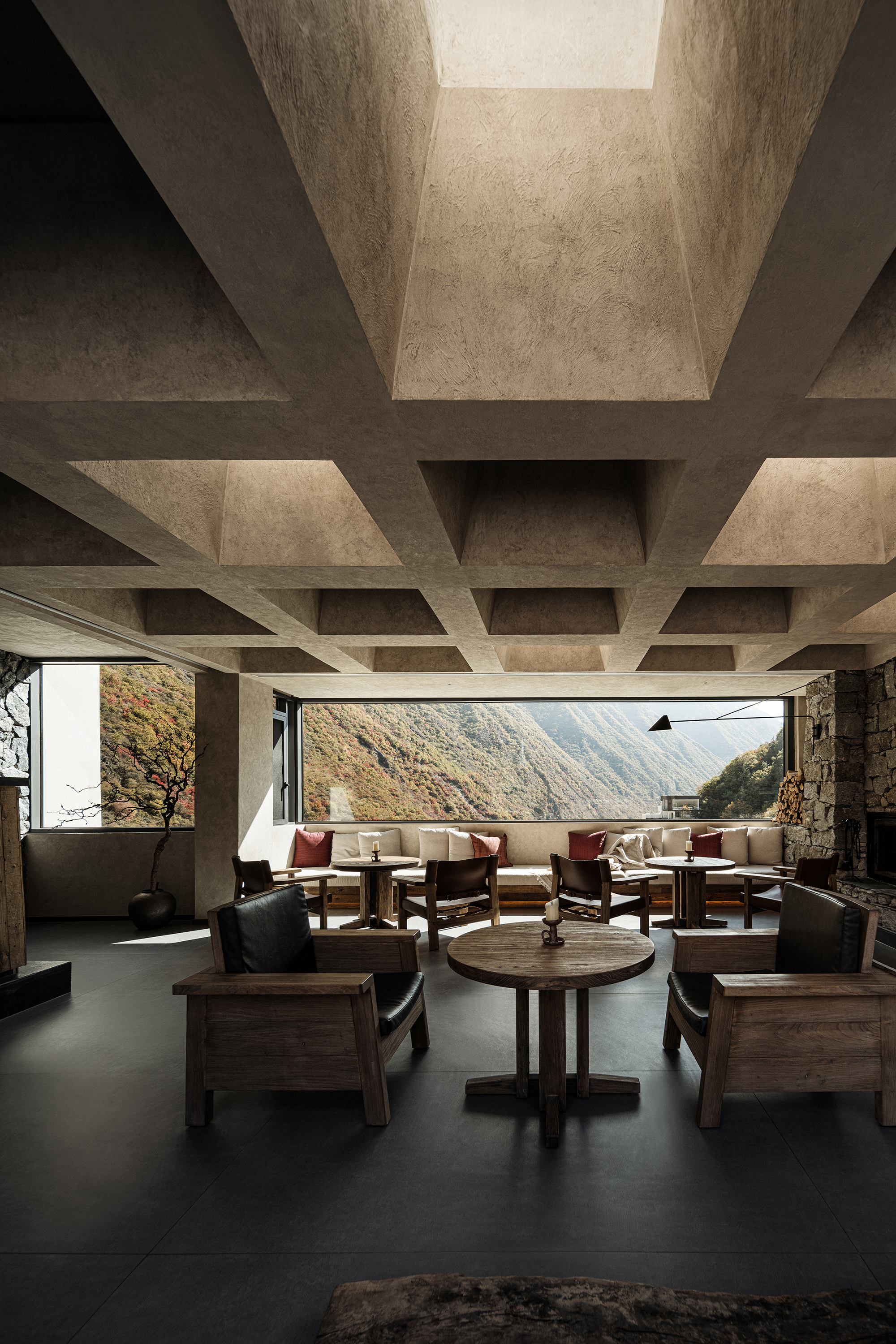
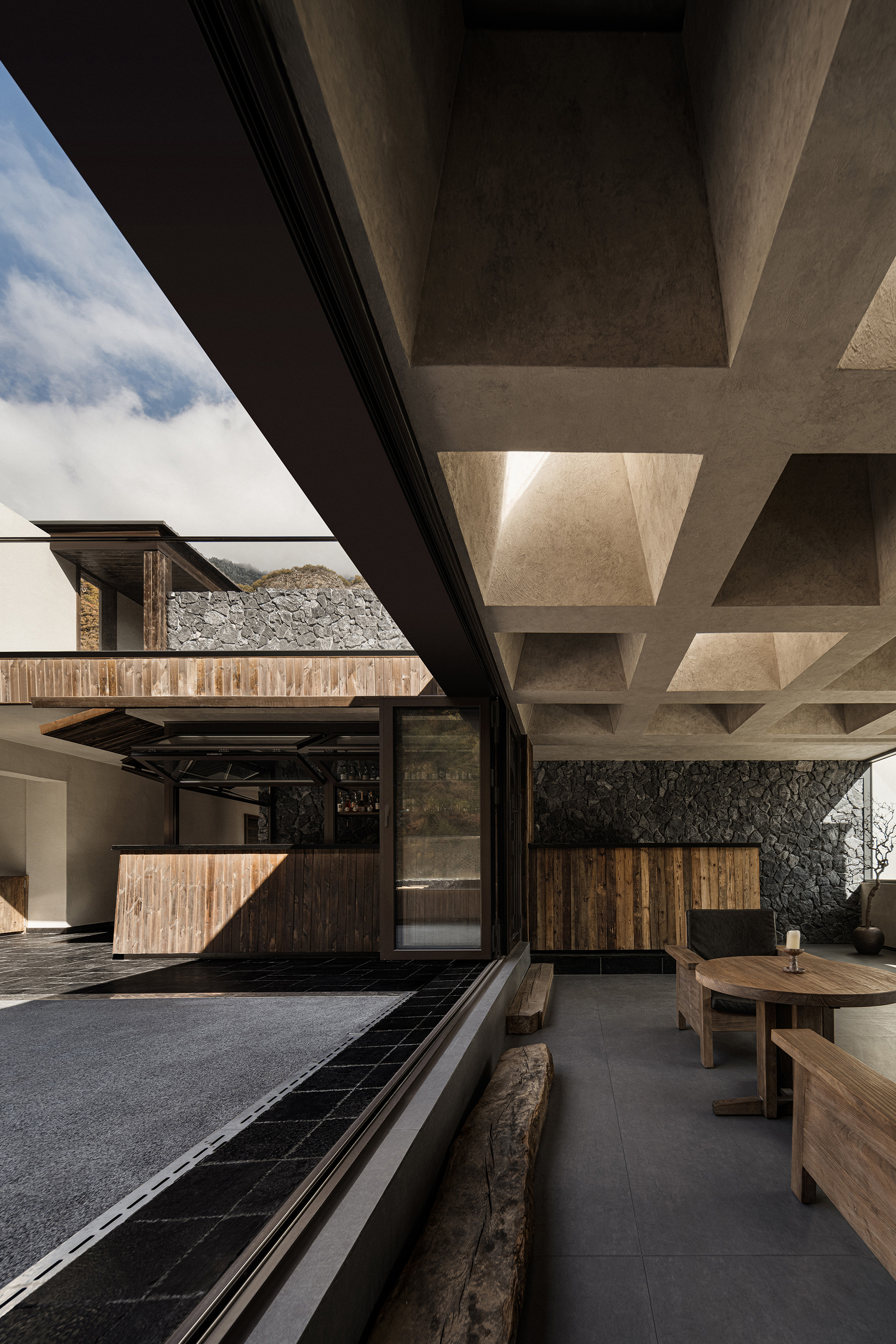
Positioning the bar on the top floor serves a dual purpose: first, to complement the ground-floor communal area, enriching the diversity of the public space in terms of visual experience and spatial perception; second, to extend the spiritual and pure essence of the space vertically, transforming it into an architectural will. For instance, the grid-like structure at the top and the translucent openings directly echo the columnar order and the play of light through perforations found in the ground-floor communal space.
公开 不公开