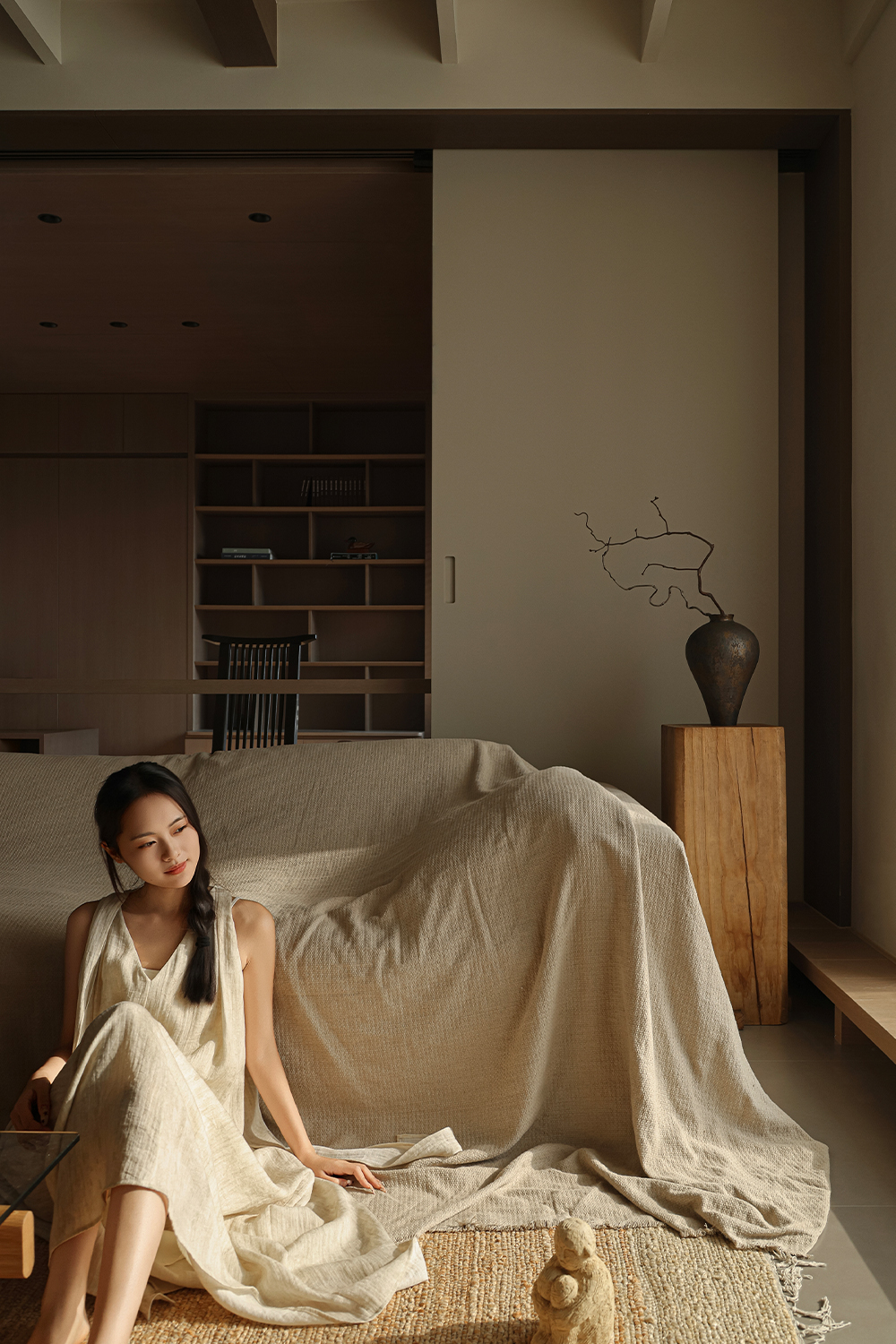
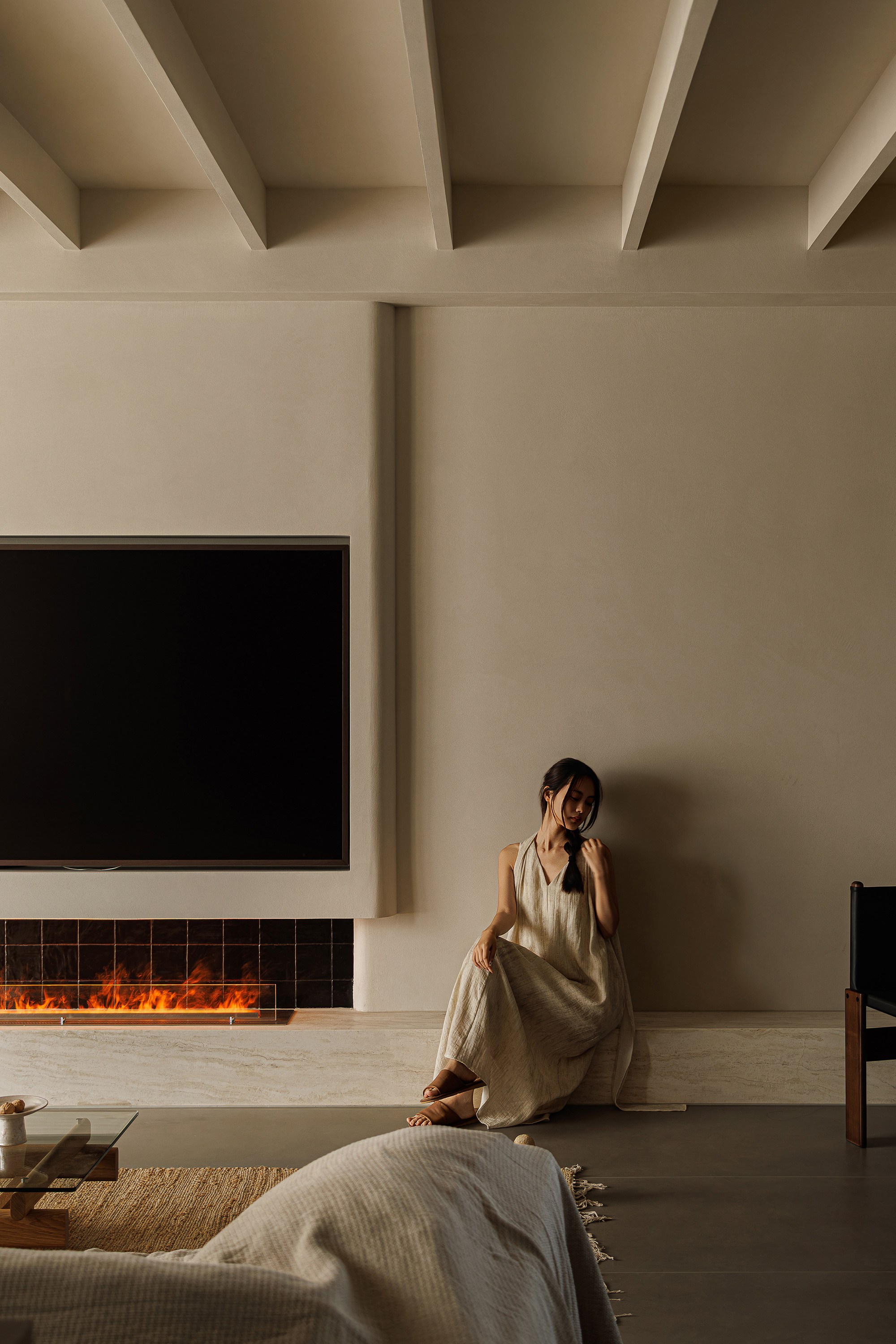
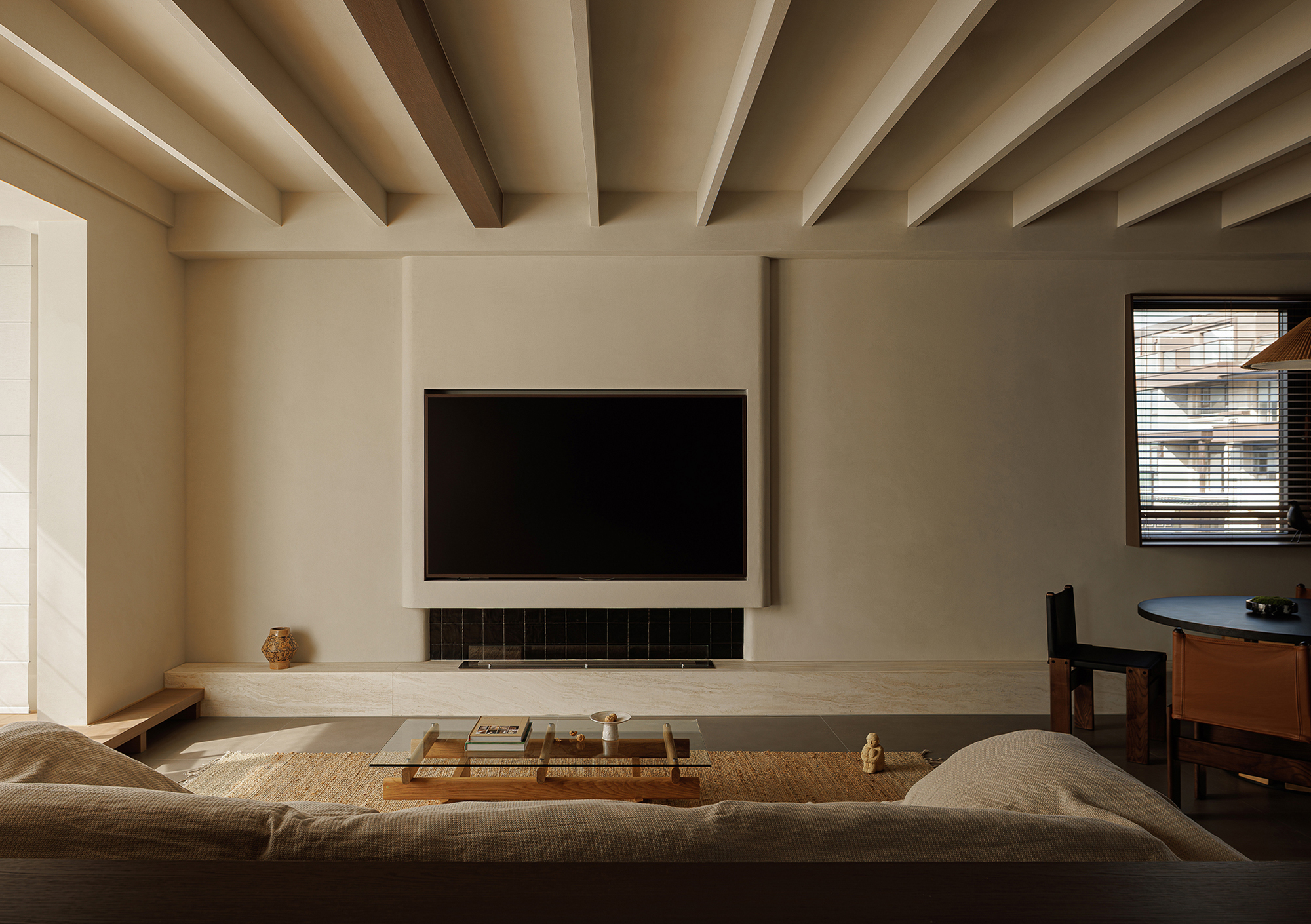
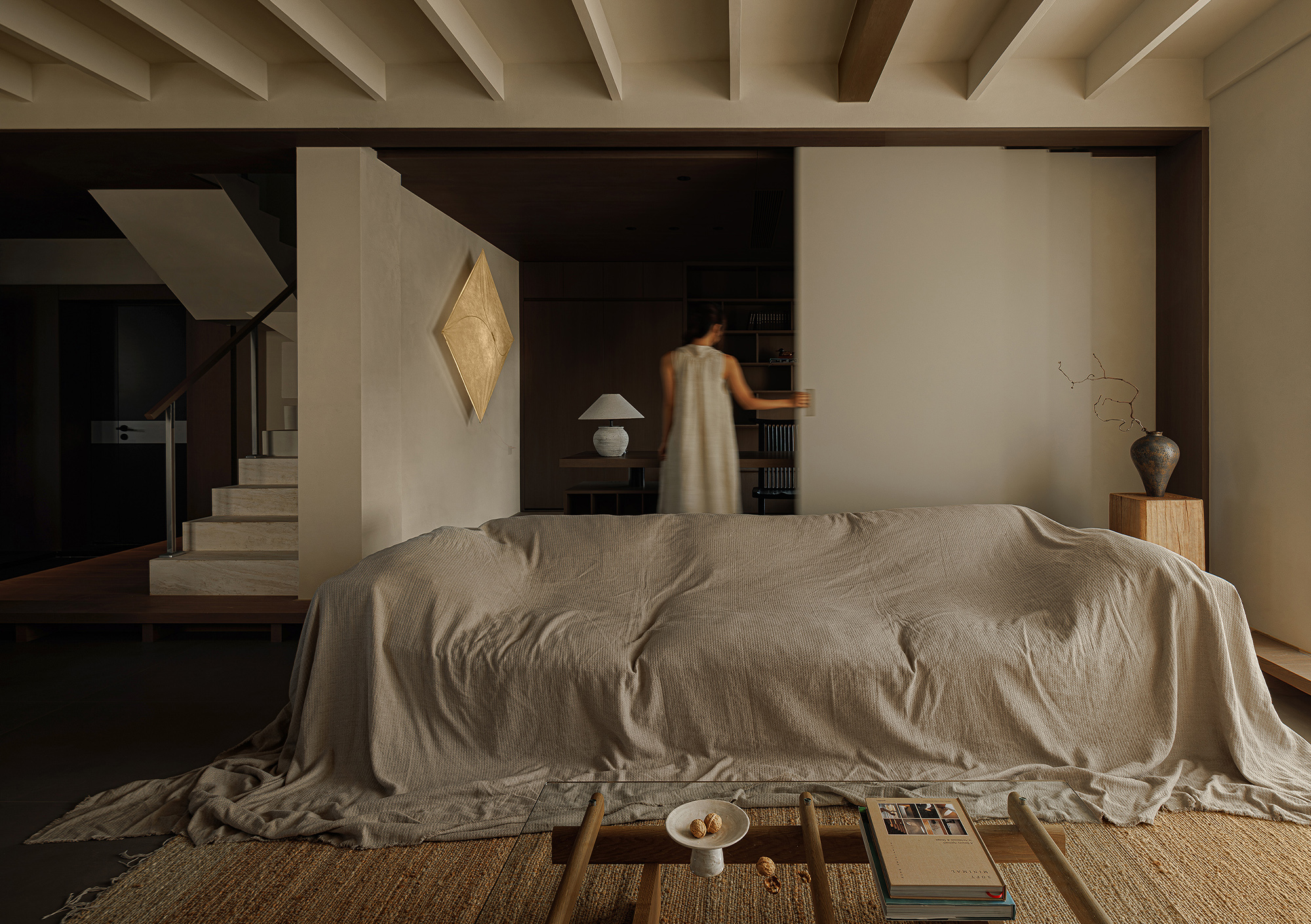
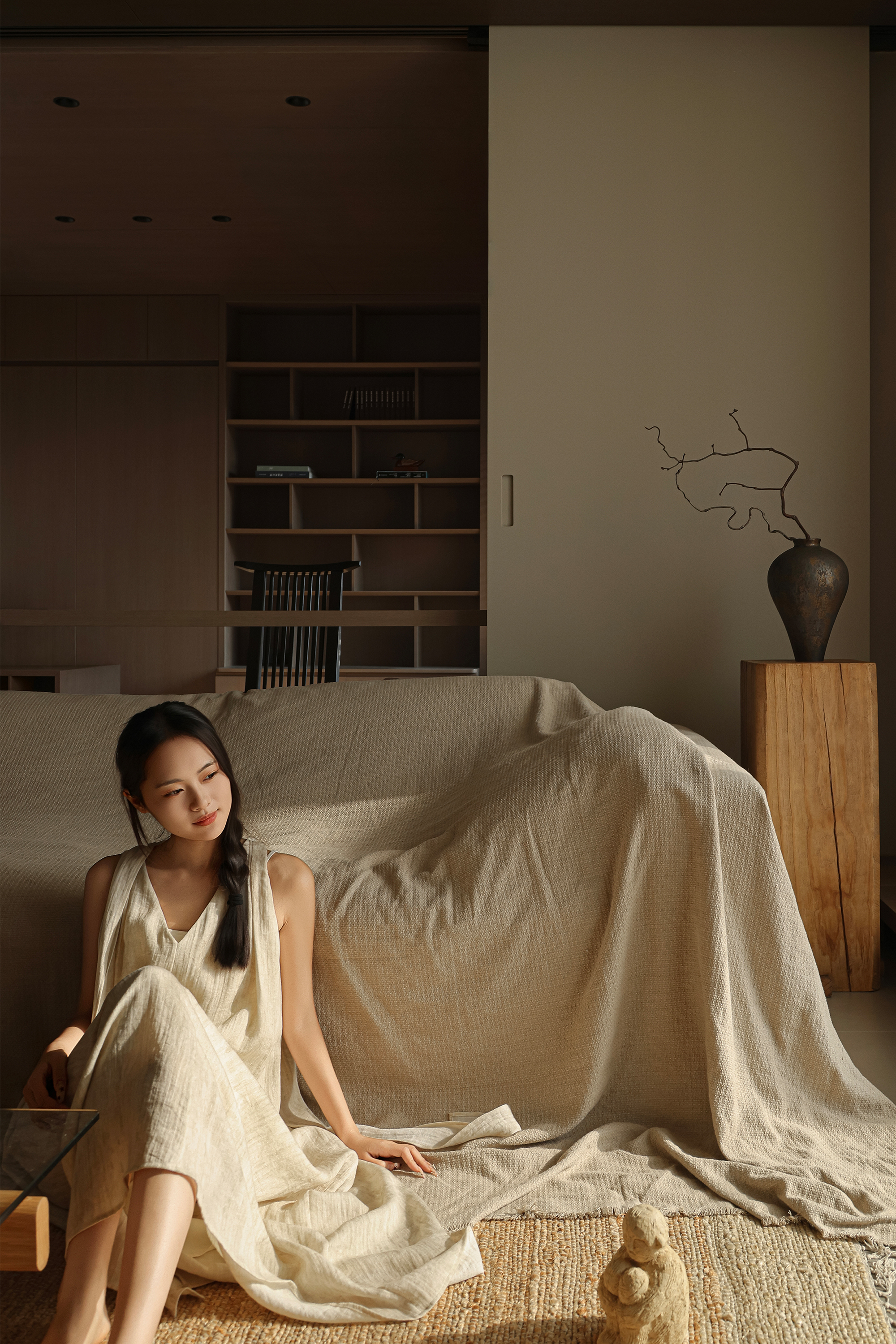
This penthouse duplex on Nanjing’s Jiangxin Island is far more than a mere dwelling; it marks a spiritual reset, born from the dweller’s profound reflection on past life stages. By stripping away superficial decorative languages, the designer directs the space back to the essence of interior architecture—the dialectical interplay of tectonics, materiality, and light. Through the blurring of spatial boundaries, the design deliberately dampens the internal 'noise,' sculpting a spiritual sanctuary with monastery-like serenity upon this river island.

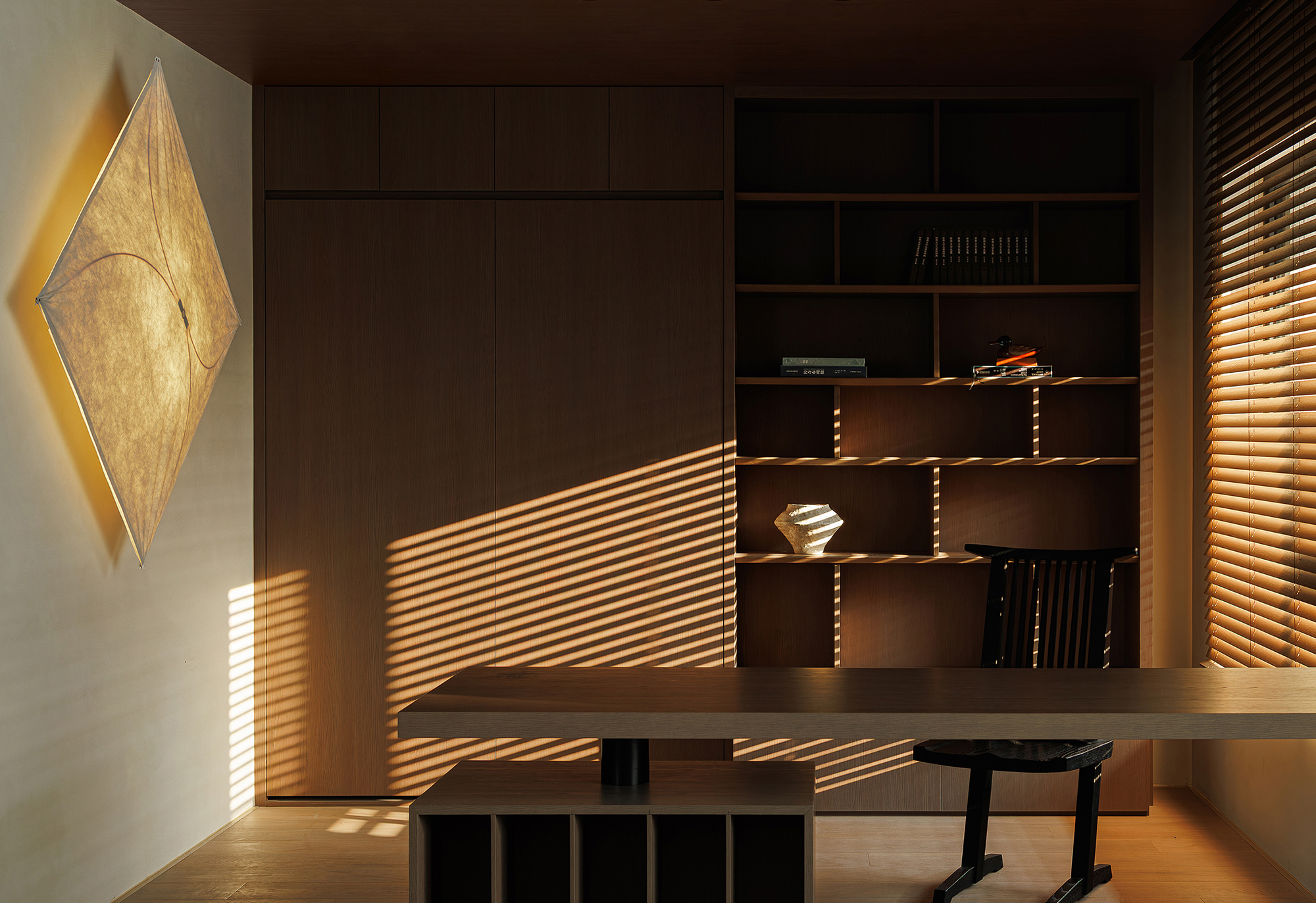
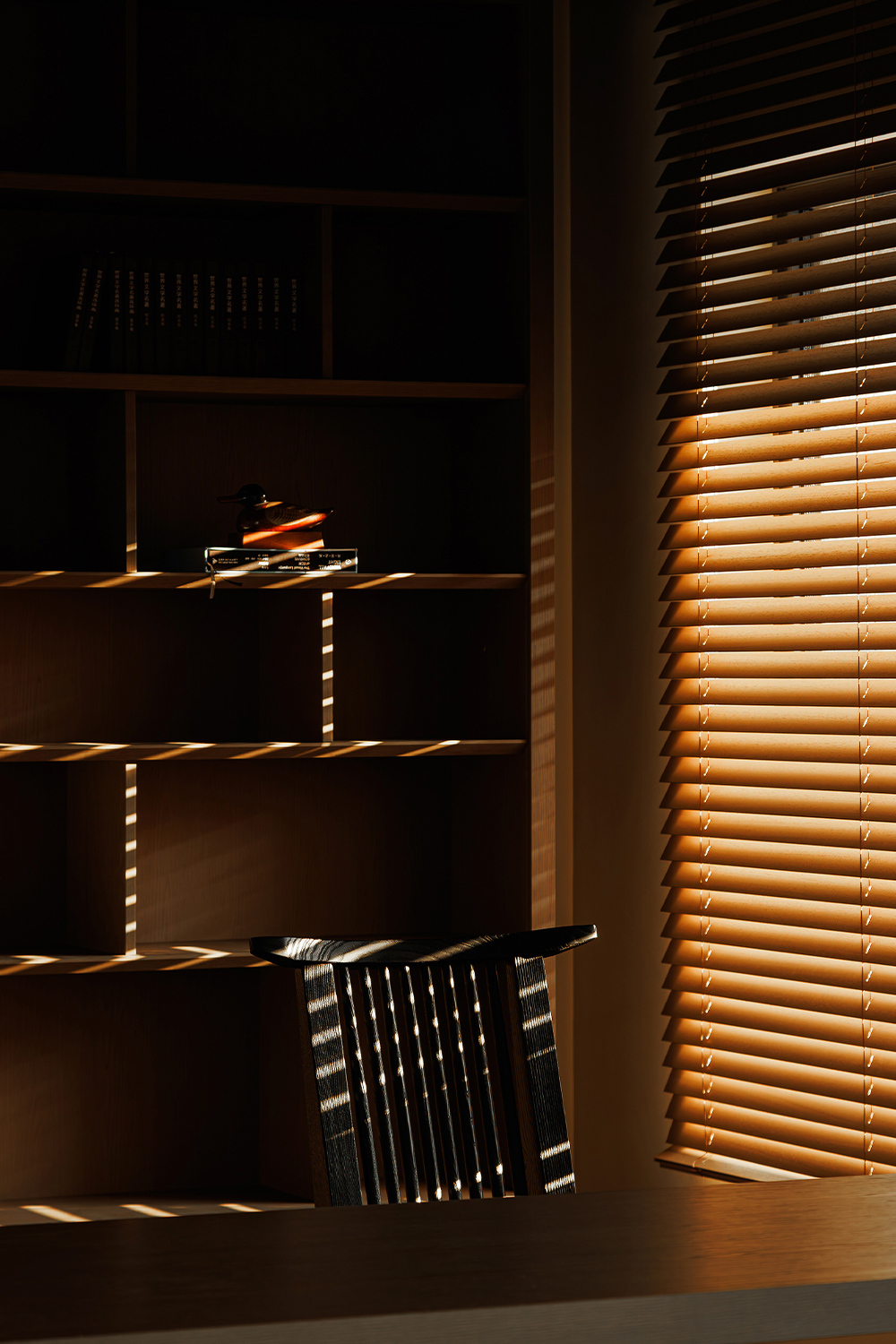
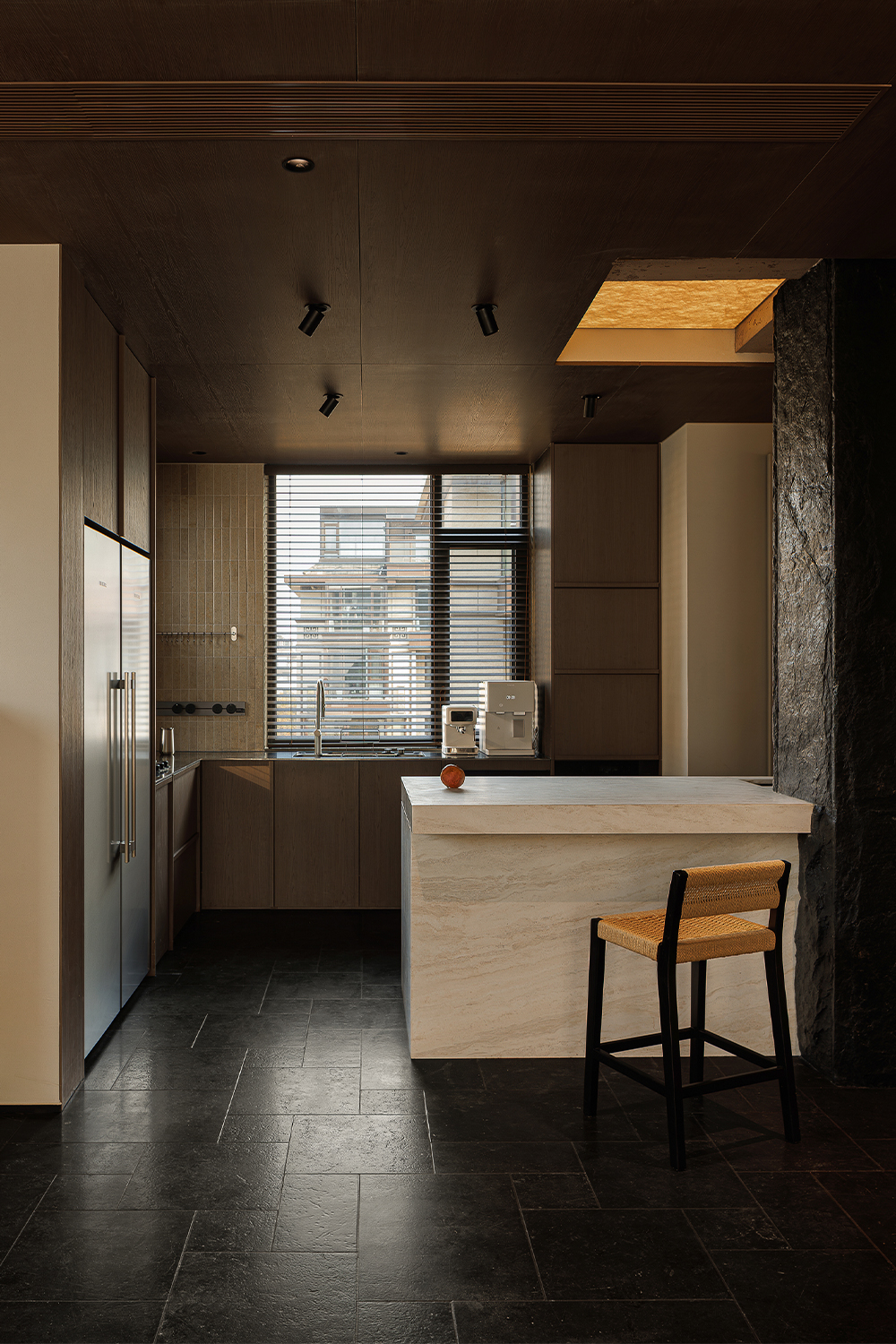
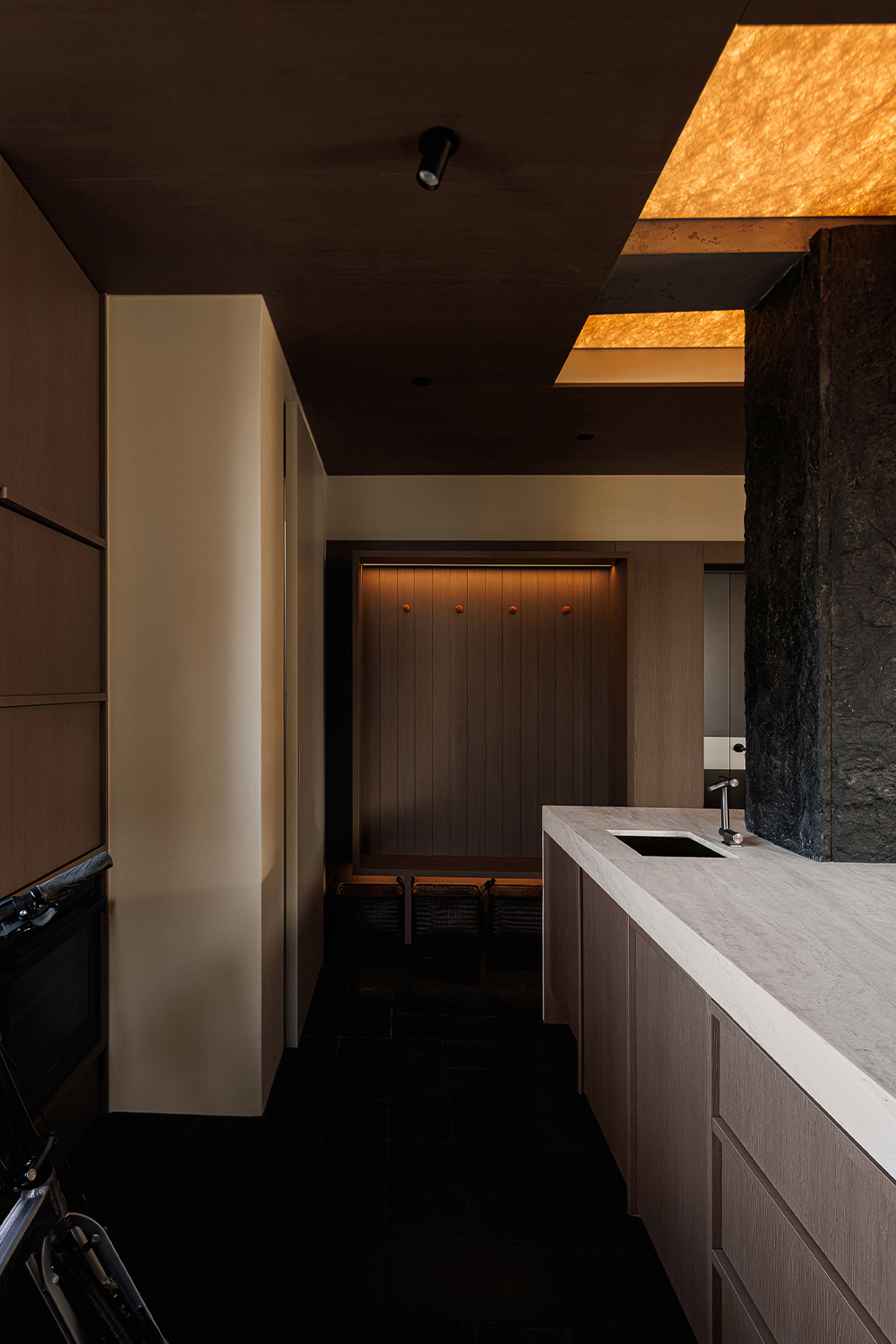
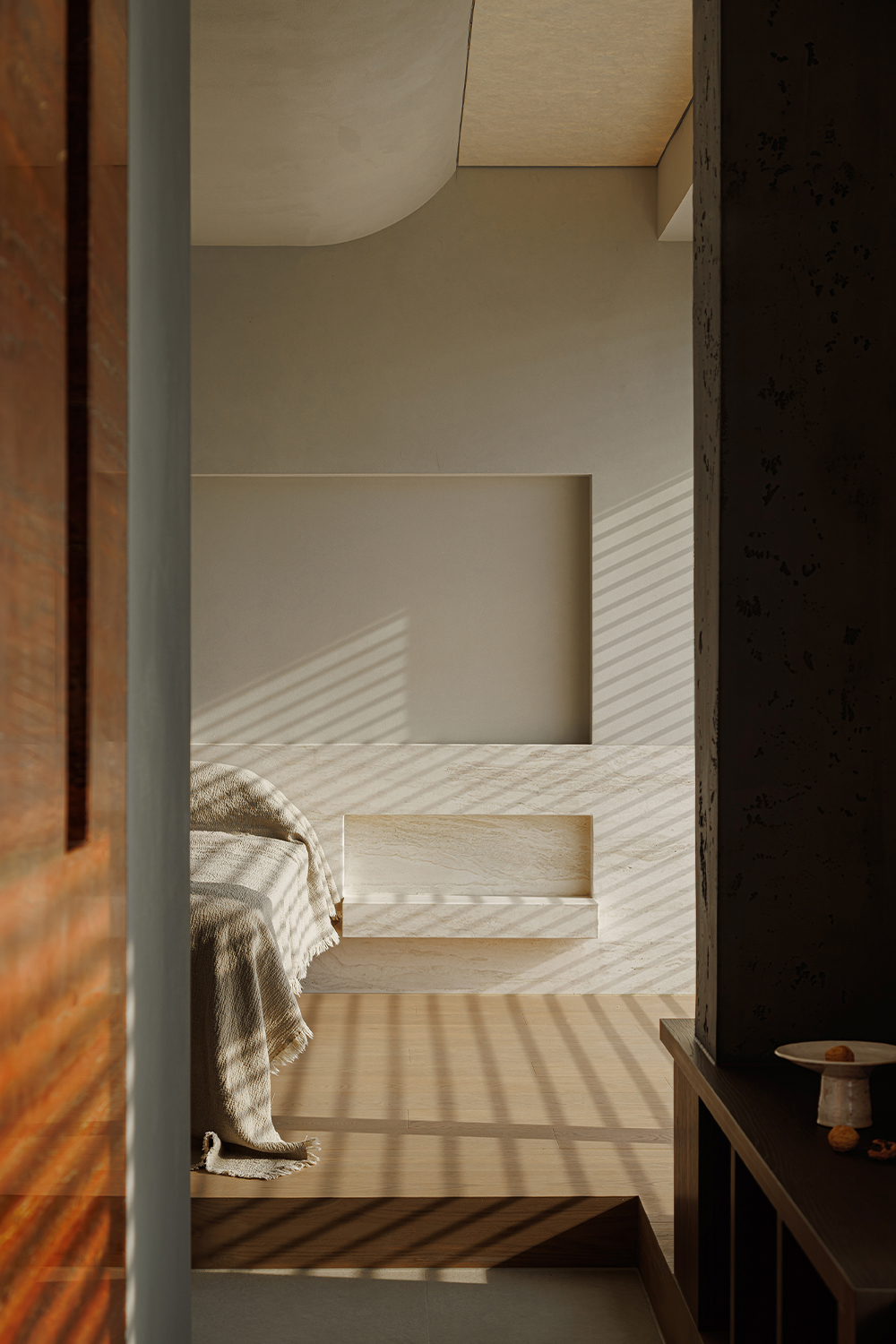
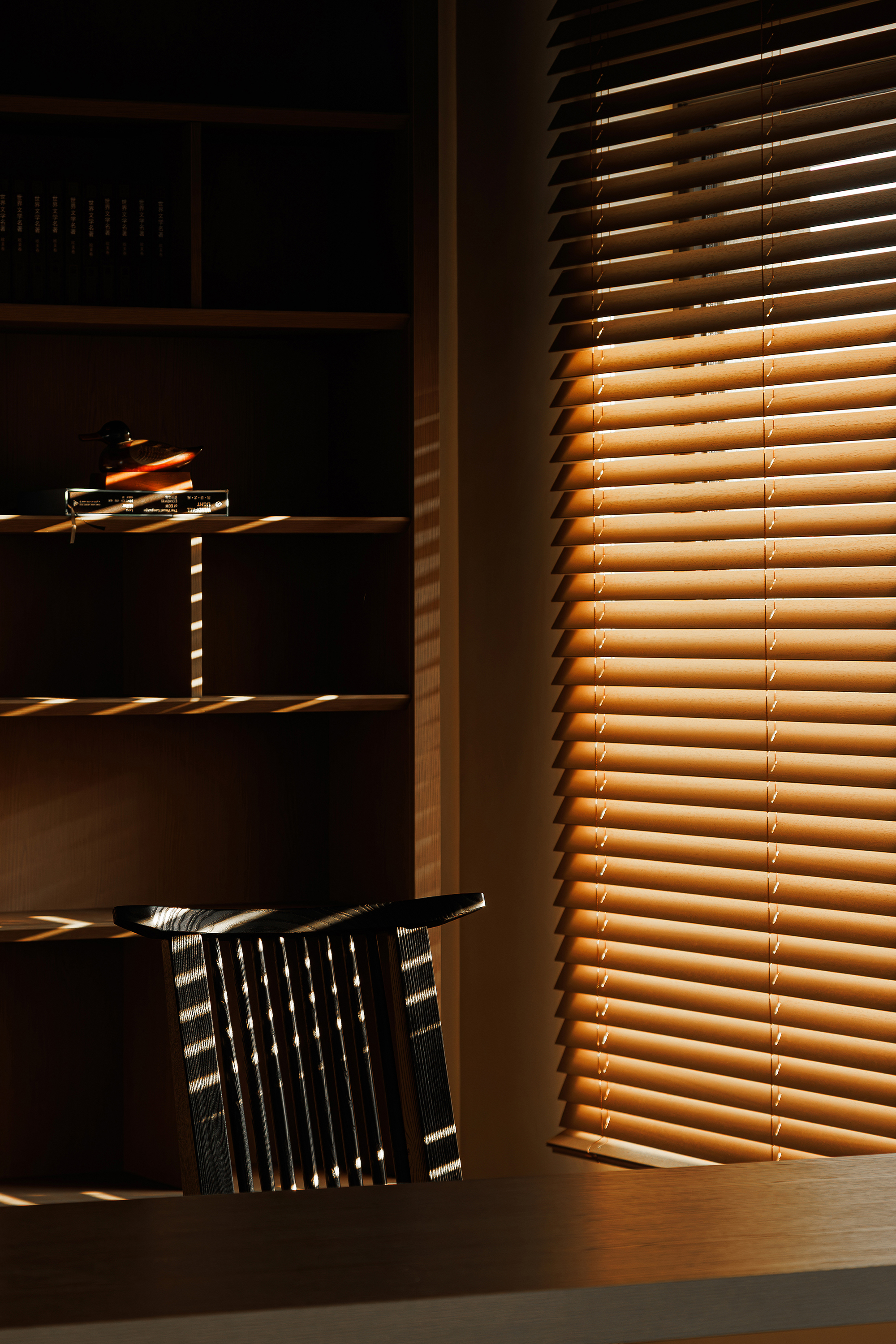
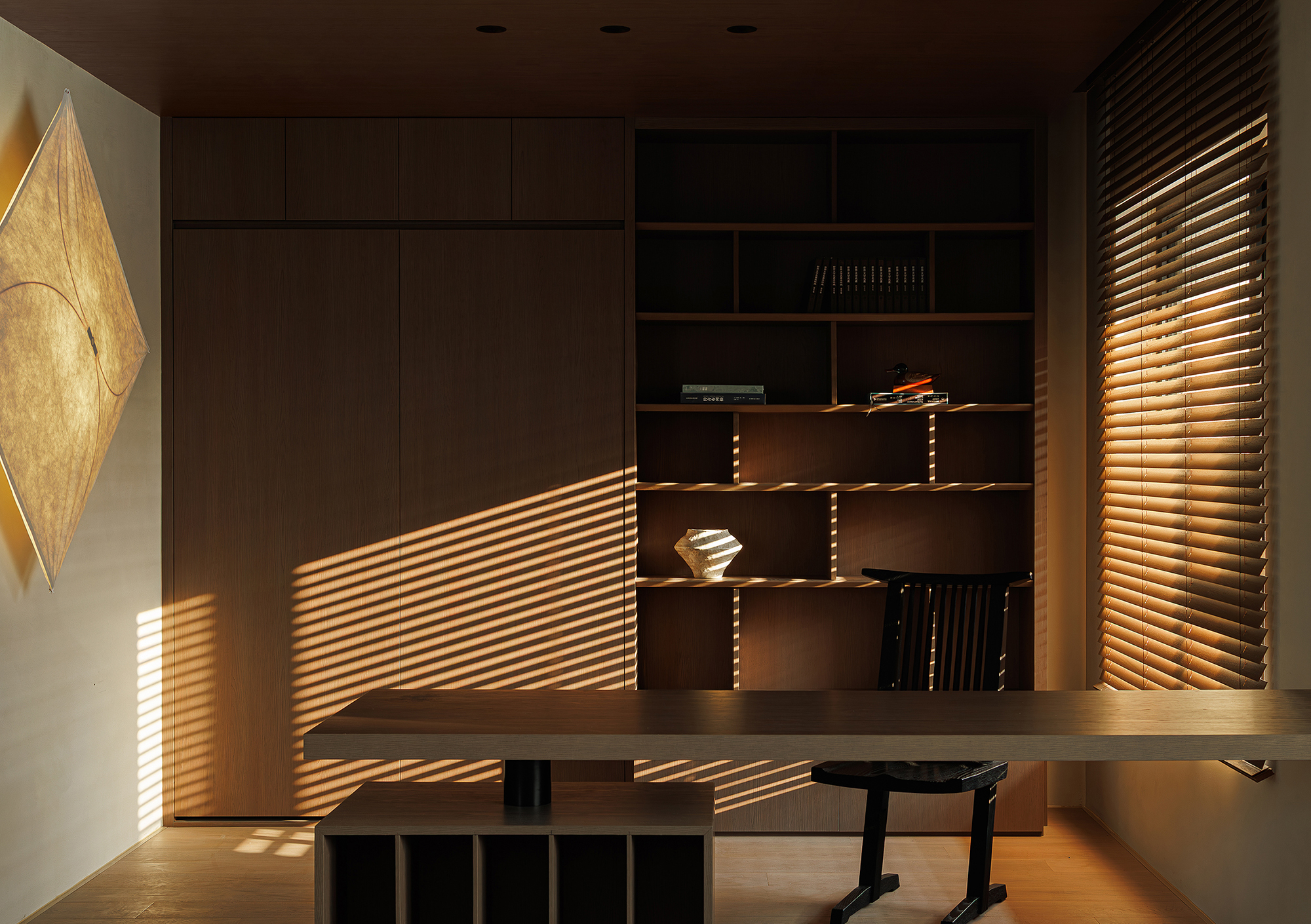
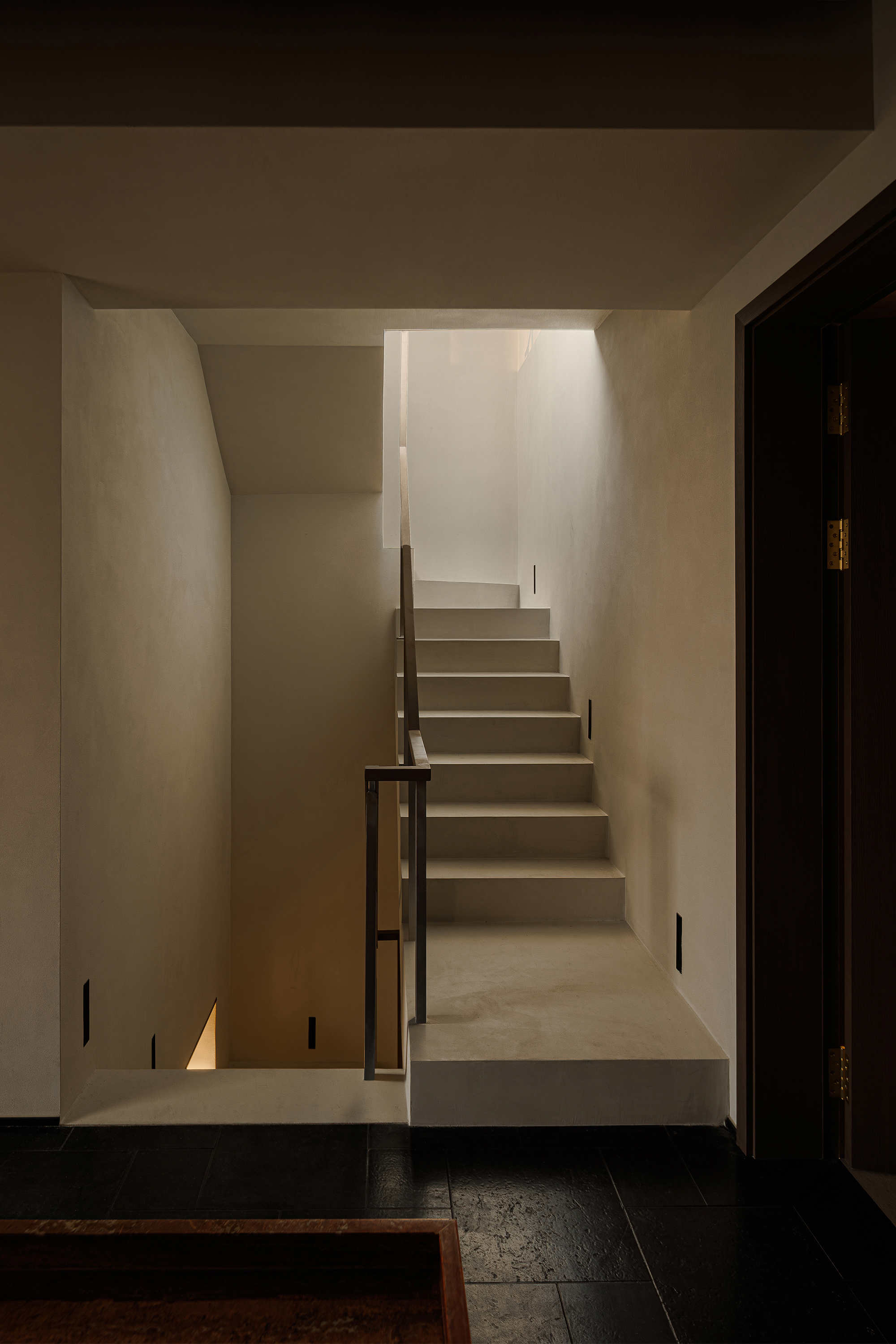
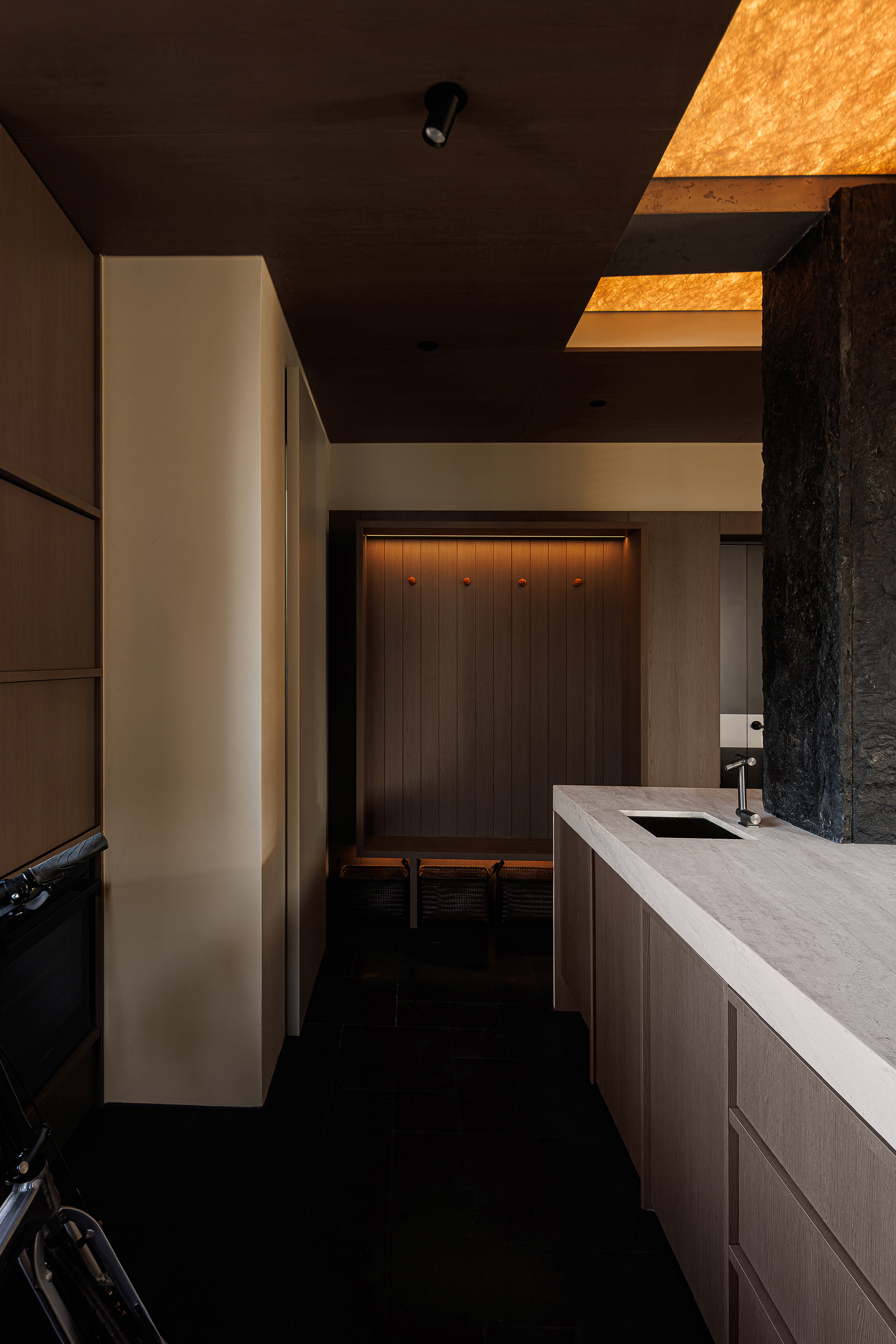
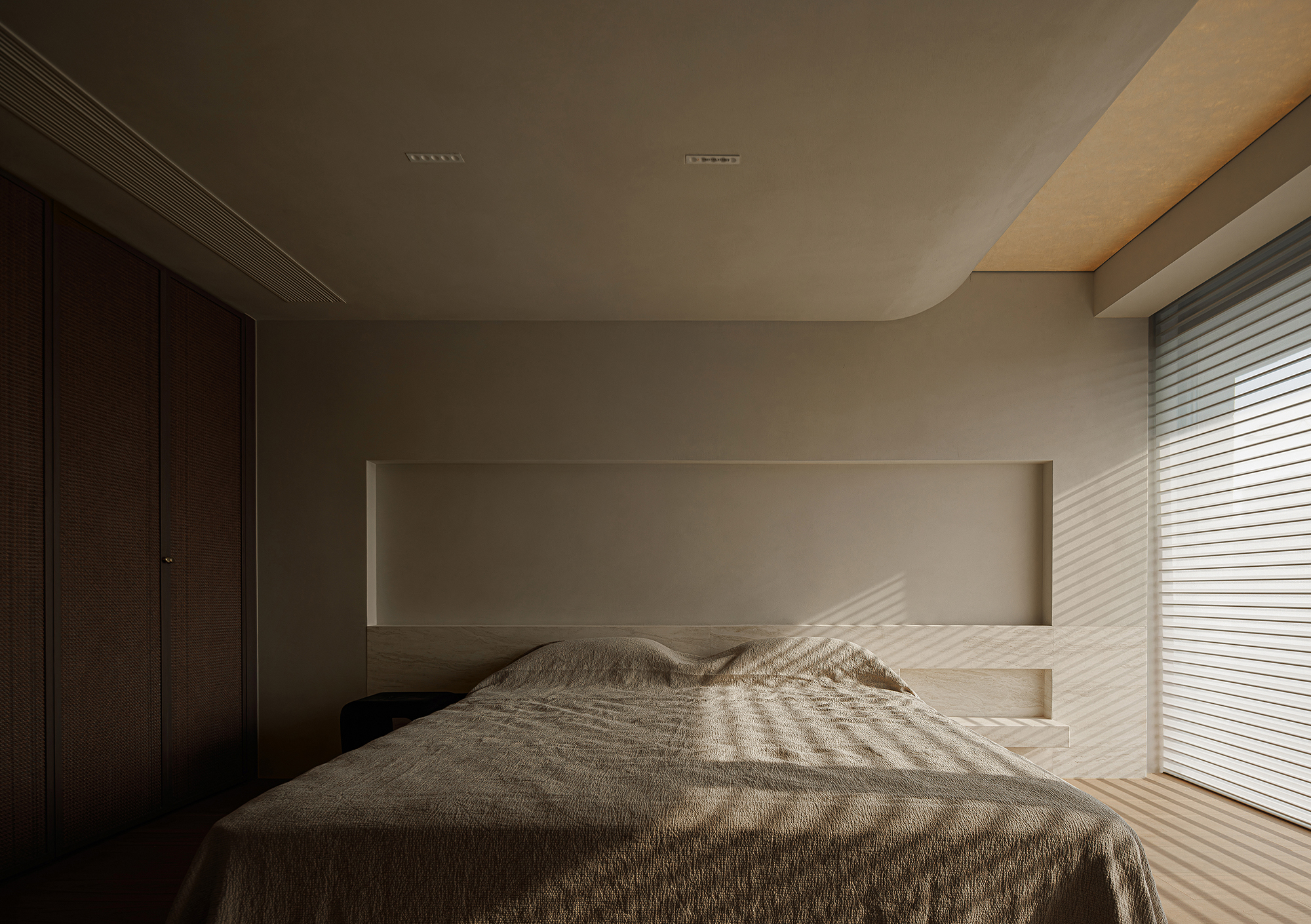
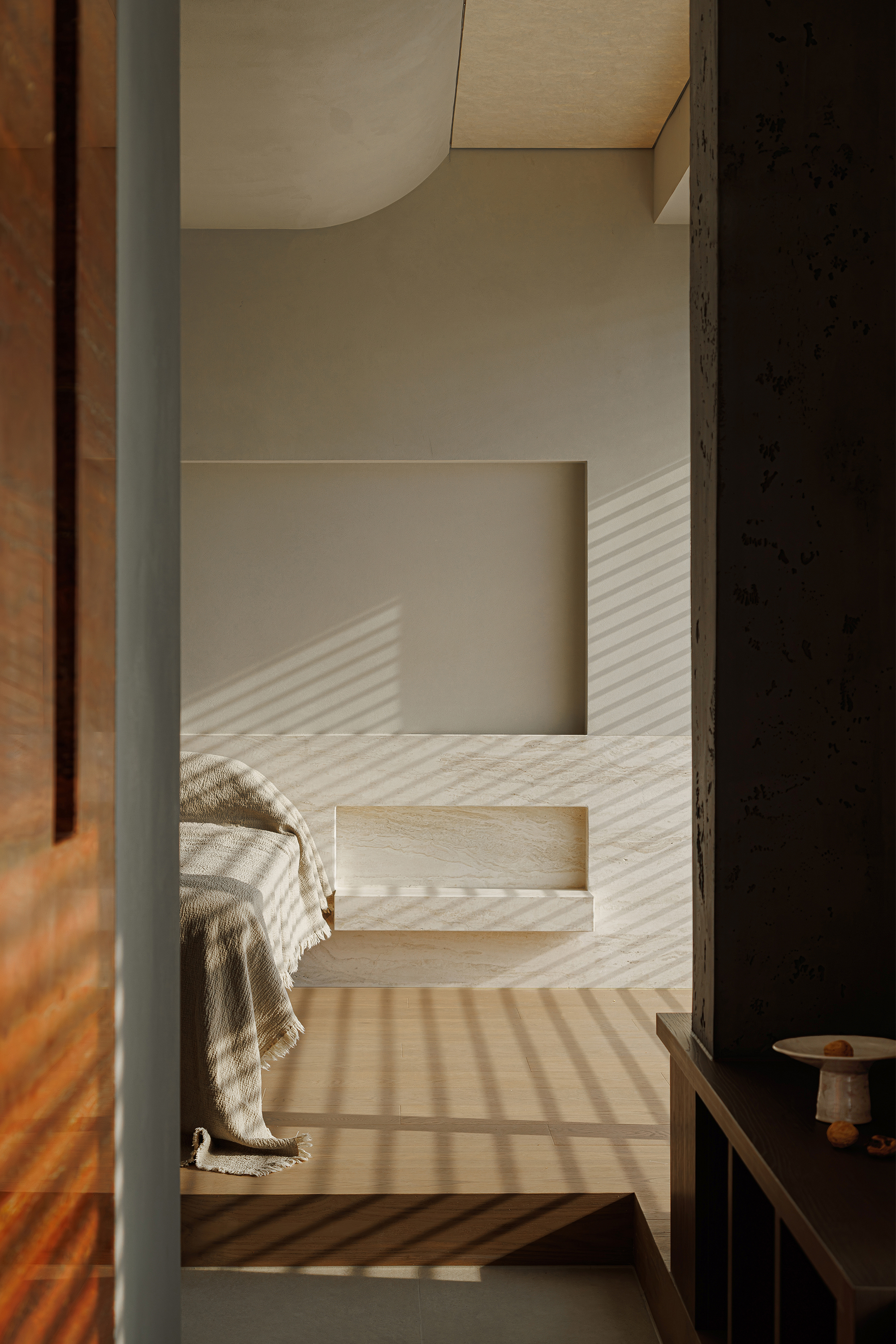
Light is the most vital medium within this domain. No longer entering in a uniform or blunt manner, it is filtered through louvers, washi paper lamps, and structural crevices, completing a transformation from mere "illumination" to "sculpting." This filtered interplay of light and shadow meticulously caresses the material properties of all things: the grain of hewn stone, the breathing pores of beige travertine, and the artisanal texture of hand-applied coatings—all gaining dignity within the gradations of shadow. As seasons change, this fugue of light endows the interior with a sense of depth and near-eternal quality that grows with the passage of time.
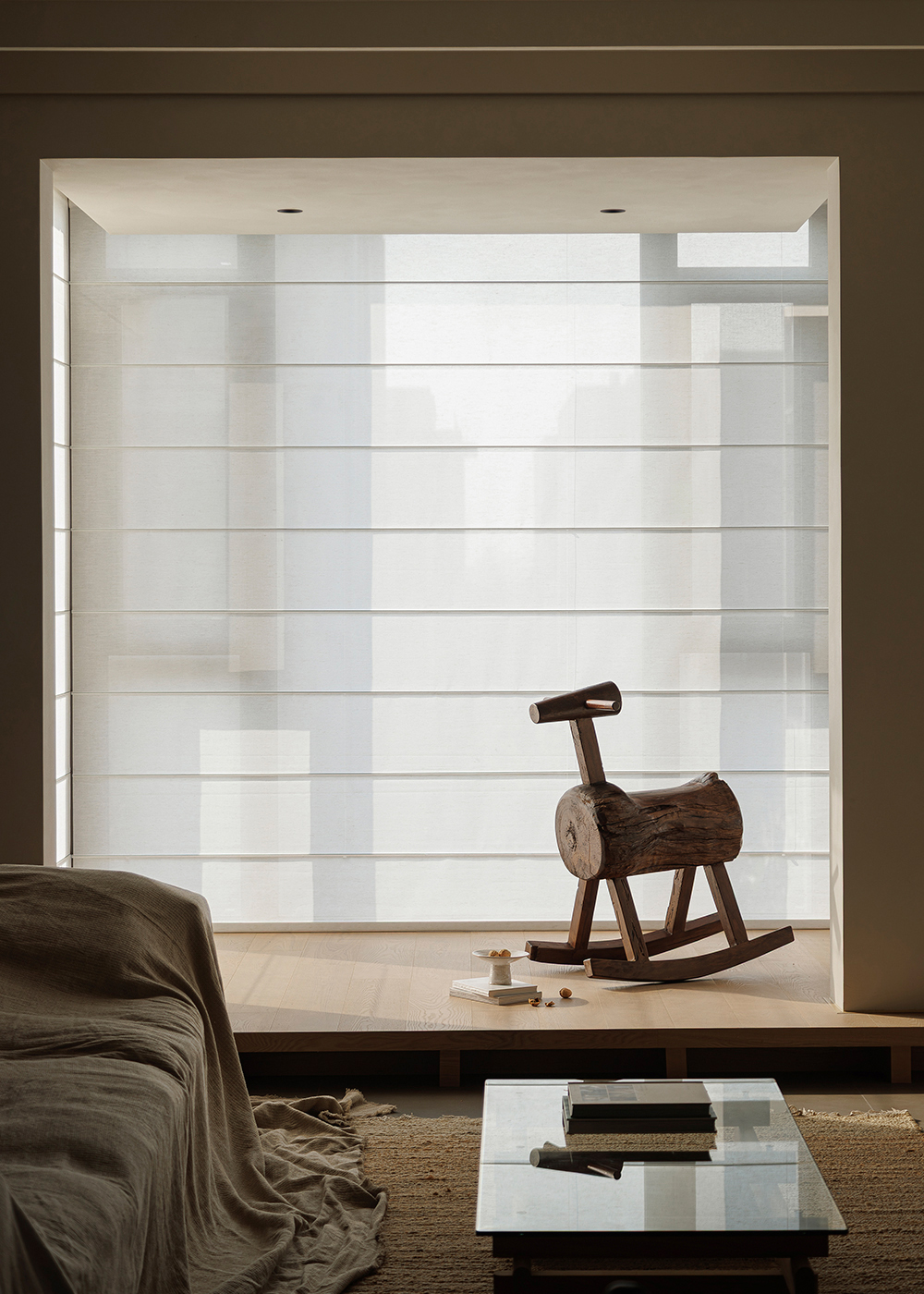
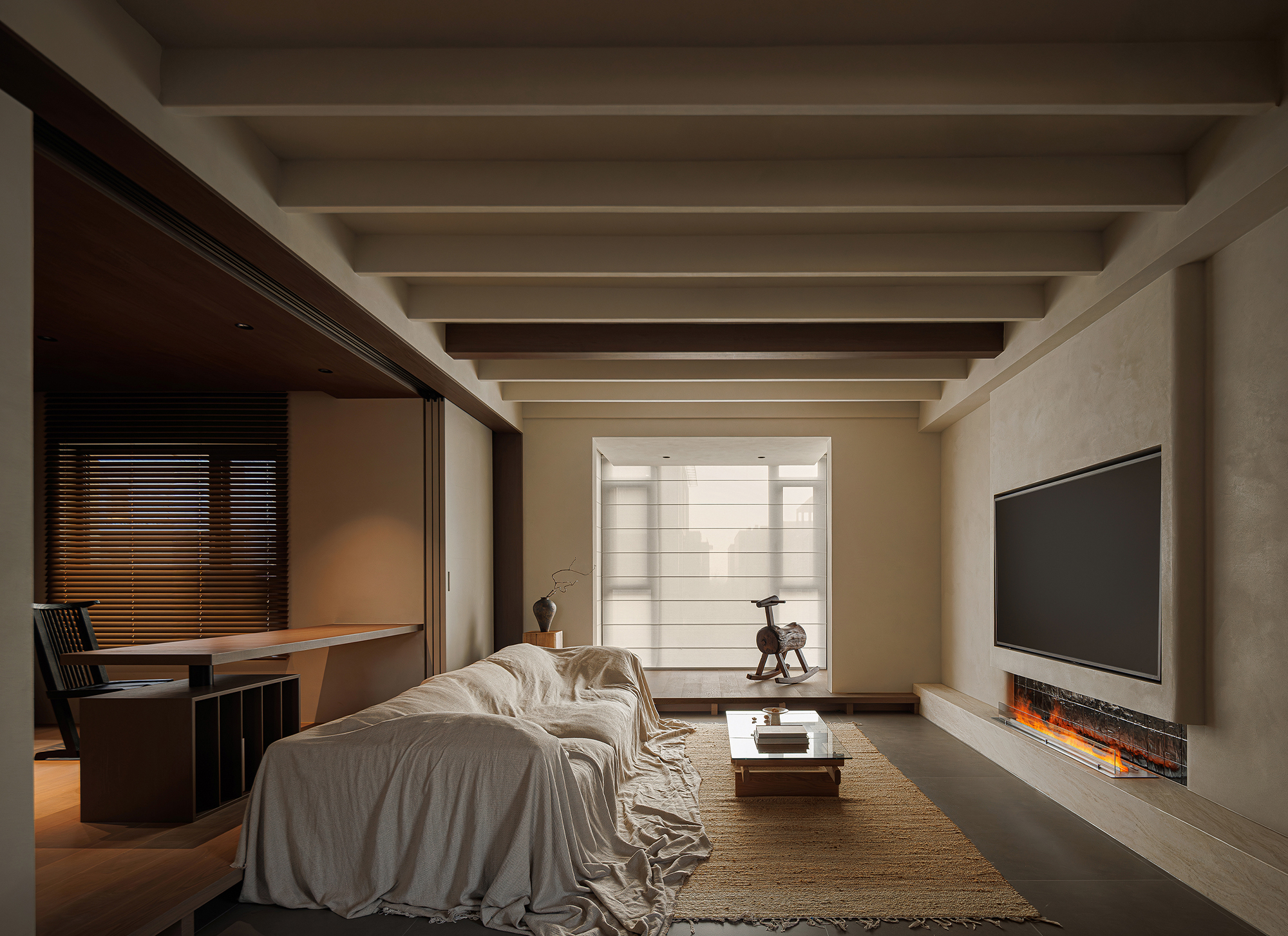
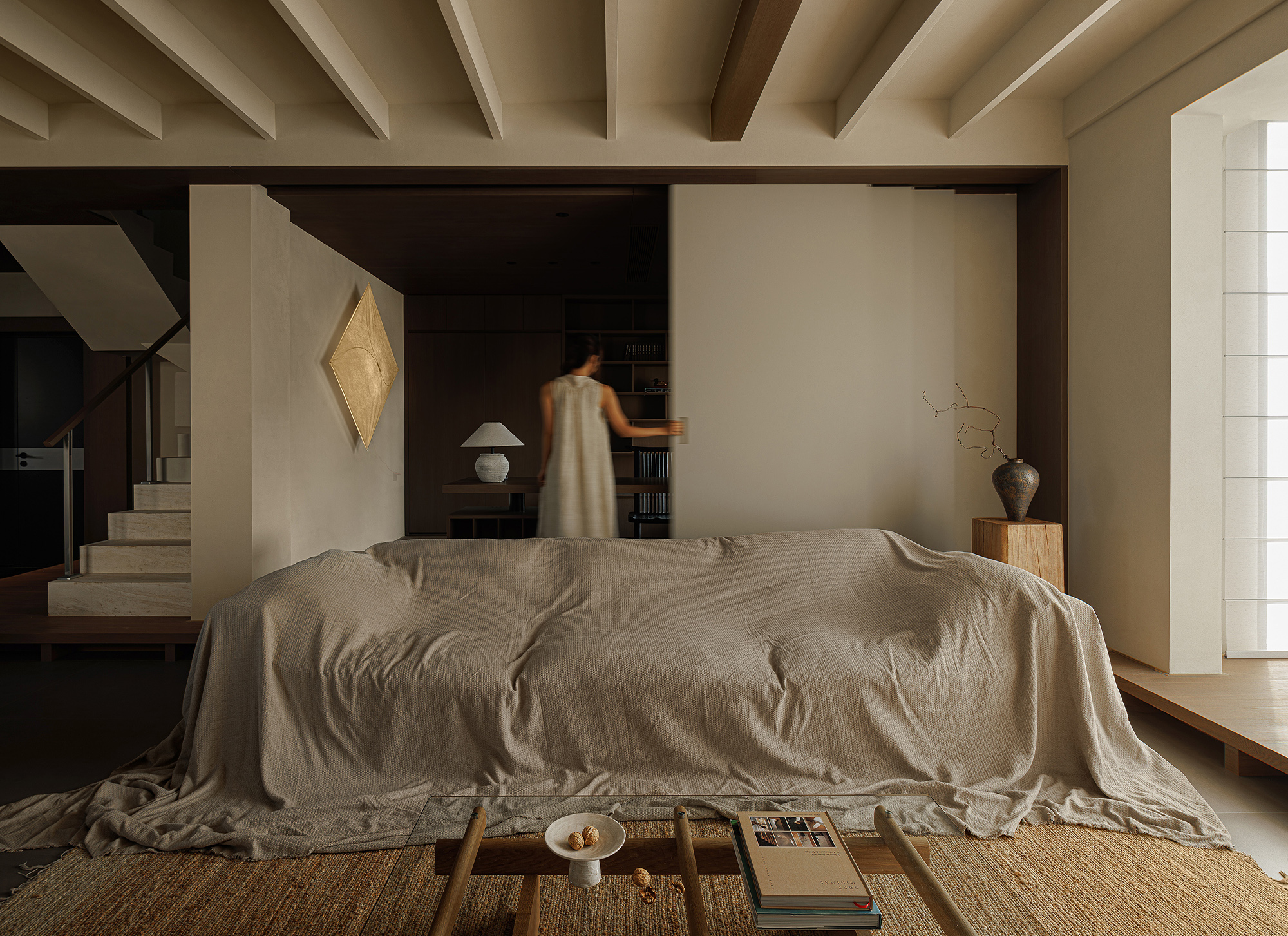
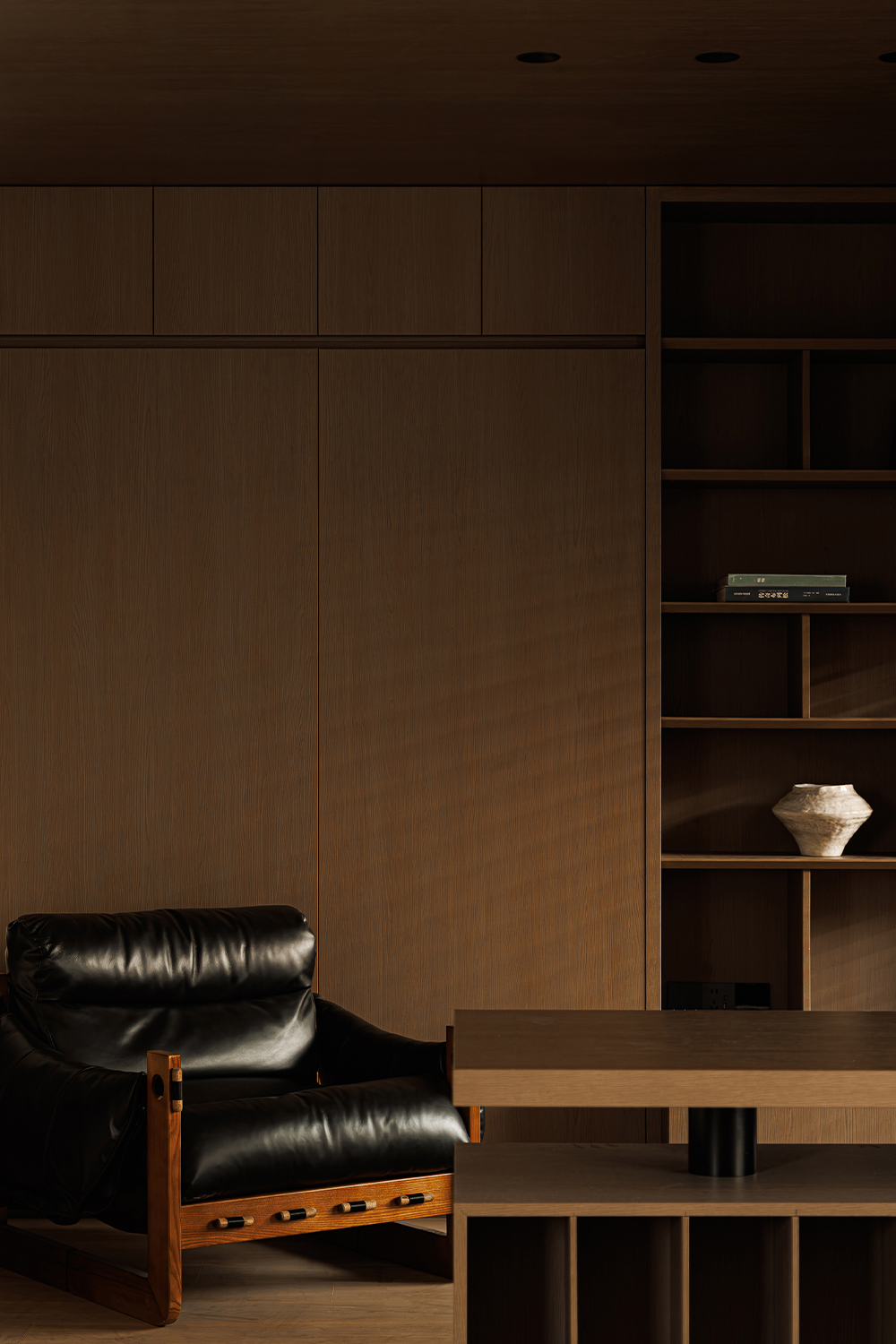
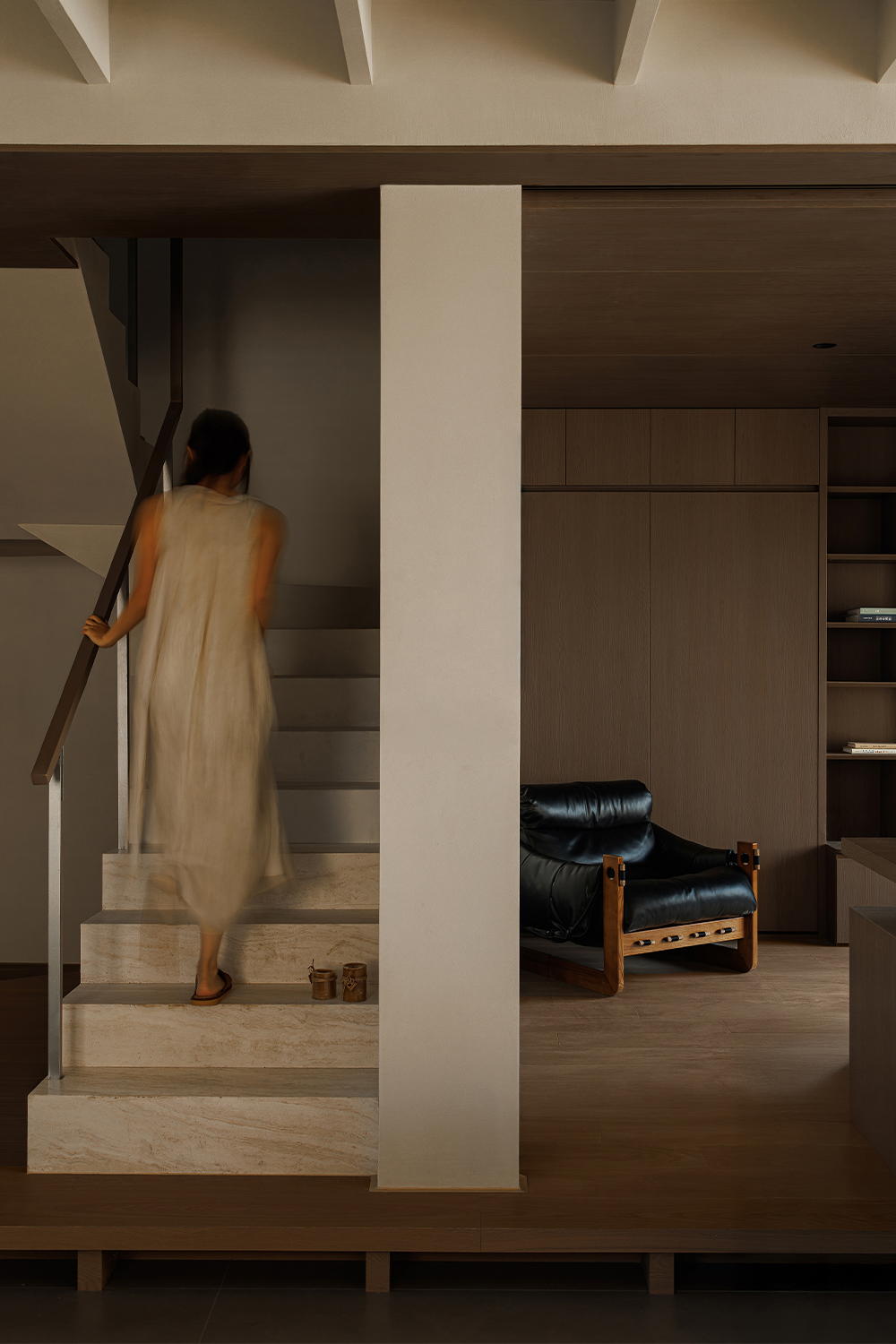
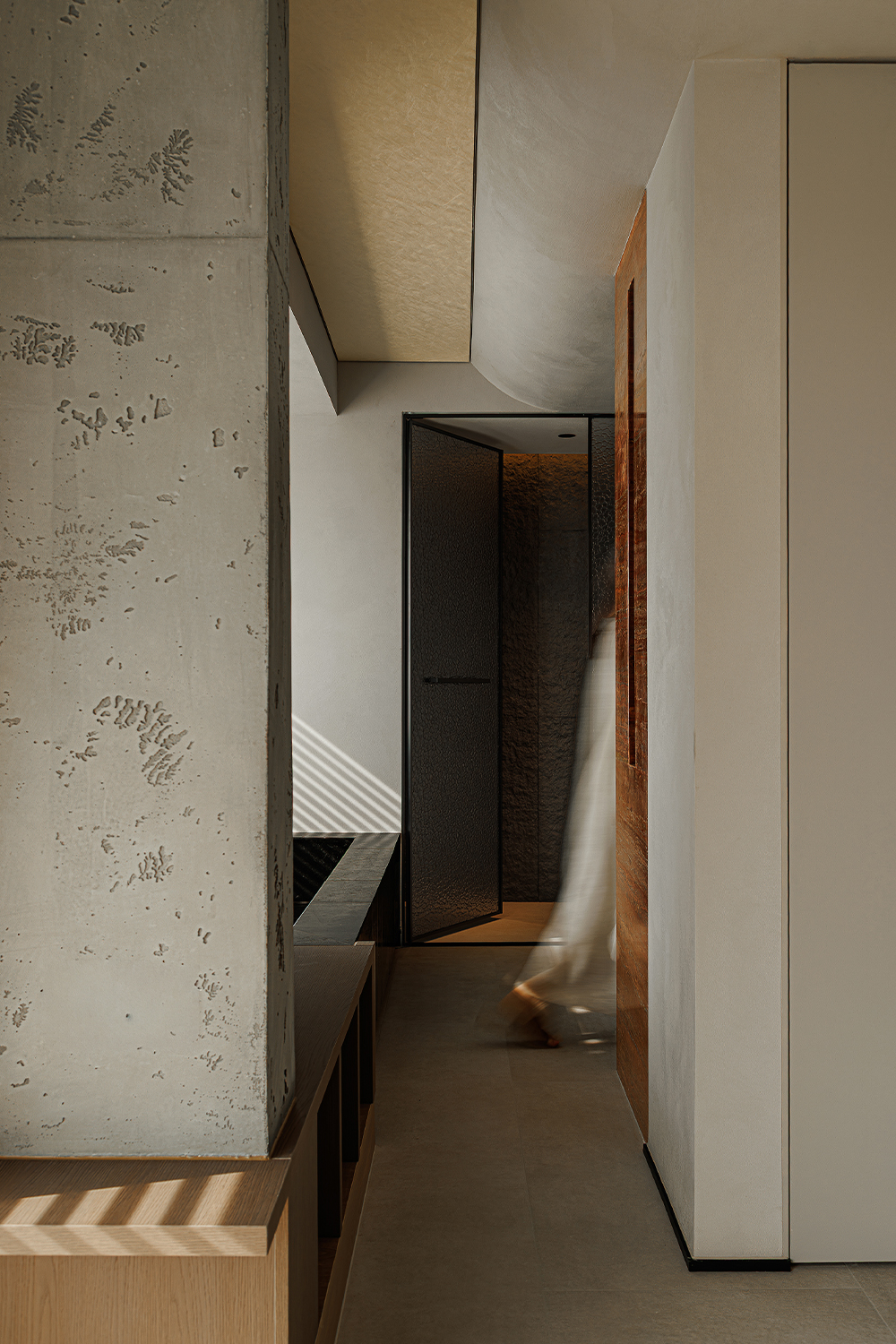
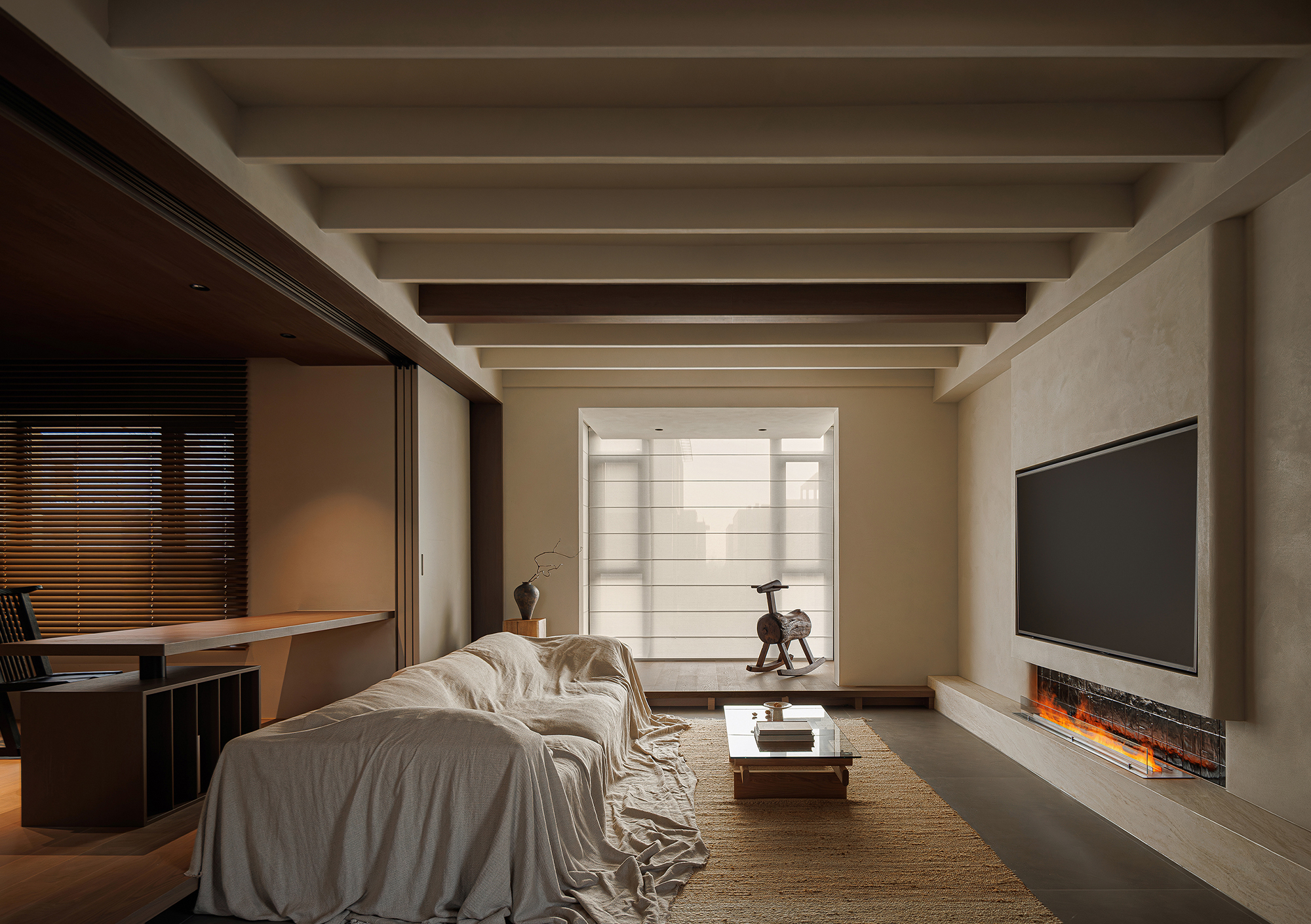
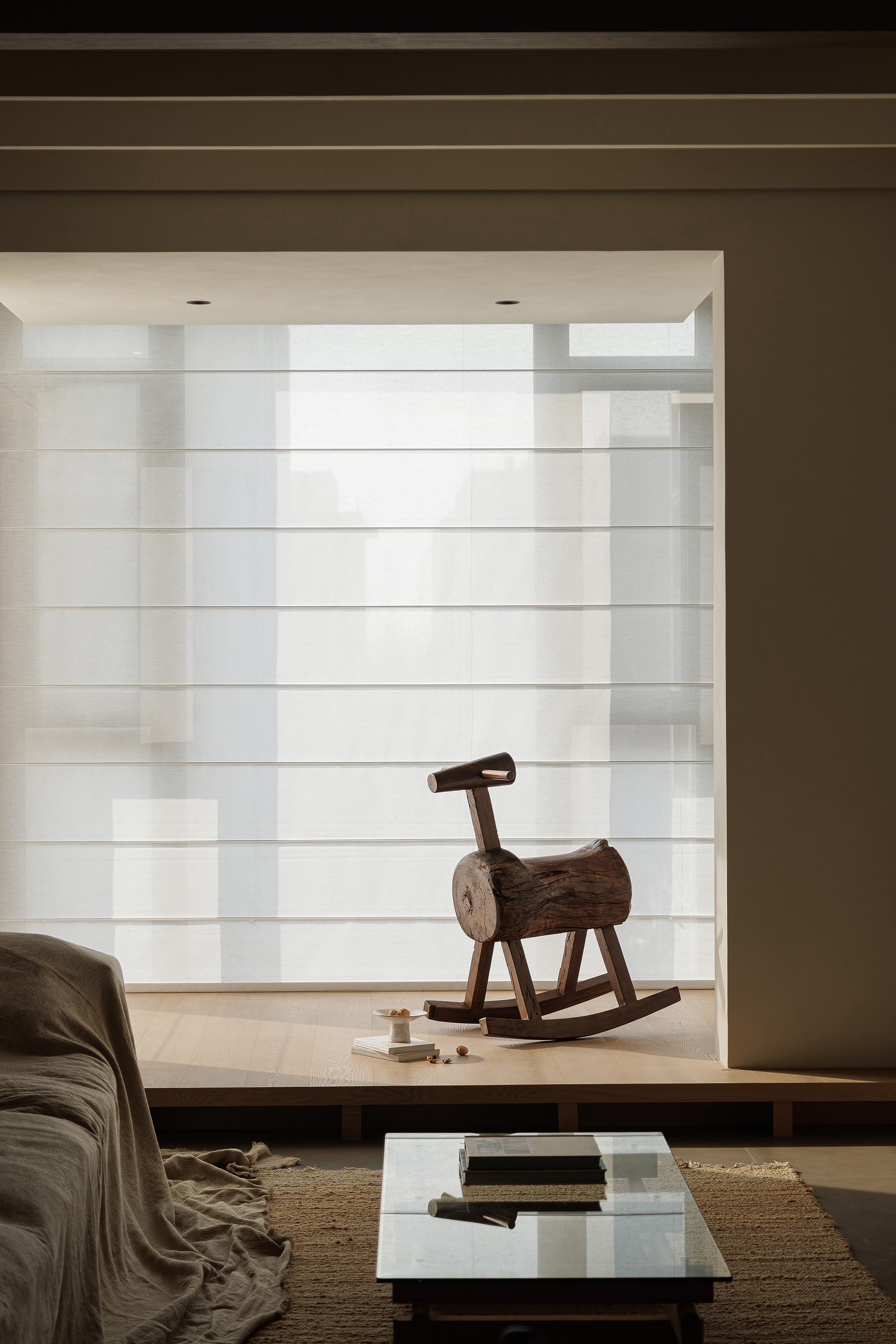
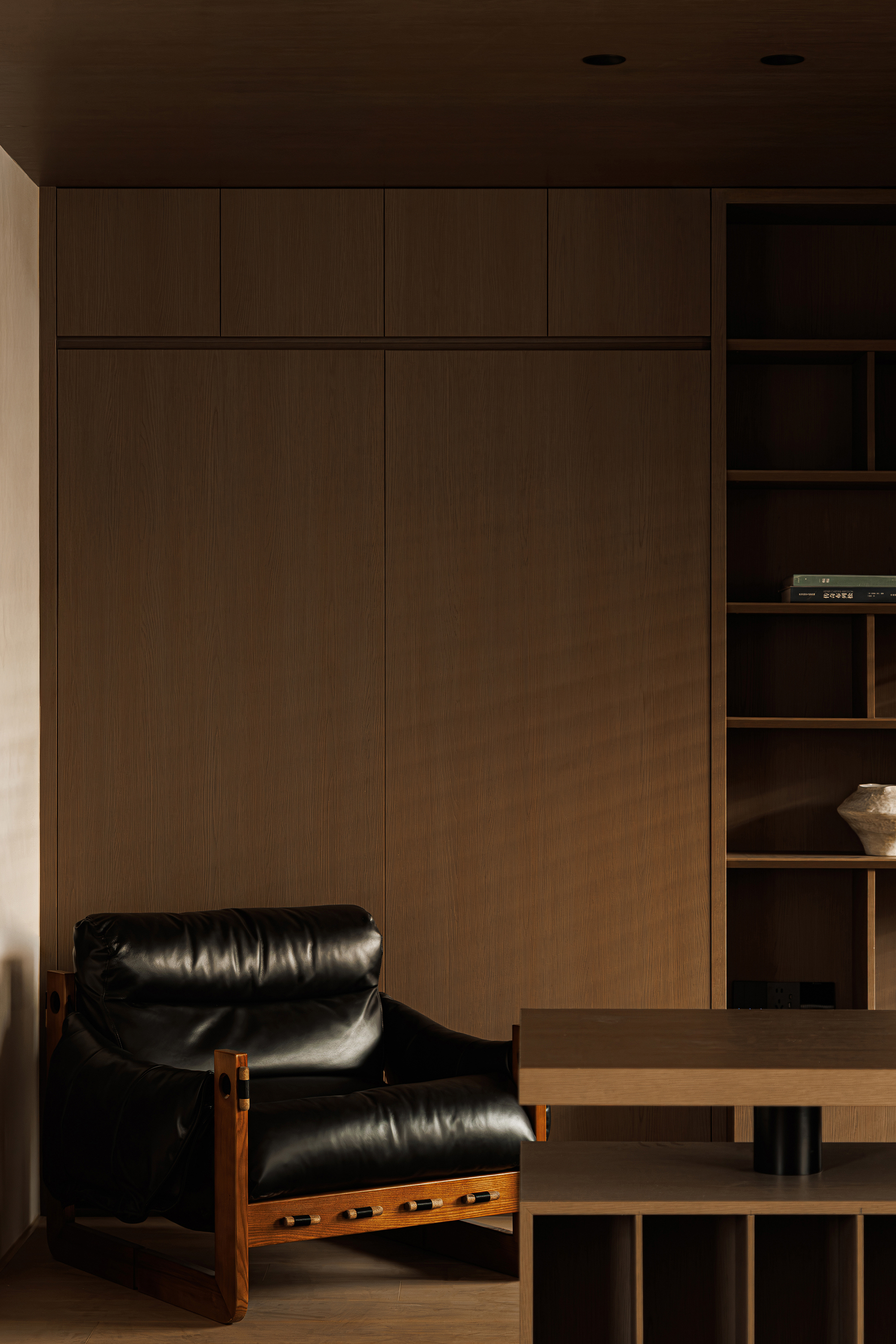
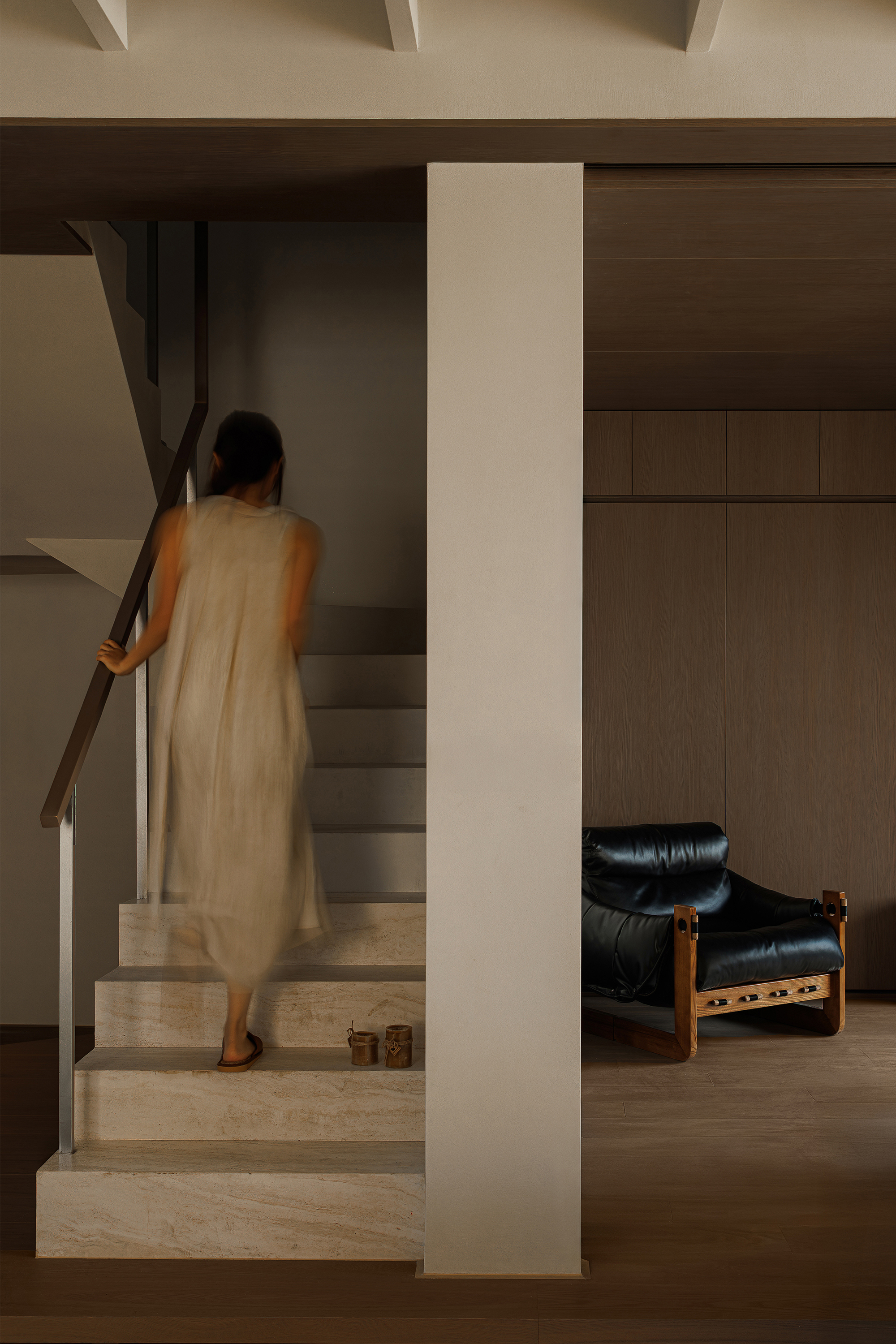
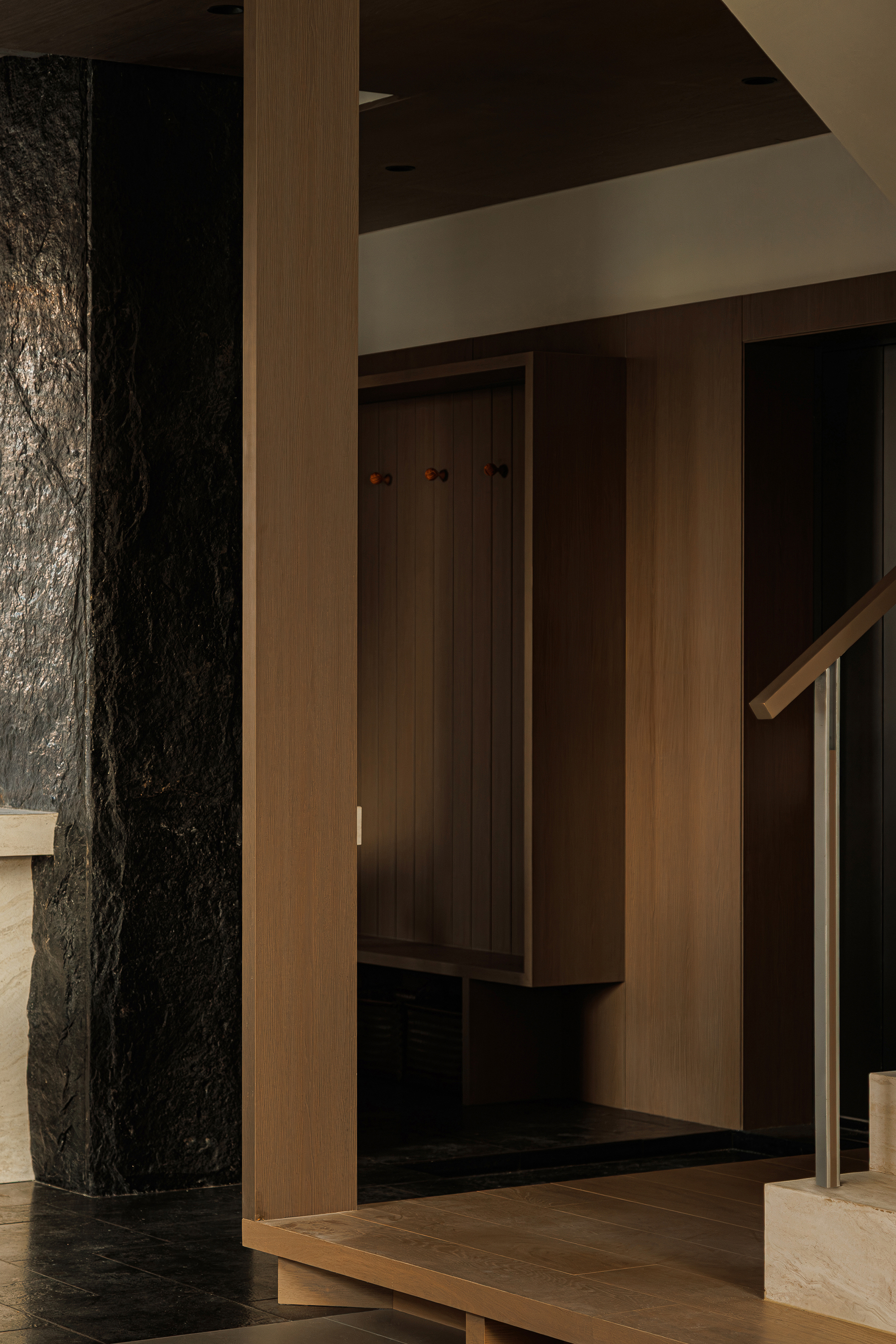
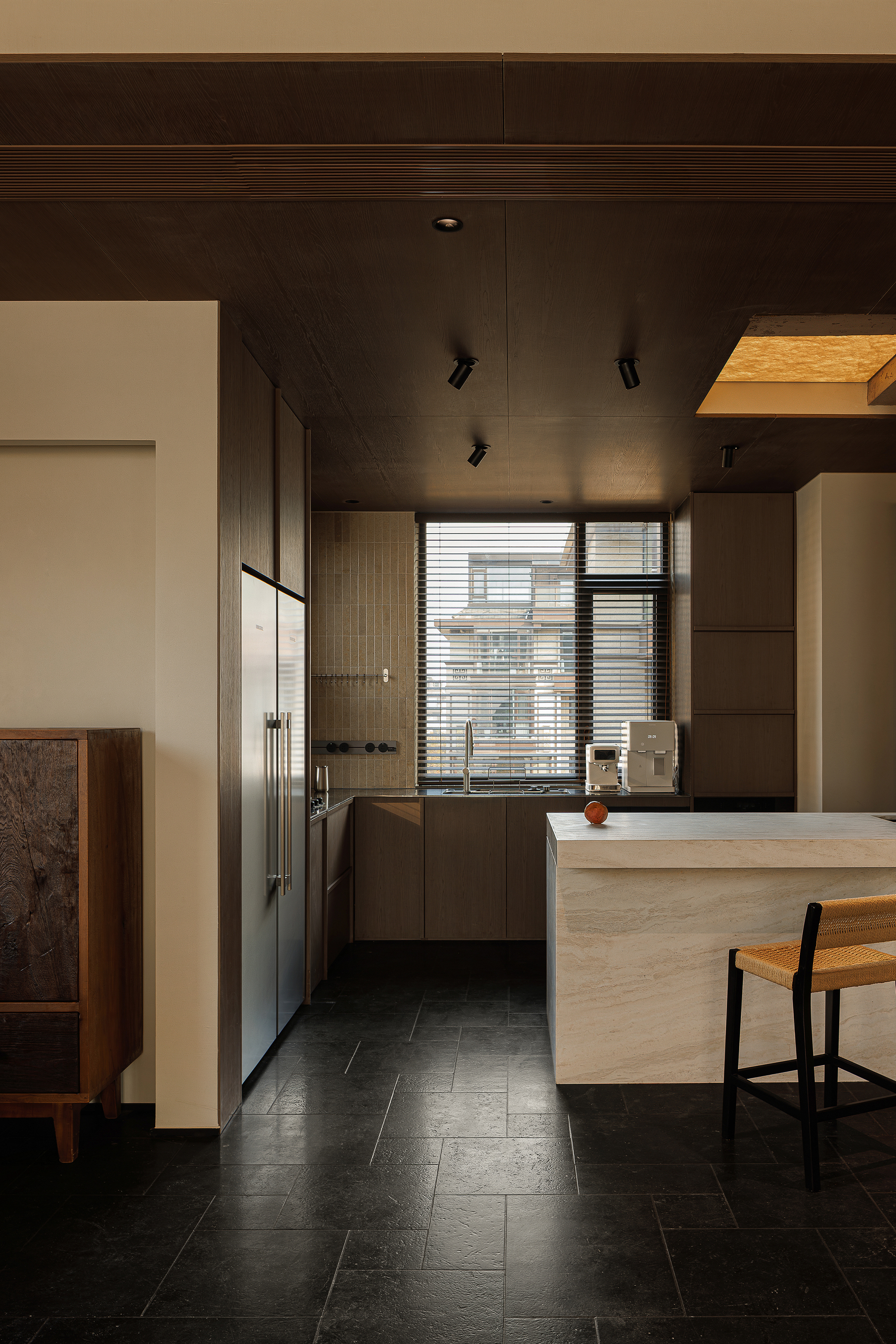
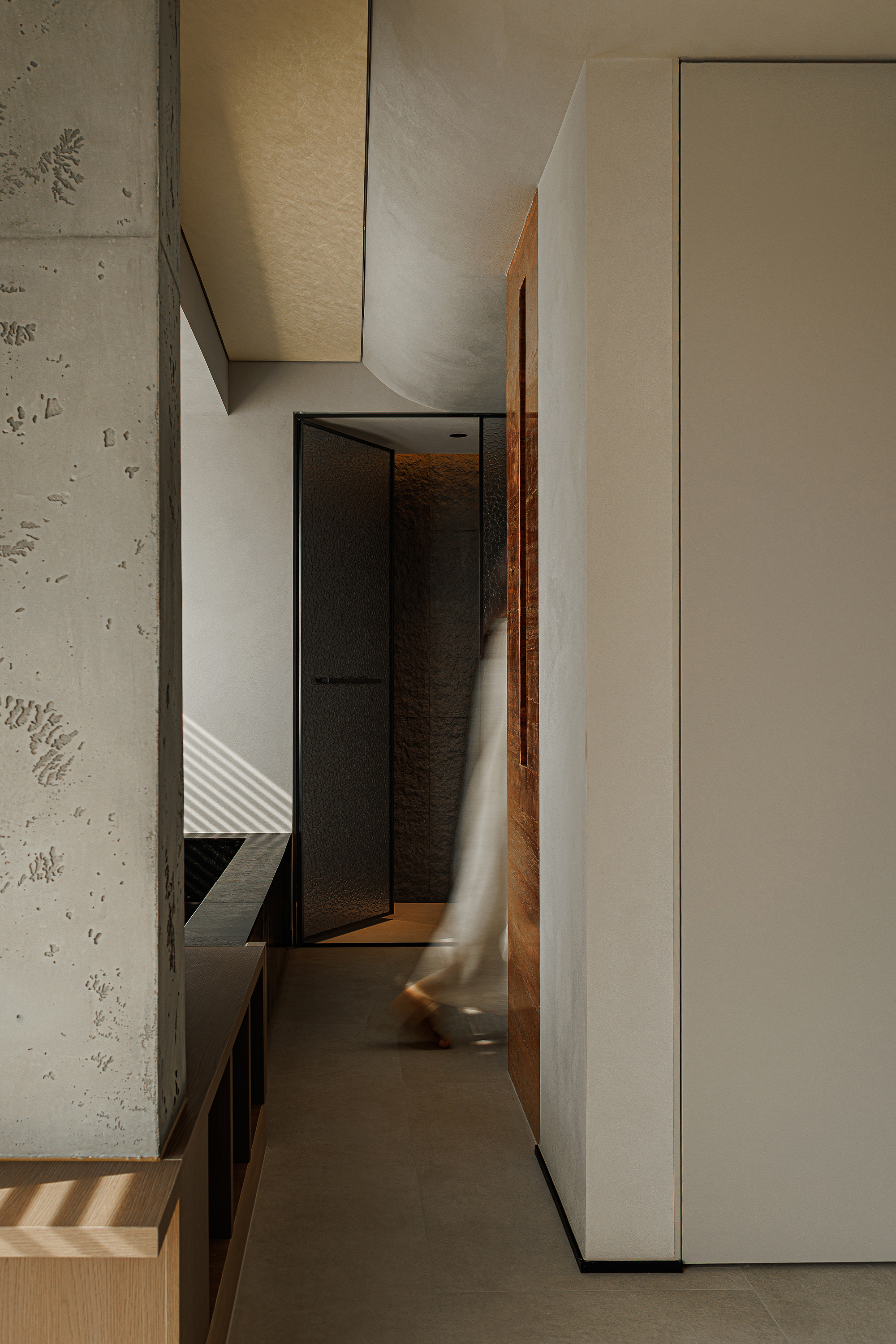
The narrative of the public area begins with the geometric logic of the ceiling. An arrayed beam structure above the living and dining areas provides the space with upward tension and a rigorous tectonic skeleton. This rhythm flows naturally between the living zone and the semi-open study; spatial transitions rely not on rigid physical partitions, but on subtle changes in floor levels to facilitate a psychological shift in the domain. A massive black stone pillar stands firm, retaining its raw, chiseled texture like a monument emerging from the depths of the earth, serving as a visual and functional "anchor" that stabilizes the spatial flow. The adjacent study uses louvers to filter natural light, creating a meditative atmosphere of inward exploration—a contemporary interpretation of the "In Praise of Shadows."

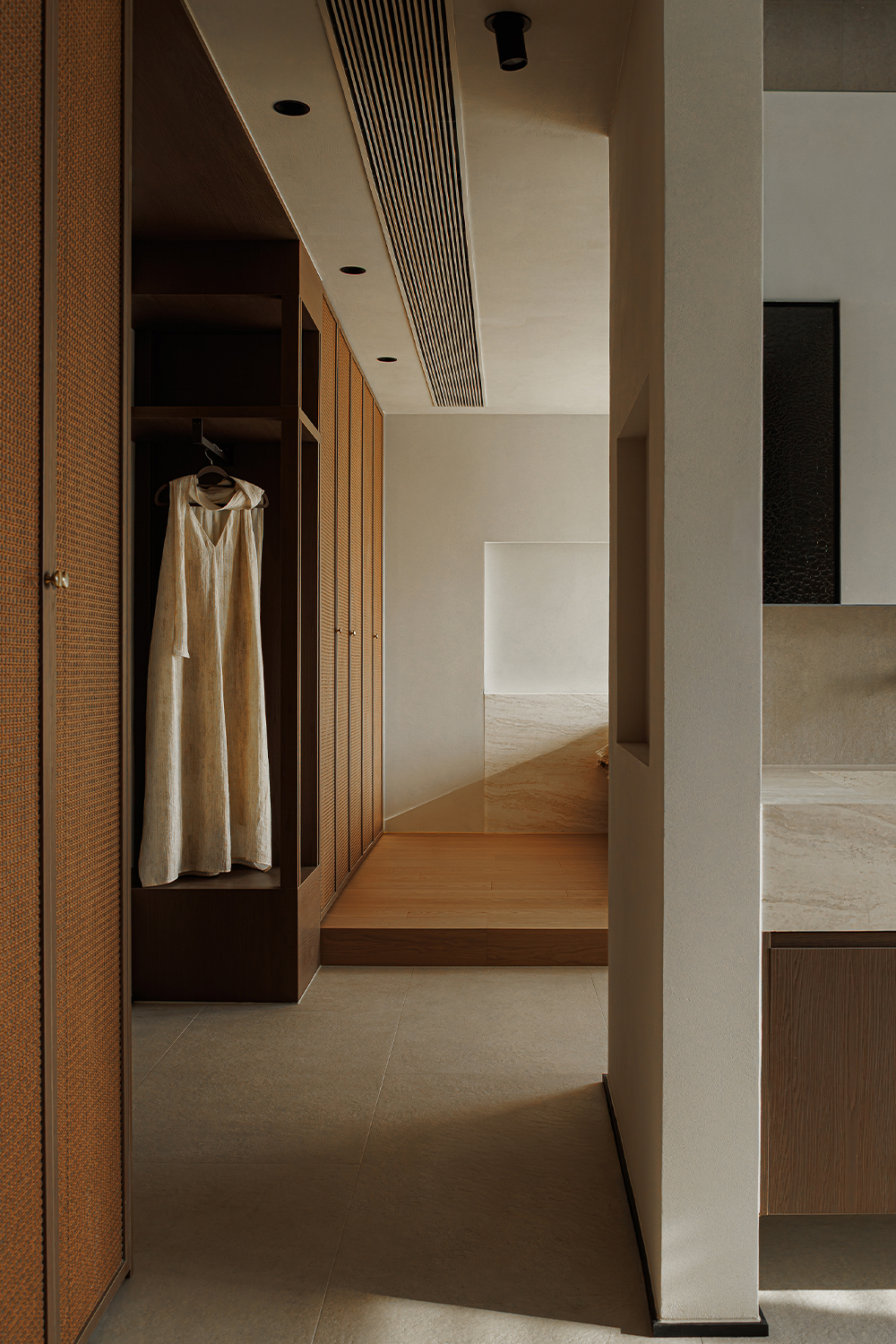
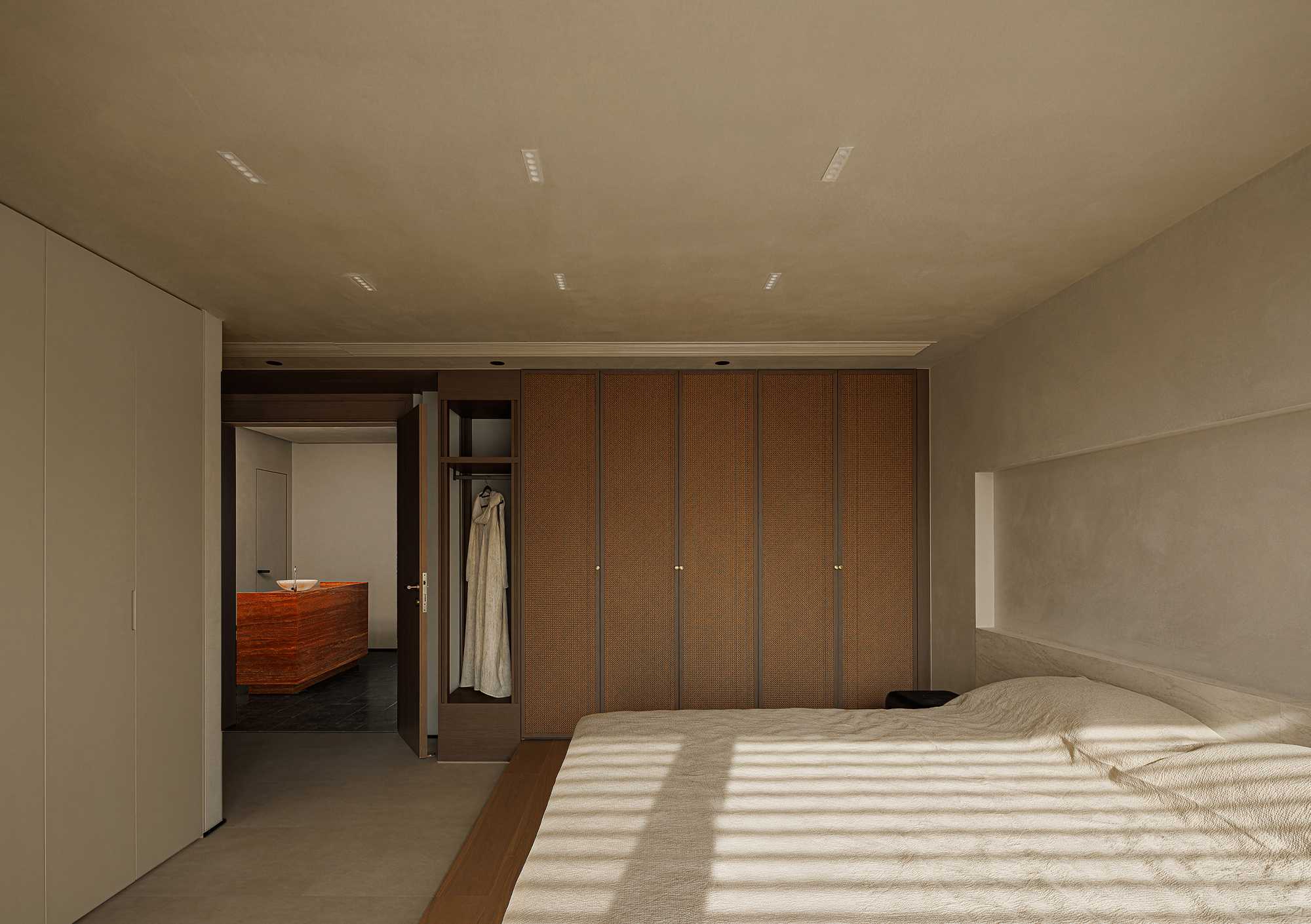
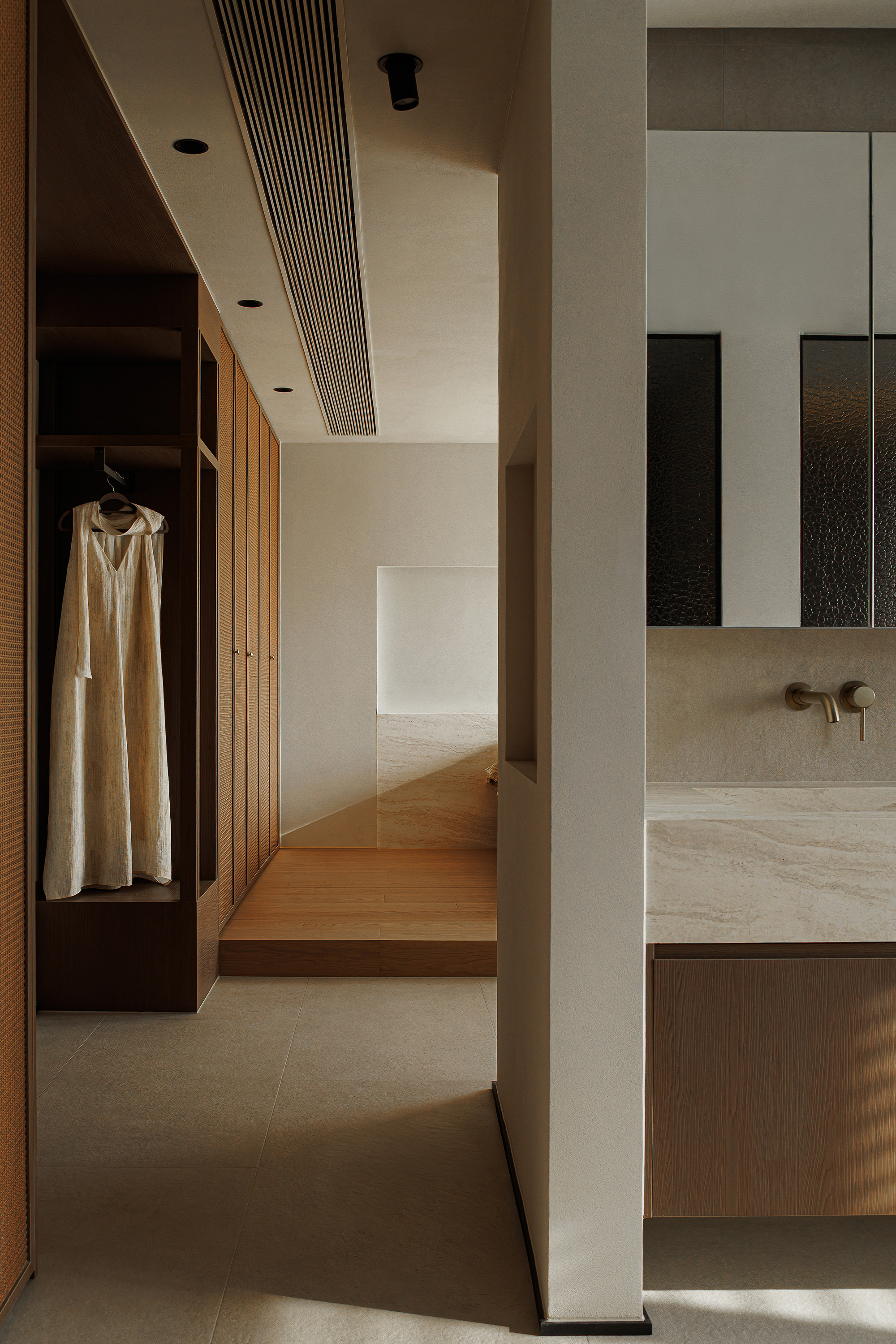
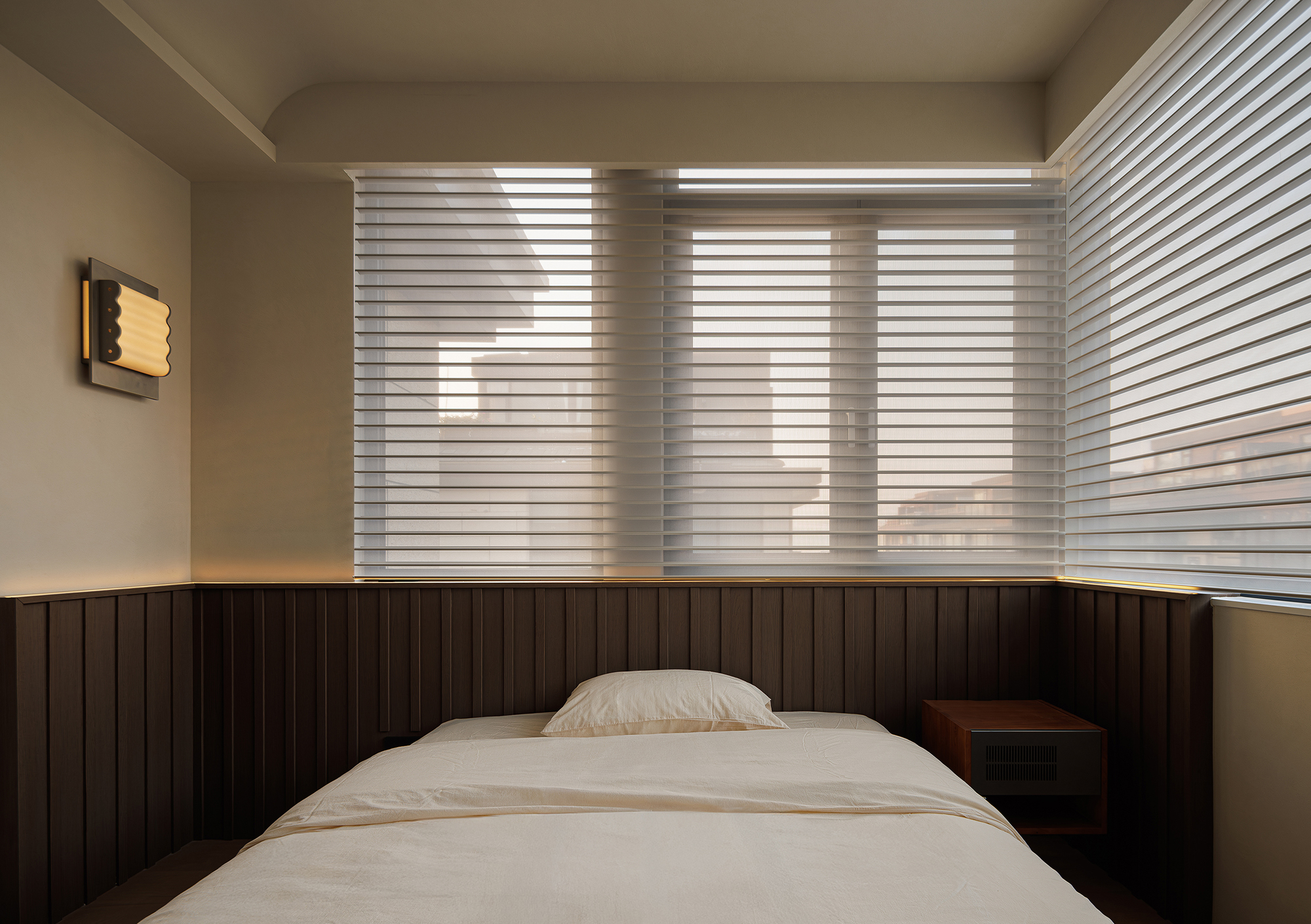
The master bedroom on the second floor continues the "de-decorative" logic, guiding the dweller back from social attributes to the true self. A low-profile platform bed significantly lowers the visual center of gravity, enhancing a sense of stability and peace. Large areas of textured paint and warm wood permeate each other, while light and shadow leave delicate shifts in the wall recesses, simulating the comforting enclosure of an earth-bound lair. The introduction of hand-woven rattan elements in the dressing area serves as an organic supplement to the facade materials, injecting a touch of rustic warmth into the minimalist architectural frame and allowing the sense of touch to perceive the traces of time.
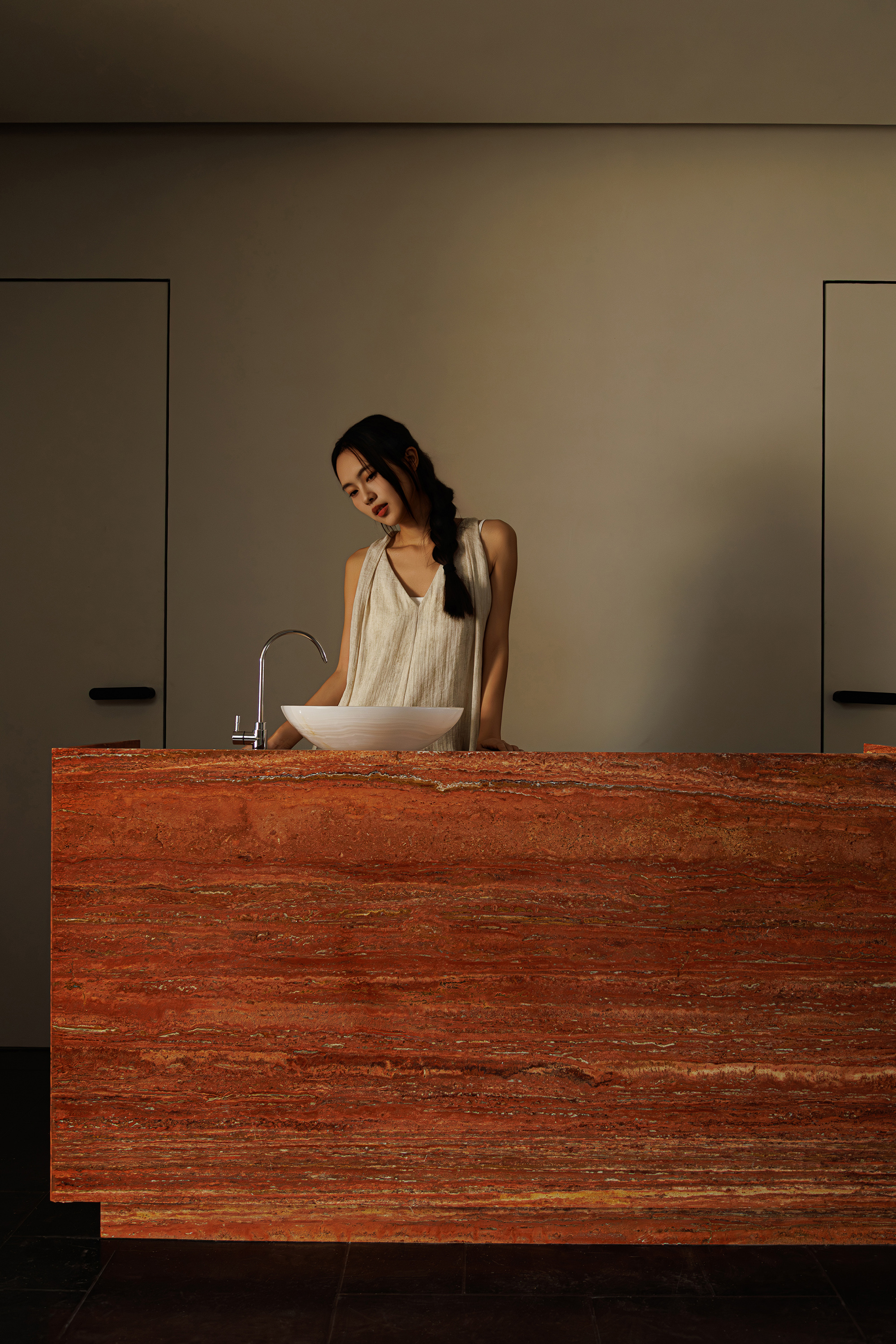
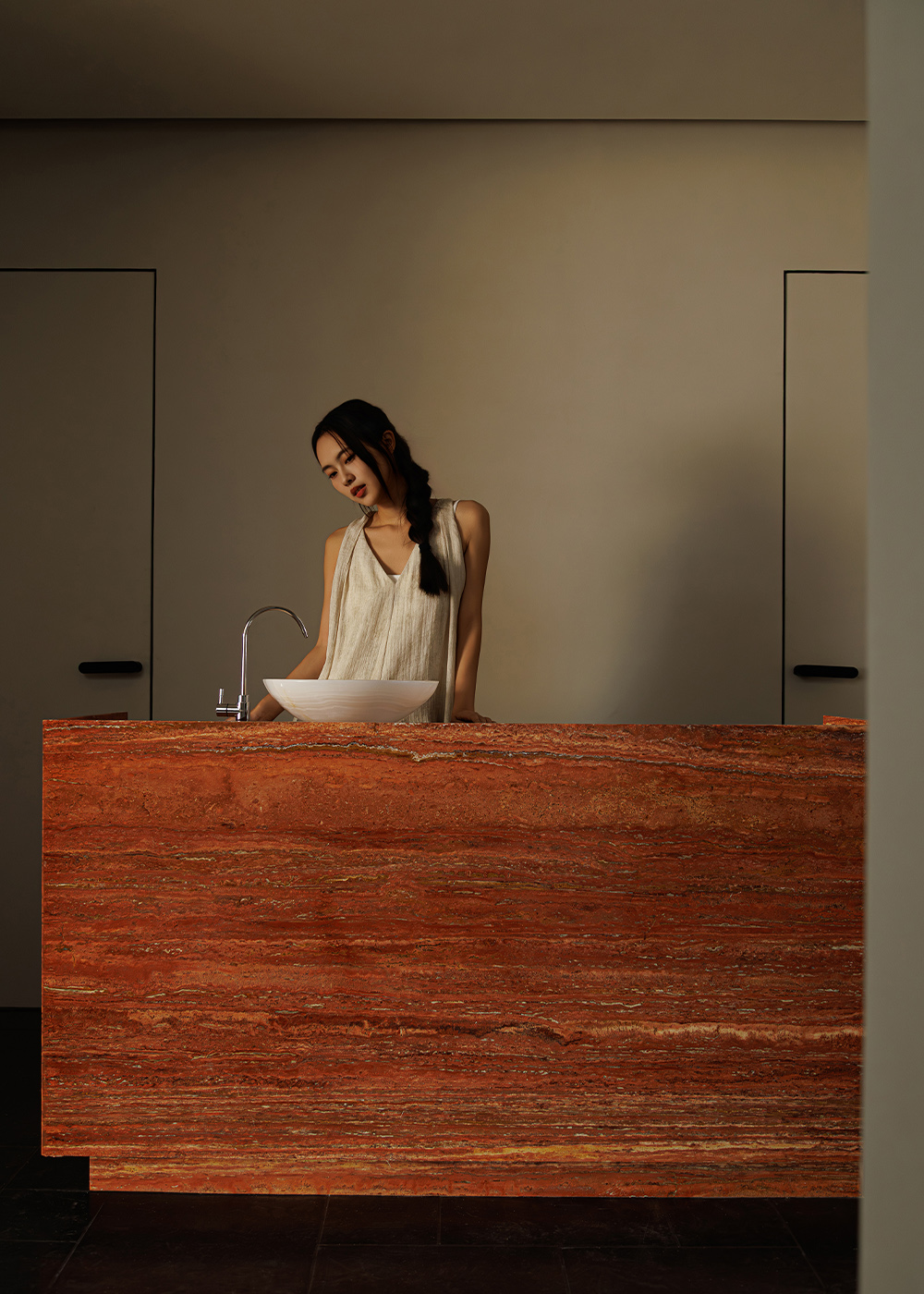
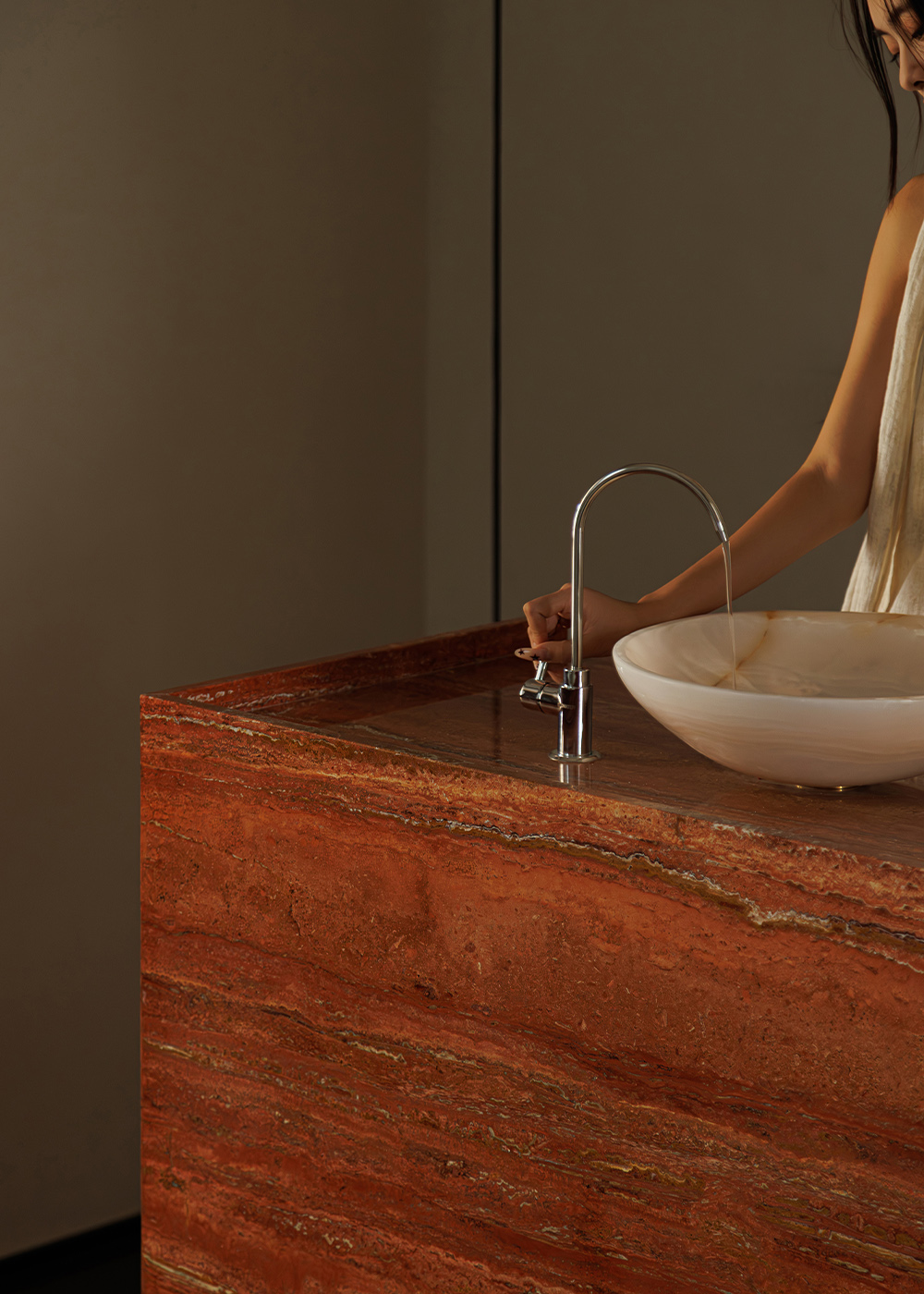
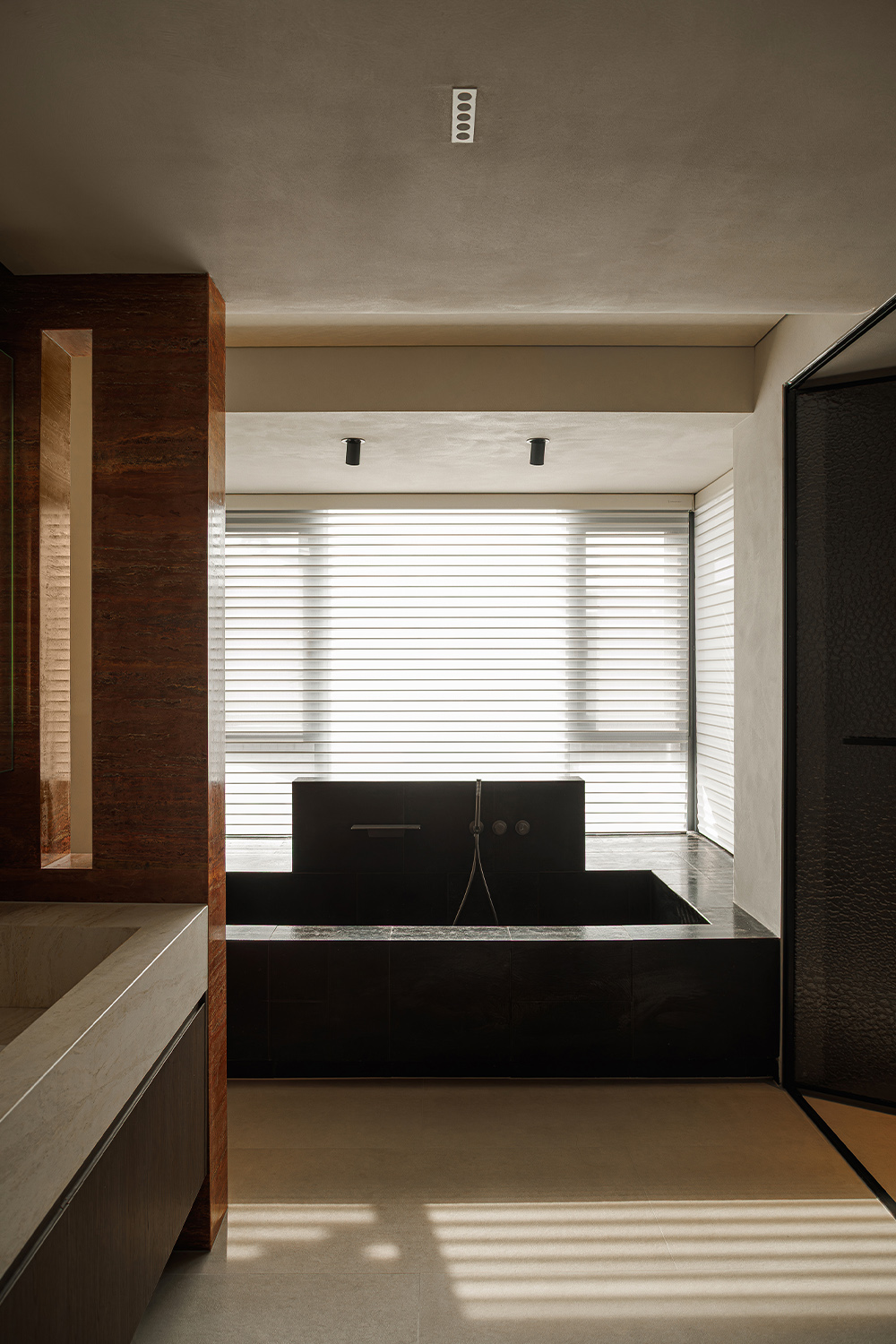
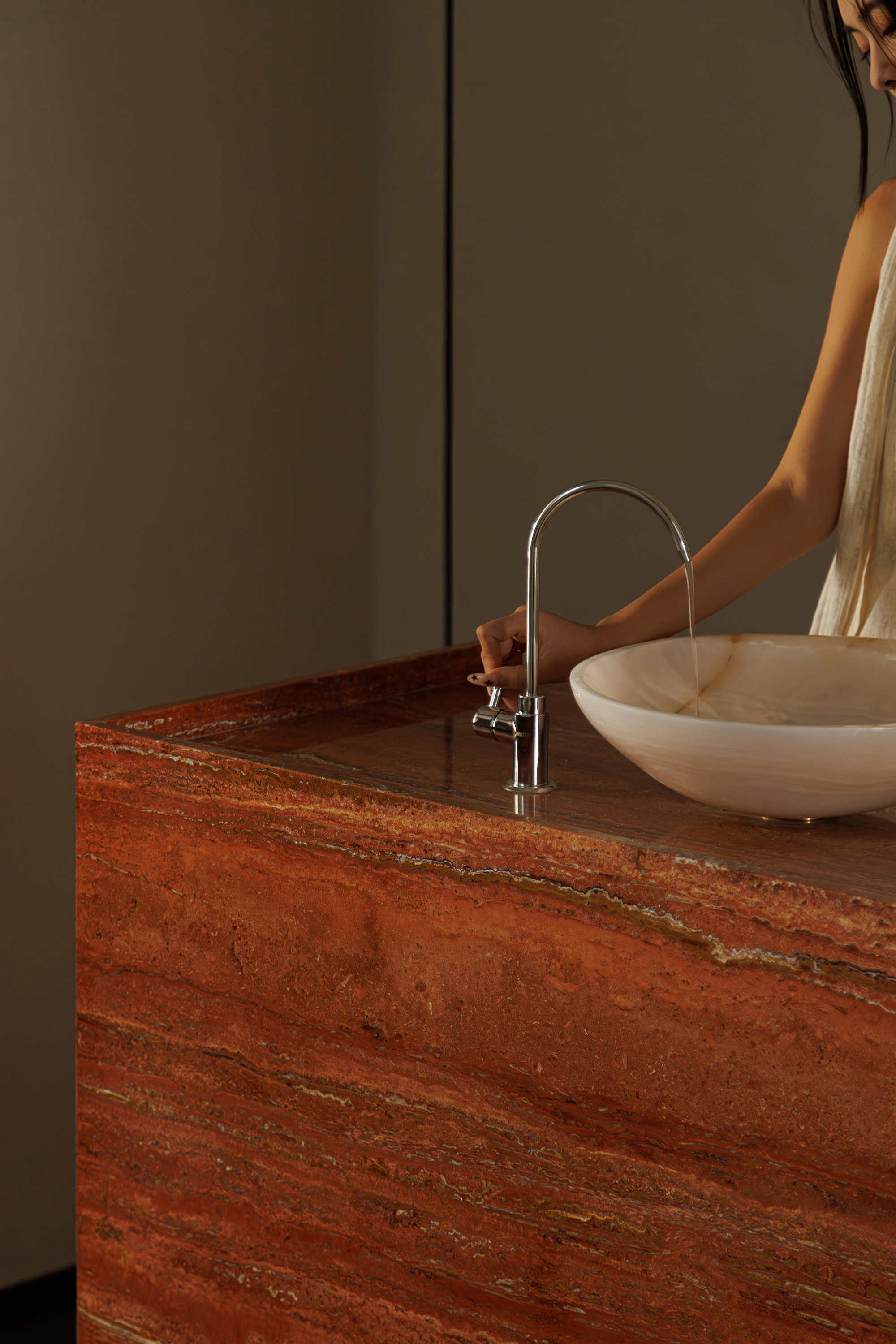
The master bathroom, connected to the bedroom through a free-flowing circulation, is a feast of materiality. Reddish stone with wild textures forms the vanity facade, its intense visual expression creating a dialectical dialogue of "refinement and wilderness" against the rugged, cool fair-faced concrete pillars. The design of the sunken bathtub transforms the daily routine of bathing into a ritualistic, immersive experience, allowing the space to carry a meditative spiritual quest beyond its basic functional requirements.
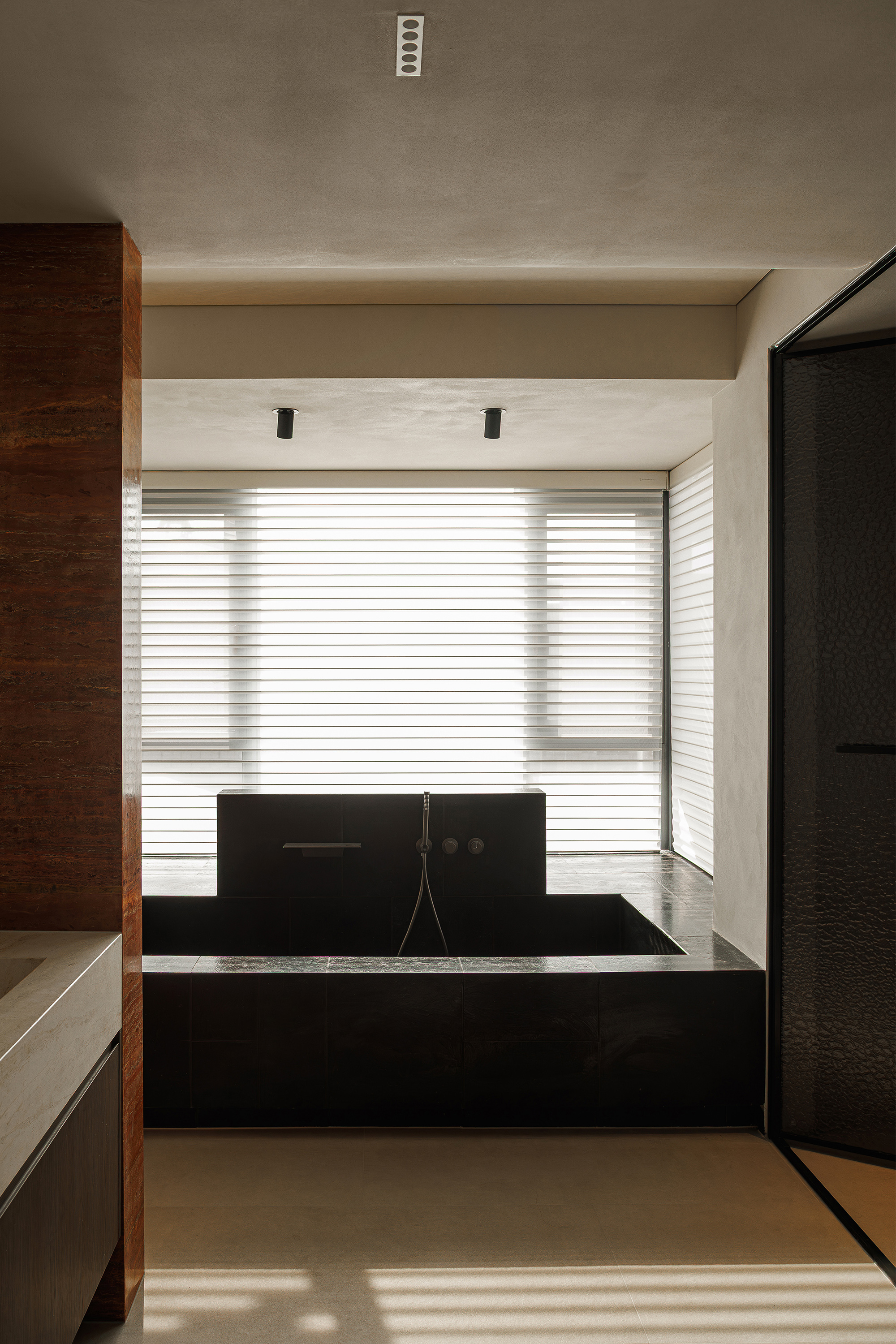
This is an experiment in "decentralization" and "material authenticity." By redefining the boundaries between public and private and deeply excavating the essence of materials, the designer has found a moving balance between the rugged and the refined, the open and the introverted, the clamorous and the silent—a balance capable of supporting the weight of the soul.

MORE PHOTOS